Anglo American Rejects $39 Billion BHP Bid, Setting Up Likely Bidding War
U.K.-listed mining giant’s chairman says the proposal undervalues the company

 2 min
2 min
LONDON— Anglo American on Friday rejected a $39 billion takeover proposal from rival BHP, saying the bid “significantly undervalues” the company and setting the stage for a potential bidding war.
London-listed Anglo American said the unsolicited proposal, which was made earlier this month and which became public this week, features an unattractive structure that is too uncertain and complex .
Anglo American Chairman Stuart Chambers said the company stands to benefit from its portfolio of assets, including copper, that are likely to experience growth from trends around the energy transition. BHP’s bid, Chambers said, is opportunistic and dilutive for shareholders.
BHP’s all-share offer valued Anglo American at about $38.8 billion, and would have been contingent upon Anglo American spinning off shareholdings in two South African-listed units. The proposal represented a premium of about 31%, not including the South African-listed units, based on Tuesday’s closing prices.
Some analysts had predicted Anglo would find the bid too low and are expecting BHP to return with another. BHP has until May 22 to make a firm offer, though the deadline can be extended. Industry participants expect other large miners to also take a run at Anglo, whose share price has dropped since 2022 as lower commodity prices have ripped through the industry.
A tie-up between BHP and Anglo American, which would be the largest mining deal on record, would illustrate the growing importance of copper, a metal essential to clean-energy products , to a sector that has long relied on Chinese industrialisation to boost profits.
Copper represents some 30% of Anglo American’s output, while BHP counts a majority stake in Chile’s Escondida, the world’s biggest copper mine, among its assets. BHP bought Australian copper-and-gold miner Oz Minerals for $6.34 billion in May last year, representing its biggest acquisition since 2011.
Copper prices are up some 15% so far this year, reflecting expectations that demand for the metal will rise as the world decarbonises and supply will be constrained. Electric vehicles and wind farms use copper in much greater quantities than gasoline-powered cars and coal-fired power stations.
Anglo American has been reviewing its assets in recent months, and has held early conversations with potential buyers for its storied De Beers diamond unit, which it values at more than $7 billion, The Wall Street Journal reported Thursday.
Activist firm Elliott Investment Management holds a stake in Anglo American worth roughly $1 billion, accumulated over several months and before BHP’s move on the miner, according to a person familiar with the matter. The firm is widely known for its campaigns to push companies for change to boost their stock prices. Its view of the Anglo American holding couldn’t be learned.
That said, a jump in Anglo American’s share price following BHP’s takeover offer indicates Elliott has already profited from its holding, potentially reducing any incentive for it to take any action until the outcome of BHP’s bid becomes clearer.
Anglo’s stock on Friday traded above the implied value of BHP’s offer, indicating the market expects a higher bid to emerge.
 Copyright 2020, Dow Jones & Company, Inc. All Rights Reserved Worldwide. LEARN MORE




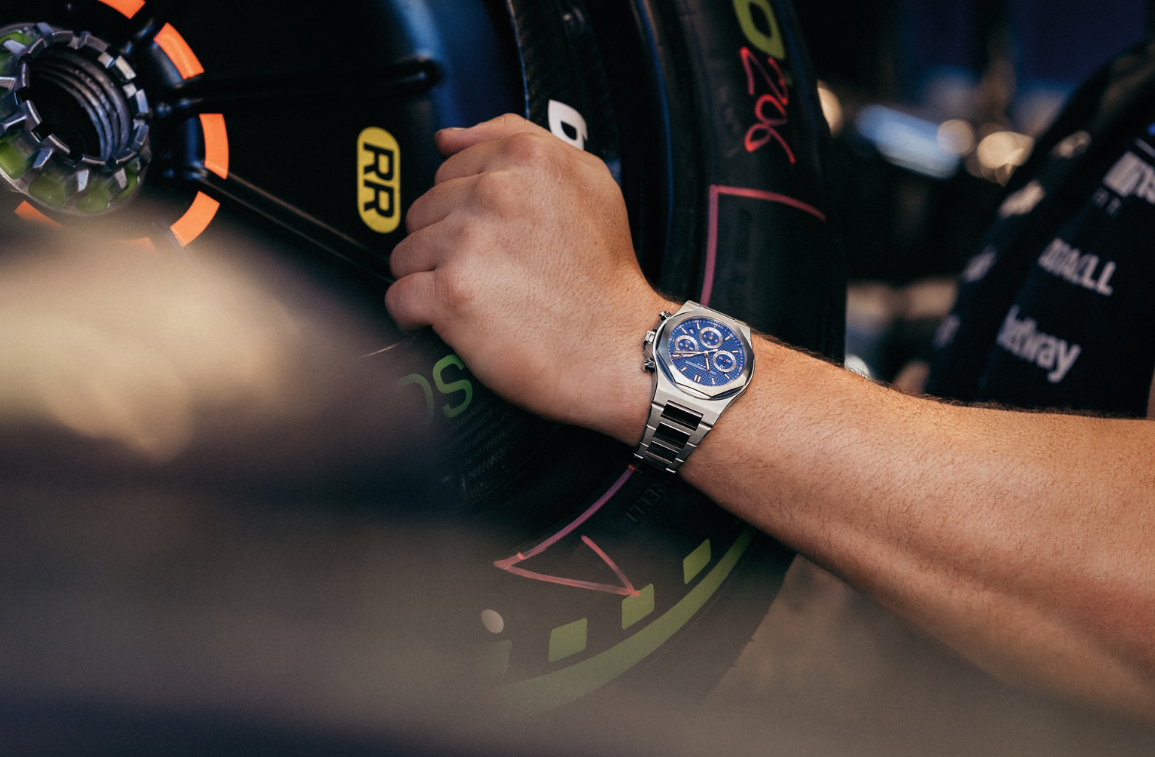
The Swiss watchmaker’s first collaboration with Atlassian Williams F1 Team produces two sporting Laureato models inspired by the team’s 2026 racing car.
Victorian auction buyers will soon receive a piece of information that has traditionally been withheld until bidding reaches it: the vendor’s reserve price. Under new property-sale and underquoting laws, agents must publish the agreed reserve at least seven days before an auction or fixed-date sale. Most changes begin on 1 October 2026 and apply to …
Continue reading “Victoria’s New Auction Rules Will Force Reserve Prices Into the Open”

The Swiss watchmaker’s first collaboration with Atlassian Williams F1 Team produces two sporting Laureato models inspired by the team’s 2026 racing car.
3 minGirard-Perregaux has revealed the first watches created through its partnership with Atlassian Williams F1 Team, bringing the British racing team’s colours to one of Switzerland’s most recognisable integrated-bracelet designs.
The collaboration comprises two 42mm steel watches: the time-and-date Laureato Williams Edition and the more technical Laureato Chronograph Williams Edition.
Both retain the familiar architecture of the Laureato, including its octagonal bezel, integrated bracelet and mix of polished and satin-finished surfaces. The influence of Williams is comparatively restrained, appearing through colour, discreet branding and details inspired by the team’s current Formula 1 car.
It is a welcome departure from the oversized logos and literal automotive references that can characterise motorsport watches.
The Williams FW48 inspires the dial
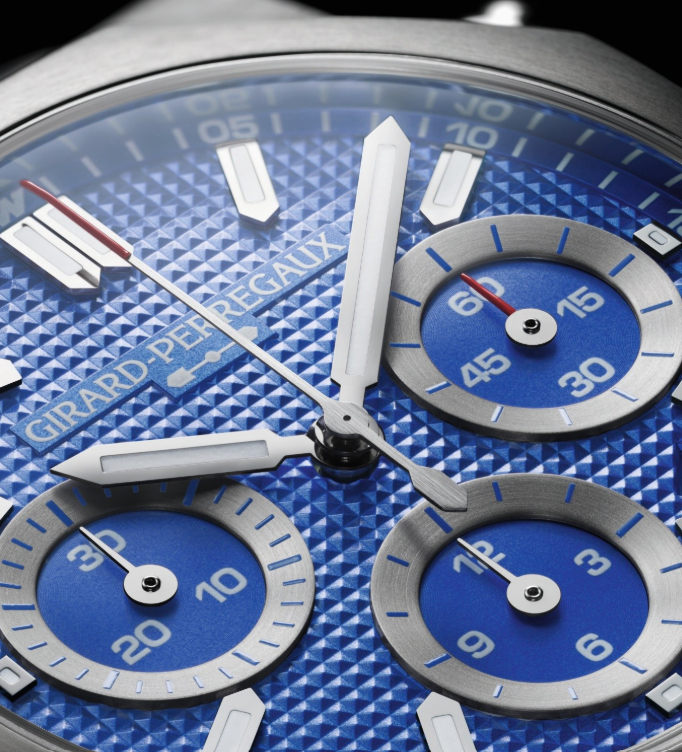
The centrepiece of both models is a blue Clous de Paris dial informed by the livery of the Williams FW48, the car being campaigned by the team during the 2026 Formula 1 season.
A small Williams “W” replaces the conventional marker at 12 o’clock, while the team emblem appears on the sapphire crystal caseback. Red accents echo the keyline used on the FW48 without overwhelming the established Laureato design.
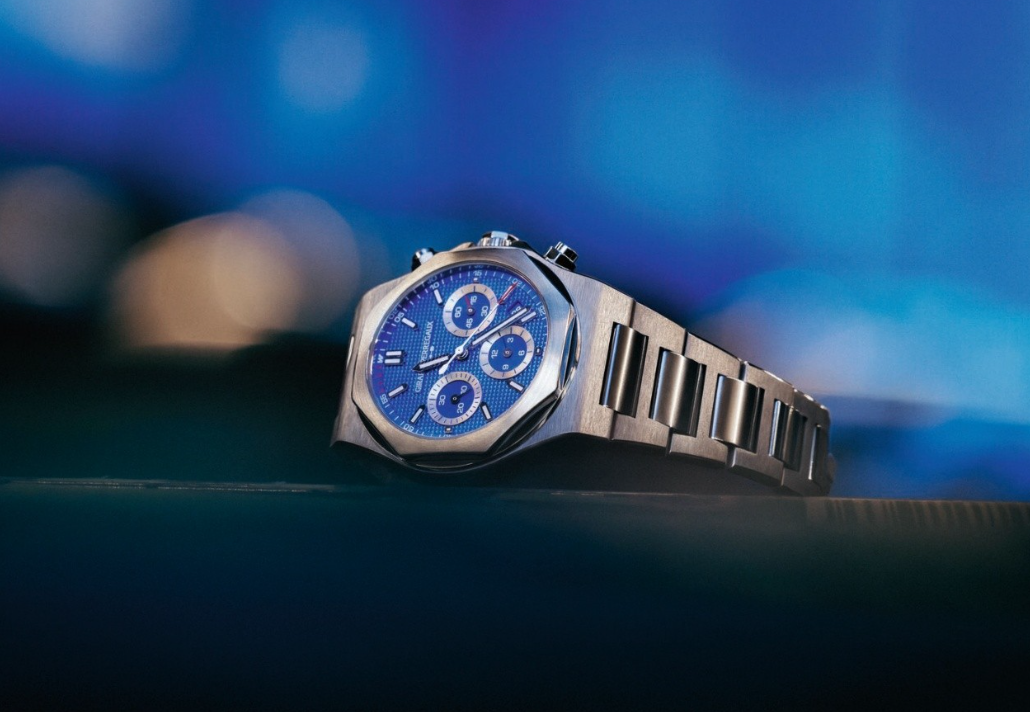
The three-hand model offers the quieter interpretation. Baton-shaped, rhodium-plated hands and hour markers are filled with white-emitting luminescent material, while a date window sits at three o’clock.
The chronograph creates a more obvious connection with motorsport. Three subdials are framed by rhodium-plated rings, with red appearing on the small-seconds hand and the tip of the central chronograph seconds hand.
Both watches measure 42mm across and are water resistant to 100 metres. The standard Laureato has a case thickness of 10.68mm, while the additional mechanics of the chronograph increase its profile to 12.16mm.
Two in-house automatic movements
The Laureato Williams Edition is powered by Girard-Perregaux’s self-winding GP01800 calibre. The movement provides hours, minutes, central seconds and the date, with a minimum power reserve of 54 hours.
The Laureato Chronograph Williams Edition uses the automatic GP03300 calibre, which combines its chronograph functions with a date display and offers a minimum power reserve of 46 hours.
Both movements operate at 28,800 vibrations per hour and can be viewed through their sapphire crystal casebacks.
Their decoration provides a more traditional counterpoint to the Formula 1 association. Finishing techniques include Côtes de Genève, circular graining, bevelling, mirror polishing, satin finishing, engraving and snailing.
The result is less about reproducing the appearance of a racing car than identifying the common ground between two mechanical disciplines: precision, incremental development and the considerable work hidden beneath the finished product.
Parallel histories
The timing of the partnership draws attention to the remarkably similar ages of its two protagonists.
Girard-Perregaux introduced the original Laureato in 1975, establishing an integrated-bracelet sports watch with a distinctive octagonal bezel. Williams entered Formula 1 two years later in 1977.
Both have evolved continuously across the five decades since. The Laureato has moved through different sizes, materials and complications, while retaining its central design language. Williams, meanwhile, has remained one of Formula 1’s most historically significant teams.
That gives the collaboration greater credibility than a simple licensing exercise. Girard-Perregaux and Williams are not being connected solely through the familiar language of speed. Their stronger link is a shared dependence on engineering, testing and the accumulation of specialist knowledge.
The watches are described as the beginning of a longer collaboration, suggesting further Williams editions may follow.
Girard-Perregaux’s international website lists the Laureato Williams Edition at US$16,200 and the Laureato Chronograph Williams Edition at US$20,900. Australian pricing has not been announced.
Specifications
Girard-Perregaux Laureato Williams Edition 42mm
Reference: 81010-11-3680-1GM
Case: Steel
Diameter: 42mm
Thickness: 10.68mm
Crystal: Anti-reflective sapphire crystal
Dial: Blue Clous de Paris pattern
Movement: Automatic GP01800
Functions: Hours, minutes, central seconds and date
Power reserve: Minimum 54 hours
Water resistance: 100 metres
Bracelet: Integrated steel bracelet with triple-folding clasp
International price: US$16,200
Girard-Perregaux Laureato Chronograph Williams Edition 42mm
Reference: 81020-11-3681-1GM
Case: 904L steel
Diameter: 42mm
Thickness: 12.16mm
Crystal: Anti-reflective sapphire crystal
Dial: Blue Clous de Paris pattern with three chronograph counters
Movement: Automatic GP03300
Functions: Chronograph, hours, minutes, small seconds and date
Power reserve: Minimum 46 hours
Water resistance: 100 metres
Bracelet: Integrated 904L steel bracelet with triple-folding clasp
International price: US$20,900

ABC Bullion has launched a pioneering investment product that allows Australians to draw regular cashflow from their precious metal holdings.

A long-standing cultural cruise and a new expedition-style offering will soon operate side by side in French Polynesia.