When ‘Drop It’ Is the Best New Year’s Resolution
Some aspects of sleep, weight, friendships and fitness aren’t worth worrying about

 4 min
4 min
Millions of people spend the final days of December coming up with ambitious tasks for the new year. In 2023, resolve to take something off your plate instead.
Physical and mental health—including eating habits, self-care, exercise and weight loss—are among the most common focuses for resolutions. But nearly two-thirds of people who set New Year’s resolutions abandon them within the first month, according to research published in the International Journal of Environmental Research and Public Health.
Part of the problem is that designating vague goals often sets us up for failure, physical- and mental-health professionals say. Consciously removing some of them from your mental to-do list can help alleviate stress and improve focus, says social psychologist Jessica Ayers.
“By taking off one of those big, lofty goals, you’re giving yourself the freedom to actually pursue the goals that are most important to you,” says Dr. Ayers, who is based in Boise, Idaho.
Here are four anti resolutions that will help you enter 2023.
Stop Worrying About Being Night Owl
If you are one of the many people whose bedtimes shifted later during the pandemic, you might be resolving to go to bed earlier. Getting more sleep is a worthy goal, but being a night owl isn’t necessarily the problem, according to sleep researchers.
People have individual chronotypes, or natural tendencies for waking early or sleeping in. When it comes to sleep health, quality, quantity and consistency are the most important metrics, sleep experts say.
If you go to bed at midnight but get between seven and nine hours of good-quality sleep, there is probably no need to worry about moving your bedtime up, says Shelby Harris, a Westchester, N.Y.-based clinical psychologist specialising in behavioural sleep medicine.
Dr. Harris says she has noticed a stigma around being a night owl, compared with morning larks, who are often viewed as more productive and in sync with the nine-to-five schedule. She tells patients they should only embark on the often difficult work of shifting their circadian rhythms, which she says can cause anxiety and insomnia in the early stages, if they are suffering from sleep deprivation.
Stop Weighing Yourself
Many people resolve to lose weight in the new year only to end up obsessing over the number on the scale or give up altogether, doctors and dietitians say.
For those whose doctors have urged them to monitor their weight at home, including people working to prevent or manage chronic conditions, patients undergoing cancer treatments and certain people who are underweight, it is a good idea to keep the scale handy, according to health experts.
Otherwise, consider ditching the scale altogether, says Gregory Dodell, an endocrinologist in New York City who sees many patients for weight-related matters. Self-weighing has been associated with weight loss, but also lower levels of self-esteem and higher levels of stress, according to a meta-analysis of 23 studies published in the journal Health Psychology Review in 2016.
“Stepping on a scale without any other health markers is not very impactful,” says Dr. Dodell.
He recommends giving priority to healthy behaviours, such as incorporating more movement into your day and eating enough protein, fruits and vegetables, which can improve health indicators even if they don’t affect weight. Patients who like tracking health metrics might want to focus on other quantifiable characteristics such as blood pressure and blood-sugar levels, he says.
Caroline Susie, a registered dietitian in Dallas, says she has focused on celebrating what she calls non-scale victories with clients, which can include sleeping better, having regular bowel movements, or feeling more energetic.
Stop Worrying That You Don’t Have Enough Friends
Many resolution-setters aim to meet new people and make new friends, but when it comes to friendships, psychologists say, quality matters more than quantity.
We have a limited amount of time and energy to invest in our relationships, says Dr. Ayers, the social psychologist. Keeping a smaller circle of friends allows us to invest more time into meaningful conversations with them, she says.
“Think of deepening instead of broadening,” says psychologist Marisa G. Franco.
As we age and become aware that the end of our lives is drawing closer, we tend to care less about having more friends, a phenomenon known in the field of social science as socio-emotional selectivity. To start forging closer bonds, increase the amount of time you spend with your close friends. That can mean scheduled dates, such as weekly dinners or book clubs, but should also include last-minute hangouts, says Dr. Franco.
“It’s a sign of intimacy when we believe people won’t reject us,” she says.
In a 2020 study of women published in Adultspan Journal, those who visited with close friends a couple of times a week felt younger and had significantly higher levels of life satisfaction than those who visited with theirs a couple of times a year or not at all.
Stop Wasting Money on Fitness
Planning to join a pricey health club or fitness program this year? Don’t rely on the price tag to motivate you.
“Meaningful, lasting, positive change doesn’t come from shame, blame and guilt,” says Darlene Marshall, a personal trainer and wellness coach in Valley Falls, N.Y.
Before you hit “subscribe” on a membership you might not make the most of, ask yourself what you are hoping to get out of it. For many, the answer goes beyond losing weight or looking good in their jeans, says Ms. Marshall. Getting outside, even for short periods, can provide mental and physical health benefits.
“If the question is, ‘Which is going to help with my well-being: the walk in the park or 20 minutes on the StairMaster?’ The walk in the park is going to have a better outcome,” she says.
About 20 minutes of daily moderate-intensity aerobic physical activity, which could include a brisk walk or pushing a lawn mower, provides the same health benefits as running for 60 to 75 minutes a week, according to guidelines from the Centers for Disease Control and Prevention and the American College of Sports Medicine.
Outdoor activities, such as group walks, hiking or biking, became more popular during the pandemic, according to the ACSM’s 2023 fitness trends report.
“Outdoor activity doesn’t take any technology and they don’t have to rely on an instructor instructing them from who knows where,” says Dr. Walt Thompson, former president of the ACSM and author of the report.
 Copyright 2020, Dow Jones & Company, Inc. All Rights Reserved Worldwide. LEARN MORE





From making unpopular decisions to learning when to listen, leaders from five businesses reveal what nobody prepared them for — and how running a company has challenged their expectations.

Technology and semiconductor shares fell sharply as investors questioned the debt financing the AI infrastructure boom and confronted higher rates and Chinese competition.

Elon Musk is exploring a potential merger between Tesla and SpaceX, a deal that could reshape the future of AI, robotics, autonomous vehicles and space technology. With a combined valuation potentially reaching $3.5 trillion, the move could bring Musk’s vision of an interconnected technology ecosystem closer to reality, although a deal remains uncertain.
5 min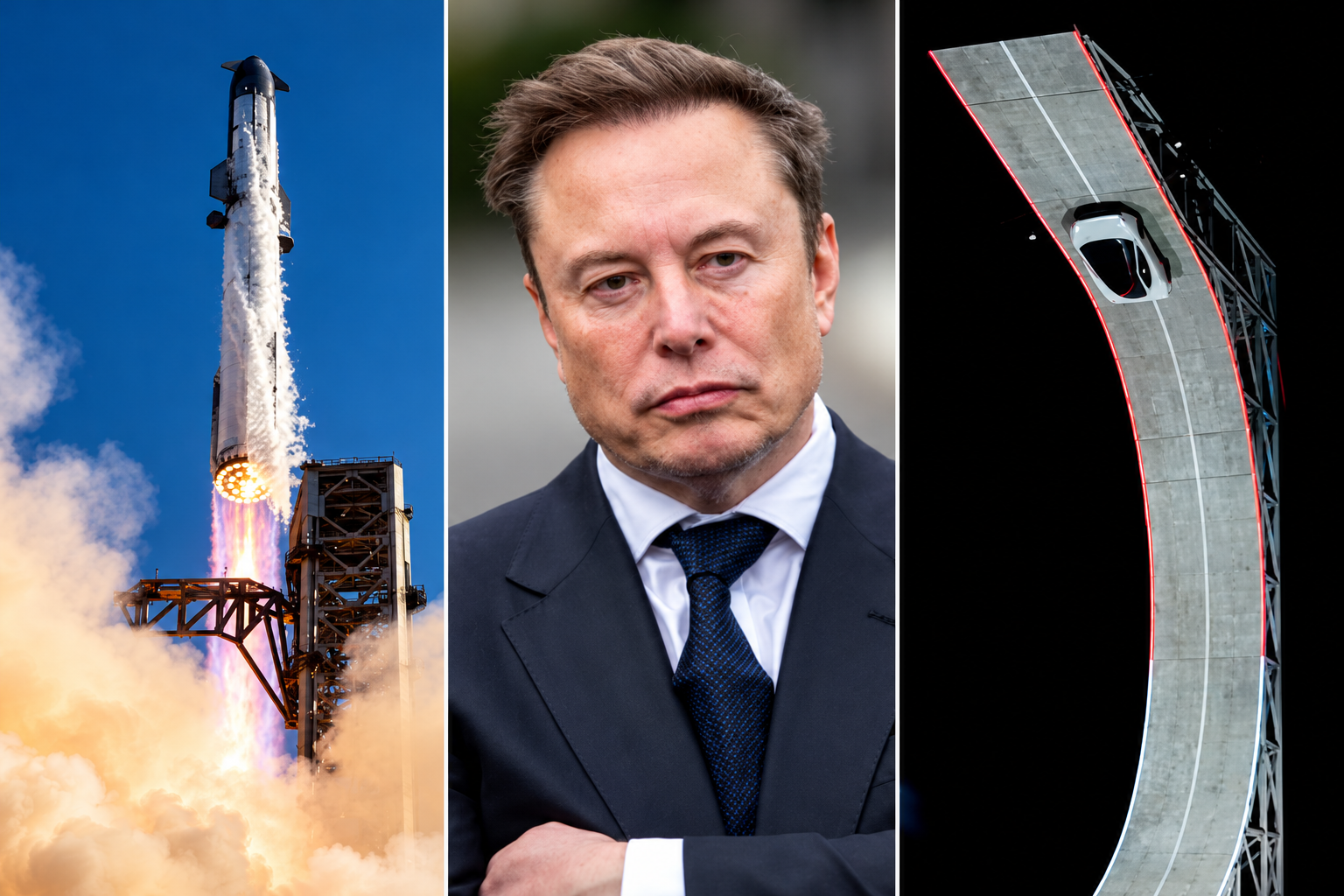
Elon Musk has engineered ties between Tesla TSLA 3.41%increase; up pointing triangle and SpaceX SPCX 7.79%increase; up pointing triangle that are hard to break, and now he wants to fuse them together permanently.
Musk has run both Tesla and SpaceX concurrently over the past two decades, using a schedule that dictated which days he spent focused on each business.
The companies have often shared resources and personnel, signaling their close ties. Last year, SpaceX looked into creating a spacesuit for Tesla’s humanoid robot Optimus, a person familiar with the matter said. Tesla last week showed off its new Roadster, a vehicle featuring SpaceX rocket thrusters that it hopes to soon bring to market.
And in recent months, Musk has repositioned both companies by expanding beyond their core operations toward a shared mission centered on artificial intelligence.
The world’s richest man on Tuesday signaled his interest in tying up SpaceX and Tesla, marking what would be the biggest corporate merger of all time. Because he serves as chief executive of SpaceX and Tesla, Musk said committees of independent directors at both companies are evaluating a possible deal, adding that a transaction might not come to fruition.
The committees will likely evaluate, with lawyers and bankers, how each company would fare in a potential deal and how a deal might best be structured. They then present their conclusions to their respective boards, who typically vote on whether to proceed.
“It’s an odd Kabuki dance where two groups of people are talking and I can’t be in the conversation,” Musk told SpaceX investors on Tuesday in response to an analyst’s question about a potential deal.
For Musk, the merger supports his vision of a world full of autonomous cars, humanoid robots and weekly rocket launches, as well as the data centers and satellites required to keep the whole thing running.
Some investors and analysts said they expect a transaction would be structured as an all-stock deal, with SpaceX potentially paying a modest premium for Tesla shares.
SpaceX, which has a market value of about $2 trillion, said it is seeing sharp growth in revenue across its businesses, which include operating data centers, launching rockets and operating satellite networks such as the internet service Starlink. Tesla is valued at about $1.5 trillion and is expanding its operations beyond its automotive and energy business. Shares in both companies traded higher following the news Tuesday.
Musk’s substantial ownership stakes in both companies, along with voting control at SpaceX, has enabled him to set the deal in motion. Analysts and investors said the deal will probably face regulatory scrutiny internationally, though some see Musk’s close relationship with the Trump administration as an asset to getting approval.
Blurred lines
The companies haven’t said which directors are on the special committees evaluating a potential deal. Several SpaceX and Tesla board members have either personal or business ties to Musk. And like Musk, venture capitalist Ira Ehrenpreis sits on both boards.
In a filing this week, Tesla outlined millions of dollars in business agreements with SpaceX and its subsidiaries last year, including $143 million in car sales to SpaceX, $3.3 million in advertising that it bought on the social-media platform X and $430 million in revenue from the sale of Megapack batteries for SpaceX’s data centers.
The companies also split the cost of resources including the use of Musk’s SpaceX jet and the bill for his personal security, which he runs through a private company.
Employees at both companies routinely move between companies to work on special projects, and some executives have dual roles, including Charles Kuehmann, vice president of materials engineering at both SpaceX and Tesla, and Ashok Elluswamy, the vice president of AI software at Tesla who runs a joint venture with SpaceX called Digital Optimus.
Over the years, Musk has launched new startups within his empire, including brain-implant company Neuralink, underground-tunnel developer the Boring Company and xAI, the AI startup that merged with SpaceX in February.
It is that AI business that Musk thinks can serve a market worth tens of trillions of dollars, justifying the need for a merger.
The business case goes like this: Tesla is developing robotaxis and robots, which it calls “physical AI.” SpaceX is working on the back end of physical AI: the data-center capacity and internet connection required for those robotaxis and robots to operate continuously.
“I don’t see what the value of Tesla is if it’s not merged with SpaceX,” said investment adviser Ross Gerber, a former Tesla bull turned critic invested in both companies. “If they don’t merge, the brains of everything that runs Tesla is owned by another company.”
On top of it all, both companies face constraints on the supply chains they need to make this world a reality, particularly when it comes to chips. To address this, Musk earlier this year announced a joint venture between Tesla, SpaceX and Intel to design and manufacture chips in Texas. “The most epic chip-building exercise by far,” he has said.
Musk at the wheel
For Musk, a merger would also solve two problems: demands on his attention and his lack of control at Tesla.
Tesla for years was Musk’s only public company, a status that came with greater scrutiny. There, Musk reports to a public board, as well as individual investors who make up around 30% of Tesla’s voting power, according to FactSet.
The question of Musk’s attention became a particular focus for investors and the board in recent years after he acquired Twitter in 2022 and launched xAI in 2023, and again in 2025 as he spent time in Washington, D.C., running the Department of Government Efficiency in the early months of President Trump’s second term.
As Tesla’s car business suffered in 2025, Musk threatened to take his AI ambitions outside the company if he wasn’t granted 25% voting control. Last November, Tesla shareholders approved a new pay package for Musk, which created a path for him to vastly expand his stake.
As of Sept. 30, Musk owned a roughly 20% stake in Tesla, according to the company’s proxy filing.
The SpaceX IPO gave Musk a different path. When SpaceX went public in June, the deal’s structure enabled him to have more than 80% voting power at the company—so much that he can’t be fired and decisions can’t be made without his support.
If SpaceX acquires Tesla, he will likely stay in control.

Four decks, 34.5 metres and a made-to-measure interior: step aboard the new Custom Line Navetta 35, unveiled at Cannes.

A survey of people with at least $1 million in investable assets found women in their 30s and 40s look nothing like older generations in terms of assets and priorities