

Great Escapes: Copenhagen’s Cozy, Egalitarian Chic

 4 min

There are many cities often described as “laid-back” that don’t totally warrant it. Copenhagen warrants it.
The description, though, does not suggest laziness. Copenhagen, in fact, is an incredibly active and fit capital. Last summer, it hosted a raucous Pride Week followed a few days later by an Iron Man competition. In the city of around 600,000, the average age is 33.
Indeed, Københavners—as its inhabitants are known—are a cheerful and active bunch. A certain coolness is the overall vibe of the city, a feature that some say stems from the Danish Law of Jante, or a sense of modest egalitarianism. Danes resent ostentatiousness. Combine that with hygge, the cherished Danish virtue of coziness, and you have a society that is friendly and welcoming but not too over the top. In other words, a fitting place for a traveler.
Copenhagen occupies two islands on the Øresund strait, across from Sweden (a bridge leads to the much-less-interesting Malmö.). Founded by Viking fishermen in the 10th century, it did not become Denmark’s capital until five centuries later. Under the Danish monarchy, the city was transformed into the preeminent cultural and economic center of Scandinavia, a position it arguably maintains today.
Since World War II, the Danish economy has extended into high-end services, pharmaceuticals and green energy, to impressive results. At some US$68,000, Denmark’s GNI per capita is the seventh highest in the world and Danes enjoy a high quality of life. Their capital is one of the most financially dynamic in northern Europe. Yet the city strikes a fine balance between pursuing its modern, capitalist aspirations and maintaining its old-world charms.

STAY
Hotel D’Angleterre is Copenhagen’s premier historic hotel, a regal, white-walled beauty dating back to 1755. Affectionately called “The White Lady on Kongens Nytorv”—the name for the wide, bustling square it overlooks—the hotel was extensively renovated in 2013. Well-equipped with modern amenities and some ninety rooms, D’Angleterre retains its Old French-inspired aesthetic. Elsewhere along Kongens Nytorv, considered the heart of the city, is the Royal Theatre as well as ample shopping, dining, and a stop on Copenhagen’s incredibly efficient metro. The spa and large indoor pool are both splendid.
For a more modern abode, book a room at Nimb, a fairy-tale-esque five-star boutique hotel in Tivoli Gardens, a pleasant amusement park first opened in 1843. Tivoli owns the hotel, which has a private entry into the magnificent park. The spacious, very hygge rooms are chicly decorated with Danish art. There is a superb rooftop terrace bar and pool, which often has live music. Visit the Asian-inspired spa and its steam room for an urban oasis.
EAT & DRINK
Copenhagen’s wonderfully varied culinary scene, which boasts 15 Michelin-starred restaurants, owes its dynamism to noma. The New Nordic superstar, which opened in 2003, has been rated as the best restaurant in the world (it recently announced it would close for regular service in 2024). Numerous noma-trained chefs have since opened their own eateries—the tastiest burger in the city can be found at POPL, whose founder is a noma veteran; Hart Bakery, one of Copenhagen’s most coveted bakeries, was opened by Richard Hart, formerly of both noma and Tartine.
But the noma buzz also infused pride and dynamism into Copenhagen’s dining scene more generally. One standout is Cofoco, a local favorite. The cozy basement spot serves up Mediterranean-inspired Nordic food like shrimp with foamy lobster bisque, pumpkin and yogurt. It’s a great place for a long, chatty meal over bountiful vin.
Restaurant Møntergade, located on the hip and buzzing Møntergade street, is a homey, chic spot with killer Nordic plates. The smoked eel is fantastic. Top-notch Italian pasta can be found at Undici, a casual, light-hearted place with picturesque positioning at the intersection of two cute canals.
Marchal, the signature restaurant on the ground floor of Hotel D’Angleterre, is well-worth a meal. The Michelin-starred spot transforms Nordic delicacies into scrumptious, inventive plates with a French touch. Try the venison with beets, blackberries, pear and pepper sauce. The Nimb Brasserie, inside the Nimb Hotel, is also French and fantastic.
Lovely libations abound in Copenhagen, a city fond of boozy celebration. One stand-out is RUDO, a vermouth bar opened by former noma sous chef and restaurateur, Christian Puglisi. Fiskebaren, a popular seafood restaurant in the Meatpacking District founded by a former noma sommelier, has an excellent wine selection. For beer, pop into one of trendy microbrewery Mikkeller’s many locations. Bright, inventive cocktails can be found at Ruby, which occupies a townhouse dating to 1740.

EXPERIENCE
One Copenhagen attraction that cannot be missed is the surprisingly charming Tivoli Gardens. To call it an amusement park perhaps cheapens its appeal—the modestl -sized place is less Six Flags than it is Golden Gate Park. Lovely, verdant grounds are interspersed with rollercoasters, a large performance stage and the most beautiful antique merry-go-round you’ve ever seen. Good restaurants abound, too.
With its bright shophouses, pretty canals, grand buildings, and ancient streets, Copenhagen is an architectural wonder. In 2023, Copenhagen becomes a UNESCO World Capital of Architecture, which means a slate of citywide events. Anytime of the year, though, whether during the idyllic summers or the punishing winters, the best way to take in Copenhagen is on a boat tour. Hey Captain, located on the sunny and buzzing Ofelia Square, provides great guided trips, with comfortable, uncrowded boats and bottled craft beer.
Museum-lovers will find much to admire in Copenhagen. One not to be missed is the Glyptoteket, an art museum in central Copenhagen with a fantastic winter garden and lots of sculptures. The National Gallery of Denmark, also known as SMK, is also well-worth a visit too, featuring mountains of glorious Danish and international works from the past seven centuries (Matisse is on display through February.) Stroll through the nearby King’s Garden, a sprawling and serene park, on the way there.
 Copyright 2020, Dow Jones & Company, Inc. All Rights Reserved Worldwide. LEARN MORE


From making unpopular decisions to learning when to listen, leaders from five businesses reveal what nobody prepared them for — and how running a company has challenged their expectations.

Technology and semiconductor shares fell sharply as investors questioned the debt financing the AI infrastructure boom and confronted higher rates and Chinese competition.

Elon Musk is exploring a potential merger between Tesla and SpaceX, a deal that could reshape the future of AI, robotics, autonomous vehicles and space technology. With a combined valuation potentially reaching $3.5 trillion, the move could bring Musk’s vision of an interconnected technology ecosystem closer to reality, although a deal remains uncertain.
5 min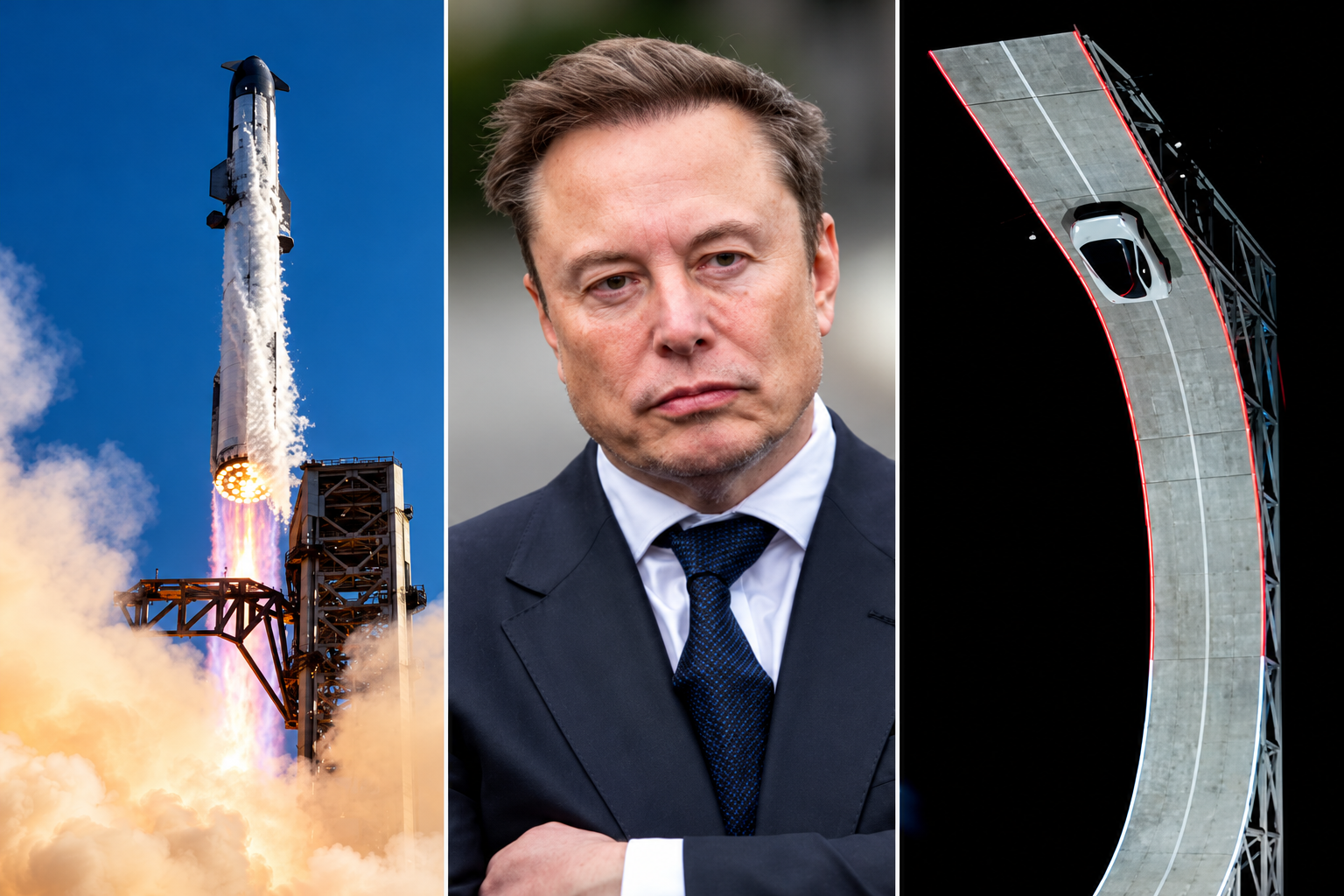
Elon Musk has engineered ties between Tesla TSLA 3.41%increase; up pointing triangle and SpaceX SPCX 7.79%increase; up pointing triangle that are hard to break, and now he wants to fuse them together permanently.
Musk has run both Tesla and SpaceX concurrently over the past two decades, using a schedule that dictated which days he spent focused on each business.
The companies have often shared resources and personnel, signaling their close ties. Last year, SpaceX looked into creating a spacesuit for Tesla’s humanoid robot Optimus, a person familiar with the matter said. Tesla last week showed off its new Roadster, a vehicle featuring SpaceX rocket thrusters that it hopes to soon bring to market.
And in recent months, Musk has repositioned both companies by expanding beyond their core operations toward a shared mission centered on artificial intelligence.
The world’s richest man on Tuesday signaled his interest in tying up SpaceX and Tesla, marking what would be the biggest corporate merger of all time. Because he serves as chief executive of SpaceX and Tesla, Musk said committees of independent directors at both companies are evaluating a possible deal, adding that a transaction might not come to fruition.
The committees will likely evaluate, with lawyers and bankers, how each company would fare in a potential deal and how a deal might best be structured. They then present their conclusions to their respective boards, who typically vote on whether to proceed.
“It’s an odd Kabuki dance where two groups of people are talking and I can’t be in the conversation,” Musk told SpaceX investors on Tuesday in response to an analyst’s question about a potential deal.
For Musk, the merger supports his vision of a world full of autonomous cars, humanoid robots and weekly rocket launches, as well as the data centers and satellites required to keep the whole thing running.
Some investors and analysts said they expect a transaction would be structured as an all-stock deal, with SpaceX potentially paying a modest premium for Tesla shares.
SpaceX, which has a market value of about $2 trillion, said it is seeing sharp growth in revenue across its businesses, which include operating data centers, launching rockets and operating satellite networks such as the internet service Starlink. Tesla is valued at about $1.5 trillion and is expanding its operations beyond its automotive and energy business. Shares in both companies traded higher following the news Tuesday.
Musk’s substantial ownership stakes in both companies, along with voting control at SpaceX, has enabled him to set the deal in motion. Analysts and investors said the deal will probably face regulatory scrutiny internationally, though some see Musk’s close relationship with the Trump administration as an asset to getting approval.
Blurred lines
The companies haven’t said which directors are on the special committees evaluating a potential deal. Several SpaceX and Tesla board members have either personal or business ties to Musk. And like Musk, venture capitalist Ira Ehrenpreis sits on both boards.
In a filing this week, Tesla outlined millions of dollars in business agreements with SpaceX and its subsidiaries last year, including $143 million in car sales to SpaceX, $3.3 million in advertising that it bought on the social-media platform X and $430 million in revenue from the sale of Megapack batteries for SpaceX’s data centers.
The companies also split the cost of resources including the use of Musk’s SpaceX jet and the bill for his personal security, which he runs through a private company.
Employees at both companies routinely move between companies to work on special projects, and some executives have dual roles, including Charles Kuehmann, vice president of materials engineering at both SpaceX and Tesla, and Ashok Elluswamy, the vice president of AI software at Tesla who runs a joint venture with SpaceX called Digital Optimus.
Over the years, Musk has launched new startups within his empire, including brain-implant company Neuralink, underground-tunnel developer the Boring Company and xAI, the AI startup that merged with SpaceX in February.
It is that AI business that Musk thinks can serve a market worth tens of trillions of dollars, justifying the need for a merger.
The business case goes like this: Tesla is developing robotaxis and robots, which it calls “physical AI.” SpaceX is working on the back end of physical AI: the data-center capacity and internet connection required for those robotaxis and robots to operate continuously.
“I don’t see what the value of Tesla is if it’s not merged with SpaceX,” said investment adviser Ross Gerber, a former Tesla bull turned critic invested in both companies. “If they don’t merge, the brains of everything that runs Tesla is owned by another company.”
On top of it all, both companies face constraints on the supply chains they need to make this world a reality, particularly when it comes to chips. To address this, Musk earlier this year announced a joint venture between Tesla, SpaceX and Intel to design and manufacture chips in Texas. “The most epic chip-building exercise by far,” he has said.
Musk at the wheel
For Musk, a merger would also solve two problems: demands on his attention and his lack of control at Tesla.
Tesla for years was Musk’s only public company, a status that came with greater scrutiny. There, Musk reports to a public board, as well as individual investors who make up around 30% of Tesla’s voting power, according to FactSet.
The question of Musk’s attention became a particular focus for investors and the board in recent years after he acquired Twitter in 2022 and launched xAI in 2023, and again in 2025 as he spent time in Washington, D.C., running the Department of Government Efficiency in the early months of President Trump’s second term.
As Tesla’s car business suffered in 2025, Musk threatened to take his AI ambitions outside the company if he wasn’t granted 25% voting control. Last November, Tesla shareholders approved a new pay package for Musk, which created a path for him to vastly expand his stake.
As of Sept. 30, Musk owned a roughly 20% stake in Tesla, according to the company’s proxy filing.
The SpaceX IPO gave Musk a different path. When SpaceX went public in June, the deal’s structure enabled him to have more than 80% voting power at the company—so much that he can’t be fired and decisions can’t be made without his support.
If SpaceX acquires Tesla, he will likely stay in control.
International AI strategist Justin Kabbani will headline the Kanebridge Property Summit in Sydney on June 18, with tickets selling fast.

From Italian vegetable-tanned leather to real-world training insight, Australian brand PK9 Gear is redefining what luxury means for discerning dog owners.