Home Renovations Were Always Tough. Now Many Are Giving Up Mid-Project.
Labour shortages and high demand have meant months-long slowdowns for people waiting to fix up their homes

 4 min
4 min
USA: A surge of home renovations in recent years combined with a shortage of contractors is turning more repairs and remodels into never-ending nightmares.
New homeowners and those renovating always expect projects to require more time and money than their contractor estimates. But for many, the costs have become so high and the waits so long that some are now abandoning projects midway, forcing them to live among half-finished renovations for months. Others are taking up the drywall themselves.
A renovation now takes 79 days on average, up 259% from 22 days in 2019, according to Jobber, an operations-management company whose software is used by home-service professionals. Remodelling is more expensive: Hourly wages for general construction workers are up 42% over the same period, from $35 to $49, according to insurance analytics firm Verisk. Material costs have climbed, too.
The Federal Reserve raised short-term interest rates by another quarter percentage point on Wednesday, a decision that will likely continue to suppress purchases of new homes. More people who had planned to move may now stay put and renovate their existing property, says Abbe Will, a researcher at Harvard’s Joint Center for Housing Studies.
Spending on home-improvement and repair projects in the U.S. increased by an estimated 15% in 2022 to a record $567 billion, following an 11% increase in 2021, according to a report issued Thursday by Harvard’s housing studies centre. Historical growth has averaged around 5%, says Ms. Will, the lead author.
Baxter Townsend and David Zlotnick thought buying an outdated Manhattan apartment and renovating it would be more affordable than new construction. Over a year and $250,000 into a remodel quoted to take a maximum of 15 weeks and around $100,000, they say they regret their decision.
The couple had to pay to completely redo the electrical work after Mr. Zlotnick tripped a circuit and sent sparks flying by plugging in a vacuum. The tiles in the primary bathroom are crooked and the sinks askew. Still, they dismissed the design firm they had been working with this month so they could finally move back home.
“We’re like, ‘Pack up and get out. It’s been a year. Please leave,’ ” says Mr. Zlotnick, who works in international shipping logistics. They plan to hire a different firm to finish the project, if they can find one.
New recruits needed
Those renovations and repairs can’t happen quickly without an influx of qualified workers. The construction industry will need to attract more than a half-million additional workers on top of the normal pace of hiring in 2023 to meet the demand for labor, according to Associated Builders and Contractors, a trade organisation.
General contractor Miguel Villamil employs four people in Indianapolis, and says he has struggled to find more workers. His lead time for projects has stretched up to seven months, and he has raised prices for his services considerably to stay staffed. He pays his workers a starting salary of $20 to $25 an hour, up from $12 to $15 in 2020.
He says he is frustrated with contractors who deliver rushed and shoddy work—hurting the industry’s reputation—and with homeowners who don’t always recognise the realities of the marketplace.
“It’s a big, big, big problem,” Mr. Villamil says. “People without experience starting their own businesses, but also big companies who end up hiring subcontractors who have no experience because they have no choice.”
Facing long waits and high prices, some impatient homeowners are taking matters into their own hands—with varying results.
Total homeowner spending on do-it-yourself improvement projects grew 44% between 2019 and 2021, to a record of $66 billion, according to the Harvard report.
Mr. Villamil has picked up jobs from homeowners who tried, and failed, to do it themselves.
“Some of them do a halfway-decent job,” he says. “Some of them don’t.” He adds that one client inadvertently wired the TV to click on every time he flipped the light switch. “They try their best,” he said.
DIY by necessity
Laura Hrusovsky wasn’t trying to save time or money when she became the general contractor on a massive home-repair project. She just didn’t feel like she had a choice.
About a year ago, Ms. Hrusovsky came home from a day out with friends to a sopping entryway carpet and water cascading out of the light fixtures. An upstairs toilet had sprung a leak from the water line, spewing hundreds of gallons of water through her 3,800-square-foot home in Valparaiso, Ind.
When their preferred general contractor said he couldn’t start for another six months, her husband, Jim Hrusovsky, had an idea. “I said to Laura, who is very well organised: ‘Are you willing to try it?’ ”
She took on the 40-hour-a-week project, but isn’t happy she had to. “I just lost a year of my life,” she says. She says she has a newfound appreciation for construction work.
Evan Moody and Autumn Furr bought a second home in New York’s Catskill Mountains in summer 2021. The couple expected the few cosmetic upgrades and repairs on their list would take a couple of months. Almost two years later, the house still isn’t finished.
After getting turned down by every electrician in the area, Mr. Moody ended up pleading with one who was two counties over. On top of a $100 surcharge for travel, he said he could only come on a rainy day when he couldn’t do the outdoor work that made up most of his income. A storm didn’t occur for weeks.
Tired of waiting, Mr. Moody recently took a week-and-a-half away from his job in advertising to build a back deck himself. He knew he was in trouble and needed a professional to finish the job when he had barely gotten the holes for the posts dug by the end of day two.
“I think that going into this, we had the perception that we were very good DIYers,” Mr. Moody says. “I learned that, in fact, I wasn’t.”
 Copyright 2020, Dow Jones & Company, Inc. All Rights Reserved Worldwide. LEARN MORE





From making unpopular decisions to learning when to listen, leaders from five businesses reveal what nobody prepared them for — and how running a company has challenged their expectations.

Technology and semiconductor shares fell sharply as investors questioned the debt financing the AI infrastructure boom and confronted higher rates and Chinese competition.

Mirvac’s 45-level Trielle has topped out at Yarra’s Edge, pairing riverfront apartments with wellness facilities, private dining and resident services.
3 min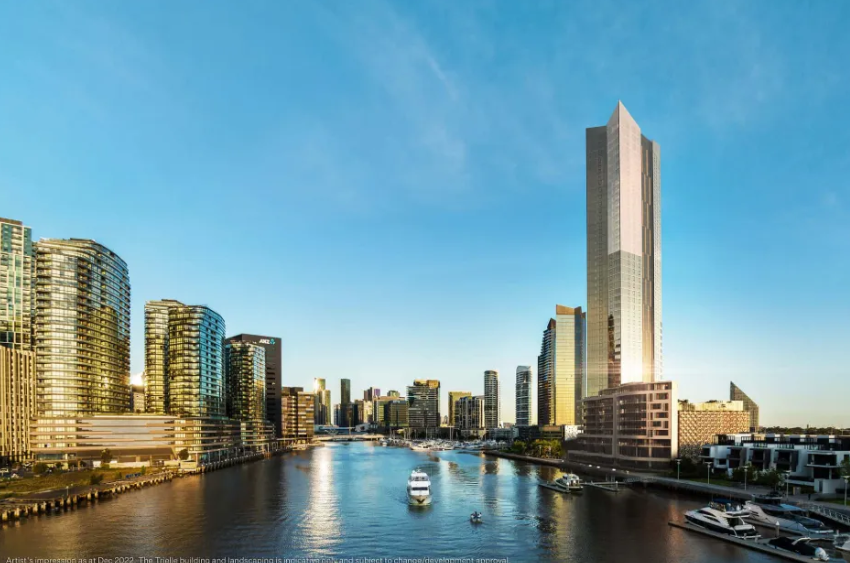
Mirvac has topped out Trielle at Melbourne’s Yarra’s Edge, with more than 70 per cent of the riverfront development sold and approximately 80 per cent of purchasers intending to make their apartment a home.
The figures, released on September 22, point to an owner-occupier audience for one of the precinct’s final residential towers. Mirvac began developing Yarra’s Edge in 2003, and its latest addition occupies one of the remaining absolute riverfront sites.
Mirvac CEO of Development Stuart Penklis said existing residents were among those moving up within the neighbourhood.
“Many purchasers already have a connection to Yarra’s Edge,” Mr Penklis said, describing buyers whose changing needs were encouraging an upgrade within the precinct.
“As one of the final residential towers within Yarra’s Edge, Trielle represents the culmination of more than two decades of creating one of Melbourne’s most established and sought-after waterfront communities,” Penklis said.
“Positioned on the Collins Street axis with absolute river frontage, Trielle offers residents a rare opportunity to enjoy sweeping views across the Yarra River, Melbourne skyline and Port Phillip Bay, while remaining seamlessly connected to the CBD. With Trielle now more than 70 per cent sold, we’re continuing to see strong demand from buyers seeking quality homes in established locations.”

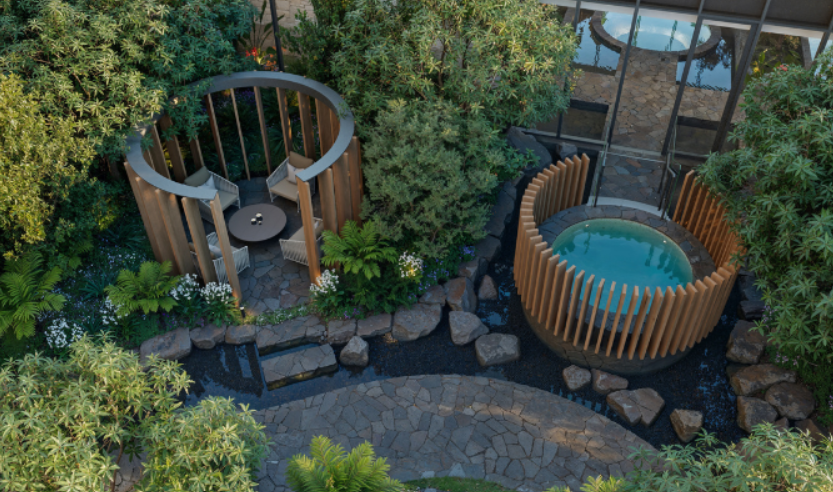
The developer also flagged a penthouse and sub-penthouse collection with larger layouts, premium finishes and broad outlooks. The planned wellness centrepiece, The Oasis, encompasses a 900-square-metre elevated urban rainforest.
Mirvac General Manager Residential Development Victoria Elysa Anderson said Trielle had resonated strongly with buyers seeking a rare lifestyle offering in Melbourne.
“Opportunities to secure a new luxury residence on a riverfront site of this calibre are incredibly rare, particularly within a community like Yarra’s Edge,” Anderson said.
“What makes Trielle unique is the combination of exceptional views, world-class residential facilities and the lifestyle that already exists around it. Residents are buying into a mature waterfront community with parks, promenades, dining, wellness and strong community connections already in place.”
The 45-level tower brings a substantial new presence to that waterfront. Its residential offering spans one-, two-, three- and four-bedroom apartments, with Signature, Prestige and Sub-Penthouse collections accommodating different household sizes. The north-facing position connects the apartments visually to the river and city beyond.
Seven storeys above the promenade, the planned Oasis combines planting and a running stream with a Scandinavian-inspired wellness club developed with spa specialist Naomi Gregory. Facilities include a 25-metre lap pool, hot magnesium pool, sauna, hydrotherapy, a gym, yoga and Pilates room, and treatment spaces.
The amenity extends beyond exercise. Residents will have access to The Biblioteca library and workspaces, ground-floor work pods, and The Salone piano lounge. A private Chef’s Table dining room offers a setting for larger gatherings, while a cinema, games room and sports lounge broaden the entertaining options. Concierge services and a dog-wash area support everyday routines.
Trielle comprises a collection of one, two, three and four-bedroom residences. Reflecting strong demand from owner occupiers, approximately 80 per cent of purchasers to date intend to live in their homes, highlighting the project’s appeal to those seeking a long-term waterfront lifestyle.
Mirvac has recently delivered The Albertine, a premium apartment development on the edge of Melbourne’s CBD, and is nearing completion of Prince & Parade in Brunswick, further strengthening its portfolio of thoughtfully designed apartment communities in some of Melbourne’s most sought-after urban locations.

Many of the most-important events have slipped from our collective memories. But their impacts live on.

A thoughtful timber-led renovation in Byron Bay has reimagined an existing house as a warm, resort-style family sanctuary grounded in natural materials.