

Older Adults Are Obsessed With These Five Tech Topics
Fitness wearables and password managers are among the hottest topics for people ages 50 and up

 5 min
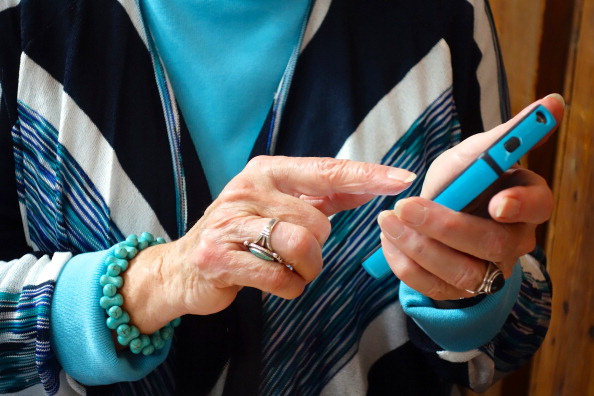
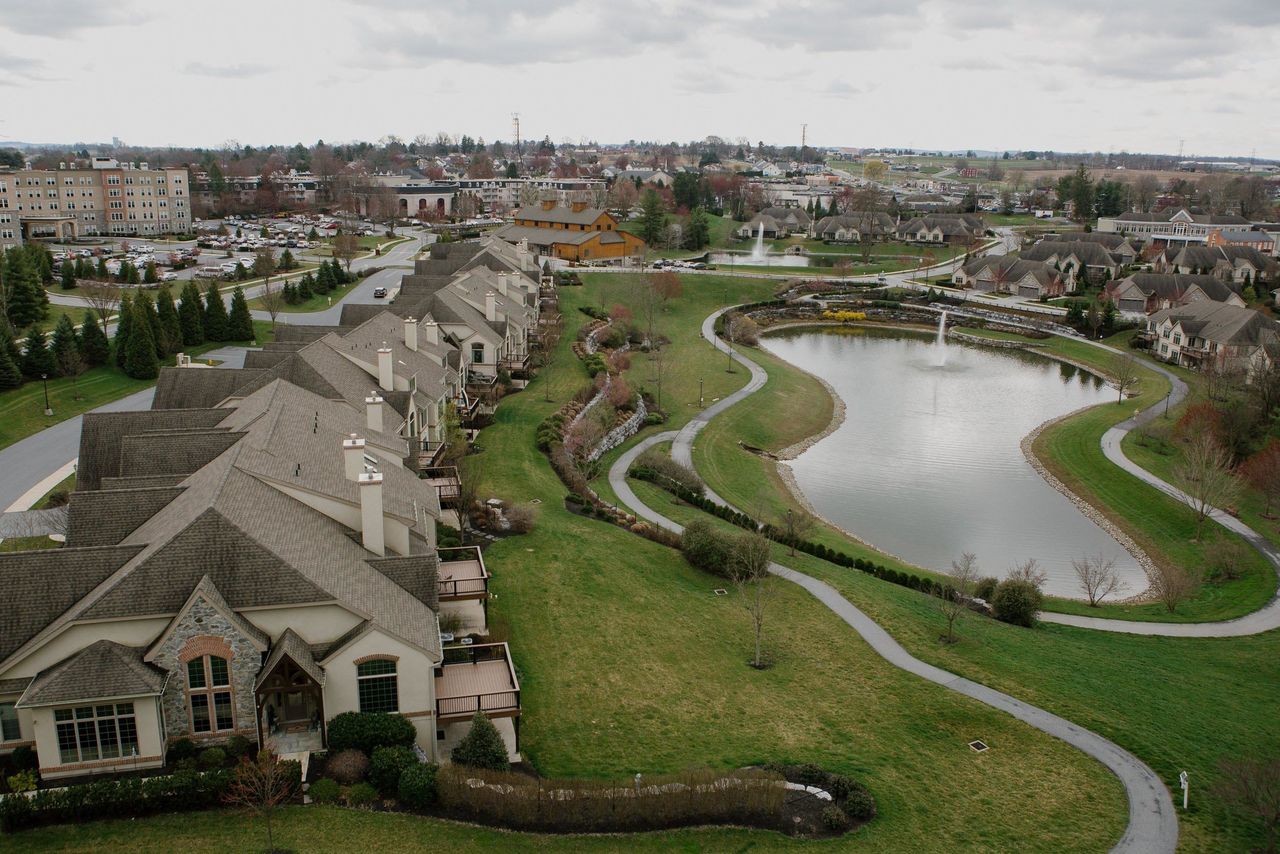
The residents of a retirement community in the heart of Amish country are proving what experts on ageing have been saying for years: Older adults are as keen on new technologies as anyone else.
Willow Valley Communities, a 2,600-resident campus in Lancaster, Pa., has a tech centre staffed by volunteers. People can drop in for tech help or get their computers fixed. It also has an active computer club and an Apple products group that offer resident-taught classes.
The challenges of the pandemic accelerated tech adoption among older adults who, initially, just needed ways to communicate with far-flung loved ones. People ages 50 and older each spent an average of $912 on technology last year, up from $394 in 2019, according to the AARP.
But barriers remain as older Americans go beyond the video call. There is a lack of training programs and a concern that products aren’t always designed for an ageing populace, the organisation says.
At Willow Valley, many of the residents are focused on technology that can keep them active but won’t open them up to scams or frauds.
“Older adults aren’t into tech for tech’s sake,” says Jeff Weiss, chief executive of Age of Majority, a consulting firm that helps companies market to older adults. “For them to want to use and adopt technology, there has to be a practical reason.”
During my conversations with ageing experts and Willow Valley residents, these five topics came up again and again:
Health wearables
Wearable devices for tracking health and fitness are the hottest technology among older adults, according to leaders at several aging-tech organisations and companies. The AARP says 28% of older Americans own a wearable and 77% of those people use it daily.
The Centers for Disease Control and Prevention says people ages 65 and older need at least 150 minutes a week of moderate to intense activity, such as brisk walking, as well as strength and balance exercises.
Trish Macvaugh, a 76-year-old Willow Valley resident, began swimming competitively three years ago. She uses her Apple Watch Series 6 to log her heart rate and more particular stats, too. There’s her “swolf” score, the number of strokes taken plus the time it takes to swim a certain length, and her “VO2 max,” the maximum amount of oxygen she takes in during intense exercise.
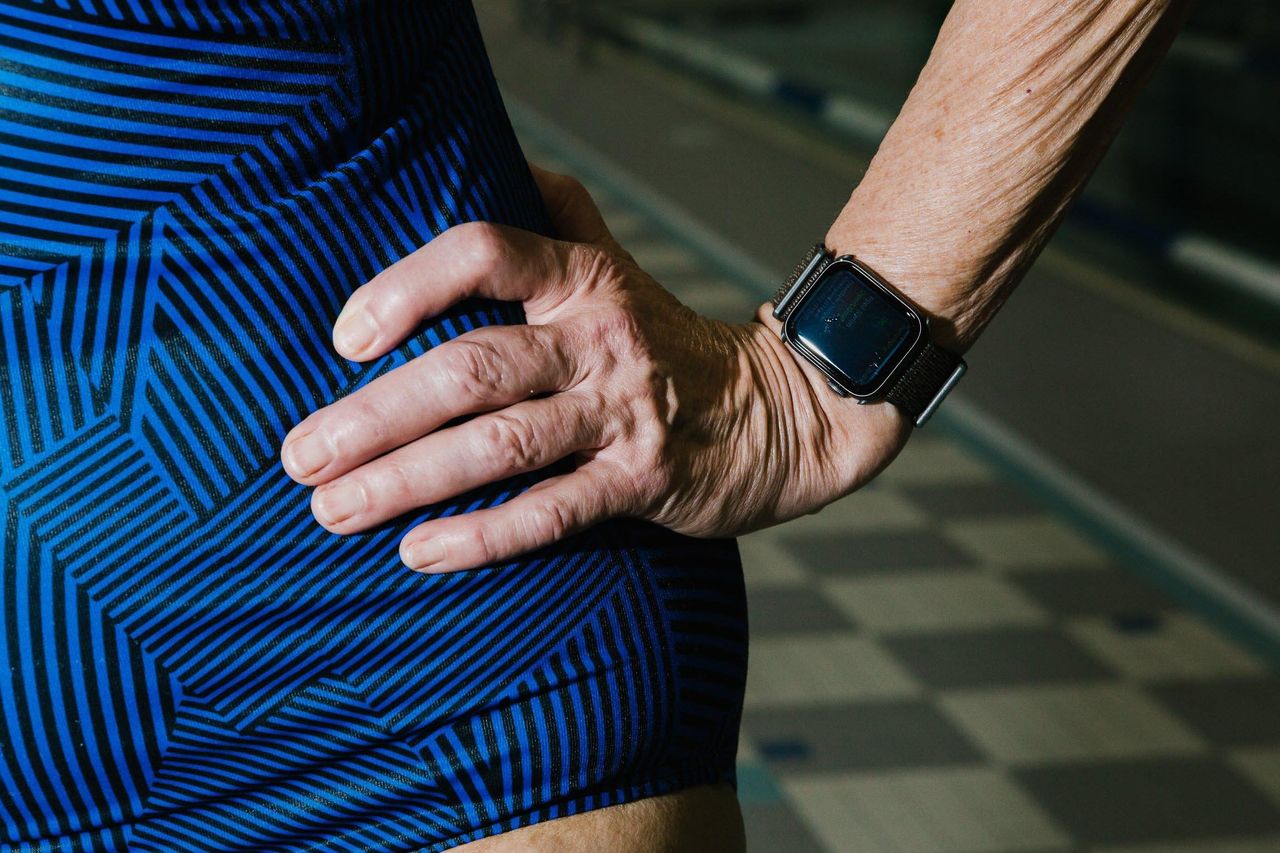
“I can compare all of that to what I was doing a month ago, and it’s really encouraging to see how much I’m improving,” says Ms. Macvaugh, who is planning to compete in her second National Senior Games this summer.
A retired professor of English and women’s studies and mother of two, she also uses her Apple Watch to track her walking steadiness, as well as her performance when lifting weights and using the elliptical machine.
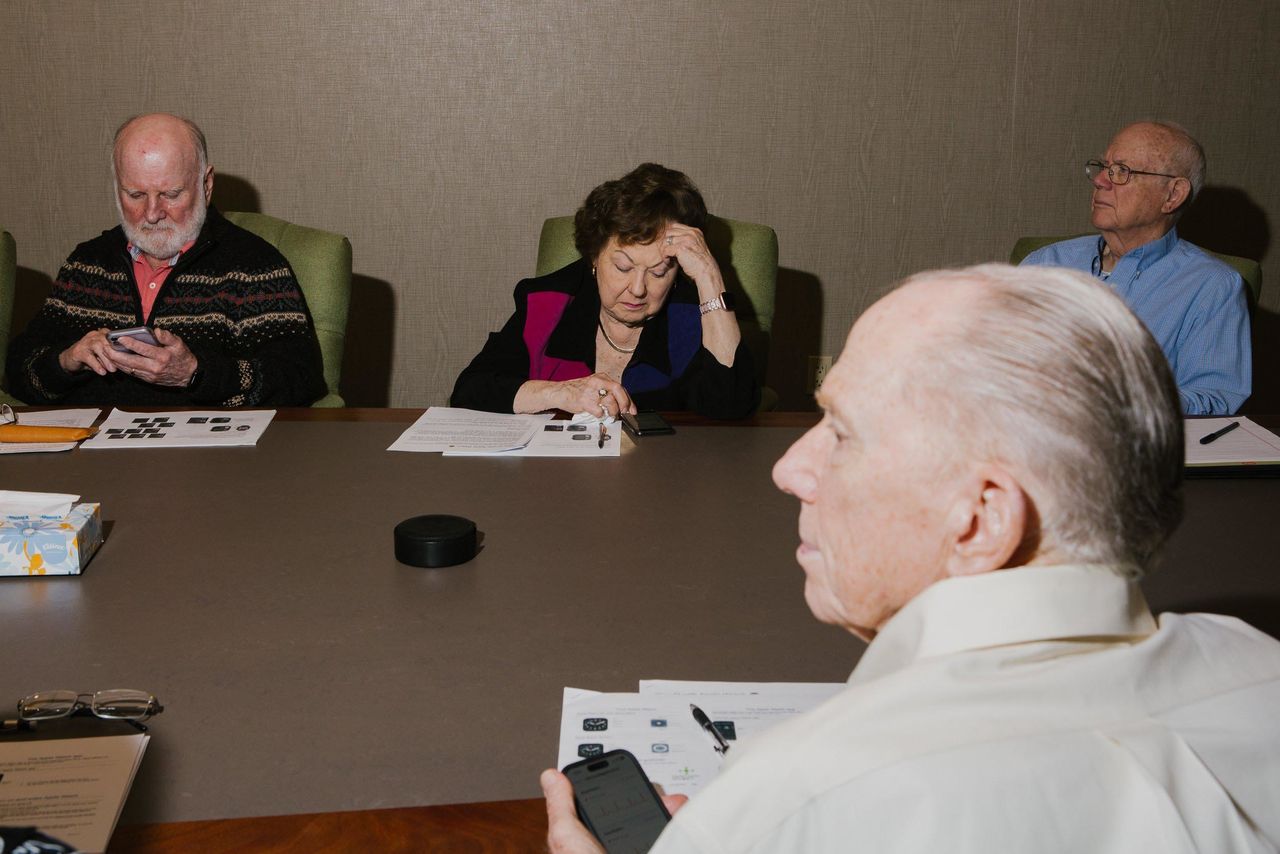
For tech advice, she turns to fellow resident Susan Culbertson, a 76-year-old retired computer-software trainer. Last fall, Ms. Culbertson created classes at Willow Valley to teach others how to use Apple products. The classes have gotten so popular, they’ve occasionally run out of seats for people in the conference room where they take place.
Using the iPhone’s Health app and tracking Apple Watch metrics—beyond just step counting—are top subjects. “People want to stay fit as long as possible,” Ms. Culbertson says.
Home assistants
Many residents at Willow Valley use voice-activated home assistants such as Amazon Echo and Google Nest Audio. They’re rising in popularity among older adults across the country, with one in three older adults owning one. Approximately 60% of the older adults who own a home assistant use it daily, the AARP says.
As with other age groups, older adults use home assistants largely to play music, ask questions, check weather or traffic and set alarms or timers.
Streaming services
Ms. Culbertson says that Willow Valley residents are very interested in streaming movies and shows and that many residents no longer watch network television. She recently taught a class on how to use Apple TV.
Older adults are fuelling the growth in video-streaming and subscribing to multiple services, including Netflix, Hulu and HBO Max.
They’re also combining their interest in streaming content with their interest in fitness. Older Adults Technology Services from AARP, a nonprofit that teaches tech to older adults, streams free fitness classes via Zoom. Its stretch classes have been wildly popular, says OATS Executive Director Tom Kamber.
Password protection
Al Williams, president of Willow Valley’s 845-member computer club, says password protection has been a hot topic among older people since news broke that the password manager LastPass was hacked.
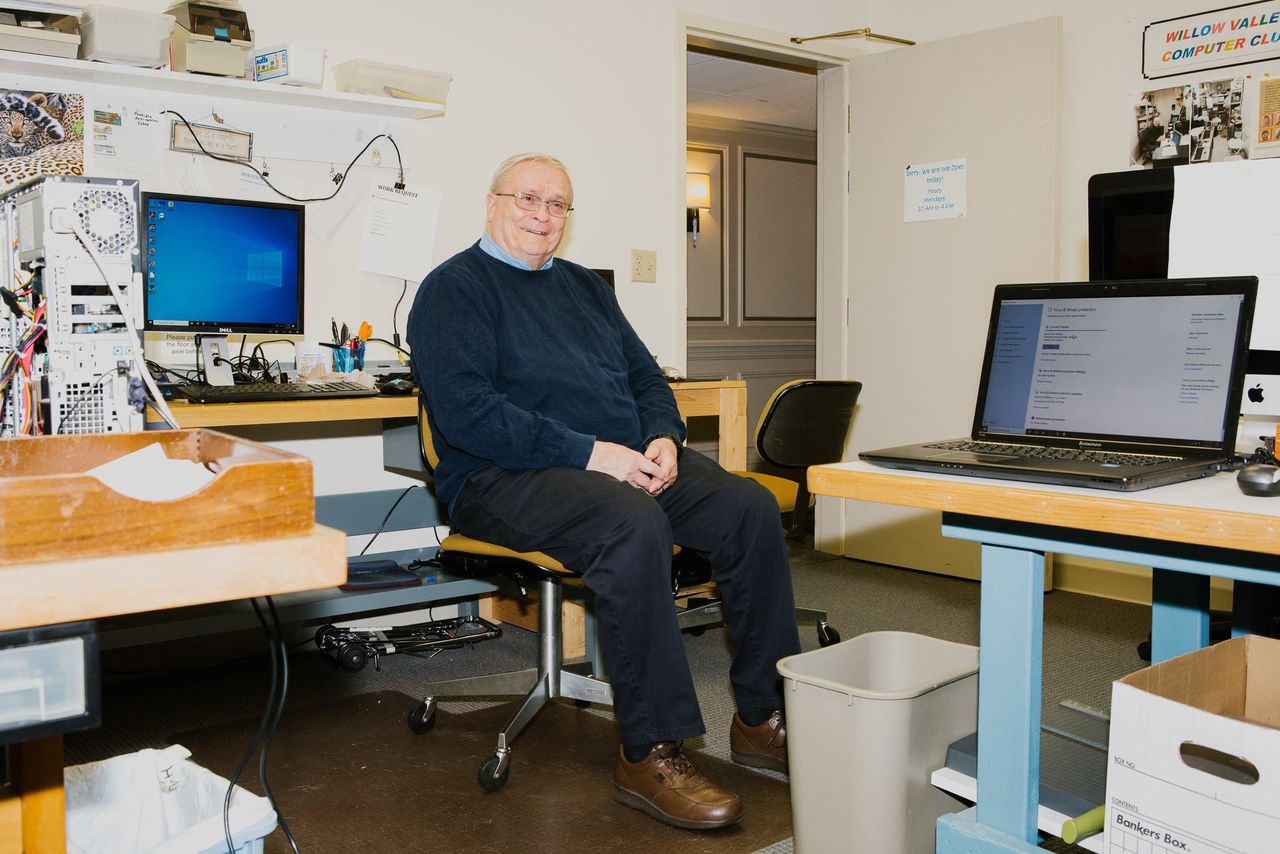
Mr. Williams, an 83-year-old retired engineer, recently gave a presentation on choosing strong passwords and using password managers. (My colleague Nicole Nguyen says physical security keys—little dongles that you plug into a USB port or tap on your phone when logging into an account—offer even more protection.)
A recent poll from Age of Majority found that only 37% of people ages 55 and older use a password manager.
Scam prevention
Older adults have fallen prey to all kinds of scams conducted online and by phone.
OATS from AARP offers free online classes for older adults who want to burnish their digital skills, including one later this month on how to protect your personal information online.
Mr. Williams says Willow Valley residents are interested in this, too. He plans to give a “Scammers and other invasive species” presentation to teach people to recognise social engineering.
Teaching tech to a span of older adults, ranging from 55 to over 90, requires a certain skill. “The main thing we have to do,” he says, “is to talk about tech in terms of solving a problem, not as a lecture.”
 Copyright 2020, Dow Jones & Company, Inc. All Rights Reserved Worldwide. LEARN MORE


From making unpopular decisions to learning when to listen, leaders from five businesses reveal what nobody prepared them for — and how running a company has challenged their expectations.
Technology and semiconductor shares fell sharply as investors questioned the debt financing the AI infrastructure boom and confronted higher rates and Chinese competition.

Elon Musk is exploring a potential merger between Tesla and SpaceX, a deal that could reshape the future of AI, robotics, autonomous vehicles and space technology. With a combined valuation potentially reaching $3.5 trillion, the move could bring Musk’s vision of an interconnected technology ecosystem closer to reality, although a deal remains uncertain.
5 min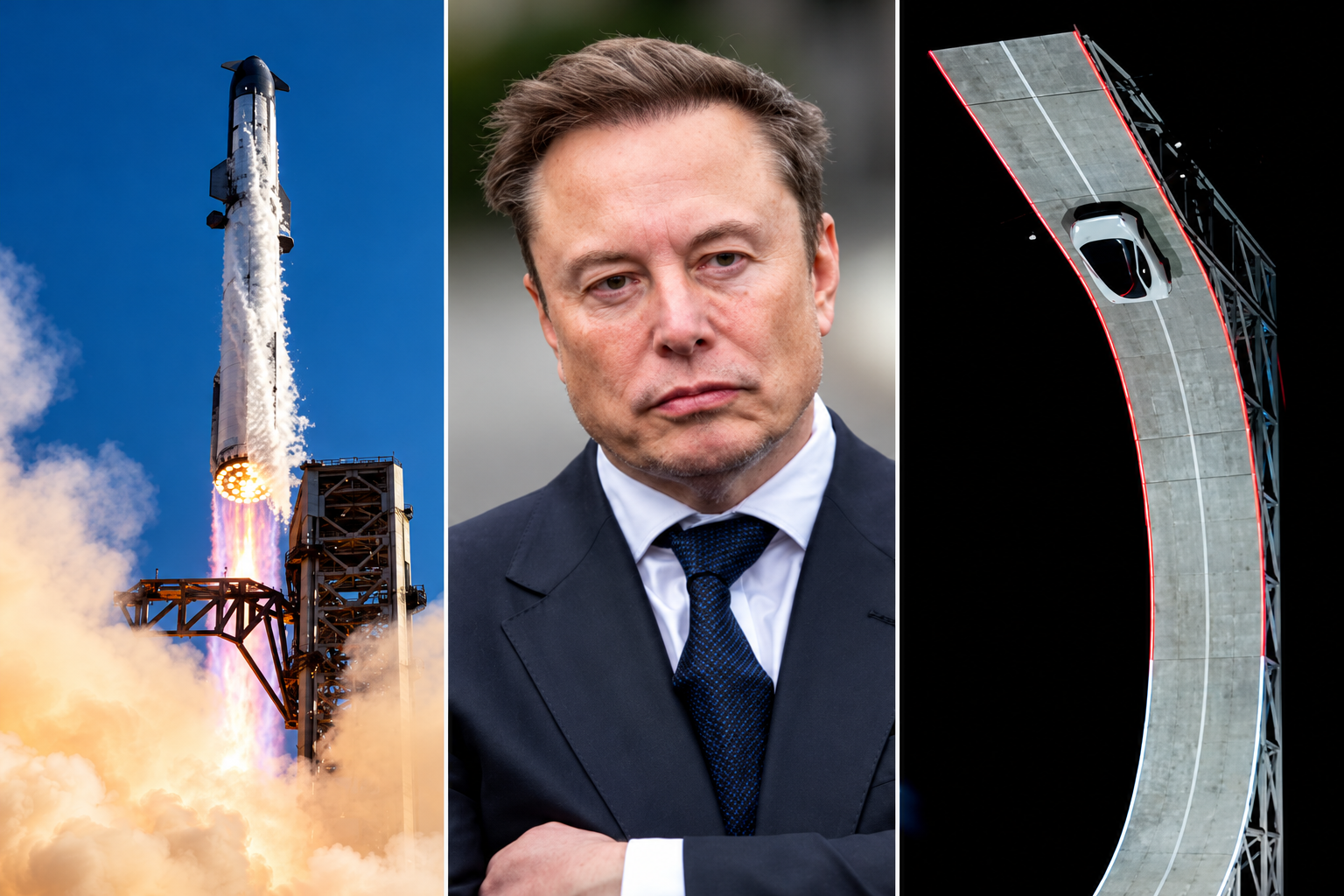
Elon Musk has engineered ties between Tesla TSLA 3.41%increase; up pointing triangle and SpaceX SPCX 7.79%increase; up pointing triangle that are hard to break, and now he wants to fuse them together permanently.
Musk has run both Tesla and SpaceX concurrently over the past two decades, using a schedule that dictated which days he spent focused on each business.
The companies have often shared resources and personnel, signaling their close ties. Last year, SpaceX looked into creating a spacesuit for Tesla’s humanoid robot Optimus, a person familiar with the matter said. Tesla last week showed off its new Roadster, a vehicle featuring SpaceX rocket thrusters that it hopes to soon bring to market.
And in recent months, Musk has repositioned both companies by expanding beyond their core operations toward a shared mission centered on artificial intelligence.
The world’s richest man on Tuesday signaled his interest in tying up SpaceX and Tesla, marking what would be the biggest corporate merger of all time. Because he serves as chief executive of SpaceX and Tesla, Musk said committees of independent directors at both companies are evaluating a possible deal, adding that a transaction might not come to fruition.
The committees will likely evaluate, with lawyers and bankers, how each company would fare in a potential deal and how a deal might best be structured. They then present their conclusions to their respective boards, who typically vote on whether to proceed.
“It’s an odd Kabuki dance where two groups of people are talking and I can’t be in the conversation,” Musk told SpaceX investors on Tuesday in response to an analyst’s question about a potential deal.
For Musk, the merger supports his vision of a world full of autonomous cars, humanoid robots and weekly rocket launches, as well as the data centers and satellites required to keep the whole thing running.
Some investors and analysts said they expect a transaction would be structured as an all-stock deal, with SpaceX potentially paying a modest premium for Tesla shares.
SpaceX, which has a market value of about $2 trillion, said it is seeing sharp growth in revenue across its businesses, which include operating data centers, launching rockets and operating satellite networks such as the internet service Starlink. Tesla is valued at about $1.5 trillion and is expanding its operations beyond its automotive and energy business. Shares in both companies traded higher following the news Tuesday.
Musk’s substantial ownership stakes in both companies, along with voting control at SpaceX, has enabled him to set the deal in motion. Analysts and investors said the deal will probably face regulatory scrutiny internationally, though some see Musk’s close relationship with the Trump administration as an asset to getting approval.
Blurred lines
The companies haven’t said which directors are on the special committees evaluating a potential deal. Several SpaceX and Tesla board members have either personal or business ties to Musk. And like Musk, venture capitalist Ira Ehrenpreis sits on both boards.
In a filing this week, Tesla outlined millions of dollars in business agreements with SpaceX and its subsidiaries last year, including $143 million in car sales to SpaceX, $3.3 million in advertising that it bought on the social-media platform X and $430 million in revenue from the sale of Megapack batteries for SpaceX’s data centers.
The companies also split the cost of resources including the use of Musk’s SpaceX jet and the bill for his personal security, which he runs through a private company.
Employees at both companies routinely move between companies to work on special projects, and some executives have dual roles, including Charles Kuehmann, vice president of materials engineering at both SpaceX and Tesla, and Ashok Elluswamy, the vice president of AI software at Tesla who runs a joint venture with SpaceX called Digital Optimus.
Over the years, Musk has launched new startups within his empire, including brain-implant company Neuralink, underground-tunnel developer the Boring Company and xAI, the AI startup that merged with SpaceX in February.
It is that AI business that Musk thinks can serve a market worth tens of trillions of dollars, justifying the need for a merger.
The business case goes like this: Tesla is developing robotaxis and robots, which it calls “physical AI.” SpaceX is working on the back end of physical AI: the data-center capacity and internet connection required for those robotaxis and robots to operate continuously.
“I don’t see what the value of Tesla is if it’s not merged with SpaceX,” said investment adviser Ross Gerber, a former Tesla bull turned critic invested in both companies. “If they don’t merge, the brains of everything that runs Tesla is owned by another company.”
On top of it all, both companies face constraints on the supply chains they need to make this world a reality, particularly when it comes to chips. To address this, Musk earlier this year announced a joint venture between Tesla, SpaceX and Intel to design and manufacture chips in Texas. “The most epic chip-building exercise by far,” he has said.
Musk at the wheel
For Musk, a merger would also solve two problems: demands on his attention and his lack of control at Tesla.
Tesla for years was Musk’s only public company, a status that came with greater scrutiny. There, Musk reports to a public board, as well as individual investors who make up around 30% of Tesla’s voting power, according to FactSet.
The question of Musk’s attention became a particular focus for investors and the board in recent years after he acquired Twitter in 2022 and launched xAI in 2023, and again in 2025 as he spent time in Washington, D.C., running the Department of Government Efficiency in the early months of President Trump’s second term.
As Tesla’s car business suffered in 2025, Musk threatened to take his AI ambitions outside the company if he wasn’t granted 25% voting control. Last November, Tesla shareholders approved a new pay package for Musk, which created a path for him to vastly expand his stake.
As of Sept. 30, Musk owned a roughly 20% stake in Tesla, according to the company’s proxy filing.
The SpaceX IPO gave Musk a different path. When SpaceX went public in June, the deal’s structure enabled him to have more than 80% voting power at the company—so much that he can’t be fired and decisions can’t be made without his support.
If SpaceX acquires Tesla, he will likely stay in control.

Porsche has revealed a one-off 911 GT2 RS that brings the extraordinary silhouette of its 935/78 “Moby Dick” racing car onto the road. Created by Porsche Sonderwunsch with Manthey, the commission began with a near-new GT2 RS. The owner requested greater performance, a Slantnose profile and a rear wing influenced by the limited 911 GT3 …
Continue reading “Porsche Builds a Road-Going “Moby Dick” From a 911 GT2 RS”
As interest rates, inflation and market sentiment fluctuate, investors are being urged to focus on data, not panic.