Australians on the move as housing affordability worsens
Analysts say more people may leave capital cities for the regions in 2024 as the housing crisis deepens
 3 min
3 min
Frustrated aspiring home buyers and renters fed up with high runaway prices in certain markets may resort to moving interstate in 2024, according to analysts. In the latest Housing Affordability Report released by ANZ and CoreLogic, analysts say housing affordability has worsened due to rising migration and interest rates on top of longer-term factors such as governments not building enough social and affordable housing to keep up with demand.
“There is no quick and easy supply response to rising rents and home values,” according to the report. “As a result, 2024 may see more internal migration of prospective first home buyers and renters to markets with relatively low price points.” ANZ and CoreLogic point to data tracking historical net internal migration trends against the current median value of dwellings. “Internal migration was higher across areas with relatively low median values at that time,” the data shows.
During the pandemic, internal migration patterns changed as more people left Sydney and Melbourne, in particular, and relocated to the regions. Being able to work from home enabled many families to move to lower-cost markets and attain a better lifestyle. Queensland – especially the Gold Coast and Sunshine Coast, along with regional NSW and Victoria — were key beneficiaries of this trend. In 2022, NSW lost 31,560 residents and Victoria lost 9,955 due to net internal migration, while Queensland gained 34,545 residents, according to the Australian Bureau of Statistics (ABS).
The ANZ/CoreLogic report also predicts that more Australians will choose to share a property to save money in today’s cost-of-living crisis. Multi-generational living among families is a rising trend among home owners, and in the rental market, there is surging demand for share houses to make the rent more affordable for individuals. This represents a reversal of pandemic trends, say the analysts.
“In addition to changing location preferences, there could also be some preference shifts around the number of people sharing a household in 2024. The pandemic period saw a notable drop in average household size from 2.55 people per household to 2.49 as of 2023. This may have reflected greater demand for space as more time was spent at home, a temporary rise in available rentals at the very start of the pandemic, and high levels of fiscal stimulus supporting incomes. However, this trend could reverse as more people take up share housing to alleviate housing costs.”
The interest rate hiking cycle is likely coming to an end, which will ease pressure on mortgage serviceability, but the analysts note that a steady or falling cash rate typically results in upward pressure on prices. “Additionally, the current drop-off in new dwelling approvals may hinder housing supply growth for some time. Ultimately, improved housing affordability in the long term is likely to depend on deliberate initiatives to increase housing supply, rather than relying on a temporary downswing in prices or cyclical reduction in interest rates.”
The report also finds that regional markets are not as affordable as they used to be following the pandemic boom. As of October, regional home values are 44 percent higher than at the start of COVID compared to capital city prices being 26 percent higher.
The report also notes a widening price gap between Sydney and Melbourne, with Melbourne the only capital city where affordability for buyers has improved over the past five years.
“More modest dwelling value increases in Melbourne, which has led to Melbourne being more affordable relative to Sydney over time, comes down to more supply of dwellings over the past 15 years,” the report states. “ABS building activity data shows there were around 850,000 dwelling completions across Victoria in the 15 years to June 2023, which is 21% higher than in NSW over the same period.”

Australian shares fell on Thursday as Wall Street weakness, rising oil and persistent rate concerns weighed on most of the market. The S&P/ASX 200 declined 0.72 per cent to 8,702. The All Ordinaries lost 0.66 per cent to finish at 8,897. Mining stocks were hit particularly hard, while real estate also dragged on the index. …
Continue reading “ASX falls 0.7 per cent as miners and property stocks retreat”

Borrowers cannot control the Reserve Bank, but they can control how exposed their household budget is to its next decision. The RBA meets on 29 September with inflation concerns still elevated and major-bank economists increasingly bringing forward their rate-rise calls. Fixed mortgage rates have also been moving, reducing the value of waiting for perfect certainty. …
Continue reading “What mortgage holders should do before the next RBA decision”

A five-bedroom Palo Alto home designed by Steven Ehrlich is listed for $44 million, making it the city’s most expensive listing. Built around a dramatic concrete spine, the home features four courtyards and a pool.
3 min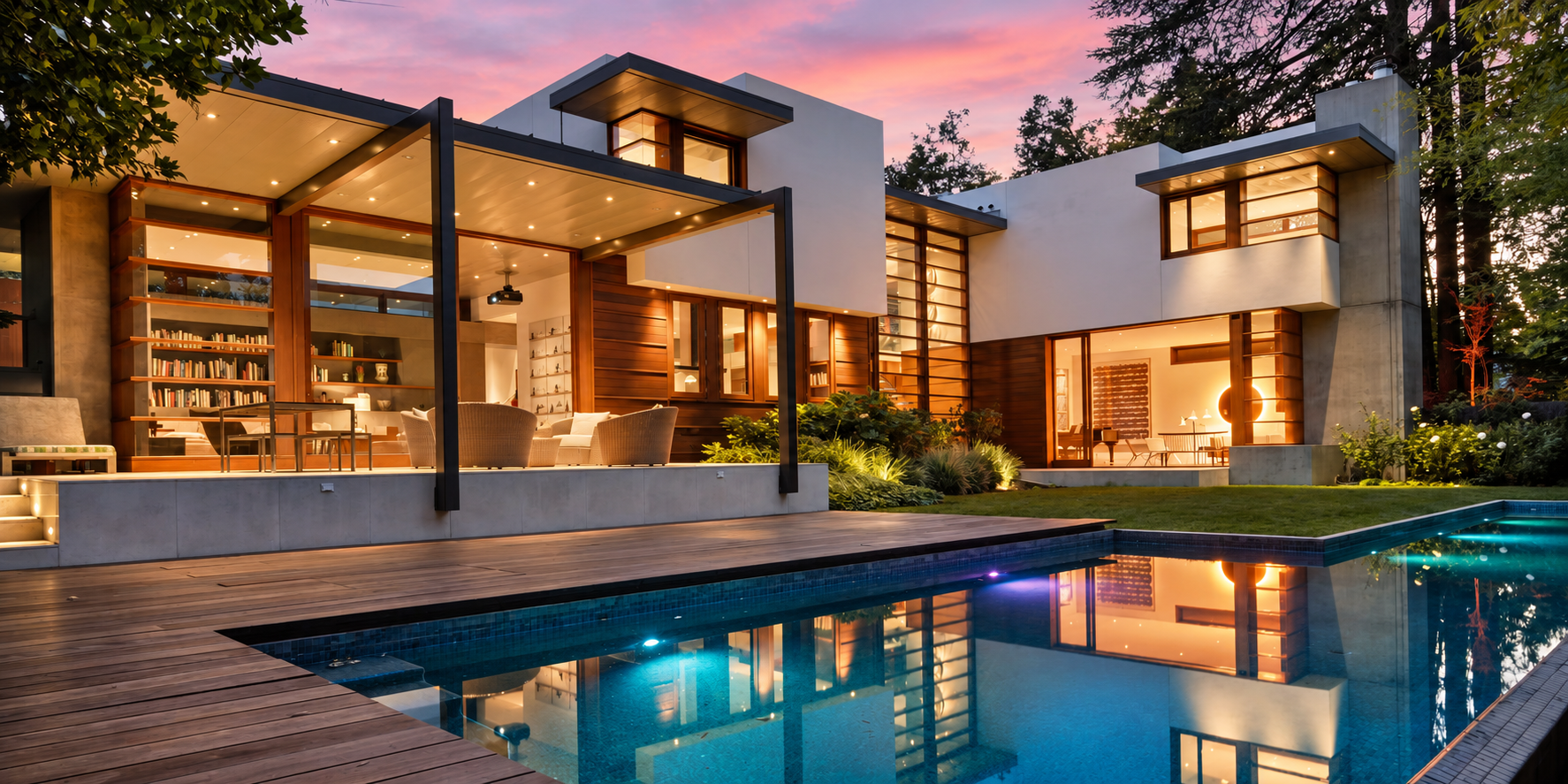
For years, tech entrepreneur Asher Waldfogel and his wife, Helyn MacLean, dreamed of building a modern house in Palo Alto, Calif.
The couple, however, worried about clashing with the Mediterranean-style architecture typically associated with their neighborhood of Old Palo Alto.
So they tapped architect Steven Ehrlich to create a design that paid homage to its surroundings with stucco, mahogany and titanium zinc cladding. They spent $20 million over several years building the house, completed in 2005.
Now looking to be closer to their adult daughter on the East Coast, they are putting the five-bedroom home on the market for $44 million—the most expensive listing in Palo Alto.
Waldfogel is an angel investor who co-founded Redback Networks, a telecommunications-equipment company. MacLean previously had a career in fundraising.
The couple purchased the roughly 0.4-acre site for $7.1 million in 2000 and demolished a circa-1930s Spanish Colonial home. The house they built pinwheels around a central staircase. It has 7,900 square feet of livable space, with four distinct courtyards and a pool.
A key feature of the home is a cast-in-place concrete wall, or spine, that is two stories high and about 80 feet long. “There’s a little bit of controlled chaos in what comes out of the form,” unlike a perfectly uniform surface, Waldfogel said. “If you want that, you do it in plastic.”
Waldfogel said he and his wife are thinking about the next phase of life now that their daughter is grown, although they have not decided where they will move. They also have a home in Sun Valley, Idaho.
“Right now we’re just trying to emotionally let go and decide what to do next,” he said.
Palo Alto, an epicenter of venture capital and tech startups in Silicon Valley, is home to some of the country’s biggest tech titans. Sales volume and prices are rising, with a median sale price of $3.5 million for the three months ending in August, up 5.8% year-over-year, according to real-estate brokerage Redfin.
Arthur Sharif of Sotheby’s International Realty—San Francisco Brokerage has the listing.
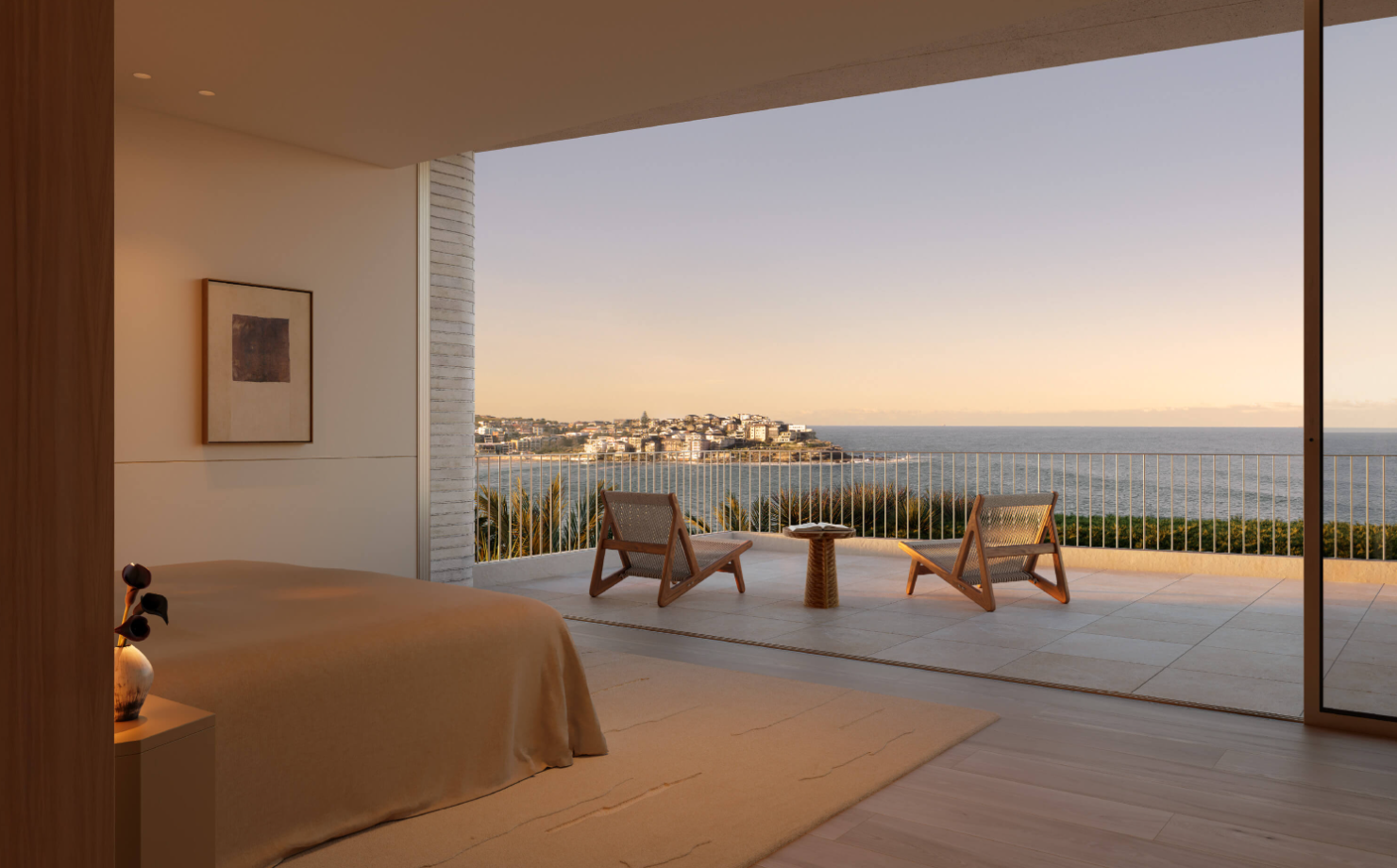
For Central Element, the start of work at Pearl represents another step in the company’s growing eastern suburbs pipeline.

Here’s how they are looking at artificial intelligence, interest rates and economic pressures.