Canada Extends Foreign Home Buyer Ban
The law that forbids non-residents from acquiring homes in most areas has affected the luxury end of urban markets, experts say

 2 min
2 min
Canada’s government has extended through the end of 2026 a controversial ban on foreign home buyers that took effect last January after years of debate.
“For years, foreign money has been coming into Canada to buy up residential real estate, increasing housing affordability concerns in cities across the country, and particularly in major urban centres,” Chrystia Freeland, Canada’s deputy prime minister and minister of finance, said in a news release yesterday. “Foreign ownership has also fuelled worries about Canadians being priced out of housing markets in cities and towns across the country.”
The Prohibition on the Purchase of Residential Property by Non-Canadians Act forbids non-citizens from buying residential property in most urban areas, though it includes a long list of exceptions. Property in many rural and “recreational” regions is exempt; most students, refugees, permanent residents, spouses of Canadian citizens, and some temporary workers in Canada may still buy homes.
While the government says the ban will help ease Canada’s severe housing crunch, critics in the real estate industry counter that the prohibition is misguided―and ineffective.
“The newly announced two-year extension is completely unnecessary, considering the fact there is no analysis, evidence or data from Statistics Canada, CMHC [Canada Mortgage and Housing Corporation] or Finance Canada, to support the government’s intended impact on housing affordability in Canada,” said Janice Myers, CEO of the Canadian Real Estate Association (CREA), in a statement Monday. “If the government decides to move forward with this baseless extension, CREA urges them to consider recommendations including exempting pre-construction financing, defining and exempting recreational property, including CUSMA [Canada-United States-Mexico Agreement] exemptions, and giving provinces input to tailor to their housing market requirements,” she added.
Don Kottick, the president and CEO of Sotheby’s International Realty Canada, agreed.
“Canada’s housing market has been driven almost entirely by the housing needs and demands of locals, as well as by population gains due to in-migration of Canadians from other cities, and through immigration,” he told Mansion Global in an email. “The extension of the foreign buyers ban will continue to have little or no impact on housing affordability and housing prices. This policy has only confused and frustrated those from other countries with crucial skills, talent and capital that Canada has been striving to attract and retain.”
The ban has also chilled luxury home sales in key markets like Toronto, said Maureen O’Neill, manager of Sotheby’s International Realty Canada in Toronto. “People who want to sell houses for more than C$5 million [US$3.92 million] can no longer rely on the buyers they used to count on globally,” she said. “It’s another extra burden on selling a house.”
That burden may soon get even heavier; Toronto’s mayor last week endorsed a 10% tax on foreign home buyers in that city, Canada’s largest. The province of Ontario already imposes its own 25% “non-resident speculation tax” on foreign buyers.
Though Canadian data on non-resident buyers is limited, the CBC last year reported that in British Columbia―one of the nation’s hottest housing markets―only about 1.1% of transactions in 2021 involved a foreign buyer, a drop of 3% in 2017. At the time, Ontario’s government told the CBC it had seen “a downward trend” in foreigners buying property since it began taxing non-resident purchases in 2017.
 Copyright 2020, Dow Jones & Company, Inc. All Rights Reserved Worldwide. LEARN MORE





From making unpopular decisions to learning when to listen, leaders from five businesses reveal what nobody prepared them for — and how running a company has challenged their expectations.

Technology and semiconductor shares fell sharply as investors questioned the debt financing the AI infrastructure boom and confronted higher rates and Chinese competition.

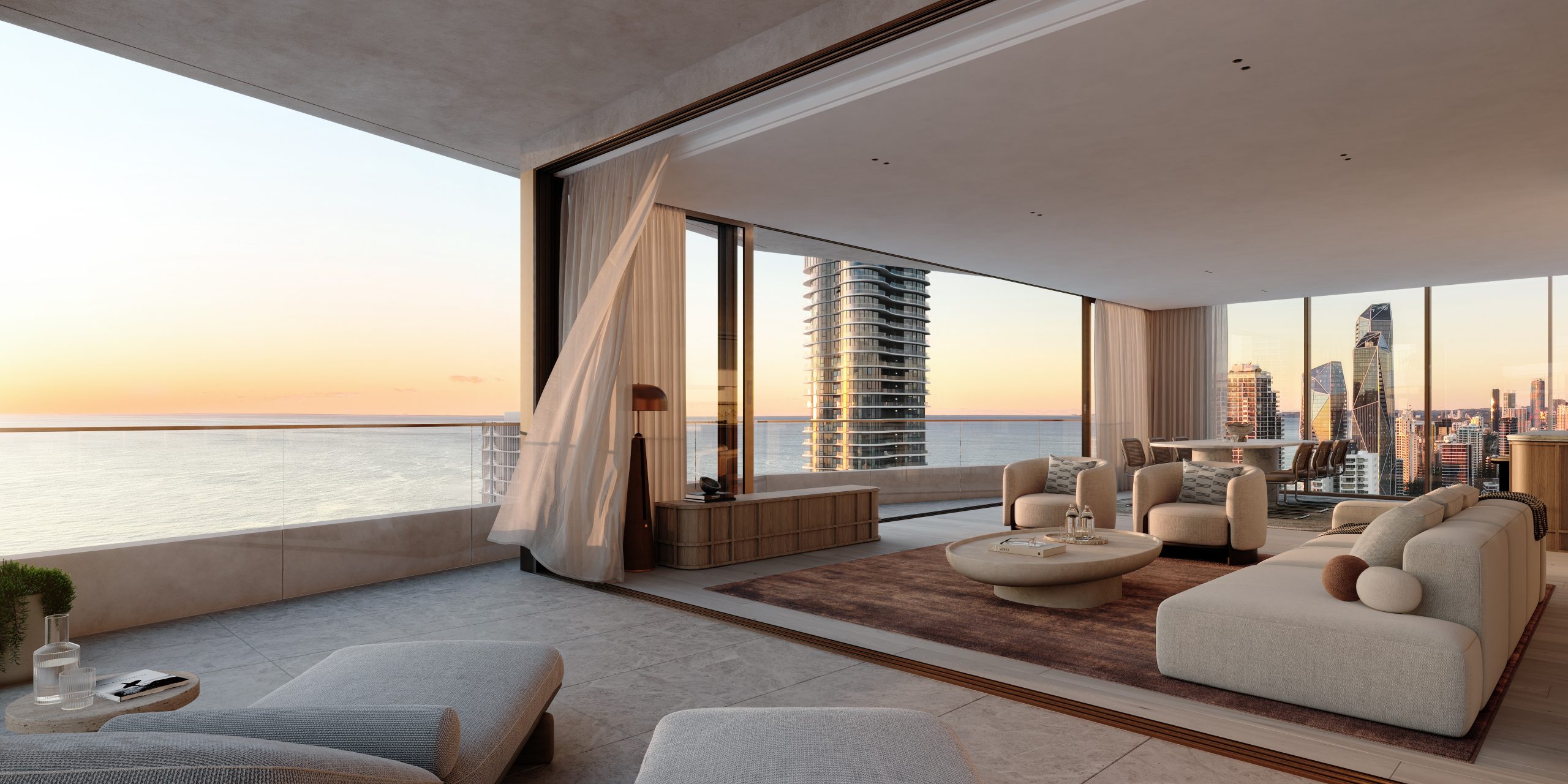
Mirvac’s 45-level Trielle has topped out at Yarra’s Edge, pairing riverfront apartments with wellness facilities, private dining and resident services.
3 min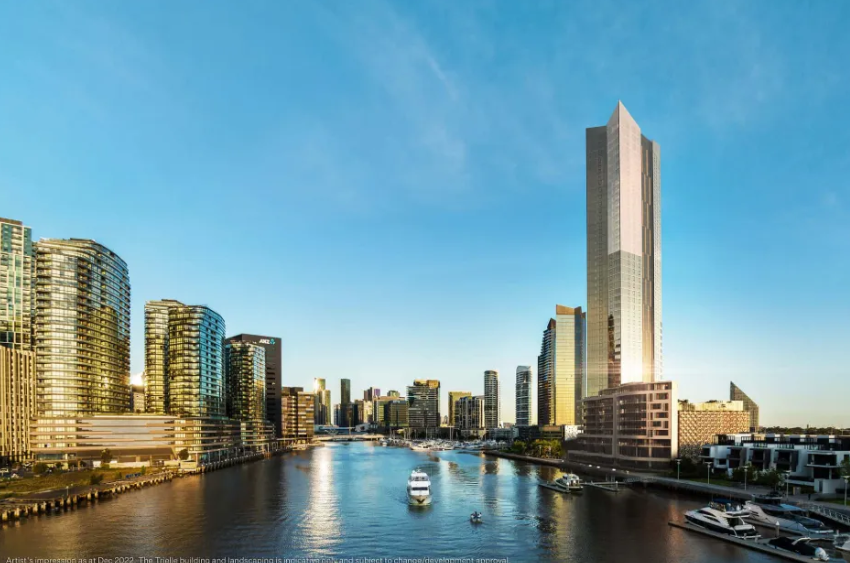
Mirvac has topped out Trielle at Melbourne’s Yarra’s Edge, with more than 70 per cent of the riverfront development sold and approximately 80 per cent of purchasers intending to make their apartment a home.
The figures, released on September 22, point to an owner-occupier audience for one of the precinct’s final residential towers. Mirvac began developing Yarra’s Edge in 2003, and its latest addition occupies one of the remaining absolute riverfront sites.
Mirvac CEO of Development Stuart Penklis said existing residents were among those moving up within the neighbourhood.
“Many purchasers already have a connection to Yarra’s Edge,” Mr Penklis said, describing buyers whose changing needs were encouraging an upgrade within the precinct.
“As one of the final residential towers within Yarra’s Edge, Trielle represents the culmination of more than two decades of creating one of Melbourne’s most established and sought-after waterfront communities,” Penklis said.
“Positioned on the Collins Street axis with absolute river frontage, Trielle offers residents a rare opportunity to enjoy sweeping views across the Yarra River, Melbourne skyline and Port Phillip Bay, while remaining seamlessly connected to the CBD. With Trielle now more than 70 per cent sold, we’re continuing to see strong demand from buyers seeking quality homes in established locations.”

The developer also flagged a penthouse and sub-penthouse collection with larger layouts, premium finishes and broad outlooks. The planned wellness centrepiece, The Oasis, encompasses a 900-square-metre elevated urban rainforest.
Mirvac General Manager Residential Development Victoria Elysa Anderson said Trielle had resonated strongly with buyers seeking a rare lifestyle offering in Melbourne.
“Opportunities to secure a new luxury residence on a riverfront site of this calibre are incredibly rare, particularly within a community like Yarra’s Edge,” Anderson said.
“What makes Trielle unique is the combination of exceptional views, world-class residential facilities and the lifestyle that already exists around it. Residents are buying into a mature waterfront community with parks, promenades, dining, wellness and strong community connections already in place.”
The 45-level tower brings a substantial new presence to that waterfront. Its residential offering spans one-, two-, three- and four-bedroom apartments, with Signature, Prestige and Sub-Penthouse collections accommodating different household sizes. The north-facing position connects the apartments visually to the river and city beyond.
Seven storeys above the promenade, the planned Oasis combines planting and a running stream with a Scandinavian-inspired wellness club developed with spa specialist Naomi Gregory. Facilities include a 25-metre lap pool, hot magnesium pool, sauna, hydrotherapy, a gym, yoga and Pilates room, and treatment spaces.

The amenity extends beyond exercise. Residents will have access to The Biblioteca library and workspaces, ground-floor work pods, and The Salone piano lounge. A private Chef’s Table dining room offers a setting for larger gatherings, while a cinema, games room and sports lounge broaden the entertaining options. Concierge services and a dog-wash area support everyday routines.
Trielle comprises a collection of one, two, three and four-bedroom residences. Reflecting strong demand from owner occupiers, approximately 80 per cent of purchasers to date intend to live in their homes, highlighting the project’s appeal to those seeking a long-term waterfront lifestyle.
Mirvac has recently delivered The Albertine, a premium apartment development on the edge of Melbourne’s CBD, and is nearing completion of Prince & Parade in Brunswick, further strengthening its portfolio of thoughtfully designed apartment communities in some of Melbourne’s most sought-after urban locations.

From Italy’s $93,000-a-night villas to a $20,000 Bowral château, a new global ranking showcases the priciest Airbnbs available in 2026.

Borrowers cannot control the Reserve Bank, but they can control how exposed their household budget is to its next decision. The RBA meets on 29 September with inflation concerns still elevated and major-bank economists increasingly bringing forward their rate-rise calls. Fixed mortgage rates have also been moving, reducing the value of waiting for perfect certainty. …
Continue reading “What mortgage holders should do before the next RBA decision”