Return to Work Is Coming for Your Pandemic-Era Home
Some sellers are putting properties on the market to be closer to the office, as companies shift back to in-person work and hybrid schedules

 3 min
3 min
After three years of living in her dream home in a Texas community called Rocky Creek Ranch, Donna Rutter is giving it up to move closer to the accounting firm she bought in the nearby city of Fort Worth.
Rutter spent most of her 30-year career as a CPA for large firms in Dallas and Fort Worth. Even before Covid, she had a work style that allowed her some flexibility. She didn’t have a central office she went to every day, but she had clients she travelled to visit on site. That schedule allowed her to build a home in Rocky Creek, about 20 minutes from downtown Fort Worth.
Then the pandemic hit and she gave up travel and went fully remote. Now, with the pandemic-influenced lifestyle waning and the importance of being in the office growing, she has been drawn back into the workplace but for different reasons. In 2021, she bought her own firm, renamed Donna R Rutter CPA PC, and started working from her desk each week.
“Small businesses weren’t really set up to work remotely,” said Rutter, 59. “My clients want me in the office. They want to meet with me.”
The only problem, she said, was that her office is near central Fort Worth, making her commute about 45 minutes each way. She decided that is too long, and is moving closer to her new business. Her roughly 11-acre ranchette is now on the market for $1.75 million.
Rutter is just one of many homeowners making the decision to relocate closer to work.
According to a September report by Redfin, about 10% of home sellers in the U.S. are looking to move because of return-to-work policies, indicating that after more than three years of remote-work policies dominating behaviour in the housing market, the in-person, 9-to-5 lifestyle is picking up some steam. Average office attendance last week was 50.5% of the pre pandemic level in February 2020 across 10 major U.S. cities, including New York and San Francisco, according to Kastle, which tracks security-badge swipes into the buildings they secure.
In May and June, Redfin’s study surveyed more than 600 people across the country who were likely to sell and move within the next year, according to chief economist Daryl Fairweather. The findings follow more than a year of announcements from major corporations—including Apple, Walt Disney, Google and Tesla—calling remote employees back to the office.
In Seattle, local real-estate agent David Palmer of Redfin said that so far this year, he has received about 10% more inquiries than in 2022 from clients looking to relocate closer to the city because their jobs require a hybrid work schedule.
“I have a buyer who moved out of the city during the pandemic. He now works for Google and, long story short, he needs to commute three days a week and it’s about a two-hour commute each way,” he said. “So he’s actively looking to buy something.” Palmer’s client didn’t respond to a request for an interview.
Google has announced it will consider office attendance records in performance reviews, The Wall Street Journal reported in June. The company began calling employees back to the office a few days a week in April 2022.
Austin-based real-estate agent Matt Holm of Compass said that since Elon Musk called his employees back to the office, he has had several clients looking to move to the city to work for, or with, Tesla, where the company is headquartered. Last year, Musk told Tesla employees they are required to spend at least 40 hours a week in company offices, The Wall Street Journal reported. He sent the same message to employees of his rocket company, Space Exploration Technologies Corp., or SpaceX, which also operates in Texas.
Finding affordable housing in Austin for some of the incoming workers can be tough, Holm said. Those who can’t, often settle down in nearby markets, such as San Antonio and Killeen, because they are cheaper, he said. In October, the median sale price in the Austin metro area was about $444,000, down 6.5% from October 2022, Redfin said.
But for the employees who can afford Austin prices, Holm added, the demand has been a welcome boost to the housing market, which has seen slowed sales due to rising interest rates. On average, homes in the Austin metro area are sitting on the market for 63 days, Redfin stated, up from 53 days during the same period in 2022.
The sentiment around relocating for in-person attendance is mixed, Palmer said, “I have some clients who don’t mind, others who are a bit peeved.”
Rutter and her husband, Steve Lewis, 61, built their roughly 4,000-square-foot ranchette in late 2019. They outfitted it with vaulted ceilings, a heated saltwater pool, a dog shower and an outdoor kitchen, among other features.
While the home they have bought closer to the city is just 20 minutes from her office, it is about 1,000 square feet smaller and sits on about a third of an acre. She declined to disclose the purchase price. “We don’t have as much room,” she said, but added she is excited for a change and a shorter commute.
The couple’s ranchette is garnering interest from potential buyers, according to their listing agent, John Giordano of Compass. Rocky Creek Ranch is a desirable area because of the steady demand for ranchettes and because of its proximity to downtown Fort Worth, he said, adding that homes there rarely come up for sale.
 Copyright 2020, Dow Jones & Company, Inc. All Rights Reserved Worldwide. LEARN MORE




From making unpopular decisions to learning when to listen, leaders from five businesses reveal what nobody prepared them for — and how running a company has challenged their expectations.

Technology and semiconductor shares fell sharply as investors questioned the debt financing the AI infrastructure boom and confronted higher rates and Chinese competition.
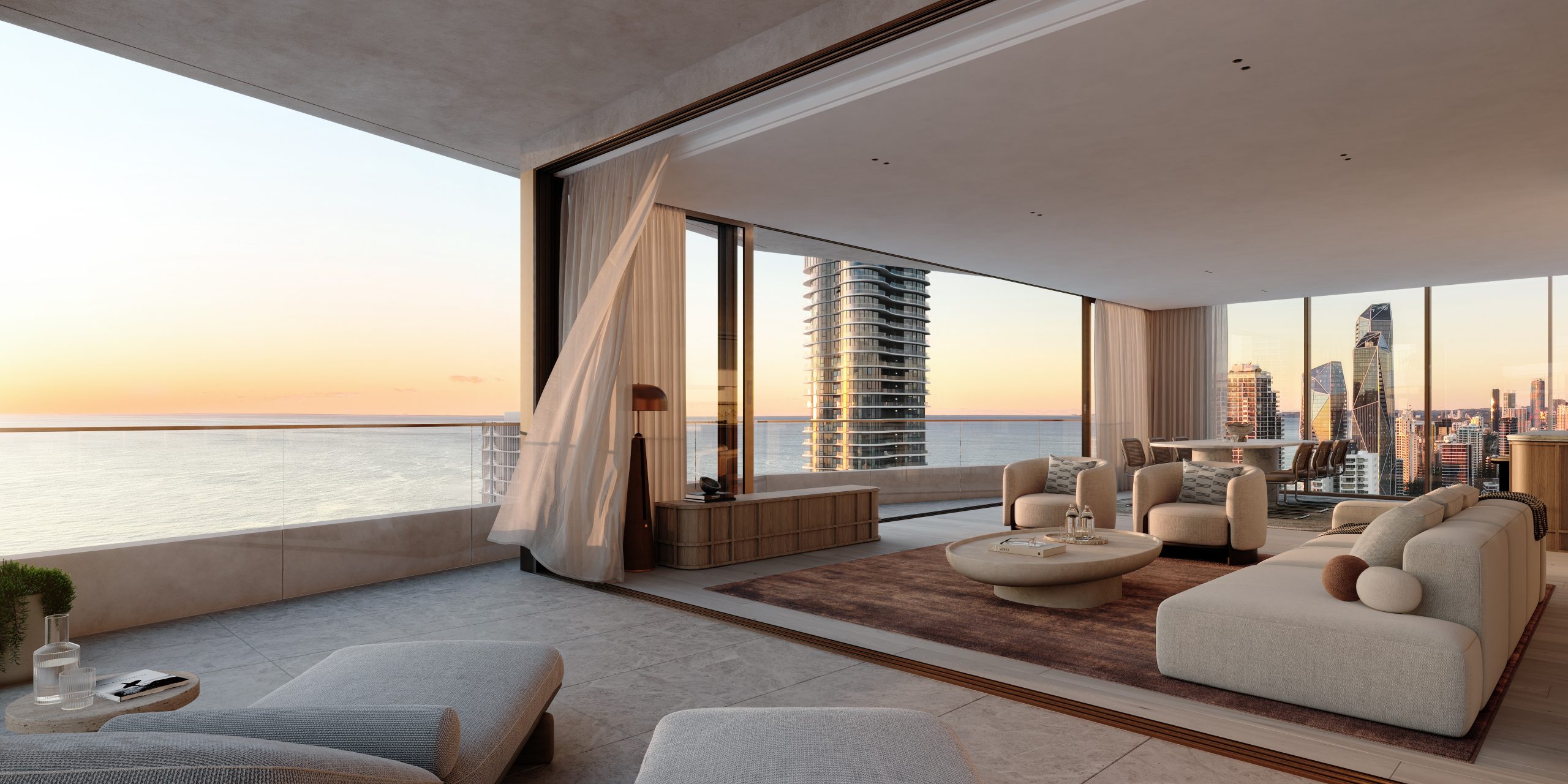
Mirvac’s 45-level Trielle has topped out at Yarra’s Edge, pairing riverfront apartments with wellness facilities, private dining and resident services.
3 min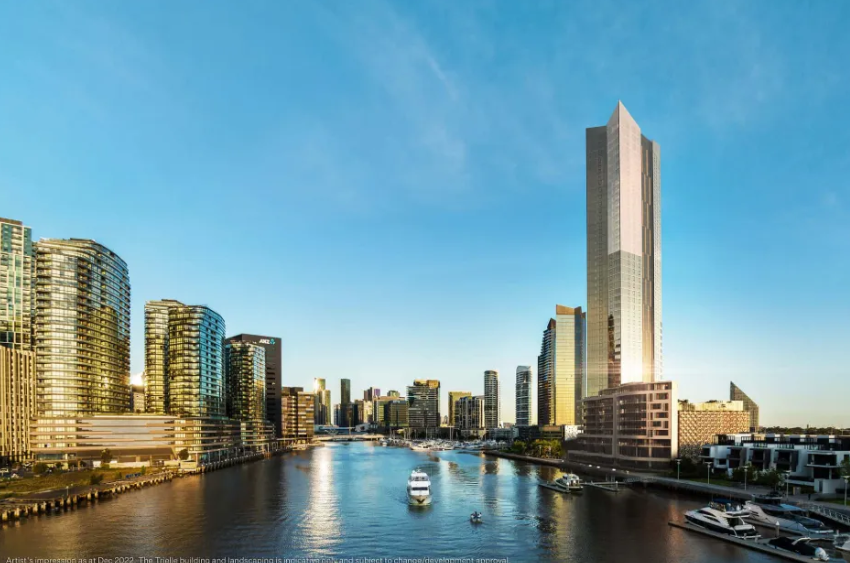
Mirvac has topped out Trielle at Melbourne’s Yarra’s Edge, with more than 70 per cent of the riverfront development sold and approximately 80 per cent of purchasers intending to make their apartment a home.
The figures, released on September 22, point to an owner-occupier audience for one of the precinct’s final residential towers. Mirvac began developing Yarra’s Edge in 2003, and its latest addition occupies one of the remaining absolute riverfront sites.
Mirvac CEO of Development Stuart Penklis said existing residents were among those moving up within the neighbourhood.
“Many purchasers already have a connection to Yarra’s Edge,” Mr Penklis said, describing buyers whose changing needs were encouraging an upgrade within the precinct.
“As one of the final residential towers within Yarra’s Edge, Trielle represents the culmination of more than two decades of creating one of Melbourne’s most established and sought-after waterfront communities,” Penklis said.
“Positioned on the Collins Street axis with absolute river frontage, Trielle offers residents a rare opportunity to enjoy sweeping views across the Yarra River, Melbourne skyline and Port Phillip Bay, while remaining seamlessly connected to the CBD. With Trielle now more than 70 per cent sold, we’re continuing to see strong demand from buyers seeking quality homes in established locations.”
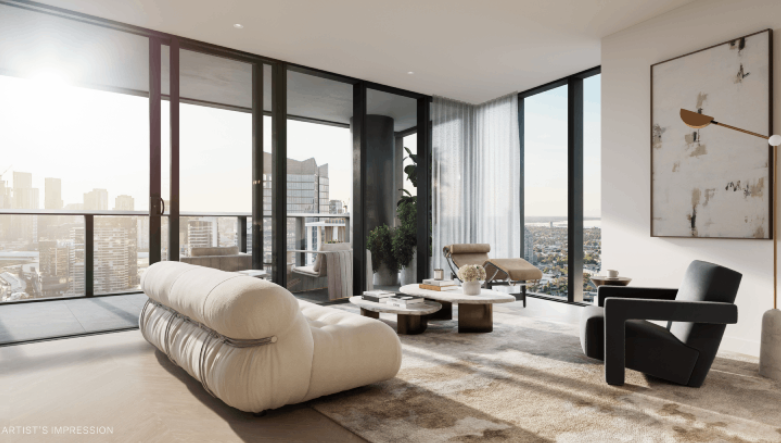
The developer also flagged a penthouse and sub-penthouse collection with larger layouts, premium finishes and broad outlooks. The planned wellness centrepiece, The Oasis, encompasses a 900-square-metre elevated urban rainforest.
Mirvac General Manager Residential Development Victoria Elysa Anderson said Trielle had resonated strongly with buyers seeking a rare lifestyle offering in Melbourne.
“Opportunities to secure a new luxury residence on a riverfront site of this calibre are incredibly rare, particularly within a community like Yarra’s Edge,” Anderson said.
“What makes Trielle unique is the combination of exceptional views, world-class residential facilities and the lifestyle that already exists around it. Residents are buying into a mature waterfront community with parks, promenades, dining, wellness and strong community connections already in place.”
The 45-level tower brings a substantial new presence to that waterfront. Its residential offering spans one-, two-, three- and four-bedroom apartments, with Signature, Prestige and Sub-Penthouse collections accommodating different household sizes. The north-facing position connects the apartments visually to the river and city beyond.
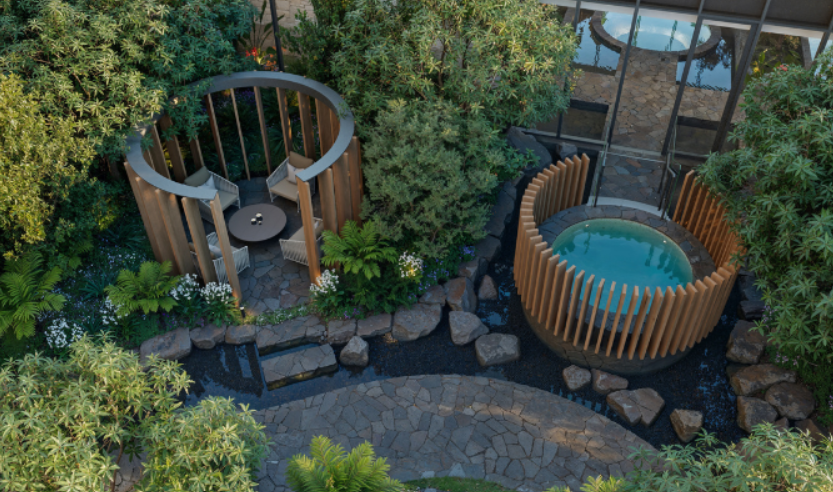
Seven storeys above the promenade, the planned Oasis combines planting and a running stream with a Scandinavian-inspired wellness club developed with spa specialist Naomi Gregory. Facilities include a 25-metre lap pool, hot magnesium pool, sauna, hydrotherapy, a gym, yoga and Pilates room, and treatment spaces.
The amenity extends beyond exercise. Residents will have access to The Biblioteca library and workspaces, ground-floor work pods, and The Salone piano lounge. A private Chef’s Table dining room offers a setting for larger gatherings, while a cinema, games room and sports lounge broaden the entertaining options. Concierge services and a dog-wash area support everyday routines.
Trielle comprises a collection of one, two, three and four-bedroom residences. Reflecting strong demand from owner occupiers, approximately 80 per cent of purchasers to date intend to live in their homes, highlighting the project’s appeal to those seeking a long-term waterfront lifestyle.
Mirvac has recently delivered The Albertine, a premium apartment development on the edge of Melbourne’s CBD, and is nearing completion of Prince & Parade in Brunswick, further strengthening its portfolio of thoughtfully designed apartment communities in some of Melbourne’s most sought-after urban locations.

Margot Robbie and Jacob Elordi star in an adaptation of the classic novel that respects the romance’s slow burn.

Many of the most-important events have slipped from our collective memories. But their impacts live on.