


Nike Reverses Course as Innovation Stalls and Rivals Gain Ground
Shoe giant stumbled as CEO John Donahoe pulled away from retailers and relied on old hits. Now it says it’s refocusing on cutting-edge footwear for athletes.

 10 min
In late February, Nike boss John Donahoe led a virtual all-hands meeting where he delivered a message to his staff: The company wasn’t performing at its best and he held himself accountable.
Two weeks earlier, Nike had announced it would lay off more than 1,600 employees .
Now, as the CEO spoke at the meeting, critical comments started to fill the chat window on the Zoom call while more than 20,000 employees watched.
“Accountability: I do not think that word means what you think it means,” an employee wrote. “If this is cost cutting, how about a CEO salary cut?” another wrote. Soon a cascade of laughing emojis filled the screen.
Some colleagues warned others that their posts weren’t anonymous and the chat might be monitored. The attacks went on for several minutes. “I hope Phil is watching and reading this,” an employee wrote, referencing the retired Nike co-founder Phil Knight .
The virtual protest illustrated the depths of the dissatisfaction within the sneaker giant and concern for its strategy. “How did we actually get here?” wrote one product manager.
Since the pandemic, Nike has lost ground in its critical running category while it focused on pumping out old hits and preparing for an e-commerce revolution that never came. The moves, current and former employees say, have eroded a culture of innovation and edginess that made Nike one of the world’s best-known brands.
Donahoe had told The Wall Street Journal in 2020 that his No. 1 priority when taking over the company was “don’t screw it up.” Four years later, the company is unwinding key elements of the CEO’s strategy that have backfired as a growing number of upstarts nip at its heels.
Among the reversals: As Covid raged and more shopping moved online, Nike cut ties with longtime retail partners such as DSW and Urban Outfitters and tried selling more merchandise directly to consumers. It is now asking some of those stores for help clearing out its overstuffed shelves and warehouses.
“I would say we got some things right and some things wrong,” Donahoe said Thursday, in an interview at Nike’s Beaverton, Ore., headquarters.
Losing its roots
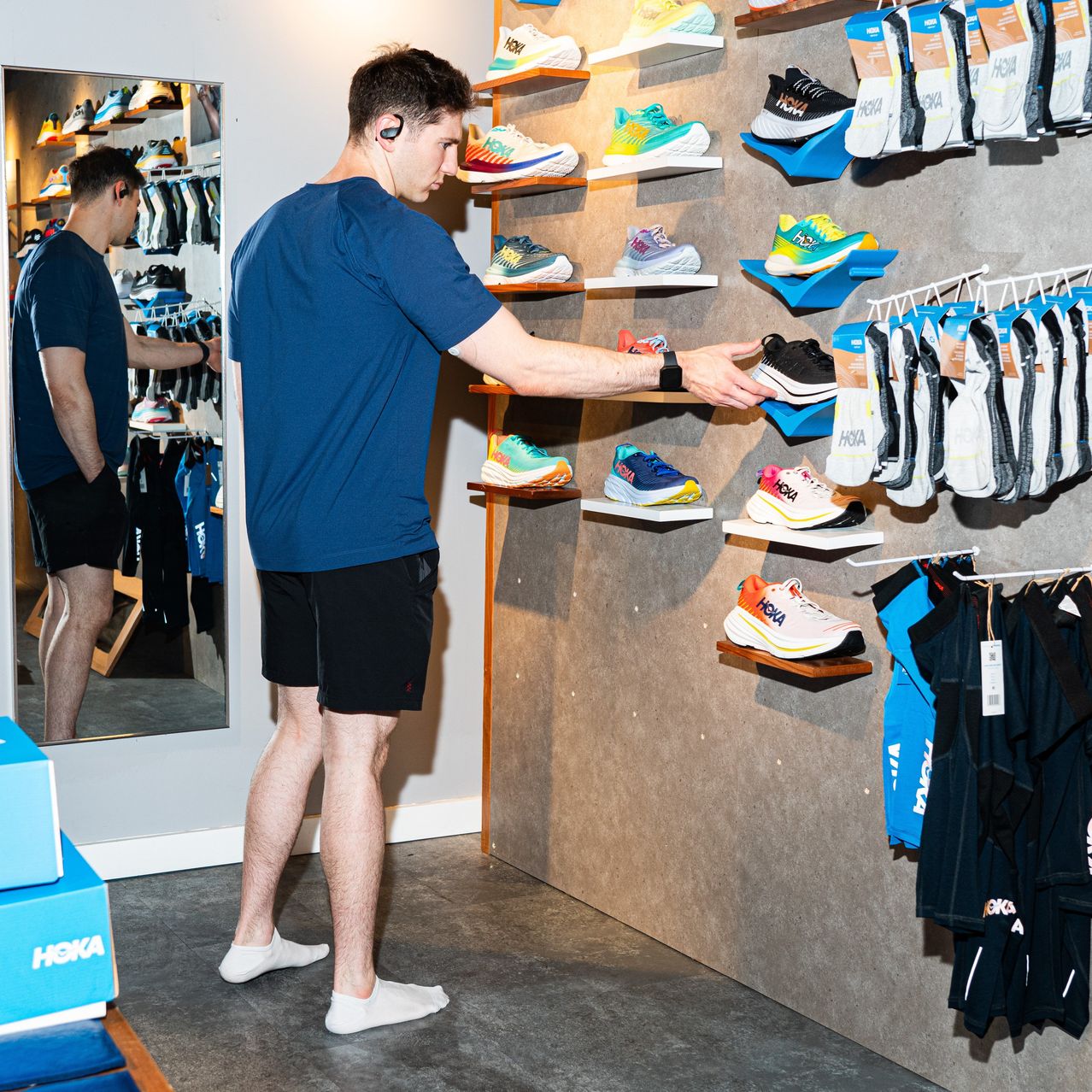
The strategic missteps have animated a debate inside the company about its identity. In its zeal to boost digital sales, some current and former employees say, Nike veered from its roots as a maker of cutting-edge footwear for serious athletes. It has opened itself to competition from newcomers such as On and Hoka, which have borrowed from the playbook that fuelled Nike’s rise—including focusing on sport over lifestyle, and taking risks on innovation.
Nike’s once torrid growth has stalled . Sales for the quarter ended Feb. 29 were flat compared with a year earlier, and shares in the company have declined 24% over the past year, compared with a 19% gain in the S&P 500.

Donahoe in the interview acknowledged the brand lost its “sharp edge” in sports and needed to boost its “disruptive innovation pipeline.” The CEO said the brand’s marketing got fragmented and that with people going back to bricks-and-mortar stores, it was clear Nike needed to invest in its retail partners.
Nike executives said in interviews that the company became too cautious after the pandemic and overly reliant on older products that were reliable sellers. They said the company has made significant changes in recent months to refocus it on putting out cutting-edge footwear.
“We were serving consumers what they know and love,” said John Hoke , Nike’s recently named chief innovation officer. “The job is to of course do that but also to show them something new, take them someplace new.”
Donahoe said Nike is going through a period of adversity and layoffs that has created uncertainty, but that the company will get through it. “Our employees have been through a lot,” he said. “Nike is actually at its best, like a great sports team, when our backs are against the wall.”
Knight, who is chairman emeritus of the board and the company’s largest shareholder, said in a statement that Donahoe has his “unwavering support.”
Donahoe said employees’ responses to the all-hands meeting reflected one of Nike’s biggest strengths: how much its staff cares about the company. “We welcome and encourage that,” Donahoe said.
Shift into digital
Donahoe took over Nike just before the pandemic, at a delicate time. Though he inherited a market leader and one of the world’s best-known brands, Nike was seeking a refresh after it dealt with complaints about its workplace culture that led to a management shake-up .
The Evanston, Ill., native had been CEO of eBay , where he doubled the e-commerce platform’s revenue during a seven-year stint that ended in 2015. After a sabbatical—during which he says he had a life-altering experience at a 10-day Buddhist silent meditation retreat—Donahoe went on to run cloud-computing company ServiceNow .
When he took the helm of Nike in early 2020, his marching orders from Mark Parker , his predecessor and current executive chairman, and Knight were clear. He was to turn the world’s biggest shoe maker into a tech company more directly connected to consumers through its own apps, which in turn collect valuable data from shoppers.
Parker said when he stepped down that Donahoe was the right candidate to lead Nike’s digital transformation.
Donahoe was just the fourth CEO in the company’s more than 50-year history. The only other outsider to get the job said he was ousted in 2006 after a short stint because he focused too much on the numbers .
Donahoe started out with a 100-day global listening tour that was cut short after a month when the pandemic hit.
Covid lockdowns fuelled a surge in online shopping. Digital channels accounted for 30% of Nike’s sales in May 2020, about three years ahead of schedule.
Donahoe saw it as an acceleration of an inevitable shift and adjusted Nike’s plans accordingly. A few months in, he redoubled the company’s bet that it could make more money by selling products directly to consumers through its stores and digital channels. He said he believed digital sales would reach 50% of the business, and Nike should transform faster to define the marketplace of the future. It was time to act.
By late 2020, Nike dropped about a third of its sales partners and sold less merchandise to clients such as Foot Locker , DSW and Macy’s . There had been a plan to phase out wholesale clients since 2017, but with digital sales growing quickly, Donahoe said there was a need for urgency.
Executives were divided over whether Nike’s own stores, which include both factory outlets and specialty shops selling higher-priced new releases, could fill the sales void left by the retailers the company was cutting out.
In meetings, finance chief Matt Friend and Nike president Heidi O’Neill supported the aggressive exit from retail that Donahoe was pushing, while others favored a slower transition, people familiar with the matter said.
Some executives felt the specialty stores in particular worked better as marketing tools and that cutting off so many retailers so fast would backfire, the people said. Donahoe and his allies prevailed.
Nike teams were tasked to come up with a new global supply-chain process. Selling directly to consumers increased the company’s liabilities, including by shifting storage and shipping costs from wholesalers to Nike. The company would also absorb the losses from discounts if the merchandise didn’t sell quickly and inventory piled up.
One of the casualties of Donahoe’s 2020 transformation was a multibillion-dollar operation dedicated to developing footwear sold for under $100. The company deprioritised more-affordable footwear that usually sold to the sales partners that Nike was leaving behind. The move left Nike skewed toward higher-priced shoes.
The first evidence of cracks in Nike’s new approach appeared early last year when Foot Locker Chief Executive Mary Dillon said during an earnings call the brand had reversed course and was sending the retailer a wider assortment of Nike products. By the summer, Macy’s and DSW were saying the same thing.
The message was clear: Nike needed help selling merchandise.

Nike veterans said cutting off wholesale clients was one of the biggest mistakes the company has ever made. After digital sales hit the 30% of the total mark early in the pandemic, they dropped back, and haven’t reached that level since—let alone the 50% target Donahoe had foreseen.
Donahoe said in the interview the goal at the time was to lean more on specific partners, such as Dick’s Sporting Goods and JD Sports , which he considers to be more aligned with Nike, rather than make a dramatic shift in strategy. Nike deprioritised making lower-priced shoes because of supply-chain disruptions during the pandemic, but it is now making more of those products, he said.
“I don’t see it as a reversal of the strategy,” Donahoe said of the return to more retail chains. “I see it as an adjustment.”
Rising competition
Competitors have been using the sneaker giant’s playbook at its expense. Smaller brands like On, Hoka and New Balance have captured significant pieces of the market for both hard-core and everyday runners—and their popularity is spreading to the mainstream.
Often quoting Knight, the Nike co-founder, former employees said the principle always was to first capture the market for hard-core athletes with innovative performance gear, and the casual consumer would follow.
In early February, Hoka owner Deckers Outdoor tapped Nike alums to take over both the parent company and the shoe brand. Hoka had $1.4 billion in sales for the year through March 2023, compared with about $352 million three years earlier.
Hoka didn’t respond to requests for comment.
“When you’re the biggest, there’s always going to be people coming after you,” Donahoe said. Competitors give Nike an incentive to try to understand what consumers want and to figure out how to come up with something bold and different, he said.
Nike still dwarfs its competition . During Donahoe’s tenure, Nike sales have grown 31% to $51 billion in 2023. That is more than double the results of Adidas, its closest competitor by far. New Balance reported sales reached $6.5 billion last year, and upstart On almost hit the $2 billion mark.
The race to hit revenue targets came at a cost for Nike. Executives turned to the brand’s lucrative franchises, including Air Jordan and Dunk, and ramped up the releases. The strategy diluted the exclusivity prized by die-hard Nike sneaker shoppers.
Donahoe said in the interview that Nike ramped up production to meet demand on its SNKRS app, which fans use to buy the latest limited releases. In early 2021, Nike was meeting less than 5% of the demand for some releases on the app and consumers were frustrated, Donahoe said, adding the goal is to meet something closer to 20% of demand for the exclusive styles.
Now, sneaker resellers say they have seen release after release of Nike’s limited-edition kicks that don’t sell out on the SNKRS app, and that in the secondary market—a space that the brand closely monitors —prices are tanking.
Nike executives in March said they would pull back on franchise releases.
Donahoe said “franchise management has always been something Nike has done.”
Nike’s digital sales, a figure that includes direct and partner e-commerce sales, declined for the quarter ended Feb. 29. Friend, the finance chief, told analysts in March that Nike expects total sales to decline at least until the end of this year.
Struggle for innovation
The pursuit of sales growth from limited-edition sneaker releases led Nike to neglect its running category, long considered the core product of the company, former employees said.
This month in Paris, Nike unveiled its new product line for the Olympics, including running shoes with a new cushioning system that uses the company’s Air technology.
In interviews at the event, executives said the company had become somewhat risk-averse during the pandemic, when working remotely stifled creativity. Martin Lotti, chief design officer, said the company had spent too much time looking to its past.

“If you drive a car just by looking in the rear view mirror, that’s not a good thing,” Lotti said. “The bigger opportunity is the windshield.”
Current and former Nike executives believe the future of the company is in its app ecosystem , like the Nike Training and Running Club or its SNKRS app, and the data it can harness from them to help design and sell products. Inside the company, leaders have long tried to draw comparisons to Apple when talking about Nike’s innovation and design culture.
The sneaker giant has been acquiring smaller data analytics startups for at least a decade. Two years ago, it also bet on the NFT craze .
One of Nike’s biggest tech investments is a multibillion-dollar process to migrate multiple software programs into one single system. The new platform, known as S/4HANA, is still not operational and is three years behind schedule. The software is designed to help day-to-day operations, such as procurement and inventory management, and speed up digital sales.
As part of its accelerated focus on digital sales, Nike hired about 3,500 people to join what the company calls its global technology group, which includes consumer insights and data analytics. Executives at the time said they were investing in “demand sensing,” “insight gathering” and a new inventory system.
Former Nike employees with knowledge of the consumer insights strategy said executives misinterpreted the data in ways that overestimated demand for retro franchises.
During February’s round of layoffs executives trimmed layers of management across the company’s insights and analytics teams. A large technology innovation team, tasked with developing software to implement Apple’s new Vision Pro augmented reality system in day-to-day design tasks, and a separate artificial intelligence team were also eliminated.
Executives at Nike say it is entering a “supercycle” of innovation and that the new Air line of products enhances athlete performance.
At the Olympics preview event this month, the company took over the historic Palais Brongniart in central Paris with a three-day event to unveil its new Air line. Guests wandered through a museum-like, conveyor-belt installation highlighting Nike’s product evolutions and research and development programs. Athletes including runners Sha’Carri Richardson and Eliud Kipchoge modeled the new gear. Retired tennis great Serena Williams narrated the company’s lavish introduction video before appearing on stage.
Outside, 30-foot orange statues of Nike-sponsored athletes including LeBron James, Kylian Mbappé and Victor Wembanyama stood guard.
Donahoe’s relationship with Knight goes back to the early 1990s, when he was a Bain consultant on Nike projects. He joined the Nike board in 2014 and is one of the directors of an entity Knight created called Swoosh LLC, which holds roughly $22 billion worth of Nike shares and controls a majority of Nike’s board seats. Donahoe calls Knight his “greatest hero in business.”
The current CEO said he meets with his predecessor, Parker, every week.
Donahoe said that he and Parker share an approach to management he calls “servant leadership” that was embodied by some of his sports heroes, including basketball coaches Phil Jackson, John Thompson, Mike Krzyzewski and Tara VanDerveer.
“It’s never been about me. It’s about your players. And are you doing everything you can to allow your players to make the adjustments to win? And when you have a win it’s about the players and when you have a loss you say it’s on me, right?,” he said. “And that’s what I’ve always tried to embody, including during this period of time.”
This week, Donahoe is facing another test: the company is notifying several hundred more workers whose jobs are being cut.
 Copyright 2020, Dow Jones & Company, Inc. All Rights Reserved Worldwide. LEARN MORE



Dutch studio Vripack took cues from a Shirley Temple song for Lollipop, a 37.4-metre Moonen superyacht built for long-range cruising.

A Sydney couple has paid $15.5 million for the Grand Penthouse at Marquee’s $285 million La Belle Residences beachfront development which is nearing completion at Palm Beach, eclipsing the record for an off-the-plan apartment sale on the southern Gold Coast. The sprawling single level 640 sqm beachfront residence, with sweeping views of the Gold Coast …
Continue reading “$15.5m La Belle Penthouse eclipses southern Gold Coast record”

The ASX 200 rose 1.28 per cent in the week ending 30 October as miners rallied, consumer stocks fell and rate-rise expectations climbed
6 min
The Australian sharemarket rose during four of five sessions in the week ending 30 October, but the headline gain concealed a sharp divide between recovering miners, rate-sensitive property stocks and retailers hit by inflation and weaker trading updates.
The Australian sharemarket finished October with a positive week, although the route higher was anything but uniform.
The S&P/ASX 200 closed Friday 30 October at 8,908.1, gaining 112.9 points, or 1.28 per cent, from the previous Friday’s close of 8,795.2.
The All Ordinaries advanced 1.34 per cent to 9,025, while the more concentrated S&P/ASX 20 gained 1.11 per cent.
The benchmark rose during four of the week’s five sessions. It added 0.17 per cent on Monday and 0.46 per cent on Tuesday, before slipping 0.03 per cent on Wednesday. It recovered 0.50 per cent on Thursday and gained another 0.18 per cent on Friday.
The index briefly reached 8,933.3 but again failed to establish itself above the psychologically important 9,000-point mark.
The week’s central tension was between a resources recovery and a less forgiving domestic interest-rate outlook.
Materials gained 4.06 per cent, reclaiming part of the previous week’s heavy fall. Australian real estate investment trusts rose 3.77 per cent, financials gained 1.05 per cent and energy advanced 1.39 per cent.
At the other end of the market, consumer staples fell 5.13 per cent and consumer discretionary shares lost 2.35 per cent. Utilities declined 0.73 per cent and communication services eased 0.68 per cent.
Inflation changes the conversation
Australia’s September inflation data was the week’s pivotal domestic release.
Annual inflation of 4.3 per cent pushed market pricing towards another possible Reserve Bank increase and disrupted Wednesday’s early sharemarket rally.
By Thursday’s close, one widely followed market measure placed the probability of an increase in the cash rate to 4.85 per cent at approximately 80 per cent.
That pricing does not make an increase certain. It does, however, change the framework through which investors assess Australian businesses.
Companies dependent on discretionary household spending face renewed pressure on sales and margins. Property trusts, banks, developers and highly leveraged companies must be considered against the prospect of higher funding costs.
Banks present a more complicated equation. Higher rates can support margins, but they may also slow credit growth and increase arrears.
Miners recover
BHP gained 4.56 per cent across the week to close at $57.56, making a substantial contribution to the benchmark’s rise.
The recovery followed an 8.3 per cent fall during the previous week and helped lift the broader materials sector.
Northern Star Resources added 4.59 per cent, while Goodman Group advanced 6.85 per cent to become the strongest performer in the ASX 20.
The commodities picture was mixed. Gold fell approximately 3.12 per cent on the cited weekly measure, while Brent crude added around 0.68 per cent.
The Australian dollar was little changed at approximately US70.35 cents at the reference point.
Supermarkets and consumer shares retreat
The consumer-staples story was markedly weaker.
Coles fell 11.77 per cent after its first-quarter update, making it one of the largest significant-company declines of the week.
Woolworths lost 3.66 per cent and Wesfarmers fell 4.48 per cent to $76.69 as investors processed company trading commentary against the prospect of another squeeze on household demand.
The moves illustrate how quickly expectations can change when an apparently defensive company disappoints.
Supermarkets still benefit from the recurring need for groceries, but customers can trade down, shift between chains and reduce spending on higher-margin discretionary lines.
Wesfarmers carries exposure to several consumer categories through businesses including Bunnings, Kmart and Officeworks. A renewed rate increase would place more pressure on households already confronting higher prices.
The wider market’s biggest movements
Among companies outside the ASX 20, Mesoblast surged 27.32 per cent, SiteMinder gained 22.74 per cent and Zip rose 22.60 per cent.
The sharpest weekly falls included 4DMedical, down 33.51 per cent; Tuas, down 29.95 per cent; Catalyst Metals, down 17.47 per cent; and Champion Iron, down 13.35 per cent.
Those percentages require context.
The movements in BHP, Commonwealth Bank and other very large companies had substantially more influence on the index than similarly dramatic changes among smaller companies.
A 20 per cent move in a relatively small stock may attract more attention than a two per cent rise in a major bank, but the bank can have the greater effect on the market.
How the ASX 20 moved
The following list uses the S&P/ASX 20 constituents and five-session movements reported at the 30 October close.
Where the component feed did not publish a valid five-day comparison, no figure has been estimated.
BHP Group: Up 4.56 per cent
Commonwealth Bank: Up 1.66 per cent
Rio Tinto: Down 2.20 per cent
National Australia Bank: Up 0.48 per cent
Westpac: Up 0.08 per cent
ANZ Group: Up 1.92 per cent
CSL: Up 2.05 per cent
Macquarie Group: Up 2.19 per cent
Wesfarmers: Down 4.48 per cent
Woodside Energy: Up 1.43 per cent
Goodman Group: Up 6.85 per cent
Telstra: Five-day comparison unavailable from the cited component feed
Woolworths: Down 3.66 per cent
Fortescue: Five-day comparison unavailable from the cited component feed
Transurban: Down 2.40 per cent
QBE Insurance: Down 1.21 per cent
Aristocrat Leisure: Up 0.63 per cent
Northern Star Resources: Up 4.59 per cent
Sigma Healthcare: Down 0.36 per cent
Brambles: Down 1.20 per cent
The companies dominating the conversation
Coles was the week’s standout media-facing company for the wrong reason.
Its trading update produced an outsized repricing and drew attention across the grocery and retail sectors. Woolworths and Wesfarmers were also scrutinised as investors considered how stubborn inflation and another possible rate rise could affect sales volumes.
Bank of Queensland offered a more positive corporate signal.
The bank reported that its FY26 net interest margin had risen six basis points to 1.70 per cent, ahead of the 1.68 per cent expected by the market according to contemporaneous reporting.
Bank of Queensland shares rose 5.8 per cent on Thursday, while the major banks also rallied.
Endeavour Group finished Friday at $3.39, up 4.31 per cent on the day, and released the results of its annual general meeting.
The movement was notable during a week in which investors were highly sensitive to consumer-facing companies. The AGM result should not, however, be presented as the sole cause of the share-price increase without further supporting company guidance.
Mesoblast’s 23.4 per cent Thursday rise and 27.32 per cent weekly gain returned the biotechnology company to the centre of market attention.
For editors, it is important to separate the size of that percentage movement from its influence on the index. Mesoblast was an eye-catching performer, but it did not drive the ASX 200 in the way BHP or Commonwealth Bank did.
Qantas remained part of the broader market conversation as investors watched travel demand and company updates.
However, the primary-source review did not locate a fresh Qantas announcement that justified attributing a major weekly market movement to new company information. The airline should therefore remain on the monitoring list rather than being forced into the week’s causal narrative.
Is Australia’s IPO market reopening?
The official ASX new-listings pipeline remains active but selective.
ASX’s upcoming-floats page included formal applications with offer timetables extending through October and at least one anticipated listing on 30 November.
The exchange notes that its page covers companies for which a formal listing application has been received. It does not represent every company privately exploring a float.
The wider debate concerns whether Australia’s public market is sufficiently competitive when high-growth businesses can pursue capital in the United States or remain privately funded for longer.
ASX has previously raised possible reforms designed to improve the attractiveness of the local market. These include debate about reducing minimum free-float requirements and streamlining aspects of the admissions process.
An enhanced fast-track pathway for qualifying applicants can shorten the review process, reducing the execution risk created when market conditions change during a long IPO timetable.
That does not remove the more fundamental challenge.
New floats still require credible earnings or a convincing growth pathway, sensible pricing and enough genuine free float to support trading after listing.
Investors can already obtain diversified exposure through low-cost exchange-traded funds or buy established, liquid businesses. A float must therefore offer more than novelty.
The current pipeline suggests that the IPO window is open, but it is not indiscriminate.
What investors will watch next
The Reserve Bank’s next decision now sits at the centre of the domestic outlook.
Any change in cash-rate expectations will flow rapidly through banks, retailers, property trusts, listed developers and companies carrying substantial debt.
Investors will also watch whether the materials recovery can continue, whether BHP can hold its rebound and whether consumer companies provide further evidence of slowing demand.
Overseas, technology-sector volatility, commodity prices and the United States interest-rate outlook will continue to shape Australian trading.
The week’s 1.28 per cent headline gain was encouraging, but it was not a broad declaration of confidence.
It was a rotation towards miners, selected financials and property securities—and away from consumer businesses facing a more difficult inflation and interest-rate equation.
Market dashboard
S&P/ASX 200: 8,908.1, up 1.28 per cent for the week
All Ordinaries: 9,025, up 1.34 per cent
S&P/ASX 20: 5,214.7, up 1.11 per cent over five sessions
Best sector: Materials, up 4.06 per cent
Next-best sector: A-REITs, up 3.77 per cent
Weakest sector: Consumer staples, down 5.13 per cent
Major large-cap winner: Goodman Group, up 6.85 per cent
Major large-cap loser: Coles, down 11.77 per cent
AUD/USD: Approximately US70.35 cents at the weekly reference point
Gold: Approximately US$3,885 an ounce, down 3.12 per cent on the cited weekly measure
Brent crude: Approximately US$117.70 a barrel, up 0.68 per cent on the cited weekly measure

Chinese carmaker GAC will expand its Australian electric vehicle line-up with the city-focused AION UT hatchback.

Pure Amazon has begun journeys deep into Peru’s Pacaya-Samiria National Reserve, combining contemporary design, Indigenous craftsmanship and intimate wildlife encounters in one of the richest ecosystems on Earth.