





The Rise of Women’s Sports Unlocks Unexpected Sponsorships
Unknown startups, female-focused companies and other brands with no prior dealings with sports are being named official sponsors of women’s leagues and teams

 4 min
4 min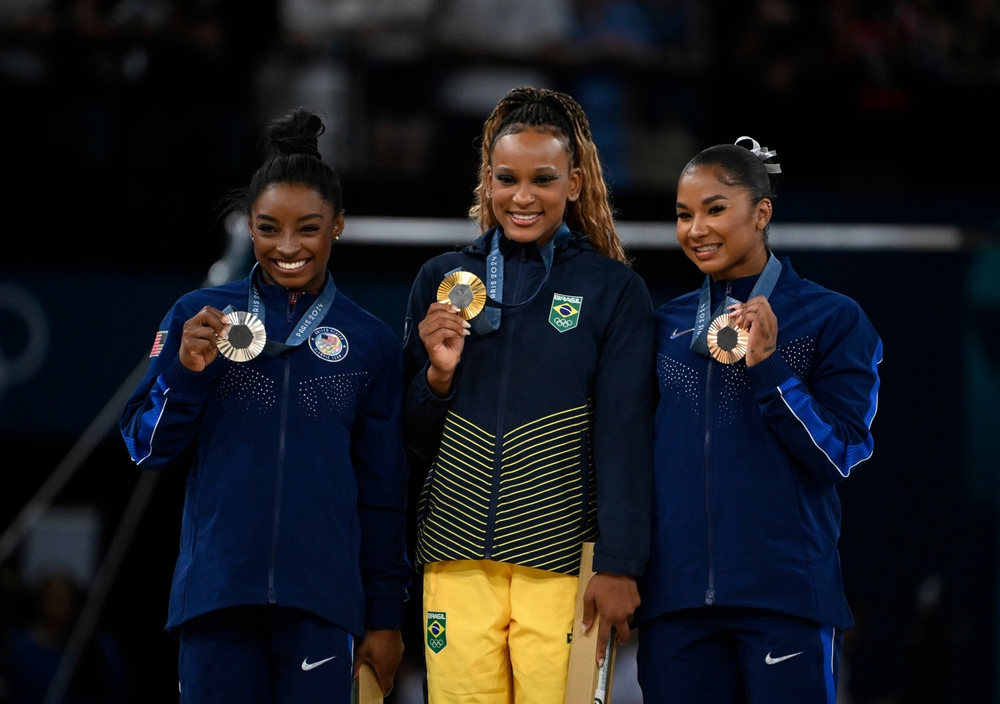
Makeup brands, hair-care startups and fertility clinics historically haven’t been associated with sports. Now they’re taking over game nights as the draw of elite women’s players, teams and leagues attracts new kinds of sponsors.
The menstrual care brand Sequel this week was named as the official tampon provider of USL Super League, for example, as the new professional women’s soccer league prepares to start play this month. The Kansas City Current, part of the National Women’s Soccer League, in December granted naming rights of its stadium’s main entrance to Helzberg Diamonds, its official jeweller.
And the Women’s National Basketball Association’s New York Liberty has accompanied familiar corporate sponsors such as the financial giant Barclays and hotel brand Marriott with newer partners such as the acne-focused skin-care company Hero, women’s workwear designer M.M.LaFleur and fertility centre RMA of New York.
“There were years where I would scratch my head as to why we weren’t garnering more endemic interests, like, why wouldn’t the beauty companies and the hair-care companies and the clothing companies want to align with women?” said Keia Clarke , chief executive of the Liberty. “Now, finding those brands is not hard.”
The new sponsors are being drawn by fans’ growing appetite and female athletes’ soaring cultural cachet and social-media reach.
“There’s interest from new brands that have never ventured into the sports space before because they weren’t appropriate for men’s sports,” said Erin Kane , vice president of women’s sports at Excel Sports Management, a management and marketing agency.
At the same time, lower prices to back women’s sports mean that a wider pool of businesses can get into the game if they so desire. Despite the growing spotlight, women’s sports are still cheaper to sponsor.
Breaking records
The surge in women’s sports comes as sports in general is ascendant in media and marketing. Game days are one of the last occasions standing that can reliably deliver large TV audiences and generate conversation on social media across most demographics.
April’s championship game of the National Collegiate Athletic Association’s women’s basketball tournament for the first time drew more viewers than the men’s equivalent, fuelled in part by hype around superstar Caitlin Clark . The hype also helped bring attention to the tournament as a whole; viewership of even games she wasn’t in rose 76% year-over-year. And much of the excitement around Team USA at this year’s Olympics has centred on its female stars, rugby player Ilona Maher, swimmer Katie Ledecky, and gymnast Simone Biles and her teammates .
Women’s elite sports will generate around $1.3 billion in revenue globally in 2024, up from $981 million in 2023 and $692 million in 2022, according to consulting firm Deloitte. Commercial deals, including sponsorships, will make up around 55% of that revenue, according to the company, which does not report similar figures for men’s sports.
By way of comparison, the National Basketball Association’s team sponsorship revenue alone was estimated to be worth $1.5 billion for the 2023-24 season, according to sports and entertainment data firm SponsorUnited.
Some companies previously found themselves sponsoring women’s sports as a result of dual packages—buy-one-get-one-style deals whereby sports businesses that owned and operated both men’s and women’s teams would offer partner status across both for a huge discount on the women’s side.
Those kinds of deals are no longer in fashion, sports executives said.
David King , senior vice president of corporate partnerships for the NBA’s Minnesota Timberwolves and the WNBA’s Minnesota Lynx, said he is discussing more brand deals that are specific to the Lynx.
“That wasn’t necessarily the case a few years ago,” King said. “I welcome the day there’s an onslaught of people calling us, but there’s certainly more now than there’s been before.”
Minneapolis-based hair-care company Odele became a sponsor after hearing the pitch about aligning with passionate women and supporting equality, despite the WNBA’s shorter season and lower viewership compared with the NBA.
“These athletes are at the forefront of what influencers can be and should be,” said Lindsay Holden , co-founder of the brand.
The team has been distributing samples, coupons and hosting giveaways at games, and presented a “get ready with me” TikTok series featuring Lynx players.
Brands with less tangible offerings have sought creative ways to activate their partnerships, and often with little-to-no experience in sports marketing, executives say.
RMA of New York, the New York Liberty fertility centre sponsor, introduced a campaign called “Let’s Go, Baby!” that filled the team’s Brooklyn arena with merch giveaways and scoreboard animations during a Pride-themed game in June. And birth-control medication Opill, a WNBA league sponsor since April, this season has set up booths designed to educate women on contraception at other events like the fan festival WNBA Live.
Pricing performance
Women’s sports executives are now trying to narrow the price gap with men’s sponsorships.
“We’ve gotten pretty aggressive with what we’re asking our partners to spend,” said King, the Lynx executive, declining to confirm specific sponsorship costs. “We’re not going to grow our business by doing the $10,000, $20,000 and $30,000 deals anymore.”
Team owners and sales executives are trying to persuade marketers that women’s sports have more value in terms of engagement than has been historically recognised, even when viewership remains generally lower, games are often fewer or less frequent, and it’s still hard for top players to match the international star power of a Travis Kelce or Lionel Messi .
“Women’s sports is a brand conversation, it’s an engagement conversation—it’s less so a transactional, asset-based conversation,” said Laura Correnti , the founder and CEO of women’s sports firm Deep Blue Sports + Entertainment. “And so that requires teams to examine their pitch strategy, and not necessarily lead with how many people they reach.”
While a five-figure brand deal was once an acceptable number for WNBA sales teams, that’s no longer the case, said New York Liberty’s Clarke. The organisation in the past few years has regularly begun pitching and inking six-figure deals, and sometimes seven-figure deals, she said. The Liberty this season has 47 sponsors, up from 31 last season and 17 in 2022.
“It was easy before to dismiss the WNBA because the excuse was always, you don’t have the numbers. And now it’s like, well, we do have numbers, and we also have these really cool other attributes,” Clarke said.
 Copyright 2020, Dow Jones & Company, Inc. All Rights Reserved Worldwide. LEARN MORE





Borrowers cannot control the Reserve Bank, but they can control how exposed their household budget is to its next decision. The RBA meets on 29 September with inflation concerns still elevated and major-bank economists increasingly bringing forward their rate-rise calls. Fixed mortgage rates have also been moving, reducing the value of waiting for perfect certainty. …
Continue reading “What mortgage holders should do before the next RBA decision”

Australian shares finished higher on Tuesday, September 22, as a technology rally and lower oil prices outweighed weakness in energy companies and continued anxiety about domestic interest rates. The S&P/ASX 200 closed 25.9 points, or 0.30 per cent, higher at 8,757.8. The All Ordinaries gained 0.36 per cent to 8,951.0, while the All Technology index …
Continue reading “ASX Wrap: Technology lifts the ASX as falling oil relieves inflation pressure”

 2 min
2 minAustralian shares finished higher on Tuesday, September 22, as a technology rally and lower oil prices outweighed weakness in energy companies and continued anxiety about domestic interest rates.
The S&P/ASX 200 closed 25.9 points, or 0.30 per cent, higher at 8,757.8. The All Ordinaries gained 0.36 per cent to 8,951.0, while the All Technology index rose 1.71 per cent.
Information technology was the strongest major sector, up 2.67 per cent. Megaport gained 4.3 per cent, NextDC rose 3.8 per cent and Life360 added 2.9 per cent, according to the ABC’s closing market report. The move followed a record Nasdaq close and reflected renewed demand for growth assets as oil prices eased.
Consumer discretionary gained 1.29 per cent, while real estate and healthcare each rose 0.76 per cent. The simultaneous strength of technology, discretionary shares and listed property was consistent with a modest easing in market inflation anxiety, although it did not erase expectations of a possible RBA increase at the 29 September meeting.
Energy was the clear laggard, down 1.16 per cent, after Brent crude briefly fell below US$100 a barrel overnight. Origin Energy dropped about 4 per cent, Woodside lost 2.4 per cent and AGL declined 2.3 per cent. Utilities were the weakest sector overall, down 2.03 per cent.
Among larger and liquid movers, Telix Pharmaceuticals rebounded 6.85 per cent after the previous session’s sharp acquisition-related decline. IDP Education jumped 20.67 per cent and was the largest percentage gainer in the ASX 300 screen, while Catalyst Metals fell 14.37 per cent. Those moves should be checked against company announcements before publication; percentage rankings alone do not establish cause or index impact.
Mining performance was mixed. Sunrise Energy Metals rose 12.71 per cent, FireFly Metals added 5.7 per cent and Bellevue Gold gained 4.8 per cent, while Resolute Mining lost 4.44 per cent.
The Australian dollar traded near US71.18 cents late in the session. Oil remained volatile as markets assessed potential US–Iran talks, making energy prices a continuing input into inflation expectations, bond yields and the RBA outlook.
For Wednesday, investors will watch oil, offshore technology leads, Australian bond yields and any new evidence that changes the probability of a September rate rise.
Market dashboard
S&P/ASX 200: 8,757.8, up 25.9 points or 0.30 per cent.
All Ordinaries: 8,951.0, up 0.36 per cent.
Best sector: Information Technology, up 2.67 per cent.
Weakest sector: Utilities, down 2.03 per cent. Energy fell 1.16 per cent.
Material winner: Telix Pharmaceuticals, up 6.85 per cent. Megaport rose 4.3 per cent and NextDC rose 3.8 per cent.
Material loser: Origin Energy, down about 4 per cent. Woodside fell 2.4 per cent.
ASX 300 percentage leader: IDP Education, up 20.67 per cent. Confirm announcement context before publication.
ASX 300 percentage laggard: Catalyst Metals, down 14.37 per cent. Confirm announcement context before publication.
AUD/USD: Approximately US$0.7118 late in the session.
Next catalyst: RBA policy decision on 29 September, oil-price volatility and offshore technology trading.

Once a sleepy surf town, Noosa has become Australia’s prestige property hotspot, where multi-million dollar knockdowns, architectural showpieces and record-setting sales are the new normal.
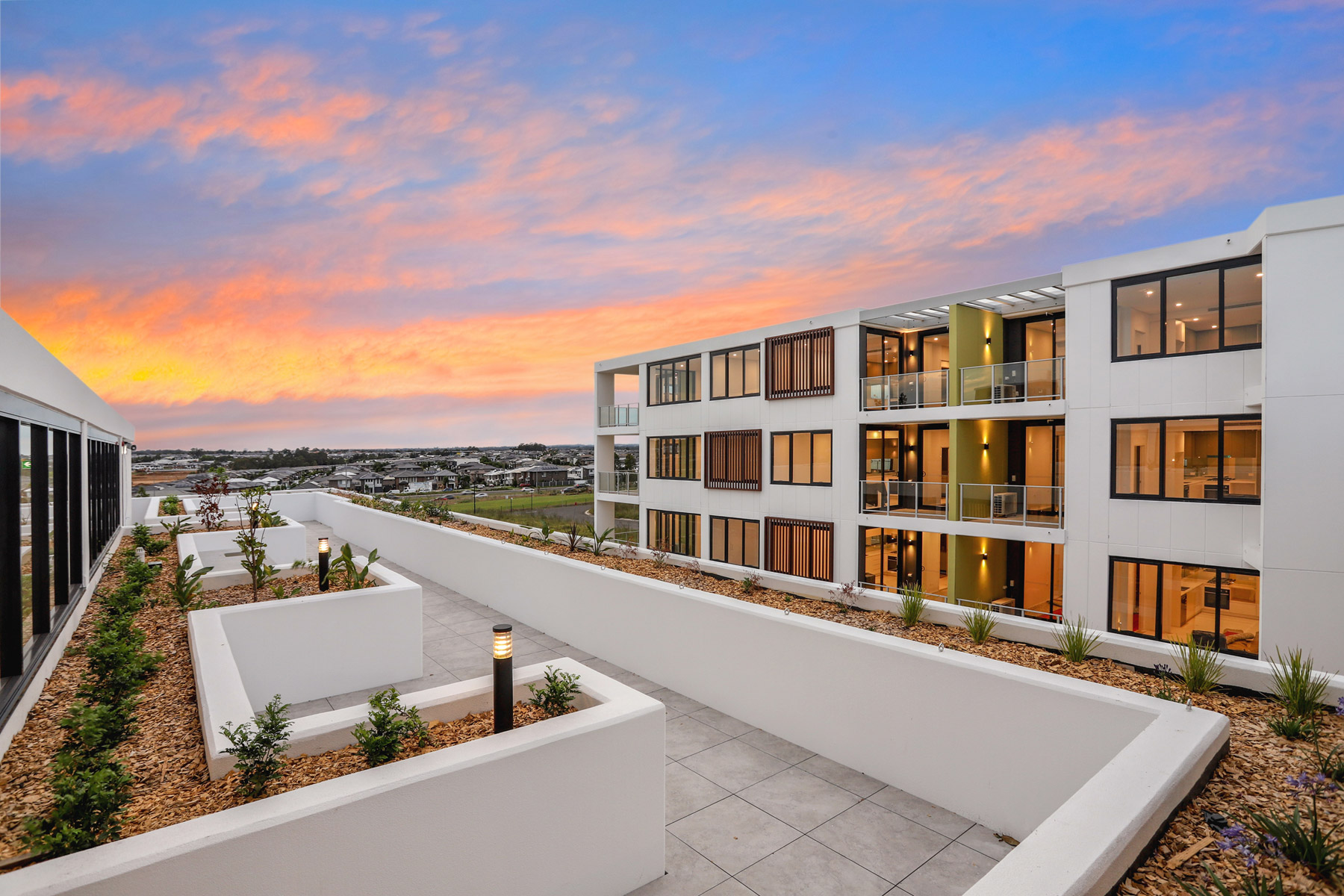
Ophora Tallawong has launched its final release of quality apartments priced under $700,000.


