Why we’re working anywhere but the office
In a post pandemic environment, Australian workers are voting with their feet and skipping the office in favour of other, more appealing environments
 4 min
4 min
From the latest issue of Kanebridge Quarterly magazine. Order your copy here.
For many, working from home is the new normal. The transition from being based in the office to working off-site has been a fundamental one, and almost four in 10 Australians worked from home at least once a week throughout 2023.
While figures show a slight decrease on 2021, working from home (WFH, it even has its own acronym) has continued to escalate in white-collar occupations, with 60 percent of managers and professionals eschewing the traditional office set-up. And those who aren’t already doing it wish they were. According to the annual Taking the Pulse of the Nation report, almost all workers (94pc) would like to do at least part of their work hours at home.
“I would say that the days of only full-time in the office for all employees are likely gone for good,” says the author of the report, the Melbourne Institute’s Professor Ragan Petrie.
“The trends in Australia mimic those in other countries where hybrid schedules are quite common.”
But is it all good news? Among the many compelling reasons to ditch the commute — saving time, improved mental health, higher productivity and being able to put the washing on — there are the well-documented shortcomings regarding the isolation, and missing out on the opportunities that those casual catch ups in the stairwell can offer.

“Constant drop-bys for chit-chat are not productive, but purposeful conversations are,” counters Petrie. “There might not be shortcomings of working from home per se, but rather not having the right infrastructure and support in place for workers to be productive. It’s important for employers and workers to figure this out.”
For those who are new to the workforce, flexible working arrangements are just the way things are. According to one survey, two out of every three Generation Z workers believe that the option to work from home is a non-negotiable.
Underpinning the normality of remote work are the advancements in automation and technology that make the transition smoother than ever — and perhaps support the use of email and text over the meetings and phone calls that younger generations shy away from.
“People of different ages have differential experience with technology, and there are some ways of communication people may feel more comfortable with than others,” says Petrie. “Certainly, technology plays a large role. Those whose jobs allow them to tap into technology to perform their tasks are well poised to be successful with a hybrid schedule.
“In the end, if worker output is satisfactory, why is it important where it is done?”
At the start of the pandemic as office-goers scrambled for a space to call work, the kitchen table was the go-to location. Now working remotely has become a more permanent arrangement, a purpose-designed study area or hybrid space is as desirable in real estate brochures as a media room or butler’s pantry.
Roger Wardy is a director at Ray White Touma Group in inner city Sydney, where more than 100,000 office employees have left the CBD for the greener pastures of remote work arrangements.
“Most house hunters want to see a home office or office space these days, and in larger homes it’s an expectation,” he says.
“As such, we’d be more likely to market a six-bed home as a five-bed plus office. If a buyer works from home, that will definitely add value.”
But the home office is just the beginning. Having paved the way for more flexible work arrangements, there’s now a growing trend towards co-working environments for companionship, productivity and a delineation of work and home.
High-tech co-working spaces offer several advantages over working from home, making them the preferred choice for many. A professional environment means distractions are minimised, and you’ll have access to state-of-the-art amenities that you probably won’t have at home. And then there are those networking opportunities — co-working spaces attract a diverse group of professionals and who knows what you might find out at the communal coffee bar? It’s something that’s making its way up the agenda for apartment developers, too, with those on the front foot offering co-working spaces along with the pool, gym and rooftop entertaining.
At the luxury new development Paradiso Place in Surfers Paradise (pictured above), the entire 2900sqm 26th floor is dedicated to a state-of-the-art co-working space, maximising 360-degree views of the Gold Coast from the ocean to the hinterland.
“To have the option of working in a space like this with all the facilities of a high-tech office within your own apartment building is an exciting prospect for buyers,” says Total Property Group Managing Director Adrian Parsons. “We have been receiving a great deal of interest in this development from business owners, entrepreneurs and professionals who can see themselves waking up in their luxury apartment with ocean views to go for a walk or run along the beach, use the onsite gym, then conveniently head to work in a state-of-the-art co-working space within their own building.”
The space incorporates a boardroom, private meeting rooms, work pods and multiple hot desks. And it’s not all about focused work; there’s also a spacious balcony event space and a Coffee Emporium complete with baristas.
“With working from home becoming the new normal, we are seeing many Australians choosing to move to quality lifestyle locations like the Gold Coast, and a full-floor co-working space of this standard is attracting a high level of inquiry,” says Parsons.

For Central Element, the start of work at Pearl represents another step in the company’s growing eastern suburbs pipeline.

All three vehicles will form part of a broader charitable initiative benefiting Big Brothers Big Sisters of America, the American Red Cross and Starlight Children’s Foundation

Overall, the season showed that share prices react less to whether profits rose or fell than to the gap between results and expectations
5 min
Reporting season has once again reminded investors that a strong profit does not guarantee a rising share price, and a large loss does not always trigger a sell-off. What matters most is how each result compares with expectations and, increasingly, what management says about the year ahead. During the August 2026 season, companies offering credible turnarounds or unexpectedly strong guidance were rewarded handsomely, while those flagging weaker margins, slowing demand or greater uncertainty were punished.
The following ranking draws on Morningstar’s review of 164 ASX-listed companies and measures each company’s share-price movement on the day it reported. This captures the market’s immediate response to the earnings announcement, before subsequent economic developments, dividends and company-specific news cloud the picture. Here are the five biggest winners, and the five hardest-hit losers, of the season so far.
The five winners
1. Bapcor (ASX:BAP): +41.0%
Bapcor delivered reporting season’s largest relief rally after presenting early evidence that its troubled automotive-parts business was stabilising. Although underlying revenue fell 1.8% to $1.92 billion and underlying NPAT collapsed 85% to $10.8 million, underlying EBITDA of $152.5 million exceeded guidance.
More importantly, working-capital initiatives released $68.5 million in the second half, lifting cash conversion to 109.4% and reducing net debt by 63% to $135 million. The statutory loss was $431.6 million, largely because of non-cash impairments. Investors focused on improving operational momentum, stronger liquidity and management’s expectation of modest FY27 revenue growth.
2. Zip Co (ASX:ZIP): +18.2%
Zip comfortably surpassed its FY26 targets, sending the buy-now-pay-later provider’s shares sharply higher. Transaction volume rose 23% to $16.7 billion, while cash earnings before tax, depreciation and amortisation jumped 58% to a record $268.9 million. Statutory profit climbed 46% to $116.4 million, and the cash operating margin expanded by 4.2 percentage points to 20%.
The strongest signal was guidance for FY27 cash earnings of $340 million—around 26% growth and above analysts’ forecasts. US transaction volume increased 42.5% and now represents three-quarters of group volume, offsetting weaker customer activity in Australia.
3. CSL (ASX:CSL): +17.3%
CSL’s result was hardly spectacular in isolation, but it cleared a market bar that had fallen dramatically following earlier downgrades and restructuring announcements. Underlying NPATA was US$3.1 billion, down 2% in constant-currency terms, while operating cash flow reached US$3.51 billion.
CSL maintained its full-year dividend at US$2.92 per share and completed a A$1 billion buyback. The real catalyst was FY27 guidance for approximately 5% underlying profit growth, compared with market expectations closer to 2%. After an extended period of earnings disappointments, investors interpreted the outlook as evidence that CSL’s core plasma business was approaching a sustainable recovery.
4. Judo Capital (ASX:JDO): +16.9%
Judo Capital demonstrated strong operating leverage as its specialist business-lending franchise expanded. Full-year profit before tax rose 34% to $168.1 million, while pre-provision profit increased 42%. Gross loans and advances grew 18% to $14.7 billion, reaching the top of the bank’s guidance range and comfortably exceeding broader system growth.
Deposits increased 24% to $12.2 billion, return on equity improved by 1.1 percentage points to 6.4%, and earnings per share rose 29% to 9.9 cents. Reaffirmation of the FY27 outlook gave investors confidence that loan growth could continue without sacrificing margins or credit quality.
5. Super Retail Group (ASX:SUL): +15.8%
The owner of Supercheap Auto, rebel, BCF and Macpac reported record sales of $4.2 billion, up 3.2%, despite cautious discretionary spending. Profitability went backwards: normalised profit before tax fell 7% to $306 million and normalised NPAT declined 2.8% to $226 million as transformation spending weighed on margins. Nevertheless, the result exceeded subdued expectations, online sales grew 5.3% and membership across the group’s loyalty programs reached 13.1 million. Investors were also encouraged by positive early FY27 trading, stable gross margins and continued market-share gains. A fully franked 33-cent final dividend added to the appeal.
The five losers
1. Hansen Technologies (ASX:HSN): –21.2%
Hansen’s historic result met expectations, but investors recoiled from its outlook. The utility and communications software provider achieved an underlying EBITDA margin of 31%, exceeding its 30% target, while generating strong cash flow. However, management designated FY27 an “investment and transition year”, signalling a roughly five-percentage-point margin contraction as spending on products, sales capabilities and organisational changes increased.
Revenue had already been broadly flat, leaving investors concerned that the investment program would depress earnings before new growth appeared. Leadership changes, including the chief executive’s departure, added uncertainty. Management expects revenue growth and margins above 30% to return in FY28, but the market was unwilling to wait.
2. Life360 (ASX:360): –19.4%
Life360’s headline growth was impressive: quarterly revenue rose 38% to US$159 million, subscription revenue increased 31%, and adjusted EBITDA climbed 53% to US$31.1 million. Monthly active users reached 102.4 million and paying circles grew 27% to 3.2 million. The sell-off reflected expectations rather than a collapsing business.
Net income fell 18%, the net margin contracted from 6% to 3%, hardware shipments dropped 18%, and full-year EBITDA guidance was merely maintained. After a strong valuation run, investors wanted a larger upgrade and clearer evidence that heavy investment in advertising, international expansion and artificial intelligence would generate additional earnings.
3. PEXA Group (ASX:PXA): –17.0%
PEXA reported a 7% increase in continuing-operations revenue and 12% EBITDA growth to $152 million, accompanied by a two-percentage-point margin expansion. Free cash flow increased 39%, suggesting the core Australian electronic-conveyancing platform remained highly profitable. Investors instead concentrated on management’s warning that property-transfer volumes could decline, alongside regulatory uncertainty surrounding the fees PEXA can charge.
The company is also continuing to invest heavily in its loss-making international expansion. Morningstar considered the market reaction excessive, arguing that structural transfer-volume assumptions had not materially changed, but the combination of softer near-term activity and regulatory risk overwhelmed the respectable headline numbers.
4. SEEK (ASX:SEK): –14.3%
SEEK produced solid FY26 figures, including 10% revenue growth to $1.20 billion, a 15% rise in EBITDA and 28% growth in adjusted earnings per share. It also lifted its fully franked annual dividend by 13% to a record 52 cents. Those achievements were overshadowed by falling paid job-ad volumes and cautious FY27 assumptions.
The statutory accounts included a $201 million loss from the SEEK Growth Fund and $377 million of significant items, making the headline result considerably less attractive. Investors were particularly concerned that economic weakness could limit volumes while the company continued investing in platform integration and artificial-intelligence products.
5. JB Hi-Fi (ASX:JBH): –12.3%
JB Hi-Fi’s full-year result was broadly respectable, with group sales rising 5% to $11.1 billion and underlying earnings per share increasing 6% to $4.48. The damage came from its current-trading update. Australian sales were almost flat during the June quarter and deteriorated further in July, while earnings in the core Australian electronics business fell 3.6%.
Housing-related categories were particularly weak as higher living costs and interest rates constrained household budgets. With JB Hi-Fi entering the season on a demanding valuation, an in-line historic result was not sufficient: the loss of sales momentum prompted investors to rapidly reduce their expectations for FY27.
Overall, the season showed that share prices react less to whether profits rose or fell than to the gap between results and expectations. Bapcor was rewarded for being less troubled than feared, while several fundamentally profitable companies were punished because their outlooks failed to justify elevated valuations.
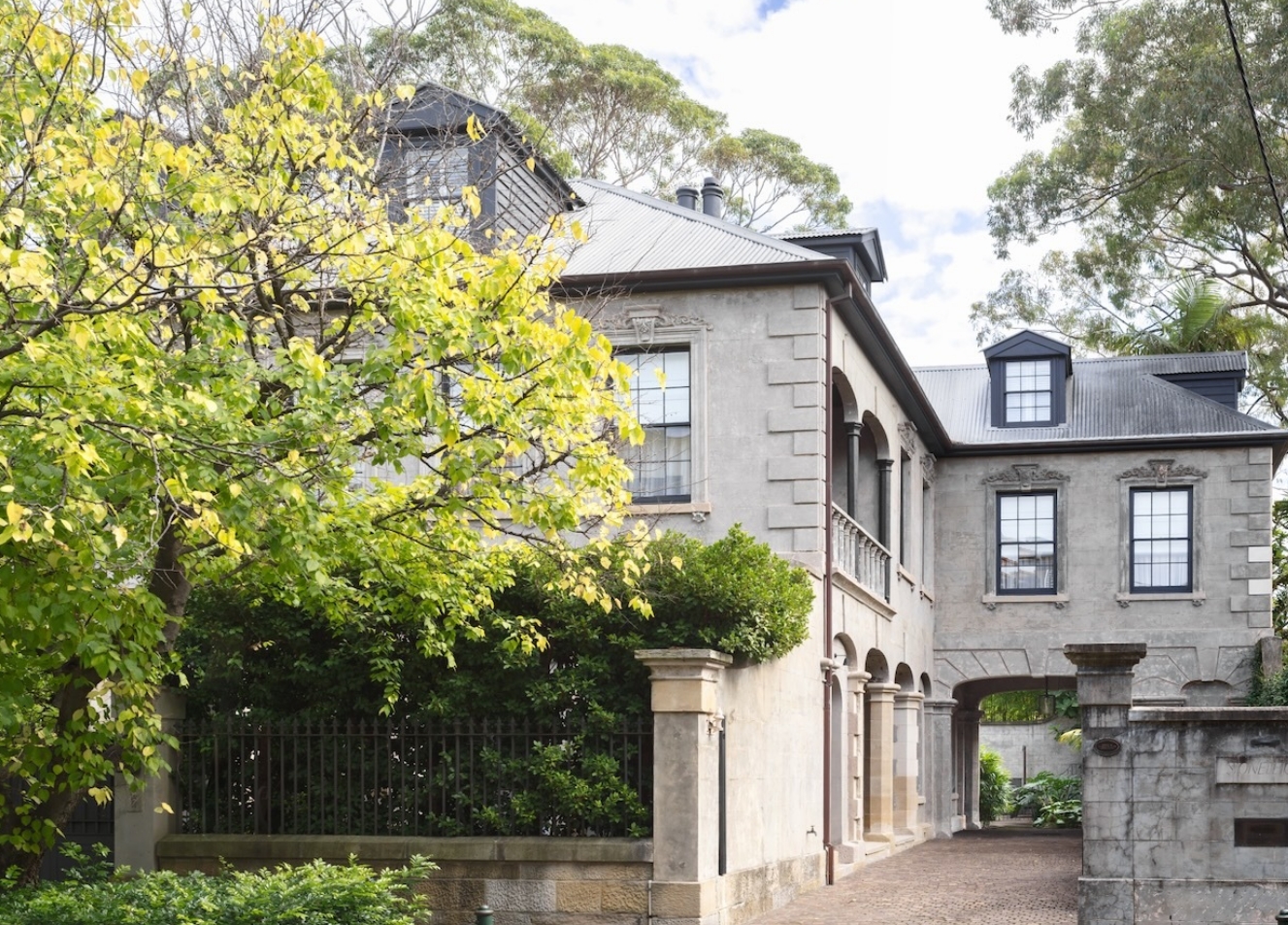
The 1860s Darlinghurst mansion Stoneleigh could become Sydney’s most expensive home ever sold under the hammer when it goes to auction. Clint Ballard is giving buyers a $28 million guide for the heritage-listed mansion on Darley Street, opposite Iona, the former home of Hollywood royalty Baz Luhrmann. Stoneleigh is being offered for sale for the …

From the Caribbean to Australia’s east coast, Oyster’s latest world rally promises a bluewater voyage designed for owners seeking ultimate sailing experiences.