Rest of World’s Growth Is at Trump’s Mercy
Growth in size of U.S. market gives him extra leverage in trade negotiations with other countries

 3 min
3 min
Donald Trump will retake office in a global economy substantially transformed from eight years ago—one much more reliant on the U.S.
It means that the president-elect’s plans, including across the board tariffs , could pack an even greater wallop on other countries than the first round of “America First” economic policy. It also gives Trump much more leverage in negotiations over trade policy.
Strong growth since the pandemic has expanded the U.S.’s weight in the global economy. Its share of output among the Group of Seven wealthy nations is higher than at any point since at least the 1980s, International Monetary Fund data shows.
Growth in China, the world’s second-largest economy, has slowed. Germany, the largest European economy, is contracting. Many poorer economies are buckling under the weight of high debt.
U.S. gains in global output partly reflect the strong dollar, which pushes up the value of American output relative to that of foreign economies. But they also result from substantial increases in U.S. productivity compared with the rest of the world.
The changes in the global economy have made America, not China, the premier destination for foreign direct investment, enlarging the exposure that foreign companies have to the U.S. economy and changes in government policy. A booming U.S. stock market has attracted huge flows of investment dollars.

“The fact that much of the rest of the world is now struggling to generate demand on its own provides more reason for countries to try to reach some sort of accommodation with Trump,” said Brad Setser, a senior fellow at the Council on Foreign Relations.
Trump started imposing tariffs in 2018, primarily on China but also on Europe and other allies. Those tariffs fractured global trade, weighing on large exporting economies in Asia and Europe, while not obviously hurting the U.S., which is less reliant on foreign demand than its trading partners. Trump campaigned on a promise to impose at least a 60% tariff on China, and an across the board tariff of 10% to 20% on everywhere else.
America’s superior economic performance has been driven in part by energy independence and massive government spending, said Neil Shearing , chief economist at Capital Economics in London. Since the U.S. now exports more energy than it imports—including millions of barrels of oil each month to China—the nation as a whole benefits when energy prices rise, unlike for net importers such as China and Europe.
The upshot: America’s traditional role as the centre of gravity in the global economy has become even more pronounced in the years after Trump’s first-term tariffs, the pandemic, and Russia’s full-scale invasion of Ukraine.
U.S. influence over Europe’s economy is a case in point. The U.S. has cemented its position as Europe’s largest export market as trans-Atlantic trade surged in recent years and China’s imports from Europe stalled. The U.S. has replaced Russia as Europe’s major source of imported energy. Europe runs big trade surpluses with the U.S. but big trade deficits with China.
The result is access to the U.S. market is far more important for Europe than access to European markets for the U.S. That asymmetry will give Trump leverage in trade negotiations with Europe, according to economists.
Germany exports around 7% of its entire manufacturing value-added to the U.S., but Germany imports only around 0.8% of value-added in U.S. manufacturing, according to a September paper by researchers at Germany’s Ifo Institute for Economic Research.
“German business is vulnerable to Trump,” said Marcel Fratzscher , president of the Berlin-based economic research institute DIW Berlin.
Parts of Asia have benefited from the changes in supply chains sparked by Trump’s initial trade war with China. Many manufacturers, including Chinese ones, moved factories to places such as Vietnam and Cambodia. For the past two quarters, Southeast Asia’s exports to the U.S. have exceeded those to China.
But that now leaves them more exposed to across the board tariffs, a policy that Trump advisers say will be necessary to force manufacturing back to the U.S.
To be sure, Trump’s policies could create countervailing forces. Tariffs would decrease imports and potentially weigh on productivity, but tax cuts would drive up household and business spending, including, inevitably, on imports. Other countries could retaliate by placing tariffs on U.S. goods.
Meanwhile, a tight U.S. labor market has pushed up wages, which is good for those workers. But it could pressure employers to raise prices, in turn making them vulnerable to foreign competition.
Many economists are girding for a different type of trade war from Trump 1.0, when trade fell between the U.S. and China but was diverted elsewhere.
“As long as protectionism refers only to one country, China, the world can live with this,” said Joerg Kraemer , chief economist at Commerzbank. “The thing becomes difficult or dangerous if you implement tariffs on all countries. This would be a new era in global trade.”
 Copyright 2020, Dow Jones & Company, Inc. All Rights Reserved Worldwide. LEARN MORE




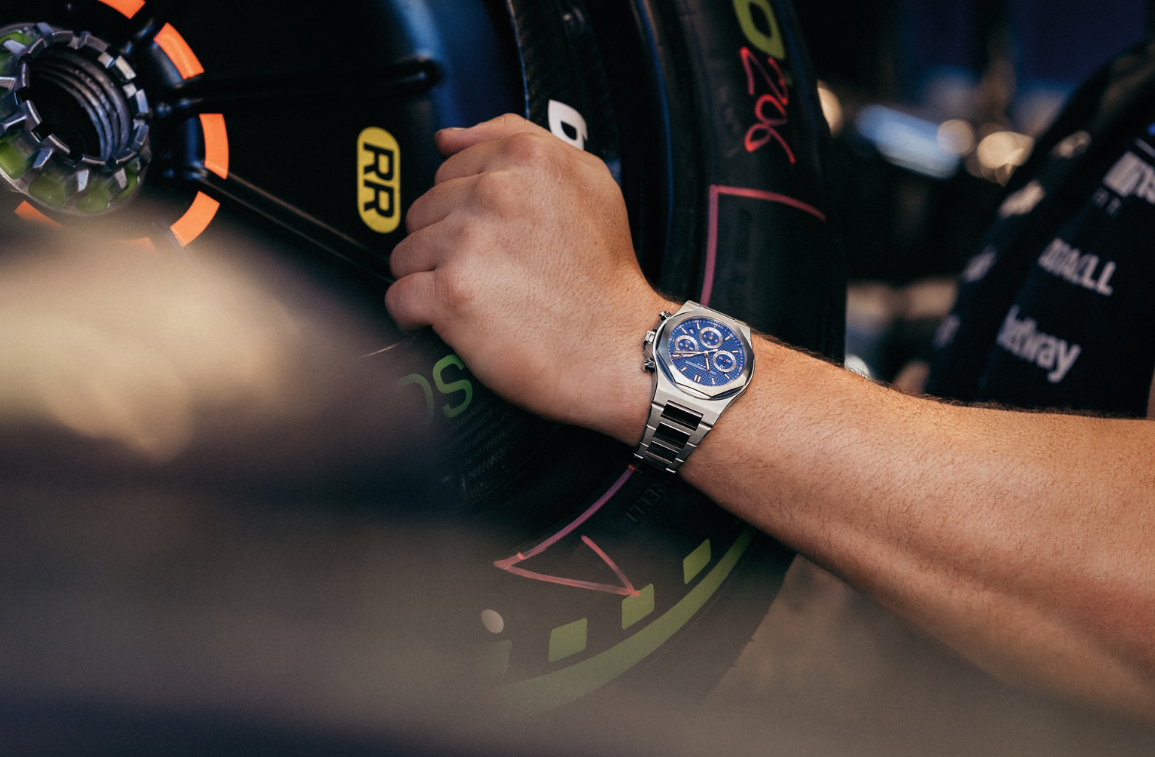
The Swiss watchmaker’s first collaboration with Atlassian Williams F1 Team produces two sporting Laureato models inspired by the team’s 2026 racing car.

Victorian auction buyers will soon receive a piece of information that has traditionally been withheld until bidding reaches it: the vendor’s reserve price. Under new property-sale and underquoting laws, agents must publish the agreed reserve at least seven days before an auction or fixed-date sale. Most changes begin on 1 October 2026 and apply to …
Continue reading “Victoria’s New Auction Rules Will Force Reserve Prices Into the Open”
The Swiss watchmaker’s first collaboration with Atlassian Williams F1 Team produces two sporting Laureato models inspired by the team’s 2026 racing car.
3 minGirard-Perregaux has revealed the first watches created through its partnership with Atlassian Williams F1 Team, bringing the British racing team’s colours to one of Switzerland’s most recognisable integrated-bracelet designs.
The collaboration comprises two 42mm steel watches: the time-and-date Laureato Williams Edition and the more technical Laureato Chronograph Williams Edition.
Both retain the familiar architecture of the Laureato, including its octagonal bezel, integrated bracelet and mix of polished and satin-finished surfaces. The influence of Williams is comparatively restrained, appearing through colour, discreet branding and details inspired by the team’s current Formula 1 car.
It is a welcome departure from the oversized logos and literal automotive references that can characterise motorsport watches.
The Williams FW48 inspires the dial
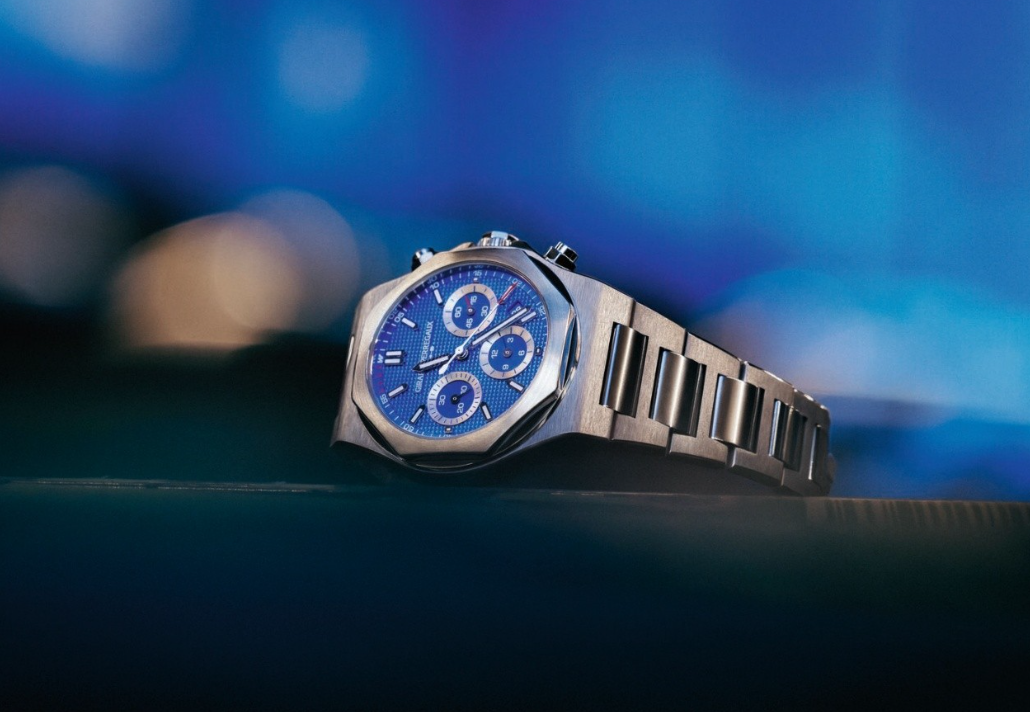
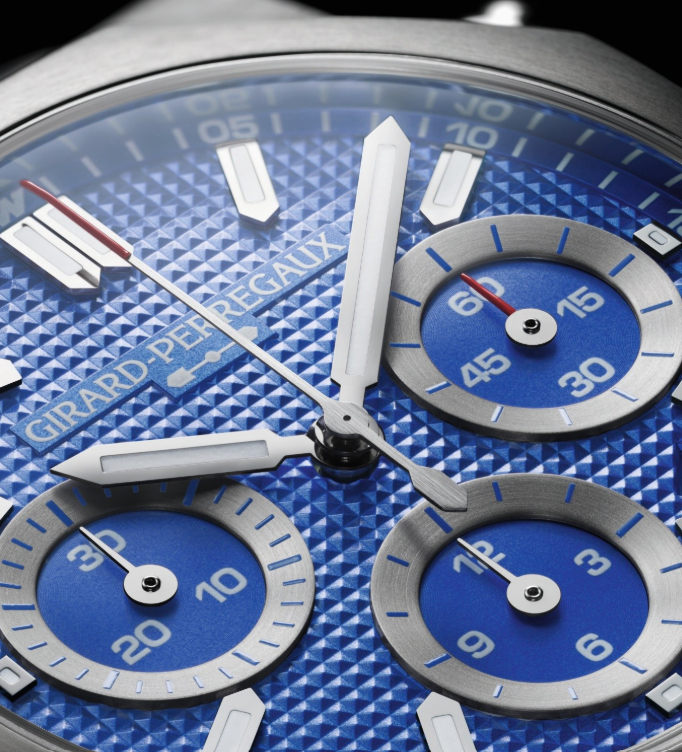
The centrepiece of both models is a blue Clous de Paris dial informed by the livery of the Williams FW48, the car being campaigned by the team during the 2026 Formula 1 season.
A small Williams “W” replaces the conventional marker at 12 o’clock, while the team emblem appears on the sapphire crystal caseback. Red accents echo the keyline used on the FW48 without overwhelming the established Laureato design.
The three-hand model offers the quieter interpretation. Baton-shaped, rhodium-plated hands and hour markers are filled with white-emitting luminescent material, while a date window sits at three o’clock.
The chronograph creates a more obvious connection with motorsport. Three subdials are framed by rhodium-plated rings, with red appearing on the small-seconds hand and the tip of the central chronograph seconds hand.
Both watches measure 42mm across and are water resistant to 100 metres. The standard Laureato has a case thickness of 10.68mm, while the additional mechanics of the chronograph increase its profile to 12.16mm.
Two in-house automatic movements
The Laureato Williams Edition is powered by Girard-Perregaux’s self-winding GP01800 calibre. The movement provides hours, minutes, central seconds and the date, with a minimum power reserve of 54 hours.
The Laureato Chronograph Williams Edition uses the automatic GP03300 calibre, which combines its chronograph functions with a date display and offers a minimum power reserve of 46 hours.
Both movements operate at 28,800 vibrations per hour and can be viewed through their sapphire crystal casebacks.
Their decoration provides a more traditional counterpoint to the Formula 1 association. Finishing techniques include Côtes de Genève, circular graining, bevelling, mirror polishing, satin finishing, engraving and snailing.
The result is less about reproducing the appearance of a racing car than identifying the common ground between two mechanical disciplines: precision, incremental development and the considerable work hidden beneath the finished product.
Parallel histories
The timing of the partnership draws attention to the remarkably similar ages of its two protagonists.
Girard-Perregaux introduced the original Laureato in 1975, establishing an integrated-bracelet sports watch with a distinctive octagonal bezel. Williams entered Formula 1 two years later in 1977.
Both have evolved continuously across the five decades since. The Laureato has moved through different sizes, materials and complications, while retaining its central design language. Williams, meanwhile, has remained one of Formula 1’s most historically significant teams.
That gives the collaboration greater credibility than a simple licensing exercise. Girard-Perregaux and Williams are not being connected solely through the familiar language of speed. Their stronger link is a shared dependence on engineering, testing and the accumulation of specialist knowledge.
The watches are described as the beginning of a longer collaboration, suggesting further Williams editions may follow.
Girard-Perregaux’s international website lists the Laureato Williams Edition at US$16,200 and the Laureato Chronograph Williams Edition at US$20,900. Australian pricing has not been announced.
Specifications
Girard-Perregaux Laureato Williams Edition 42mm
Reference: 81010-11-3680-1GM
Case: Steel
Diameter: 42mm
Thickness: 10.68mm
Crystal: Anti-reflective sapphire crystal
Dial: Blue Clous de Paris pattern
Movement: Automatic GP01800
Functions: Hours, minutes, central seconds and date
Power reserve: Minimum 54 hours
Water resistance: 100 metres
Bracelet: Integrated steel bracelet with triple-folding clasp
International price: US$16,200
Girard-Perregaux Laureato Chronograph Williams Edition 42mm
Reference: 81020-11-3681-1GM
Case: 904L steel
Diameter: 42mm
Thickness: 12.16mm
Crystal: Anti-reflective sapphire crystal
Dial: Blue Clous de Paris pattern with three chronograph counters
Movement: Automatic GP03300
Functions: Chronograph, hours, minutes, small seconds and date
Power reserve: Minimum 46 hours
Water resistance: 100 metres
Bracelet: Integrated 904L steel bracelet with triple-folding clasp
International price: US$20,900

Now complete, Ophora at Tallawong offers luxury finishes, 10-year defect insurance and standout value from $475,000.

Formula 1 may be the world’s most glamorous sport, but for Oscar Piastri, it’s also one of the most lucrative. At just 24, Australia’s highest-paid athlete is earning more than US$40 million a year.