


Populist Right-Wing Parties Lead Polls in Europe’s Biggest Economies
Surge in immigration and weak economic growth spark voter backlash in France, the U.K. and Germany.

 5 min

LONDON: For the first time, populist or far-right parties are leading the polls in the U.K., France and Germany, the latest sign of growing voter discontent in much of the continent following years of high immigration and inflation.
Far-right and anti-immigration parties have already entered government in countries such as Italy, Finland and the Netherlands.
But this year marks the first time that they have been ahead in Europe’s biggest economies at the same time. That could provoke a period of political turbulence in all three countries, even if national elections are likely still a few years away.
“It’s significant. Leaders in all three countries are grappling with an ascendant far right that looks on the cusp of power unless politicians can address what’s fuelling the rise, which is immigration and cost of living,” said Mujtaba Rahman , head of Europe for risk consulting firm Eurasia.
France’s anti-immigration National Rally has had a consistent lead in polls this year. An Elabe poll last month showed Jordan Bardella, the young protégé of the far-right leader Marine Le Pen , was the most popular with an approval rating of 36%.
Polling for the next presidential vote also suggests National Rally’s candidate—whether it is Bardella or Le Pen—would lead the first round.
In the U.K., the anti-immigration Reform UK, led by the former Brexiteer Nigel Farage , has surged in the past six months and is now comfortably ahead in opinion polls of the ruling Labour Party and the opposition Conservatives, the political duopoly that has dominated British politics for the past century.
In Germany, the far-right Alternative for Germany, or AfD, has been neck-and-neck with the ruling centre-right Christian Democratic Union in polls since the start of the year. The AfD has pulled slightly ahead in recent weeks, the first time it has done so since April, according to Forsa, one of the country’s leading pollsters.
Like the U.S., much of Europe has experienced two things at the same time since the pandemic: record levels of immigration that have caused a voter backlash, and a surge in inflation that has now eased but left prices for many goods much higher than before—leaving many voters feeling worse off. Social media has also polarised opinions.
Unlike the U.S., however, much of Europe has almost no economic growth, fuelling a widespread sense that the continent faces years of drift , as well as political gridlock.
The sense of economic decline together with rapid immigration is a toxic combination that has turned many voters against established political parties, said Jérémie Gallon, a former French diplomat and head of Europe for consulting firm McLarty Associates.
“It’s the same story from smaller English cities to the French countryside to German towns, where many people feel like the traditional elites look down on them or ignore their concerns,” he said.
Bardella and National Rally have tapped into widespread anxiety that France’s Muslim minority, one of the largest in Europe, is encroaching on the secular values of the French Republic, and into a perceived decline of living standards among working-class and middle-class families.
In recent years, National Rally has evolved from a fringe protest movement to the country’s largest single party in the National Assembly, France’s lower house of Parliament.
That hasn’t proved enough yet for the far-right party to take the reins of government, but it has made the country increasingly difficult to govern. France’s government is again on the brink of collapse , less than nine months after conservative French Prime Minister Michel Barnier was ousted from office.
This past week, National Rally pledged to vote against the government again on Sept. 8, when centrist Prime Minister François Bayrou plans to hold a confidence vote in the National Assembly ahead of what are expected to be difficult negotiations for a new budget. On Tuesday, Bardella called on President Emmanuel Macron to hold new parliamentary elections or resign.
In recent years, Germany and the U.K. both saw the biggest surges in immigration in their history, even if the numbers have begun to fall this year. In Germany, the share of residents born outside the country surged from just over 15% in 2017 to a record high of 22% in 2024, according to government data. That compares with about 16% in the U.S.
The U.K., meanwhile, has grappled with a record rise in legal and illegal immigration. Some 4.5 million people arrived legally between 2021 and 2024, primarily from India, Nigeria and China. That is slightly more than those who legally entered the U.S.—which has about five times the population of the U.K.—over that time. In addition, tens of thousands of people have illegally crossed the English Channel on flimsy boats each year to claim asylum.
So far this year, record numbers of people—29,000 through the end of August—have made the crossing, sparking growing pressure on Prime Minister Keir Starmer , who came to power last year vowing to “smash the gangs” that control migrant smuggling and reduce the crossings.
Adding to the pressure on Starmer, protests flared this summer in some English towns over the use of local hotels where the government is paying for migrants to stay until their asylum cases are resolved.
In Germany, a surprising feature of the AfD’s latest surge is that it has coincided with a drop in immigration numbers under the current government. In the midst of tougher border controls, new asylum requests fell more than a third in the first half of the year compared with the same period last year.
Friedrich Merz , the conservative chancellor, has also done away with some of his predecessor’s green policies, often criticised as excessive by the AfD.
A raft of growth-supporting measures, from corporate tax cuts to rising infrastructure investments, have yet to show any effect, however. The economy contracted by 0.3% in the most recent quarter, extending a two-year recession.
This, said Manfred Güllner, head of Forsa, was one of the factors for the AfD’s recent surge. “Voters are seeing a lot of action, but they’re not feeling any effect,” he said, pointing to the mismatch—or at least the time lag—between promises and results.
The AfD has campaigned for the deportations of immigrants in the country illegally; for Germany to leave the European Union and the euro currency; and for the country to rethink its culture of Holocaust remembrance.
It rejects the notion of man-made climate change. Its economic polices are similar to those of Merz’s Christian Democratic Union, but it also wants to increase pension benefits and limit noncitizens’ access to welfare benefits.
Some of its leaders and lawmakers have drawn scrutiny for their sympathies toward Russia and China —the party has called for Germany to resume energy deals with Moscow—while economists have said its push to leave the EU could damage the country’s export industries.
But the party has also enjoyed the support of people close to President Trump, in particular Vice President JD Vance and tech billionaire Elon Musk .
The AfD has tapped into economic frustration to buttress its appeal. Its program in the lead-up to February’s federal election focused on economic proposals, ahead of topics such as security and immigration.
This has helped it gather support among blue-collar voters in economically depressed regions far away from the party’s historical strongholds in former East Germany, such as the Ruhr, the industrial Rust Belt region east of the Rhine Valley.
 Copyright 2020, Dow Jones & Company, Inc. All Rights Reserved Worldwide. LEARN MORE



From making unpopular decisions to learning when to listen, leaders from five businesses reveal what nobody prepared them for — and how running a company has challenged their expectations.

Technology and semiconductor shares fell sharply as investors questioned the debt financing the AI infrastructure boom and confronted higher rates and Chinese competition.

Technology and semiconductor shares fell sharply as investors questioned the debt financing the AI infrastructure boom and confronted higher rates and Chinese competition.
4 minA sharp technology sell-off has exposed a new anxiety on global markets: whether the enormous borrowing behind the artificial-intelligence infrastructure boom can generate sufficient returns as interest rates rise and Chinese competition intensifies.
The artificial-intelligence investment boom has powered technology shares, semiconductor manufacturers and data-centre operators to extraordinary heights. Last week, investors were given a reminder that much of this expansion is being built with borrowed money.
The technology-heavy Nasdaq Composite fell 4.5 per cent over the week ended October 16, its weakest performance since late June. Semiconductor shares suffered an even deeper correction, with the Philadelphia Semiconductor Index losing about 11.4 per cent.
The selling spread quickly through global markets. Micron Technology fell 14.6 per cent over the week, while South Korea’s Samsung Electronics and SK Hynix dropped approximately 18 per cent and 24 per cent respectively.
This was more than a routine bout of profit-taking. Investors were reassessing three interconnected risks: higher interest rates, the rapidly expanding debt burden attached to AI infrastructure and the prospect of stronger competition from Chinese memory-chip manufacturers.
The debt behind the AI build-out
Artificial intelligence requires a physical infrastructure network of enormous scale. Data centres must be built, advanced processors purchased, power supplies secured and cooling systems installed before customers begin generating meaningful revenue from them.
Technology companies are increasingly supplementing their own cash with corporate bonds, syndicated loans, equipment leases, private credit and project-level financing.
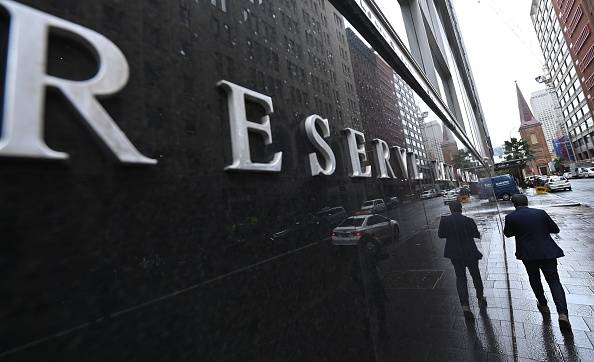
JPMorgan describes the emerging funding model as a combination of conventional corporate borrowing and project finance tied to individual data-centre assets. In Australia, the Reserve Bank estimates that syndicated loans accounted for approximately three-quarters of data-centre financing during 2025 and 2026 to date.
The numbers are becoming large enough to affect broader credit markets. The Federal Reserve Bank of Dallas has cited Wall Street estimates suggesting AI-related investment-grade bond issuance could approach US$300 billion in 2026 alone.
That borrowing is not automatically problematic. Debt can be an efficient way to finance long-lived infrastructure when future revenue is sufficiently predictable. The concern is that AI technology, customer demand and computing economics are changing much faster than the repayment schedules attached to the assets.
A data centre financed today may carry debt for years. Investors must therefore make assumptions about future utilisation rates, electricity prices, chip performance, customer concentration and the amount businesses will ultimately pay for AI computing.
When interest rates rise, those assumptions become less forgiving.
Inflation changes the calculation
September’s US inflation data intensified the pressure. Consumer prices increased 3.7 per cent over the year, ahead of market expectations and up from 3.4 per cent in August.
The hotter reading reduced confidence that interest rates would fall quickly and pushed bond yields higher. That matters particularly for companies whose valuations depend on profits expected well into the future, as well as highly leveraged infrastructure operators that may need to refinance.
CoreWeave has emerged as a closely watched test case. The specialist cloud-computing company has accumulated substantial debt and lease obligations to build AI capacity, while relying on a concentrated group of large technology customers.
Its shares fell sharply during the sell-off, while the cost of insuring its debt against default climbed. CoreWeave has argued that its contracted backlog more than covers its obligations and that financial markets do not always understand its business model. Nevertheless, its securities have become a proxy for investor confidence in debt-funded AI infrastructure.
Oracle, another major investor in AI computing capacity, fell 8.8 per cent in Friday trading, while CoreWeave dropped 15.5 per cent.
The question is shifting from how much AI infrastructure can be built to how profitably it can be operated.
China adds another source of pressure
Interest rates were not the only catalyst. Reports of advances by Chinese memory-chip producer ChangXin Memory Technologies raised concerns that lower-cost Chinese products could increase competition across the global semiconductor industry.
Memory chips are essential to AI systems, but the industry is historically cyclical. Periods of tight supply and high pricing can encourage rapid investment, eventually producing oversupply and falling margins.
The prospect of a well-funded Chinese competitor expanding its technological capabilities unsettled investors in Samsung, SK Hynix and Micron. It also demonstrated that AI-related demand does not insulate chipmakers from conventional competitive pressures.
That combination—slower rate cuts, more expensive financing and potentially cheaper supply—challenged the assumption that every company exposed to AI would enjoy continually expanding margins.
A reset rather than the end of the boom
The sell-off does not establish that the AI boom is ending. Demand for computing power remains strong, the largest technology companies continue to generate formidable cash flows and many infrastructure projects are backed by long-term customer contracts.
What has changed is the market’s willingness to overlook the price and financing structure of that growth.
The most resilient companies are likely to be those able to fund investment from operating cash flow, secure long-duration customers and demonstrate that new capacity will earn returns comfortably above its financing costs.
More speculative operators may face greater scrutiny, particularly where debt is expensive, customers are concentrated or expected revenue depends on demand that has not yet materialised.
For Australian investors, the lesson extends beyond US technology shares. Local data-centre operators, infrastructure funds, electricity suppliers and property groups are increasingly exposed to the same investment cycle.
Artificial intelligence may remain one of the defining growth themes of the decade. But last week’s correction showed that enthusiasm for the technology does not eliminate financial discipline.
The next stage of the AI boom will be judged not only by computing power, model performance or demand for chips, but by something more traditional: whether the assets being financed can generate enough cash to repay the money borrowed to build them.
Fact box
Nasdaq Composite: Down 4.5 per cent for the week ended October 16, 2026
Philadelphia Semiconductor Index: Down approximately 11.4 per cent
Micron Technology: Down approximately 14.6 per cent
Samsung Electronics: Down approximately 18 per cent
SK Hynix: Down approximately 24 per cent
US September inflation: 3.7 per cent annually
Estimated 2026 AI-related investment-grade issuance: Approximately US$300 billion

Queensland-based builder-developer MAYD has unveiled an exclusive first look at its anticipated ultra-luxury North Kirra mixed-use project as it lodges a minor amendment with the City of Gold Coast Council. The project sits across a 4,742sqm amalgamated landholding spanning seven parcels at 2–6 Pacific Parade and 27–33 Golden Four Drive, Bilinga, which MAYD secured in …
Continue reading “MAYD”s North Kirra Plans Unveiled Ahead of Early 2027 Launch”

Paine Schwartz joins BERO as a new investor as the year-old company seeks to triple sales.