Saudi Arabia Sees a Spike to $180 Oil if Energy Shock Persists Past April
Prices at such a level could trigger a recession or consumer changes that crush demand.

 4 min
4 min
Saudi Arabia’s oil officials are working frantically to project how high oil prices might go if the Iran war and its disruption of energy supplies doesn’t end soon—and they don’t like what they are seeing.
The base case, several oil officials in the Gulf’s biggest producer said, is that prices could soar past $180 a barrel if the disruptions persist until late April.
While that would sound like a bonanza for a kingdom still heavily leveraged to oil revenue, it is deeply concerning. Prices that high could push consumers into habits that slash their oil use—potentially for the long term—or trigger a recession that also hurts demand. They also would risk casting Saudi Arabia in the role of profiteer in a war it didn’t start.
“Saudi Arabia generally does not like too-rapid increases in oil, because that then creates long-term market instability,” said Umer Karim, an analyst of Saudi foreign policy and geopolitics with the King Faisal Center for Research and Islamic Studies. “For Saudis, the ideal equation is a relatively modest increase in prices while their market share remains stable.”
Saudi Aramco, the country’s national oil company, which handles production, sales and pricing, declined to comment.
This week’s strikes targeting energy facilities have pushed oil prices higher . In retaliation for an Israeli strike Wednesday on Iran’s South Pars gas field , Tehran hit facilities in Qatar’s Ras Laffan energy hub and attacked other Gulf infrastructure including Saudi facilities at Yanbu, the Red Sea end of a pipeline that can take crude around the chokepoint in the Strait of Hormuz .
Iran also continued to hit ships in the Gulf, extending a string of attacks that have all but shut the strait, the narrow conduit for 20% of the world’s oil shipments.
Attacks sent benchmark Brent futures as high as $119 a barrel before easing back Thursday. The contract’s all-time high, reached in July 2008, was $146.08.
“$200 a barrel is not outside the realms of possibility in 2026,” analysts at energy consulting firm Wood Mackenzie said.
Gulf futures tied to Oman crude, which are less liquid but which quickly reflect local supply disruptions, shot past $166 a barrel. Oman is a benchmark for much of the oil sold by Middle East producers such as Saudi Arabia, with tankers of physical crude priced at a fixed spread to the benchmark, which floats up and down each day with the market.
Some Saudi customers are balking at using the benchmark given its volatility, the oil officials said. Aramco, however, is insisting it is a true reflection of supply in the market, they said.
The war has already removed millions of barrels of oil from global supply. Prices are up by around 50% since the conflict began Feb. 28.
Modellers at Saudi Aramco need to assess the direction of the market in time to release the official selling prices for their crude by April 2. They pull in a number of inputs, including soundings on customer demand from staff who handle oil sales.
Saudi Arabian light crude is already being sold to Asian buyers via its Red Sea port for around $125 a barrel. As extra oil in storage—some of which was shipped out of the Gulf ahead of the war—is used up, physical shortages will bite more deeply next week, causing prices to close in on $138 to $140, the officials said.
By the second week of April, with no easing of the supply disruptions and the Strait of Hormuz remaining closed, the Saudi officials said they expected prices could hit $150 before stepping up to $165 and $180 in the weeks ahead.
Oil traders are also putting bets on much higher prices, though many remain far lower than Aramco’s most dire scenario. Wagers that Brent futures will hit $130, $140 or $150 a barrel next month were among the most popular positions in the options market on Wednesday, according to Intercontinental Exchange data. A smaller but growing number of traders are betting prices could shoot up even further.
“The market isn’t acting like this is an end-of-March thing any more,” said Rebecca Babin, a senior energy trader for CIBC Private Wealth, referring to an ending for the war. “I don’t think $150 is out of the question in another month…You start talking about June, I’ll give you $180.”
Many variables could keep prices from going that high, among them an end to the fighting or freed-up barrels from sanctioned producers such as Russia contributing to global supply. Demand could also fall, which would bring prices back down but potentially only in tandem with a recession.
Energy producers are scrambling to figure out how high prices can go before buyers start cutting back, a phenomenon called demand destruction.
“Generally, $150 Brent is where people will really start to put their pencils down and do the math,” Babin said.
At that price, analysts say, Americans might start taking the bus, working from home or rethinking their summer vacations. Manufacturers could slow down rather than operate uneconomically.
The more relevant price for most consumers is at the pump. Gasoline demand tends to start declining once prices exceed $3.50 a gallon, according to James West of Melius Research.
For many, prices are already there. Americans’ average retail prices for gasoline jumped to $3.88 a gallon Thursday, according to AAA, up from $2.93 a month ago. Drivers in Arizona, New Mexico and Colorado have faced the starkest sticker shock.
Diesel’s even more rapid price surge, to $5.10 a gallon, is already hitting companies that rely on the fuel to move everything from produce to semiconductors to steel nationwide.
“Higher fuel costs act like a tax on consumers and businesses, forcing households to spend more on energy and less elsewhere,” said Philip Blancato, chief executive at Ladenburg Asset Management.
Another big risk to demand comes from industrial users curtailing consumption and from the broad economic contraction that can accompany oil shocks, according to Wood Mackenzie.
That pullback in demand would likely initially hit energy-poor countries in Asia and Europe, where prices for jet fuel, diesel and more already are skyrocketing.
An adviser working with Saudi Aramco said the company is weighing a scenario in which the rapidly rising cost of oil imports in Europe, Japan and Korea puts downward pressure on their currencies, raising their effective cost of energy, driving inflation and interest rates up, and eventually slowing their economies and demand.
Analysts warn that a continued run-up in U.S. prices could eventually hit the U.S. , the world’s largest oil producer.
Federal Reserve Chair Jerome Powell said Wednesday that persistently higher energy costs would buoy price pressures and ding growth.
While the U.S. has become a major energy exporter in recent years, Powell said, “The net of the oil shock will still be some downward pressure on spending and employment and upward pressure on inflation.”
 Copyright 2020, Dow Jones & Company, Inc. All Rights Reserved Worldwide. LEARN MORE





From making unpopular decisions to learning when to listen, leaders from five businesses reveal what nobody prepared them for — and how running a company has challenged their expectations.

Technology and semiconductor shares fell sharply as investors questioned the debt financing the AI infrastructure boom and confronted higher rates and Chinese competition.
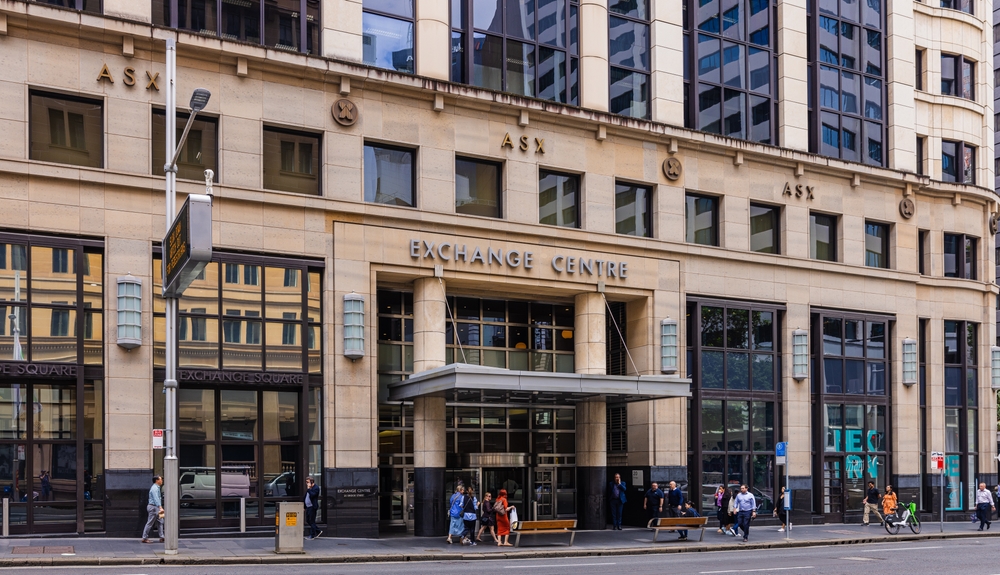
Technology and semiconductor shares fell sharply as investors questioned the debt financing the AI infrastructure boom and confronted higher rates and Chinese competition.
4 minA sharp technology sell-off has exposed a new anxiety on global markets: whether the enormous borrowing behind the artificial-intelligence infrastructure boom can generate sufficient returns as interest rates rise and Chinese competition intensifies.
The artificial-intelligence investment boom has powered technology shares, semiconductor manufacturers and data-centre operators to extraordinary heights. Last week, investors were given a reminder that much of this expansion is being built with borrowed money.
The technology-heavy Nasdaq Composite fell 4.5 per cent over the week ended October 16, its weakest performance since late June. Semiconductor shares suffered an even deeper correction, with the Philadelphia Semiconductor Index losing about 11.4 per cent.
The selling spread quickly through global markets. Micron Technology fell 14.6 per cent over the week, while South Korea’s Samsung Electronics and SK Hynix dropped approximately 18 per cent and 24 per cent respectively.
This was more than a routine bout of profit-taking. Investors were reassessing three interconnected risks: higher interest rates, the rapidly expanding debt burden attached to AI infrastructure and the prospect of stronger competition from Chinese memory-chip manufacturers.
The debt behind the AI build-out
Artificial intelligence requires a physical infrastructure network of enormous scale. Data centres must be built, advanced processors purchased, power supplies secured and cooling systems installed before customers begin generating meaningful revenue from them.
Technology companies are increasingly supplementing their own cash with corporate bonds, syndicated loans, equipment leases, private credit and project-level financing.
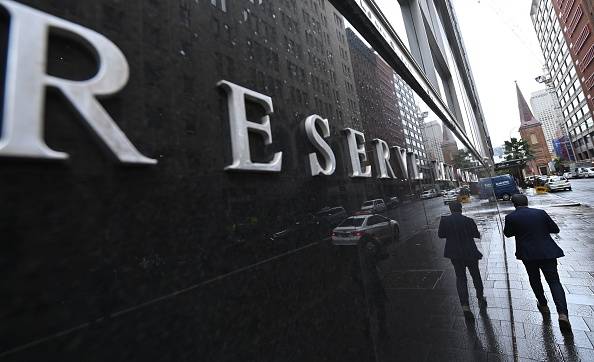
JPMorgan describes the emerging funding model as a combination of conventional corporate borrowing and project finance tied to individual data-centre assets. In Australia, the Reserve Bank estimates that syndicated loans accounted for approximately three-quarters of data-centre financing during 2025 and 2026 to date.
The numbers are becoming large enough to affect broader credit markets. The Federal Reserve Bank of Dallas has cited Wall Street estimates suggesting AI-related investment-grade bond issuance could approach US$300 billion in 2026 alone.
That borrowing is not automatically problematic. Debt can be an efficient way to finance long-lived infrastructure when future revenue is sufficiently predictable. The concern is that AI technology, customer demand and computing economics are changing much faster than the repayment schedules attached to the assets.
A data centre financed today may carry debt for years. Investors must therefore make assumptions about future utilisation rates, electricity prices, chip performance, customer concentration and the amount businesses will ultimately pay for AI computing.
When interest rates rise, those assumptions become less forgiving.
Inflation changes the calculation
September’s US inflation data intensified the pressure. Consumer prices increased 3.7 per cent over the year, ahead of market expectations and up from 3.4 per cent in August.
The hotter reading reduced confidence that interest rates would fall quickly and pushed bond yields higher. That matters particularly for companies whose valuations depend on profits expected well into the future, as well as highly leveraged infrastructure operators that may need to refinance.
CoreWeave has emerged as a closely watched test case. The specialist cloud-computing company has accumulated substantial debt and lease obligations to build AI capacity, while relying on a concentrated group of large technology customers.
Its shares fell sharply during the sell-off, while the cost of insuring its debt against default climbed. CoreWeave has argued that its contracted backlog more than covers its obligations and that financial markets do not always understand its business model. Nevertheless, its securities have become a proxy for investor confidence in debt-funded AI infrastructure.
Oracle, another major investor in AI computing capacity, fell 8.8 per cent in Friday trading, while CoreWeave dropped 15.5 per cent.
The question is shifting from how much AI infrastructure can be built to how profitably it can be operated.
China adds another source of pressure
Interest rates were not the only catalyst. Reports of advances by Chinese memory-chip producer ChangXin Memory Technologies raised concerns that lower-cost Chinese products could increase competition across the global semiconductor industry.
Memory chips are essential to AI systems, but the industry is historically cyclical. Periods of tight supply and high pricing can encourage rapid investment, eventually producing oversupply and falling margins.
The prospect of a well-funded Chinese competitor expanding its technological capabilities unsettled investors in Samsung, SK Hynix and Micron. It also demonstrated that AI-related demand does not insulate chipmakers from conventional competitive pressures.
That combination—slower rate cuts, more expensive financing and potentially cheaper supply—challenged the assumption that every company exposed to AI would enjoy continually expanding margins.
A reset rather than the end of the boom
The sell-off does not establish that the AI boom is ending. Demand for computing power remains strong, the largest technology companies continue to generate formidable cash flows and many infrastructure projects are backed by long-term customer contracts.
What has changed is the market’s willingness to overlook the price and financing structure of that growth.
The most resilient companies are likely to be those able to fund investment from operating cash flow, secure long-duration customers and demonstrate that new capacity will earn returns comfortably above its financing costs.
More speculative operators may face greater scrutiny, particularly where debt is expensive, customers are concentrated or expected revenue depends on demand that has not yet materialised.
For Australian investors, the lesson extends beyond US technology shares. Local data-centre operators, infrastructure funds, electricity suppliers and property groups are increasingly exposed to the same investment cycle.
Artificial intelligence may remain one of the defining growth themes of the decade. But last week’s correction showed that enthusiasm for the technology does not eliminate financial discipline.
The next stage of the AI boom will be judged not only by computing power, model performance or demand for chips, but by something more traditional: whether the assets being financed can generate enough cash to repay the money borrowed to build them.
Fact box
Nasdaq Composite: Down 4.5 per cent for the week ended October 16, 2026
Philadelphia Semiconductor Index: Down approximately 11.4 per cent
Micron Technology: Down approximately 14.6 per cent
Samsung Electronics: Down approximately 18 per cent
SK Hynix: Down approximately 24 per cent
US September inflation: 3.7 per cent annually
Estimated 2026 AI-related investment-grade issuance: Approximately US$300 billion

Formula 1 may be the world’s most glamorous sport, but for Oscar Piastri, it’s also one of the most lucrative. At just 24, Australia’s highest-paid athlete is earning more than US$40 million a year.

In the remote waters of Indonesia’s Anambas Islands, Bawah Reserve is redefining what it means to blend barefoot luxury with environmental stewardship.