Keep the Ambition, Lower Your Ego. How to Thrive as a No. 2 Like Charlie Munger.
Warren Buffett’s longtime deputy showed that rising to the top isn’t everything

 3 min
3 min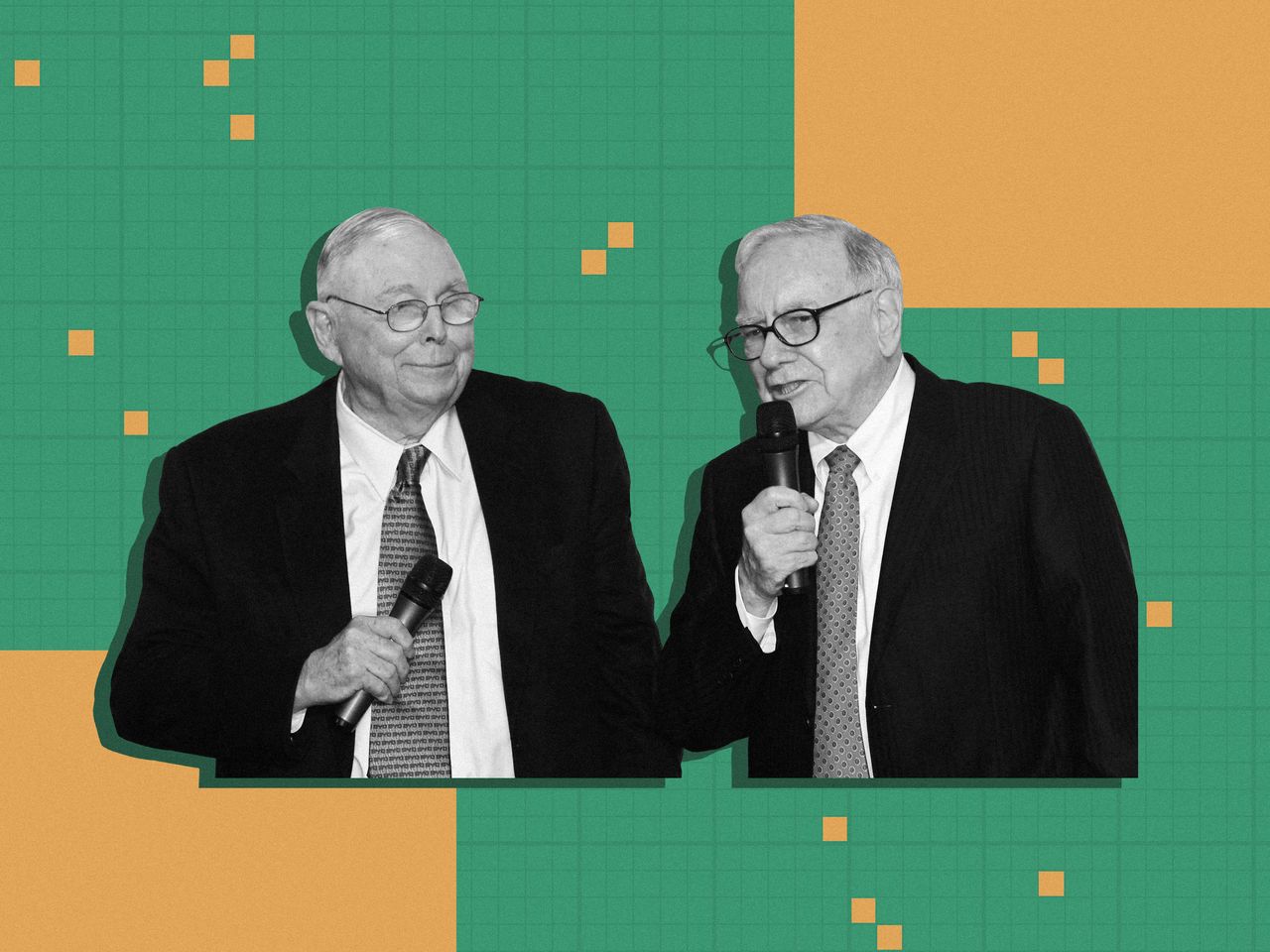
Charlie Munger was Robin to Warren Buffett’s Batman, a business equivalent of the Edge rocking with the Bono of investing.
Munger, who died Tuesday at age 99, played one of the toughest roles in the corporate (or any) world: No. 2.
Succeeding as second in command takes a rare blend of confidence and humility, say people who’ve done it. The consummate right-hand person must be devoted to organizational success while accepting that someone else’s star will always shine brighter.
At a time when many American workers are reconsidering whether the race to the top is worth running at all, Munger’s apparent satisfaction with being the ultimate sidekick could be a model.
It helped that Warren and Charlie, as the duo was known, shared a personal friendship. And being a wingman is presumably more fun when you’re a billionaire, as Munger was. Most important, say those who knew him: Munger knew he was respected and appreciated.
Buffett made sure of it.
Harry Kraemer, former chief executive of the healthcare company Baxter International, recalls a conversation with Buffett at a CEO gathering around the year 2000: “I said, ‘Boy, you’ve got an amazing track record.’ And he goes, ‘It isn’t just me. Never mention my name without Charlie’s.’”
In a recent annual letter, Buffett wrote: “I never have a phone call with Charlie without learning something.”
There aren’t many pairs like Buffett and Munger. An analog might be the late Canadian telecom mogul Ted Rogers and his longtime lieutenant, Phil Lind, who died in August at age 80. Robert Brehl, who co-wrote Lind’s 2018 memoir, “Right Hand Man,” says loyalty is essential to a relationship like Rogers-Lind or Buffett-Munger.
Having complementary strengths and interests helps ward off resentment, Brehl adds.
“You have to have the yin and yang,” he says. “Ted wouldn’t have been as effective without Phil, and the same thing with Warren and Charlie.”
Before meeting Buffett, Munger was already a professional success. He served in World War II, went to Harvard Law School and co-founded a law firm, Munger, Tolles & Olson, where his name was first on the door.
Even though his results as an investor were strong, over time, he realised he could be more successful—and happier—in a partnership. Understanding his own shortcomings contributed to his willingness to become Buffett’s running mate, he has said. He rejected Buffett’s initial overtures before agreeing to come aboard.
“It took me a long time to wise up that [Buffett] had a better way of making a living than I did,” Munger told CNBC in 2021. “But he finally convinced me that I was wasting my time.”
Not that it was easy to set aside his ego to take the No. 2 role and play to what his No. 1 needed. Buffett was Berkshire Hathaway’s public face and larger-than-life persona. Munger seemed to relish his freedom from talking to reporters and investors. In the background, he could be sharper, more direct and funnier.
The durability of the Buffett-and-Munger duo act stemmed, in part, from a shared intellectual curiosity, a measure of humility—for billionaires, anyway—and willingness to learn from their mistakes.
“I constantly see people rise in life who are not the smartest, sometimes not even the most diligent, but they are learning machines,” Munger said in his commencement address to the University of Southern California’s law school in 2007. “They go to bed every night a little wiser than they were when they got up and, boy, does that help, particularly when you have a long run ahead of you.”
Savvy runners also know it can be best to let someone else take the lead to break the wind. A certain type of person prefers to run second, says social psychologist Tessa West, who is studying people she calls “runners up” for a forthcoming book.
“Once you get to a certain level of power, you realise that that top position doesn’t necessarily come with more influence—it just comes with more publicity and a lot more reputational risk,” she says. “The way I see it, Munger got to have his cake and eat it too. He had status without all the headaches.”
He also had a life outside of Berkshire and Buffett. One of Munger’s pet projects was a quest to design the perfect college dormitory.
He’ll be remembered as the consummate consigliere, but that wasn’t his whole identity.
—Geoffrey Rogow contributed to this article.
 Copyright 2020, Dow Jones & Company, Inc. All Rights Reserved Worldwide. LEARN MORE





BNW Developments has established a Sydney presence, joining Arada and Sobha Realty among the growing number of UAE developers pursuing Australian buyers and development opportunities.

Australian shares fell on Thursday as Wall Street weakness, rising oil and persistent rate concerns weighed on most of the market. The S&P/ASX 200 declined 0.72 per cent to 8,702. The All Ordinaries lost 0.66 per cent to finish at 8,897. Mining stocks were hit particularly hard, while real estate also dragged on the index. …
Continue reading “ASX falls 0.7 per cent as miners and property stocks retreat”
 2 min
2 minAustralian shares fell on Thursday as Wall Street weakness, rising oil and persistent rate concerns weighed on most of the market.
The S&P/ASX 200 declined 0.72 per cent to 8,702. The All Ordinaries lost 0.66 per cent to finish at 8,897. Mining stocks were hit particularly hard, while real estate also dragged on the index.
Energy was the notable exception, gaining more than one per cent as Brent crude traded above US$103 a barrel. Oil had moved higher amid uncertainty surrounding potential US diesel-export restrictions and broader geopolitical supply risks. The move supported energy producers but renewed concern about inflation inputs across transport and the wider economy.
Gold shares were weak even as spot bullion remained historically elevated. The All Ordinaries Gold index fell about 2.25 per cent, showing that equity performance can diverge from the commodity because of valuation, currency, operating and company-specific factors.
Zip was a prominent loser, falling 11.38 per cent after the company reported short sales after the previous close. Nine Entertainment also weakened after UBS analysts warned of near-term revenue challenges associated with its advertising-supported subscription tier.
Premier Investments led larger winners despite caution about the retail environment. Breville, in which Premier owns a significant stake, also appeared among leading movers. In the broader ASX 300 screen, Myer gained 11.43 per cent and MAAS Group rose 7.93 per cent, while Lotus Resources fell 10.53 per cent. These percentage moves should be checked against company announcements and trading liquidity before attributing causes.
The Australian dollar was broadly flat at US70.38 cents. Spot gold was around US$4,280 an ounce, Brent crude approximately US$103.08 a barrel and iron ore near US$96.90 a tonne late in the session.
The rate outlook remains the central domestic catalyst. Labour-market weakness has not eliminated the possibility of an RBA increase next week, leaving banks, listed property and other rate-sensitive sectors exposed to changing expectations.
Market dashboard
S&P/ASX 200: 8,702, down 0.72 per cent.
All Ordinaries: 8,897, down 0.66 per cent.
Best sector: Energy, up more than one per cent.
Weakest areas: Real estate and materials were the major drags; confirm final sector percentages before publication.
Material winner: Premier Investments led the large-company gainers. Confirm its final closing move from the ASX before publication.
Material loser: Zip, down 11.38 per cent.
ASX 300 percentage leader: Myer, up 11.43 per cent.
ASX 300 percentage laggard: Zip, down 11.38 per cent.
AUD/USD: Approximately US$0.7038, broadly flat.

Wealthy Aussies are swapping large family homes for high-end apartments, with sales of prestige units tripling over the past decade.

Australian shares finished higher on Tuesday, September 22, as a technology rally and lower oil prices outweighed weakness in energy companies and continued anxiety about domestic interest rates. The S&P/ASX 200 closed 25.9 points, or 0.30 per cent, higher at 8,757.8. The All Ordinaries gained 0.36 per cent to 8,951.0, while the All Technology index …
Continue reading “ASX Wrap: Technology lifts the ASX as falling oil relieves inflation pressure”