The Embarrassment of Having to Explain Your ‘Monster’ Diamond Ring
Couples find that lab-grown diamonds make it cheaper to get engaged or upgrade to a bigger ring. But there are rocky moments.

 4 min
4 min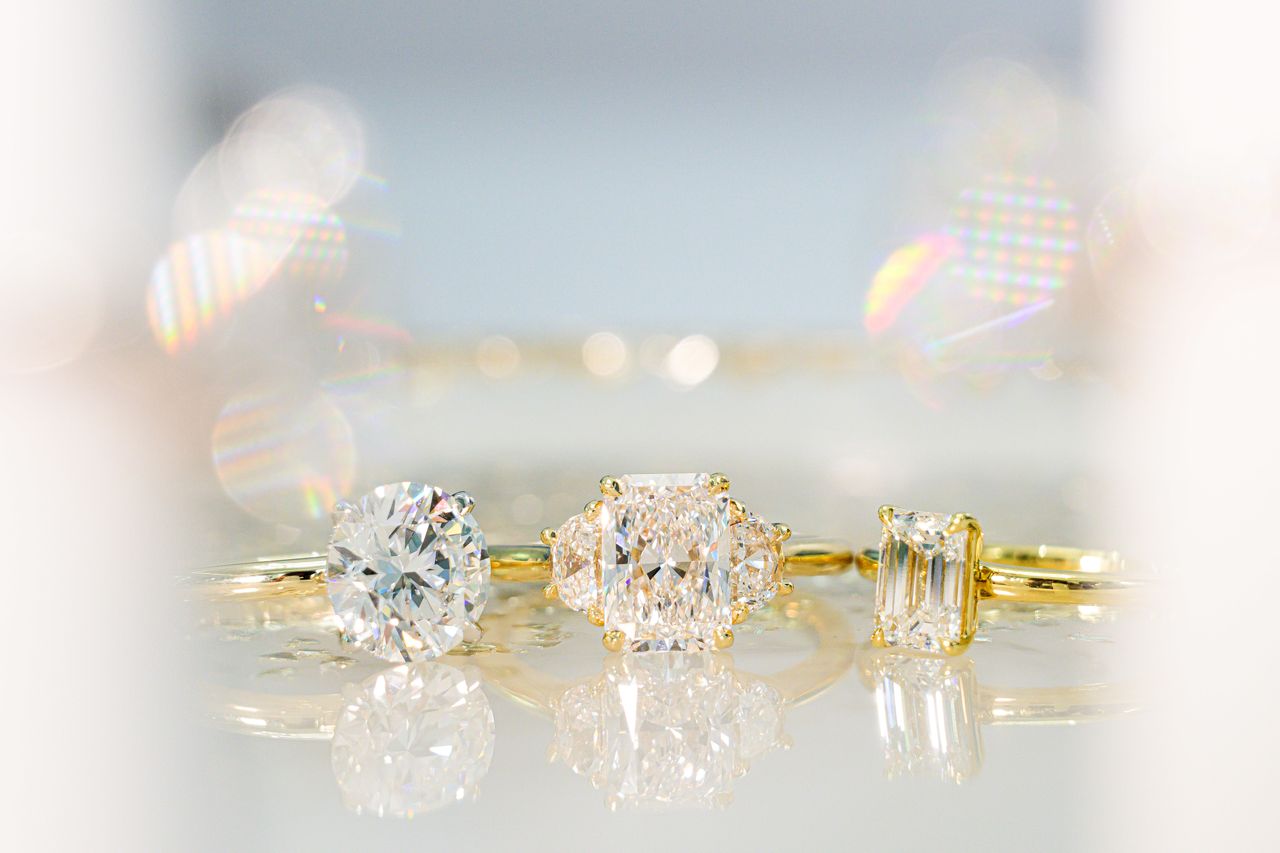
Wedding planner Sterling Boulet has some advice for brides-to-be regarding lab-grown diamonds, which cost a fraction of the natural ones.
“If you’re trying to get your man to propose, they’ll propose faster if you offer this as an option,” says Boulet, of Raleigh, N.C. Recently, she adds, a friend’s fiancé “thanked me the next three times I saw him” for telling him about the cheaper lab-made option.
Man-made diamonds are catching on, despite some lingering stigma. This year was the first time that sales of lab-made and natural mined loose diamonds, primarily used as center stones in engagement rings, were split evenly, according to data from Tenoris, a jewellery and diamond trend-analytics company.
The rise of lab-made stones, however, is bringing up quirks alongside the perks. Now that blingier engagement rings—above two or three carats—are more affordable, more people are dealing with the peculiarities of wearing rather large rocks.
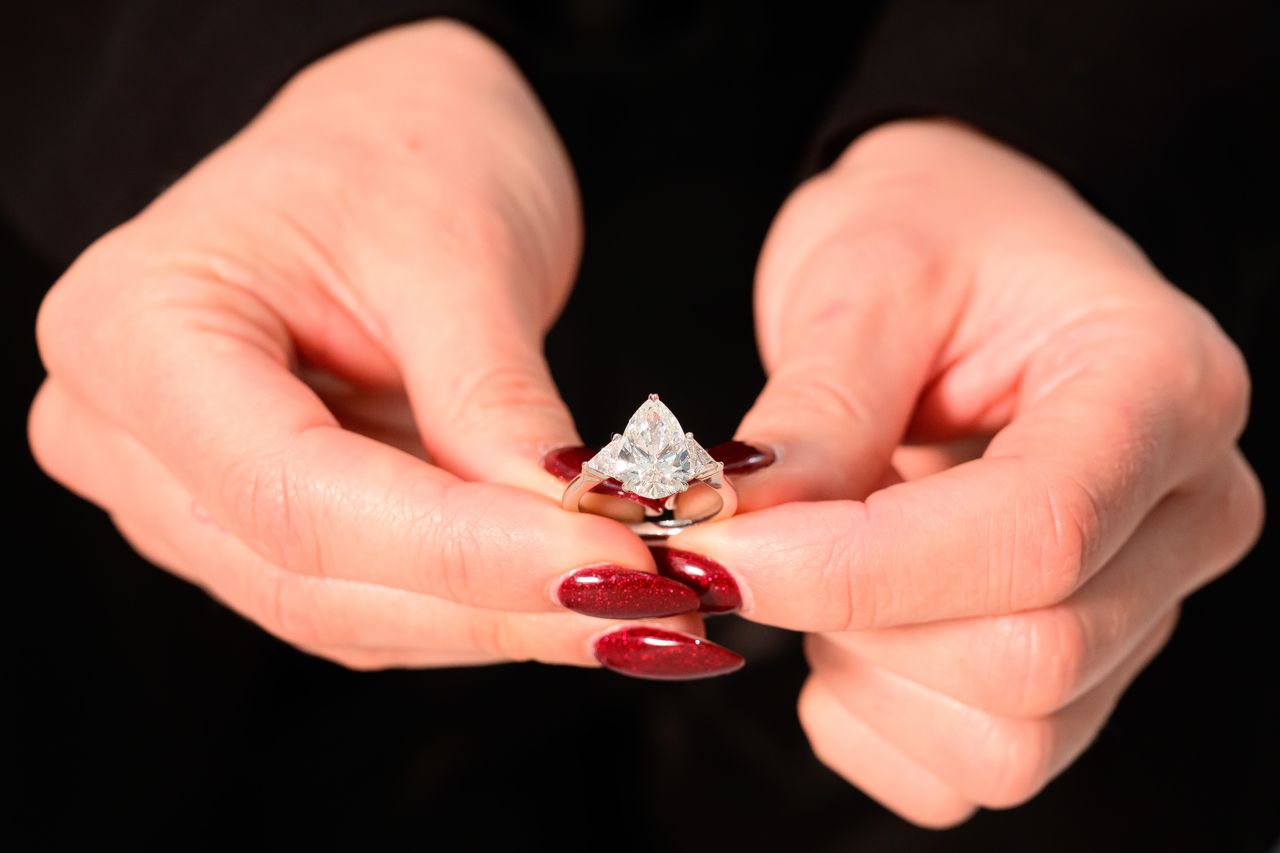
Esther Hare, a 5-foot-11-inch former triathlete, sought out a 4.5-carat lab-made oval-shaped diamond to fit her larger hands as a part of her vow renewal in Hawaii last year. It was a far cry from the half-carat ring her husband proposed with more than 25 years ago and the 1.5-carat upgrade they purchased 10 years ago. Hare, 50, who lives in San Jose, Calif., and works in high tech, chose a $40,000 lab-made diamond because “it’s nuts” to have to spend $100,000 on a natural stone. “It had to be big—that was my vision,” she says.
But the size of the ring has made it less practical at times. She doesn’t wear it for athletic training and swaps in her wedding band instead. And she is careful to leave it at home when traveling. “A lot of times I won’t take it on vacation because it’s just a monster,” she says.
The average retail price for a one-carat lab-made loose diamond decreased to $1,426 this year from $3,039 in 2020, according to the Tenoris data. Similar-sized loose natural diamonds cost $5,426 this year, compared with $4,943 in 2020.
Lab-made diamonds have essentially the same chemical makeup as natural ones, and look the same, unless viewed through sophisticated equipment that gauges the characteristics of emitted light.
At Ritani, an online jewellery retailer, lab-made diamond sales make up about 70% of the diamonds sold, up from roughly 30% two years ago, says Juliet Gomes, head of customer service at the company, based in White Plains, N.Y.
Ritani sometimes records videos of the lab-diamonds pinging when exposed to a “diamond tester,” a tool that judges authenticity, to show customers that the man-made rocks behave the same as natural ones. “We definitely have some deep conversations with them,” Gomes says.
Not all gem dealers are rolling with these stones.
Philadelphia jeweller Steven Singer only stocks the natural stuff in his store and is planning a February campaign to give about 1,000 one-carat lab-made diamonds away free to prove they are “worthless.” Anyone can sign up online and get one in the mail; even shipping is free. “I’m not selling Frankensteins that were built in a lab,” Singer says.
Some brides are turned off by the larger bling now allowed by the lower prices.When her now-husband proposed with a two-carat lab-grown engagement ring, Tiffany Buchert, 40, was excited about the prospect of marriage—but not about the size of the diamond, which she says struck her as “costume jewellery-ish.”
“I said yes in the moment, of course, I didn’t want it to be weird,” says the physician assistant from West Chester, Pa.
But within weeks, she says, she fessed up, telling her fiancé: “I think I hate this ring.”
The couple returned it and then bought a one-carat natural diamond for more than double the price.
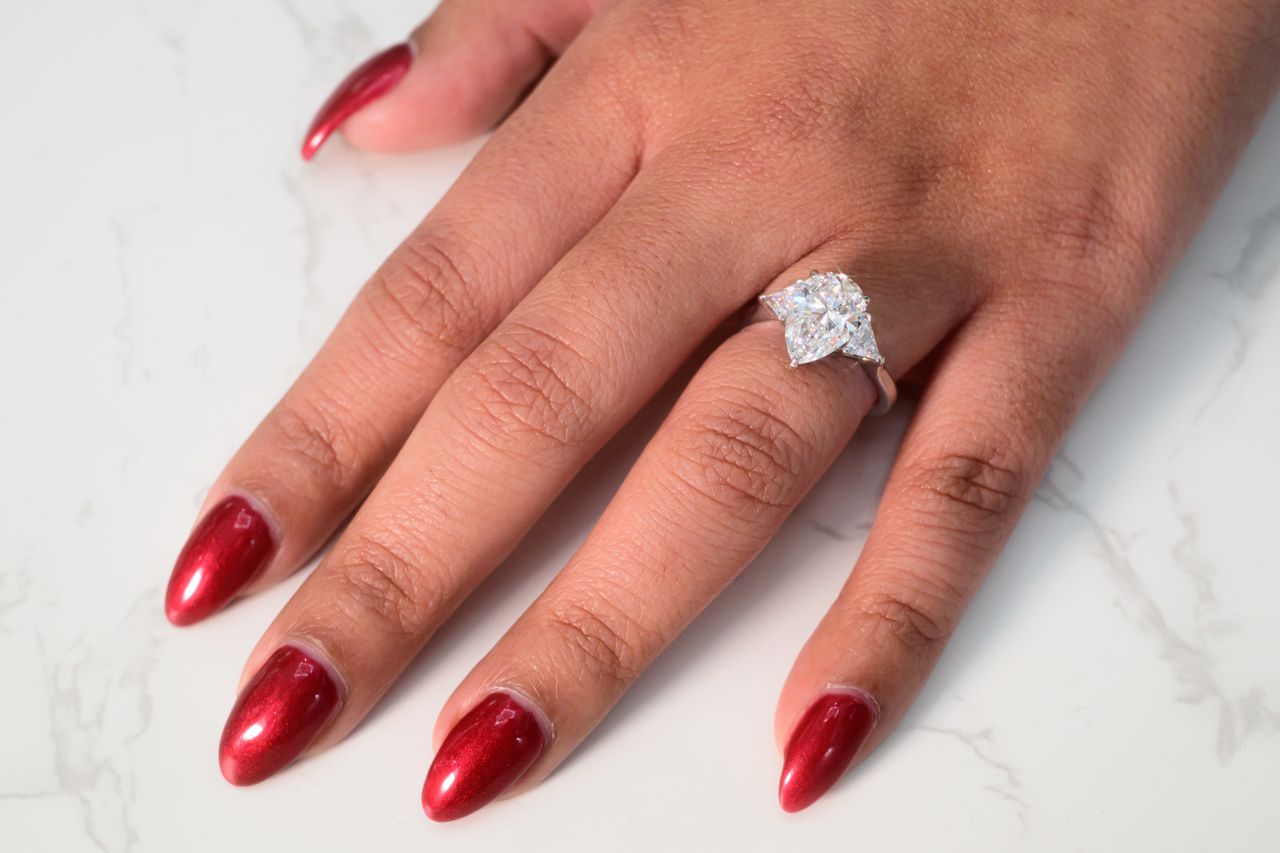
When Boulet, the wedding planner in Raleigh, got engaged herself, she was over the moon when her fiancé proposed with a 2.3 carat lab-made diamond ring. “It’s very shiny, we were almost worried it was too shiny and was going to look fake,” she says.
It doesn’t, which presents another issue—looking like someone who really shelled out for jewellery. Boulet will occasionally volunteer that her diamond ring came from a lab.
“I don’t want people to think I’m putting on airs, or trying to be flashier than I am,” she says.
For Daniel Teoh, a 36-year-old software engineer outside of Detroit, buying a cheaper lab-made diamond for his fiancée meant extra room in his $30,000 ring budget.
Instead of a bigger ring, he got her something they could both enjoy. During a walk while on an annual ski trip to South Lake Tahoe, Calif., Teoh popped the question and handed his now-wife a handmade wooden box that included a 2.5-carat lab-made diamond ring—and a car key.
She put on the ring, celebrated with both of their sisters and a friend, who was the unofficial photographer of the happy event, and then they drove back to the house. There, she saw a 1965 Mustang GT coupe in Wimbledon white with red stripes and a bow on top.
Looking back, Teoh says, it was still the diamond that made the big first impression.
“It wasn’t until like 15 minutes later she was like ‘so, what’s with this key?’” he adds.
 Copyright 2020, Dow Jones & Company, Inc. All Rights Reserved Worldwide. LEARN MORE




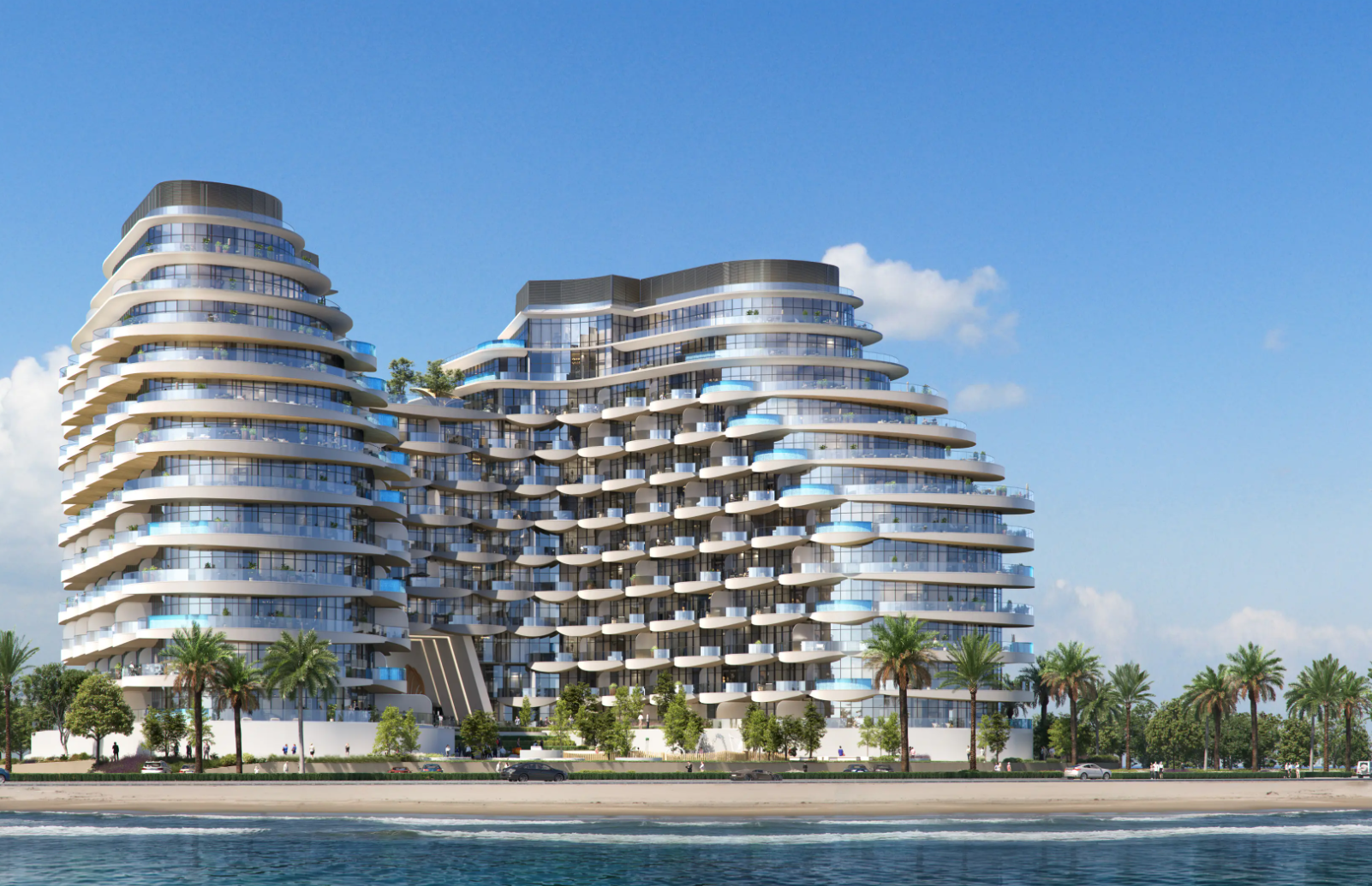
BNW Developments has established a Sydney presence, joining Arada and Sobha Realty among the growing number of UAE developers pursuing Australian buyers and development opportunities.
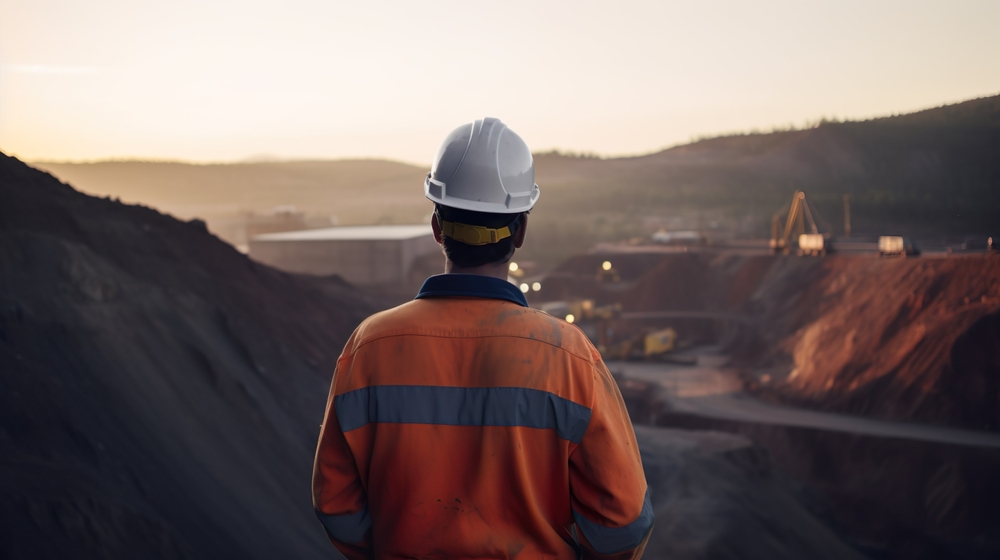
Australian shares fell on Thursday as Wall Street weakness, rising oil and persistent rate concerns weighed on most of the market. The S&P/ASX 200 declined 0.72 per cent to 8,702. The All Ordinaries lost 0.66 per cent to finish at 8,897. Mining stocks were hit particularly hard, while real estate also dragged on the index. …
Continue reading “ASX falls 0.7 per cent as miners and property stocks retreat”
 2 min
2 minAustralian shares fell on Thursday as Wall Street weakness, rising oil and persistent rate concerns weighed on most of the market.
The S&P/ASX 200 declined 0.72 per cent to 8,702. The All Ordinaries lost 0.66 per cent to finish at 8,897. Mining stocks were hit particularly hard, while real estate also dragged on the index.
Energy was the notable exception, gaining more than one per cent as Brent crude traded above US$103 a barrel. Oil had moved higher amid uncertainty surrounding potential US diesel-export restrictions and broader geopolitical supply risks. The move supported energy producers but renewed concern about inflation inputs across transport and the wider economy.
Gold shares were weak even as spot bullion remained historically elevated. The All Ordinaries Gold index fell about 2.25 per cent, showing that equity performance can diverge from the commodity because of valuation, currency, operating and company-specific factors.
Zip was a prominent loser, falling 11.38 per cent after the company reported short sales after the previous close. Nine Entertainment also weakened after UBS analysts warned of near-term revenue challenges associated with its advertising-supported subscription tier.
Premier Investments led larger winners despite caution about the retail environment. Breville, in which Premier owns a significant stake, also appeared among leading movers. In the broader ASX 300 screen, Myer gained 11.43 per cent and MAAS Group rose 7.93 per cent, while Lotus Resources fell 10.53 per cent. These percentage moves should be checked against company announcements and trading liquidity before attributing causes.
The Australian dollar was broadly flat at US70.38 cents. Spot gold was around US$4,280 an ounce, Brent crude approximately US$103.08 a barrel and iron ore near US$96.90 a tonne late in the session.
The rate outlook remains the central domestic catalyst. Labour-market weakness has not eliminated the possibility of an RBA increase next week, leaving banks, listed property and other rate-sensitive sectors exposed to changing expectations.
Market dashboard
S&P/ASX 200: 8,702, down 0.72 per cent.
All Ordinaries: 8,897, down 0.66 per cent.
Best sector: Energy, up more than one per cent.
Weakest areas: Real estate and materials were the major drags; confirm final sector percentages before publication.
Material winner: Premier Investments led the large-company gainers. Confirm its final closing move from the ASX before publication.
Material loser: Zip, down 11.38 per cent.
ASX 300 percentage leader: Myer, up 11.43 per cent.
ASX 300 percentage laggard: Zip, down 11.38 per cent.
AUD/USD: Approximately US$0.7038, broadly flat.

From Italy’s $93,000-a-night villas to a $20,000 Bowral château, a new global ranking showcases the priciest Airbnbs available in 2026.

A thoughtful timber-led renovation in Byron Bay has reimagined an existing house as a warm, resort-style family sanctuary grounded in natural materials.