I Said Yes to Every Upgrade in Las Vegas. Here’s What It Cost.

 4 min
4 min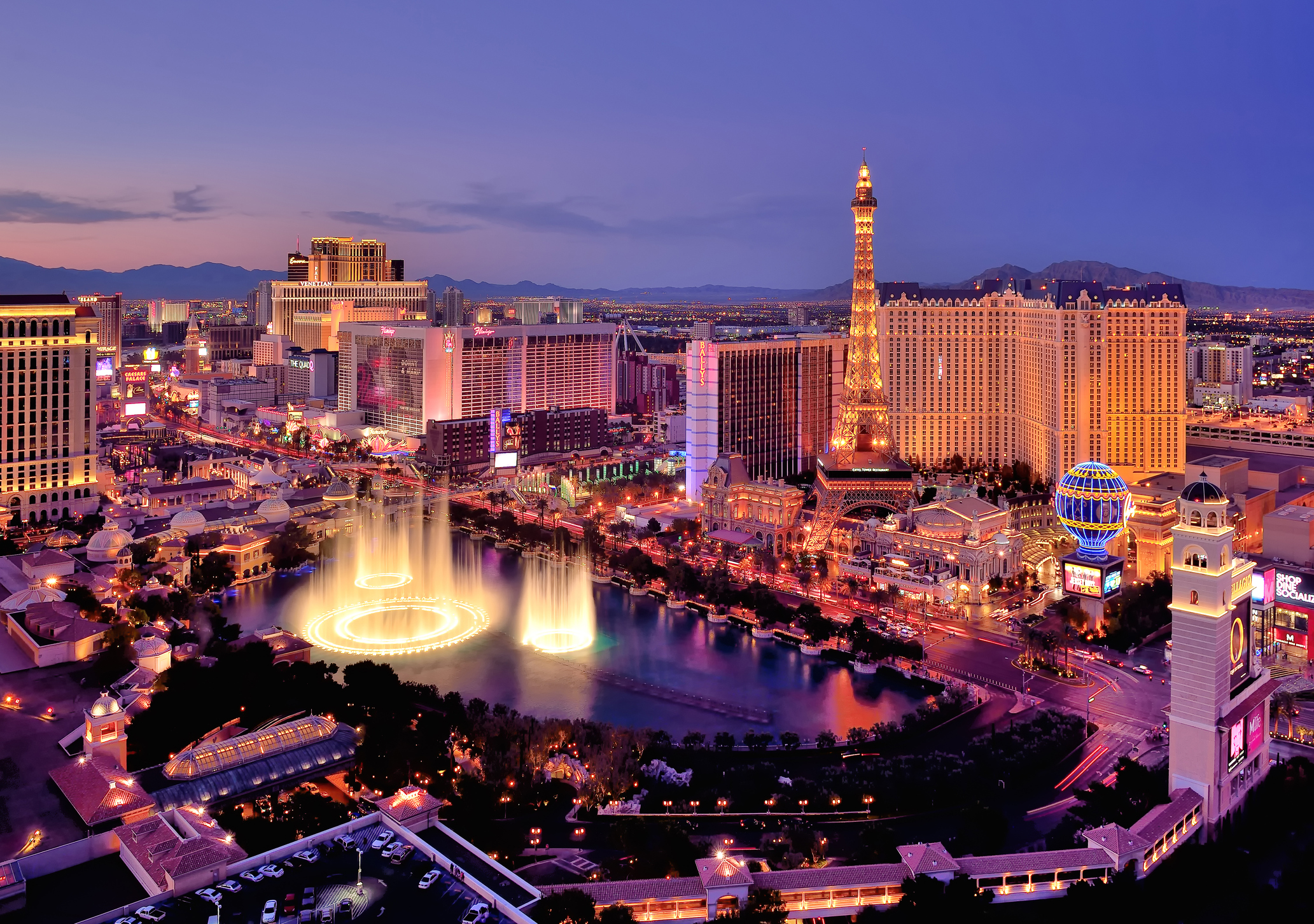
LAS VEGAS—Few places vacuum money from you like this glittering gambling and entertainment playground. That’s true for the visitors in town for Sunday’s Super Bowl —official motto: Excessive Celebration Encouraged. And it’s true for visitors any time, with the $US200 seats at the pool and the $US800 bottle service at nightclubs. All before you step onto the casino floor. You can fly here for as little as $US50 if you play your cards right. But people come to Vegas to spend, and the businesses here know it. This place hits travellers with potential upgrades every few steps. So I flew in for an experiment, a real-life version of the Jim Carrey comedy “Yes Man” (or “Yes Day” if you’re a Jennifer Garner fan). I said yes to every upgrade and VIP package to see just how much you get for your money, and what can be skipped. I had parameters. The $US3,999 helicopter ride to the top of Valley of Fire State Park for yoga was out. As was the $US4,000-a-night upgrade offer to a three-bedroom presidential suite at my hotel. Still, I cut lines, got a massage in the reserved seats at the Aria sportsbook during an NFL wild-card game, relaxed in a private lounge before a show at the Sphere , and drank a French 75 from a prime window seat at the Eiffel Tower Restaurant. In all, I spent $US976 to upgrade my Vegas visit. Was every upcharge worth it? Absolutely not. But a few are worth your money.
Yes, yes and yes
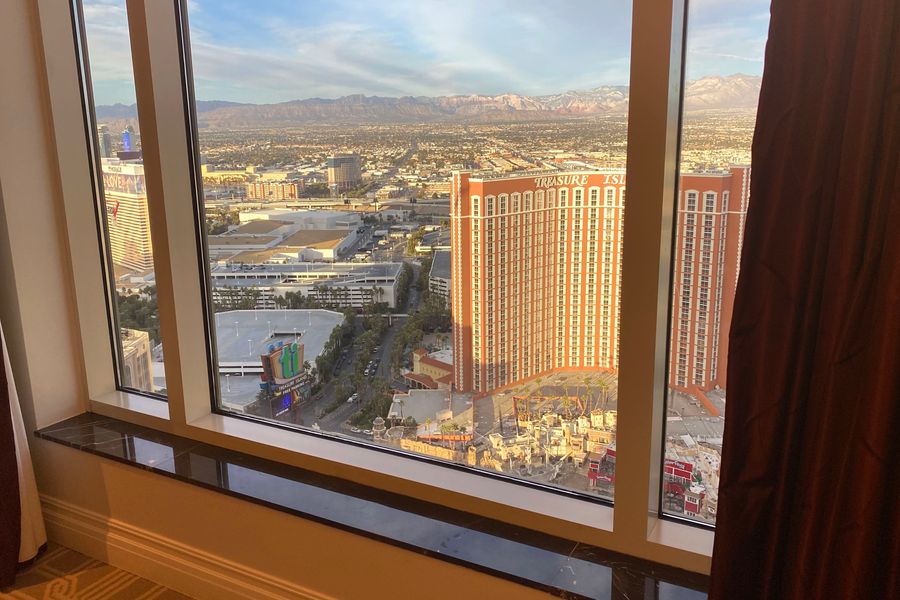
The offers began minutes after I booked a room for two nights at the luxury all-suite Palazzo resort. The price: $US480 before taxes and fees for two nights, a relative bargain on a holiday weekend in January. How much for a room booked last-minute for Super Bowl weekend? $US1,700 a night. I landed two upgrades after an email prompt gauged my interest: $US75 for early check-in and $US57 a night for a city view, the cheapest room category upgrade. Early check-in fees irk me , but this was worth it after my early flight. I was in the room by 11 a.m. The room was swank. The view of Treasure Island and the Mirage was nothing special.
I headed to Area15, an arts and entertainment complex. First stop: Meow Wolf ’s Omega Mart, a popular immersive art experience that takes visitors into a bizarro grocery store that links to an alternate dimension. Admission is $US54; upgrading to a $US99 VIP package promised to “enhance my experience” but bought me a souvenir pin, VIP lanyard, a cocktail and a 15% discount I didn’t use at the gift shop. Maybe the good stuff comes with the $US129 scavenger hunt package. (As I perused products like cans of faux La Croix in mashed-potato flavour and wandered a dizzying hall of mirrors, I wondered how many visitors upgraded with a trip to a local dispensary beforehand.) Admission to stroll around the rest of Area15 is free, but I upgraded to a $US35 pass, which included five attractions, the best of which was the outdoor Liftoff ride with great views of the Strip.
Cutting lines for crab legs
Many resorts here gave up the buffet business for good during the pandemic . The Wicked Spoon buffet at the Cosmopolitan of Las Vegas still packs them in. Saturday brunch had an hourlong wait during my visit. VIP line to the rescue! $US35 gets you a head start on the $US62 all-you-can-eat feast of snow crab legs, sushi and slow-roasted strip loin. The best part: The manager overseeing the line comped the fee because she said she enjoyed talking to me and a friend while we waited. (I never identify myself to employees as a Wall Street Journal reporter on these types of assignments.) Suddenly playing with house money, I sprang for the unlimited mimosa package for $US33 after tax and tip, to go with the brunch base price. There is a 90-minute limit, but I had places to be.
One movie, $US245
My colleague Jason Gay calls the Sphere, the giant orb that sits behind the Venetian, a “beach ball peaking on acid.” He paid $US539 to see U2 at the new venue. In the biggest single splurge on my trip, I paid $US245 to see a 50-minute movie there. The Director’s Seat package promised VIP entry, pre show lounge access with free beer, wine and snacks and a souvenir Sphere T-shirt. The VIP entry was the best perk, letting me skip the clogged Regular Joe lines. I was one of the first people in the atrium, where a humanoid robot named Aura chatted with me and a couple from Arkansas who also took the VIP plunge. The robot asked them the secret to their 55-year marriage. We met again in the nearly empty lounge before the Darren Aronofsky show “Postcard From Earth.”
Delta Sky Club this ain’t: The small food spread included soft pretzels with cheese and mustard. The bartender did dig out a great local IPA, Atomic Duck, and pointed me to the popcorn that VIP guests could take into the movie. The package promises premium seating for the show, a trip around the globe in which seats rattled when elephants or a jumbo jet rumbled across the giant screen. My seat was good, albeit one row up and an aisle over from my friends who paid $US79 for their standard tickets. The final Yes Day in Vegas is a spendy blur: $US190 to watch the Lions and Rams duke it out in an NFL playoff nail-biter from a high-top table with food and alcohol included in a roped-off section at Aria Resort & Casino. The rest of the sportsbook was standing room only. Then there was the $US40-a-person fee for the window seat at the Eiffel Tower Restaurant overlooking the dancing Bellagio fountains. The couple celebrating their anniversary one table back couldn’t believe I paid the fee. I left Vegas a little spoiled and out of sorts. When Southwest Airlines offered a $US50 upgrade to jump to the front of its boarding line on my flight home, I clicked buy. Can’t wait to explain that one to the folks in Expense Accounting.
 Copyright 2020, Dow Jones & Company, Inc. All Rights Reserved Worldwide. LEARN MORE




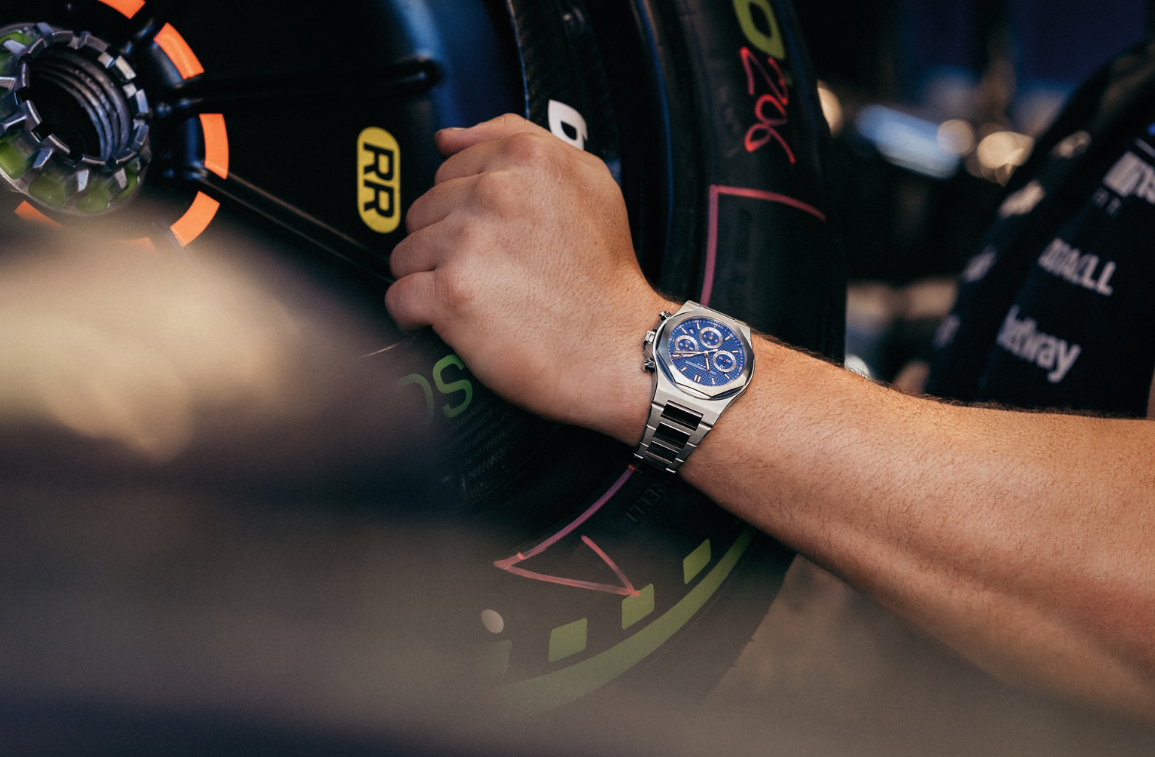
The Swiss watchmaker’s first collaboration with Atlassian Williams F1 Team produces two sporting Laureato models inspired by the team’s 2026 racing car.
Victorian auction buyers will soon receive a piece of information that has traditionally been withheld until bidding reaches it: the vendor’s reserve price. Under new property-sale and underquoting laws, agents must publish the agreed reserve at least seven days before an auction or fixed-date sale. Most changes begin on 1 October 2026 and apply to …
Continue reading “Victoria’s New Auction Rules Will Force Reserve Prices Into the Open”
The Swiss watchmaker’s first collaboration with Atlassian Williams F1 Team produces two sporting Laureato models inspired by the team’s 2026 racing car.
3 minGirard-Perregaux has revealed the first watches created through its partnership with Atlassian Williams F1 Team, bringing the British racing team’s colours to one of Switzerland’s most recognisable integrated-bracelet designs.
The collaboration comprises two 42mm steel watches: the time-and-date Laureato Williams Edition and the more technical Laureato Chronograph Williams Edition.
Both retain the familiar architecture of the Laureato, including its octagonal bezel, integrated bracelet and mix of polished and satin-finished surfaces. The influence of Williams is comparatively restrained, appearing through colour, discreet branding and details inspired by the team’s current Formula 1 car.
It is a welcome departure from the oversized logos and literal automotive references that can characterise motorsport watches.
The Williams FW48 inspires the dial
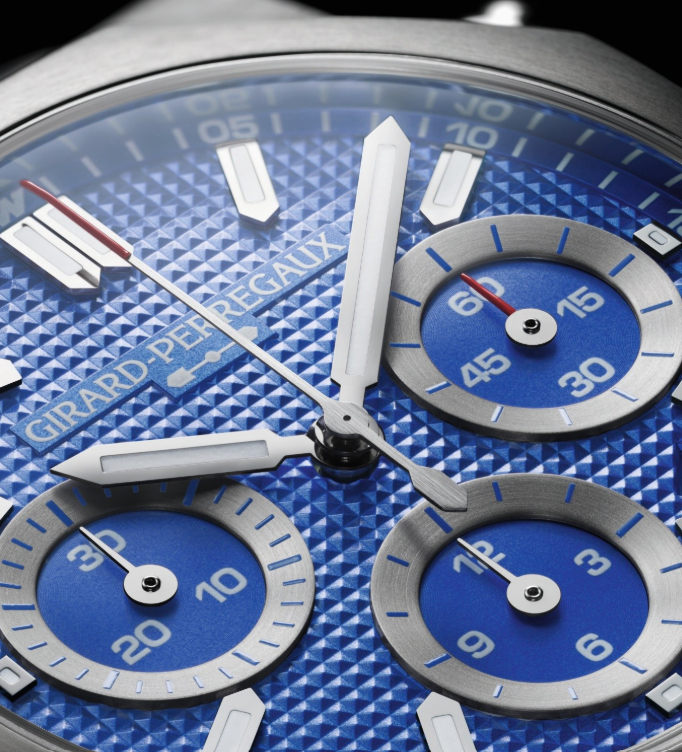
The centrepiece of both models is a blue Clous de Paris dial informed by the livery of the Williams FW48, the car being campaigned by the team during the 2026 Formula 1 season.
A small Williams “W” replaces the conventional marker at 12 o’clock, while the team emblem appears on the sapphire crystal caseback. Red accents echo the keyline used on the FW48 without overwhelming the established Laureato design.
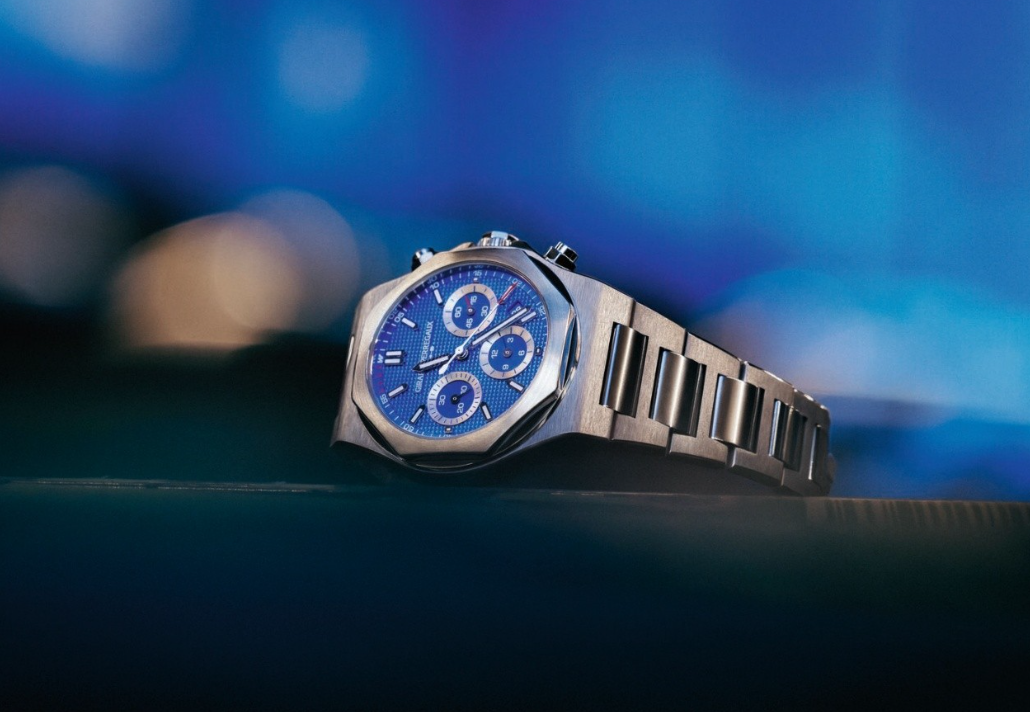
The three-hand model offers the quieter interpretation. Baton-shaped, rhodium-plated hands and hour markers are filled with white-emitting luminescent material, while a date window sits at three o’clock.
The chronograph creates a more obvious connection with motorsport. Three subdials are framed by rhodium-plated rings, with red appearing on the small-seconds hand and the tip of the central chronograph seconds hand.
Both watches measure 42mm across and are water resistant to 100 metres. The standard Laureato has a case thickness of 10.68mm, while the additional mechanics of the chronograph increase its profile to 12.16mm.
Two in-house automatic movements
The Laureato Williams Edition is powered by Girard-Perregaux’s self-winding GP01800 calibre. The movement provides hours, minutes, central seconds and the date, with a minimum power reserve of 54 hours.
The Laureato Chronograph Williams Edition uses the automatic GP03300 calibre, which combines its chronograph functions with a date display and offers a minimum power reserve of 46 hours.
Both movements operate at 28,800 vibrations per hour and can be viewed through their sapphire crystal casebacks.
Their decoration provides a more traditional counterpoint to the Formula 1 association. Finishing techniques include Côtes de Genève, circular graining, bevelling, mirror polishing, satin finishing, engraving and snailing.
The result is less about reproducing the appearance of a racing car than identifying the common ground between two mechanical disciplines: precision, incremental development and the considerable work hidden beneath the finished product.
Parallel histories
The timing of the partnership draws attention to the remarkably similar ages of its two protagonists.
Girard-Perregaux introduced the original Laureato in 1975, establishing an integrated-bracelet sports watch with a distinctive octagonal bezel. Williams entered Formula 1 two years later in 1977.
Both have evolved continuously across the five decades since. The Laureato has moved through different sizes, materials and complications, while retaining its central design language. Williams, meanwhile, has remained one of Formula 1’s most historically significant teams.
That gives the collaboration greater credibility than a simple licensing exercise. Girard-Perregaux and Williams are not being connected solely through the familiar language of speed. Their stronger link is a shared dependence on engineering, testing and the accumulation of specialist knowledge.
The watches are described as the beginning of a longer collaboration, suggesting further Williams editions may follow.
Girard-Perregaux’s international website lists the Laureato Williams Edition at US$16,200 and the Laureato Chronograph Williams Edition at US$20,900. Australian pricing has not been announced.
Specifications
Girard-Perregaux Laureato Williams Edition 42mm
Reference: 81010-11-3680-1GM
Case: Steel
Diameter: 42mm
Thickness: 10.68mm
Crystal: Anti-reflective sapphire crystal
Dial: Blue Clous de Paris pattern
Movement: Automatic GP01800
Functions: Hours, minutes, central seconds and date
Power reserve: Minimum 54 hours
Water resistance: 100 metres
Bracelet: Integrated steel bracelet with triple-folding clasp
International price: US$16,200
Girard-Perregaux Laureato Chronograph Williams Edition 42mm
Reference: 81020-11-3681-1GM
Case: 904L steel
Diameter: 42mm
Thickness: 12.16mm
Crystal: Anti-reflective sapphire crystal
Dial: Blue Clous de Paris pattern with three chronograph counters
Movement: Automatic GP03300
Functions: Chronograph, hours, minutes, small seconds and date
Power reserve: Minimum 46 hours
Water resistance: 100 metres
Bracelet: Integrated 904L steel bracelet with triple-folding clasp
International price: US$20,900

New research suggests that bonuses make employees feel more like a mere cog in a wheel.
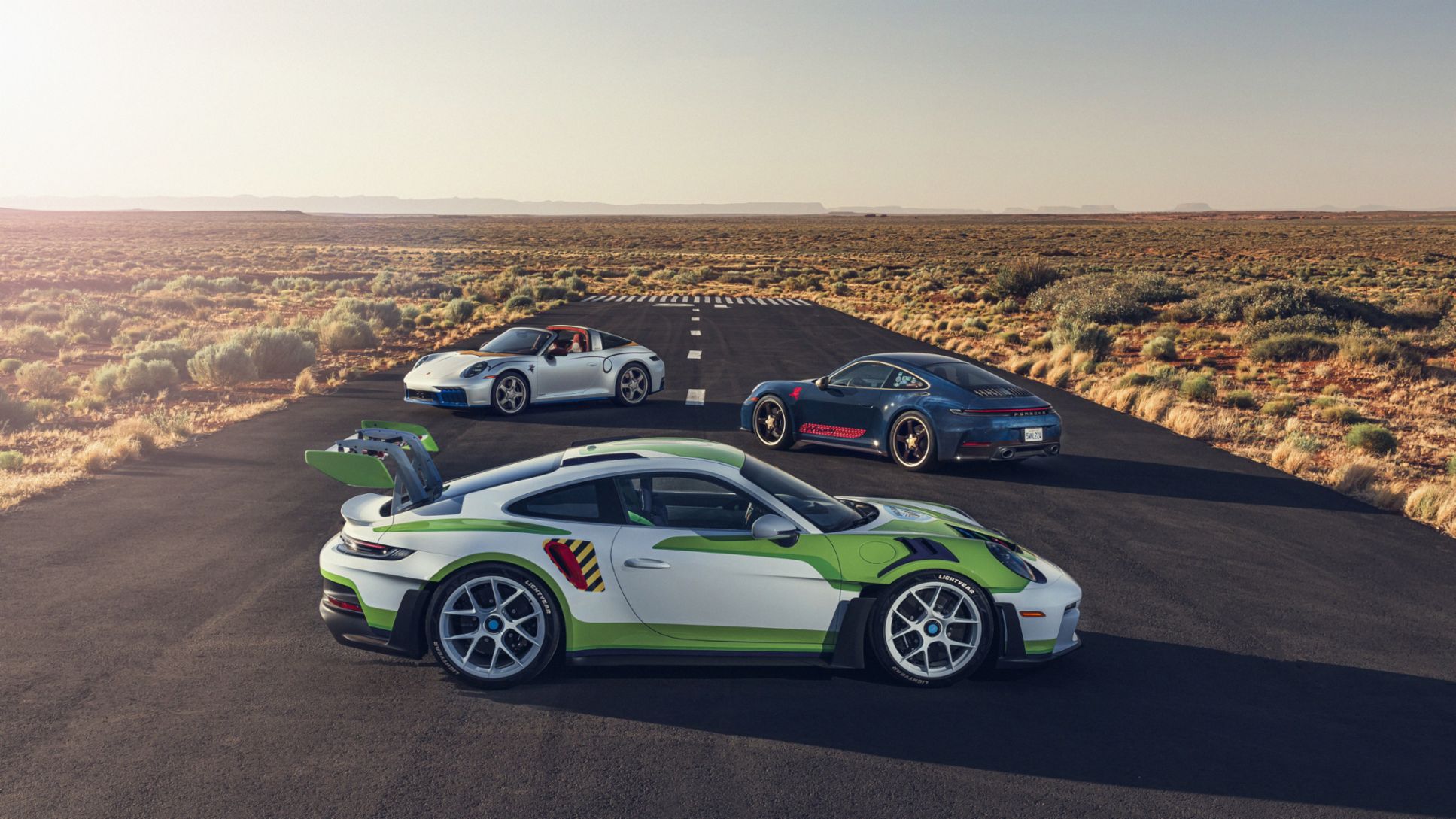
All three vehicles will form part of a broader charitable initiative benefiting Big Brothers Big Sisters of America, the American Red Cross and Starlight Children’s Foundation