Louis Vuitton Unveils Its Most Extravagant High-Jewellery Collection Ahead of Olympics

 3 min
3 min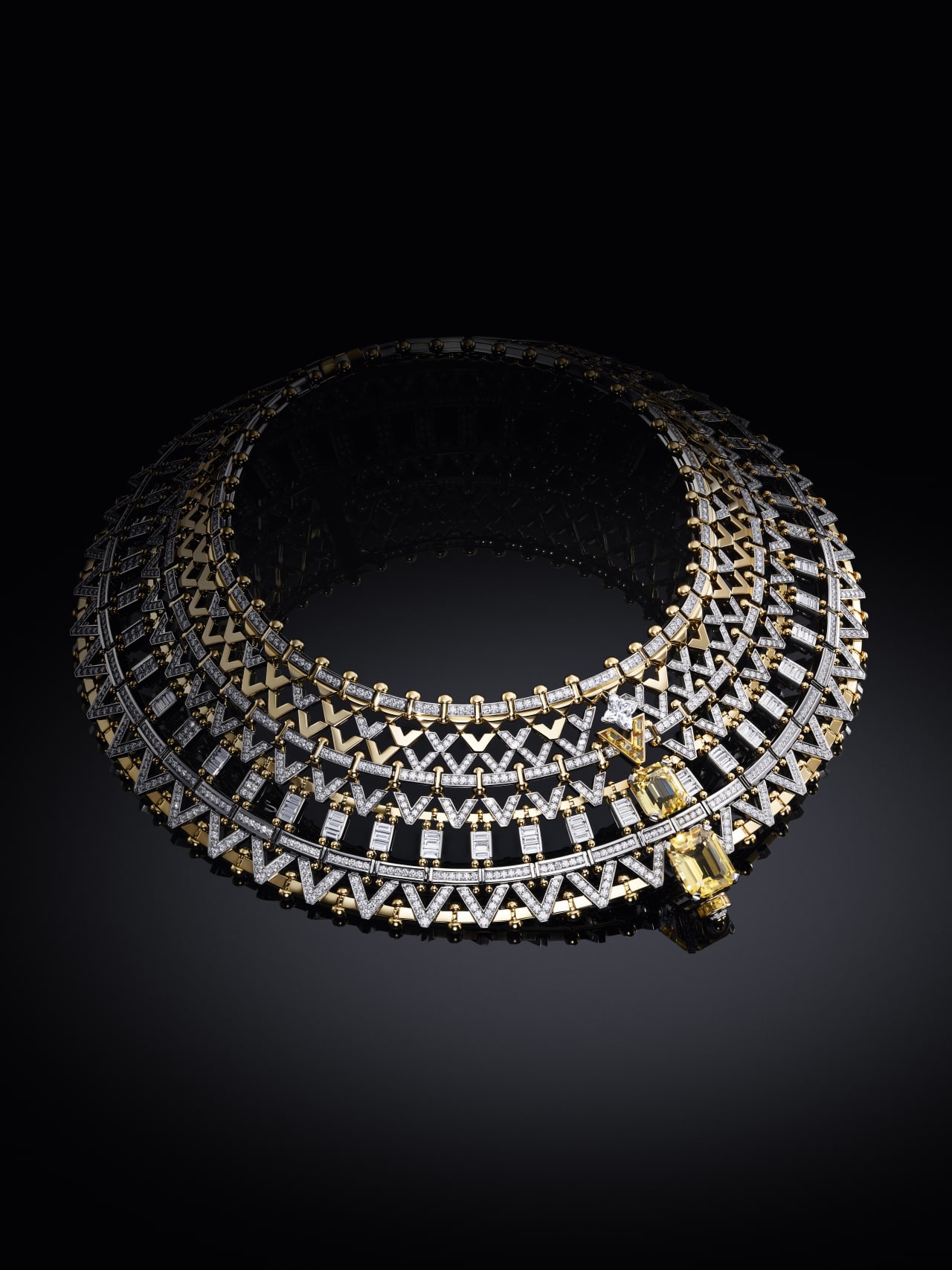
As the world turns its eyes to Paris for the start of the Summer Olympics next month, Louis Vuitton pulled out all the stops for its largest, most extravagant, and expensive high-jewellery collection with the title Awakened Hands, Awakened Minds.
Making its debut in St. Tropez on Wednesday night, the collection will encompass 13 themes and 220 pieces, some of which have yet to be unveiled. Of the 100 unique pieces that were exhibited as the first chapter, one overarching theme is clear: French pride and the celebration of the remarkably transformative period in 19th-century France, which witnessed an explosion of French influence and inventiveness.
“France in the 19th century was a phenomenal time of incredible change, and when Paris really became the centre of the world,” says Francesca Amfitheatrof, artistic director for watches and jewellery, in a news release. “The design language of Awakened Hands, Awakened Minds reflects that—all its intricacies, complications, and innovations—turned into incredible jewels.”

Courtesy of Louis Vuitton
The collection explores a journey through that century, beginning with the end of royal court rule, which resulted in a surge of creativity and talent as France’s ateliers and master craftsmen explored and experimented without limits. Among those influenced by this vibrant zeitgeist was a 16-year-old Louis Vuitton, who arrived in Paris in 1837. The apprentice developed his own unique trunkmaking métier, devising a flat and stackable trunk specifically designed for travel.
“Craftsmanship becomes the currency of this country,” Amfitheatrof said. “It is the birth of France’s Art de Vivre —and the birth of what we know as luxury today.”
The collection’s Splendeur suite took inspiration from an imperial bed embellished with low-relief woodwork in lace-like floral patterns. But the luxury brand is looking to compete for consumers with more than just aesthetics: The jewels feature more than 110 perfectly matched rubies from Mozambique, all fully traceable through blockchain technology, making Louis Vuitton the first to offer traceability of coloured stones.
Louis Vuitton’s iconic LV Monogram Flower is the chosen theme. The symbol was designed by Louis Vuitton’s son Georges in 1896 in memory of his late father. The flower is portrayed in gold and diamonds with a large centre ruby in earrings that complement a high collar, transformable necklace set with 52 rubies framed with an intricate, woven mesh of carved gold flowers. Among the collection’s most complex creations, the Splendeur necklace required the workmanship of 17 setters and 30 jewellers, who spent a total of 3,217 hours on its creation.
Louis Vuitton’s passion for travel is explored in the Vision necklace, which plays on the rivets of Louis Vuitton trunks. Crafted in platinum, yellow gold, diamonds, and yellow sapphires, the disruptive design interlaces V-shaped structures, highlighted with two octagonal-cut yellow sapphires measuring 13.47 carats and 11.79 carats. The piece occupied five jewellers, who mounted and set the necklace section by section over the course of 2,504 hours.

Courtesy of Louis Vuitton
The masterpiece of the entire collection is the Cœur de Paris, the most expensive high-jewellery piece the maison has ever produced.
The necklace pays homage to the Eiffel Tower, which was unveiled to the world at the 1899 Exposition Universelle as a beacon of modernity and ingenuity. The Cœur de Paris offers a new perspective on the structure, as if you are viewing it from underneath looking up. Pink gold rods embrace a grid of baguette settings and diamond-lit arrows, which frame the jewel’s centrepiece: a captivating 56.23-carat diamond christened the Cœur de Paris. The collection’s rarest and most important master stone radiates a unique colour with an intense pink hue complemented with unusual tones of orange and brown. It is set in a medallion that can be detached to wear as a brooch.
The centrepiece dangles from a 5.73-carat LV Monogram Star-cut diamond interlinked with 26 LV Monogram Star-cut diamonds in an opulent rivière creation that is a first for the house. A companion ring features a complementary 12.67-carat, museum-quality diamond that emanates a fancy deep, brownish pink and orange hue.
“Awakened Hands, Awakened Minds tells a story that’s very close to who we are,” Amfitheatrof said. “By showing this mixture of craftsmanship, engineering, invention, and bravery, we are really talking about Louis Vuitton. … we couldn’t celebrate in a better way.”
 Copyright 2020, Dow Jones & Company, Inc. All Rights Reserved Worldwide. LEARN MORE




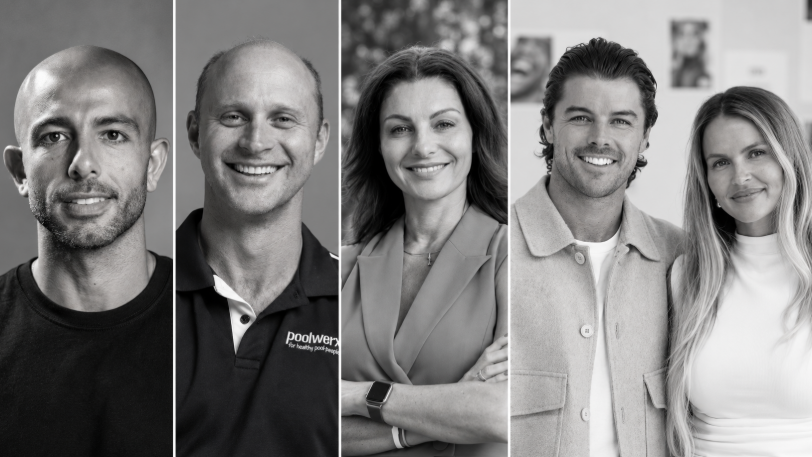
From making unpopular decisions to learning when to listen, leaders from five businesses reveal what nobody prepared them for — and how running a company has challenged their expectations.

Technology and semiconductor shares fell sharply as investors questioned the debt financing the AI infrastructure boom and confronted higher rates and Chinese competition.

Technology and semiconductor shares fell sharply as investors questioned the debt financing the AI infrastructure boom and confronted higher rates and Chinese competition.
4 minA sharp technology sell-off has exposed a new anxiety on global markets: whether the enormous borrowing behind the artificial-intelligence infrastructure boom can generate sufficient returns as interest rates rise and Chinese competition intensifies.
The artificial-intelligence investment boom has powered technology shares, semiconductor manufacturers and data-centre operators to extraordinary heights. Last week, investors were given a reminder that much of this expansion is being built with borrowed money.
The technology-heavy Nasdaq Composite fell 4.5 per cent over the week ended October 16, its weakest performance since late June. Semiconductor shares suffered an even deeper correction, with the Philadelphia Semiconductor Index losing about 11.4 per cent.
The selling spread quickly through global markets. Micron Technology fell 14.6 per cent over the week, while South Korea’s Samsung Electronics and SK Hynix dropped approximately 18 per cent and 24 per cent respectively.
This was more than a routine bout of profit-taking. Investors were reassessing three interconnected risks: higher interest rates, the rapidly expanding debt burden attached to AI infrastructure and the prospect of stronger competition from Chinese memory-chip manufacturers.
The debt behind the AI build-out
Artificial intelligence requires a physical infrastructure network of enormous scale. Data centres must be built, advanced processors purchased, power supplies secured and cooling systems installed before customers begin generating meaningful revenue from them.
Technology companies are increasingly supplementing their own cash with corporate bonds, syndicated loans, equipment leases, private credit and project-level financing.
JPMorgan describes the emerging funding model as a combination of conventional corporate borrowing and project finance tied to individual data-centre assets. In Australia, the Reserve Bank estimates that syndicated loans accounted for approximately three-quarters of data-centre financing during 2025 and 2026 to date.
The numbers are becoming large enough to affect broader credit markets. The Federal Reserve Bank of Dallas has cited Wall Street estimates suggesting AI-related investment-grade bond issuance could approach US$300 billion in 2026 alone.
That borrowing is not automatically problematic. Debt can be an efficient way to finance long-lived infrastructure when future revenue is sufficiently predictable. The concern is that AI technology, customer demand and computing economics are changing much faster than the repayment schedules attached to the assets.
A data centre financed today may carry debt for years. Investors must therefore make assumptions about future utilisation rates, electricity prices, chip performance, customer concentration and the amount businesses will ultimately pay for AI computing.
When interest rates rise, those assumptions become less forgiving.
Inflation changes the calculation
September’s US inflation data intensified the pressure. Consumer prices increased 3.7 per cent over the year, ahead of market expectations and up from 3.4 per cent in August.
The hotter reading reduced confidence that interest rates would fall quickly and pushed bond yields higher. That matters particularly for companies whose valuations depend on profits expected well into the future, as well as highly leveraged infrastructure operators that may need to refinance.
CoreWeave has emerged as a closely watched test case. The specialist cloud-computing company has accumulated substantial debt and lease obligations to build AI capacity, while relying on a concentrated group of large technology customers.
Its shares fell sharply during the sell-off, while the cost of insuring its debt against default climbed. CoreWeave has argued that its contracted backlog more than covers its obligations and that financial markets do not always understand its business model. Nevertheless, its securities have become a proxy for investor confidence in debt-funded AI infrastructure.
Oracle, another major investor in AI computing capacity, fell 8.8 per cent in Friday trading, while CoreWeave dropped 15.5 per cent.
The question is shifting from how much AI infrastructure can be built to how profitably it can be operated.
China adds another source of pressure
Interest rates were not the only catalyst. Reports of advances by Chinese memory-chip producer ChangXin Memory Technologies raised concerns that lower-cost Chinese products could increase competition across the global semiconductor industry.
Memory chips are essential to AI systems, but the industry is historically cyclical. Periods of tight supply and high pricing can encourage rapid investment, eventually producing oversupply and falling margins.
The prospect of a well-funded Chinese competitor expanding its technological capabilities unsettled investors in Samsung, SK Hynix and Micron. It also demonstrated that AI-related demand does not insulate chipmakers from conventional competitive pressures.
That combination—slower rate cuts, more expensive financing and potentially cheaper supply—challenged the assumption that every company exposed to AI would enjoy continually expanding margins.
A reset rather than the end of the boom
The sell-off does not establish that the AI boom is ending. Demand for computing power remains strong, the largest technology companies continue to generate formidable cash flows and many infrastructure projects are backed by long-term customer contracts.
What has changed is the market’s willingness to overlook the price and financing structure of that growth.
The most resilient companies are likely to be those able to fund investment from operating cash flow, secure long-duration customers and demonstrate that new capacity will earn returns comfortably above its financing costs.
More speculative operators may face greater scrutiny, particularly where debt is expensive, customers are concentrated or expected revenue depends on demand that has not yet materialised.
For Australian investors, the lesson extends beyond US technology shares. Local data-centre operators, infrastructure funds, electricity suppliers and property groups are increasingly exposed to the same investment cycle.
Artificial intelligence may remain one of the defining growth themes of the decade. But last week’s correction showed that enthusiasm for the technology does not eliminate financial discipline.
The next stage of the AI boom will be judged not only by computing power, model performance or demand for chips, but by something more traditional: whether the assets being financed can generate enough cash to repay the money borrowed to build them.
Fact box
Nasdaq Composite: Down 4.5 per cent for the week ended October 16, 2026
Philadelphia Semiconductor Index: Down approximately 11.4 per cent
Micron Technology: Down approximately 14.6 per cent
Samsung Electronics: Down approximately 18 per cent
SK Hynix: Down approximately 24 per cent
US September inflation: 3.7 per cent annually
Estimated 2026 AI-related investment-grade issuance: Approximately US$300 billion

Warmer minimalism, tactile materials and wellness focused layouts are redefining luxury interiors as homeowners design for comfort, connection and lasting appeal.
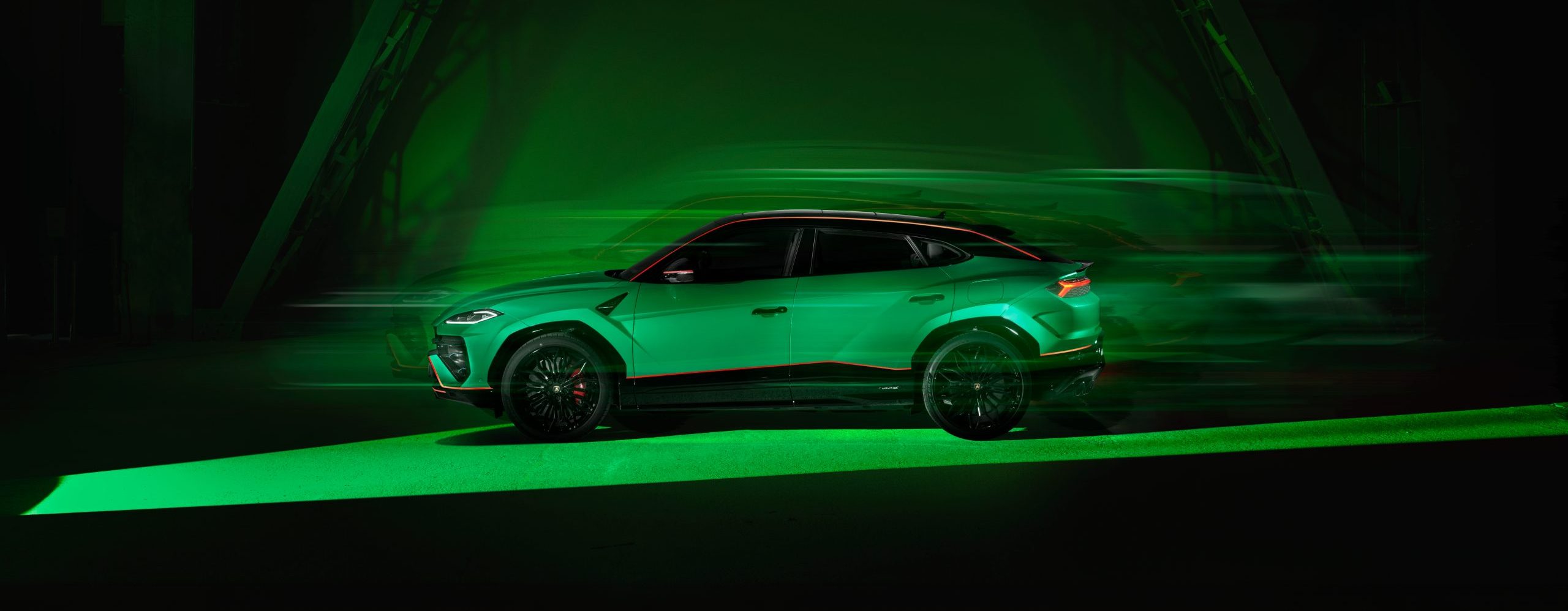
Limited to 630 units, Lamborghini’s latest Urus Capsule pushes personalisation further than ever, blending hybrid performance with over 70 bespoke design combinations.