How the Middle East Became the Latest ‘Gold Rush’ in Marketing
The Middle East is set to be the fastest-growing marketing region in the world, driven by momentum in countries such as Saudi Arabia

 5 min
5 min
Saudi Arabia’s fledgling advertising industry and continued growth in the sector in the United Arab Emirates are helping to make the marketing business in the Middle East the fastest-growing in the world.
Ad spending in the Middle East is projected to increase 8.1% to $6.6 billion this year, up from 3.5% last year, according to advertising research firm WARC.
That expansion is building from a much smaller base than in many other ad markets. The Netherlands alone will generate $6 billion in ad spending in 2024, up about 2.3%, WARC said. But it is also enough to outpace every other region in 2024, the firm said.
“It reminds me almost of the gold rush,” said Reda Raad , chief executive of TBWA\Raad Group, an ad agency based in Dubai, in the United Arab Emirates, that is part of the U.S.-based ad holding company Omnicom Group . “I don’t think we’re going to see this type of growth again in our lifetime.” TBWA\Raad has won eight new clients over the past year, with an increase in head count of 17% to accommodate the new work, Raad said.
Some international brands have long maintained a presence in the region. PepsiCo has considered the area a strategic market for decades, said Karim Elfiqi , senior vice president and chief marketing officer at PepsiCo Africa, Middle East and South Asia. Sponsorship deals with local stars such as Mohamed Salah , a soccer player from Egypt, “are a testimony of how over time, we have been part of the cultural fabric of the region,” Elfiqi said.
Other major brands have formed a more recent focus on the Middle East. The Lego Group opened a Middle East and Africa headquarters in Dubai in 2019, citing the size of the region’s young population. That office has developed work such as a Ramadan-themed campaign that ran in the U.A.E. and Saudi Arabia, among other locations.
‘Massive growth’
The Middle East’s ad market has lagged behind regions such as North America and Europe partly because of stricter cultural norms and regulations that affected business, as did a more limited media landscape and economic instability, according to Raad.
But marketing growth in the region is now being driven in part by newfound marketing interest in Saudi Arabia, where ad spending this year is expected to reach $2.1 billion, nearly double its level in 2019, according to WARC. Growth is also coming from the U.A.E., whose ad market is expected to reach $1.7 billion in 2024. Smaller contributors include Qatar and Kuwait.
The landscape has changed now because of economic diversification, increased connectivity and a move into the digital world, leading international brands to enter and invest in campaigns tailored to the region, Raad said.
Four years ago, Saudi Arabia made up a small proportion of business at Lightblue, a creative experience and tech agency based in Dubai. These days, 40% of its business comes from the country, says co-founder David Balfour , who opened an office in Riyadh last month as a result.
“The conversation used to be, ‘We’re going to do this in Dubai.’ Now, it’s ‘We’re going to do this in Dubai—and in Saudi.’” Balfour said. “We’re seeing massive growth in that region.”
There have been speed bumps. As government spending reaches huge levels , Saudi Arabia experienced a rare economic contraction in 2023.
But the country’s efforts to expand its economic pursuits beyond oil have led to the creation of new brands, which are seeking the help of marketing agencies to get the word out.
Marketers in the region are seeking help to stay on-trend in areas such as generative artificial intelligence and social media, said Greg Paull , principal of R3, a consulting firm that helps match advertisers with agencies.
“U.A.E. has been a magnet for the region for 20 years as more investment has come in—but with the new leadership in Saudi since 2017 [when Mohammed bin Salman was named crown prince ], this market has gone through remarkable growth,” Paull said.
Saudi Arabia has faced criticism for its human-rights record under the crown prince, the day-to-day ruler of the kingdom, especially over the 2018 killing of dissident journalist Jamal Khashoggi and the more recent jailing of women’s rights activists.
Mohammed has outlasted the international isolation that followed Khashoggi’s killing, however, and continues to pursue an economic diversification plan dubbed Vision 2030. The country last year unveiled plans for a new international airline called Riyadh Air, is investing billions of dollars to build its tourism and videogame industries, and in March hosted a golf tournament in Jeddah under the auspices of LIV Golf, the Saudi-backed league that has both challenged the PGA Tour and struck a deal to unify with it.
Changing tides
Vision 2030 also calls women’s empowerment a top social priority and seeks to increase the country’s employment rate of women.
Nada Hakeem , CEO and co-founder of Saudi creative agency Wetheloft, said the perceptions of hardships for women in the marketing and advertising industry are outdated and inaccurate.
“As a Saudi woman who founded my company in 2012, I’ve always felt supported by the creative community and the industry as a whole,” Hakeem said. “While every society may have its challenges, I can confidently say that these challenges have not hindered our growth.”
A progression of new laws, policies and incentives are making the industry in Saudi Arabia more inclusive and supportive for women, she added.
In certain parts of the Middle East, “absolutely, it’s still challenging, but they are making the right strides, and they have the right quotas and ambitions in place,” said Rebecca Bezzina , CEO for the EMEA region at R/GA, an agency owned by Interpublic Group of Cos.
“They’ve got wealth, they’ve got world-class ambition, world-class budget. They’re not shy of doing things in the right way,” Bezzina added, speaking of the region overall. “But they still have a talent shortage, especially from a creative and design and product point of view. So often what we’ve found our success has been that they’ve come to us and said, ‘Oh, we want a world-class agency to help us launch this new venture or do this new brand.’”
R/GA said it sees 69% more requests for agency work from marketers in the region today than it did five years ago. It recently handled a brand redesign for Banque Saudi Fransi, which wanted to reaffirm its Saudi roots with a modern identity, and created Weyay, the brand for a new digital bank from the National Bank of Kuwait.
The agency hasn’t notably increased its regional workforce, but it has made changes to facilitate working across Europe and the Middle East.
Other Western players are making moves to capture a piece of the growth. Advertising giant WPP has long worked in Saudi Arabia through units such as Ogilvy and GroupM, but in 2021 established a joint venture with a local company to create ICG Saudi Arabia, a communications and media company based in Saudi Arabia. Ad holding company Stagwell opened new offices for its media agency Assembly in Riyadh in 2021 and in Cairo in 2022.
Regional hospitality
Some executives said certain facets of business dealings in the Middle East are different than in other parts of the world.
Bertrand Morin, a group account director for R/GA who is based in London and works often with Middle Eastern clients, said he spends much more time speaking about personal lives and families with those clients than those in the U.K. or U.S. He has been invited to Middle Eastern clients’ homes to join their families for dinner, something that has never happened with clients elsewhere.
But others say it can feel surprisingly familiar.
Balfour, the Lightblue co-founder, said he was struck by the number of ad-agency workers recently having dinner at the Riyadh location of steakhouse chain Beefbar, and the scene’s similarity to far-off locations.
“The staff are from everywhere in the world. The service and the food is unbelievable. There’s a DJ playing,” Balfour said. “Apart from not having alcohol, you could be anywhere in the world.”
 Copyright 2020, Dow Jones & Company, Inc. All Rights Reserved Worldwide. LEARN MORE




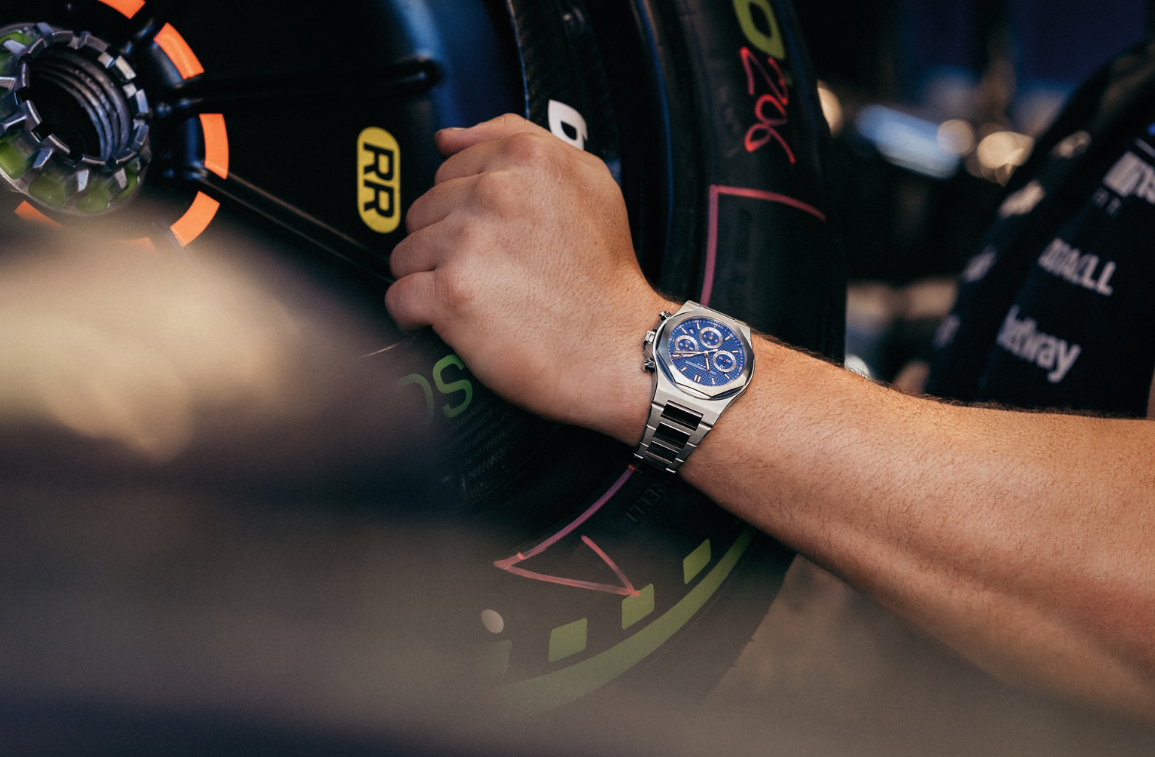
The Swiss watchmaker’s first collaboration with Atlassian Williams F1 Team produces two sporting Laureato models inspired by the team’s 2026 racing car.
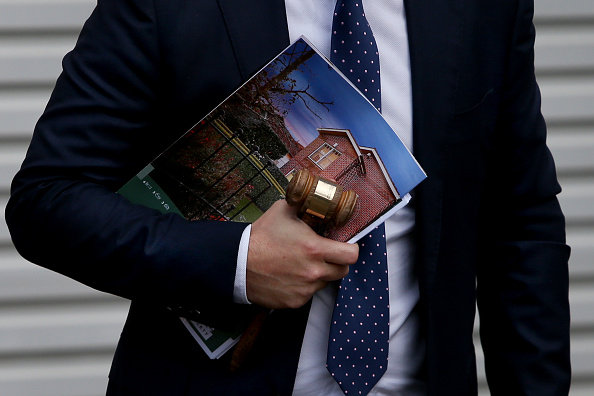
Victorian auction buyers will soon receive a piece of information that has traditionally been withheld until bidding reaches it: the vendor’s reserve price. Under new property-sale and underquoting laws, agents must publish the agreed reserve at least seven days before an auction or fixed-date sale. Most changes begin on 1 October 2026 and apply to …
Continue reading “Victoria’s New Auction Rules Will Force Reserve Prices Into the Open”
The Swiss watchmaker’s first collaboration with Atlassian Williams F1 Team produces two sporting Laureato models inspired by the team’s 2026 racing car.
3 minGirard-Perregaux has revealed the first watches created through its partnership with Atlassian Williams F1 Team, bringing the British racing team’s colours to one of Switzerland’s most recognisable integrated-bracelet designs.
The collaboration comprises two 42mm steel watches: the time-and-date Laureato Williams Edition and the more technical Laureato Chronograph Williams Edition.
Both retain the familiar architecture of the Laureato, including its octagonal bezel, integrated bracelet and mix of polished and satin-finished surfaces. The influence of Williams is comparatively restrained, appearing through colour, discreet branding and details inspired by the team’s current Formula 1 car.
It is a welcome departure from the oversized logos and literal automotive references that can characterise motorsport watches.
The Williams FW48 inspires the dial
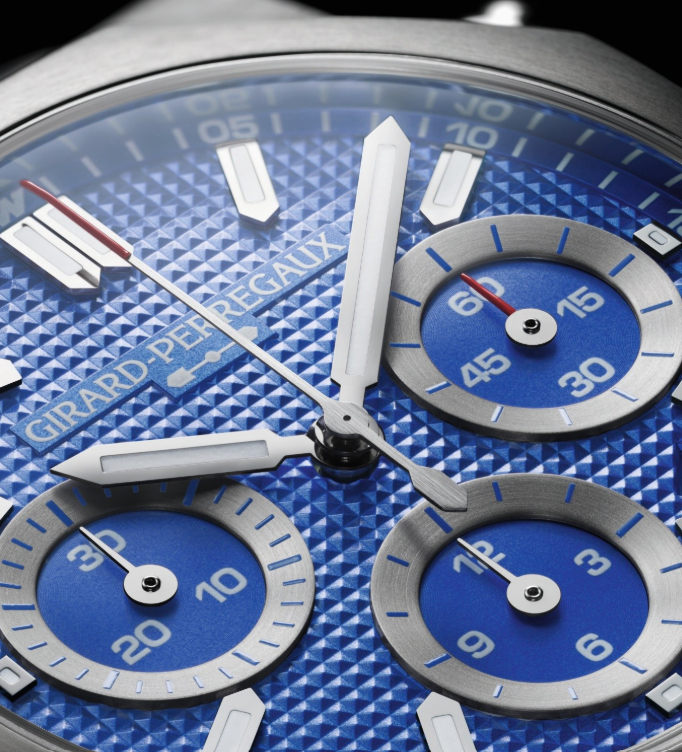
The centrepiece of both models is a blue Clous de Paris dial informed by the livery of the Williams FW48, the car being campaigned by the team during the 2026 Formula 1 season.
A small Williams “W” replaces the conventional marker at 12 o’clock, while the team emblem appears on the sapphire crystal caseback. Red accents echo the keyline used on the FW48 without overwhelming the established Laureato design.
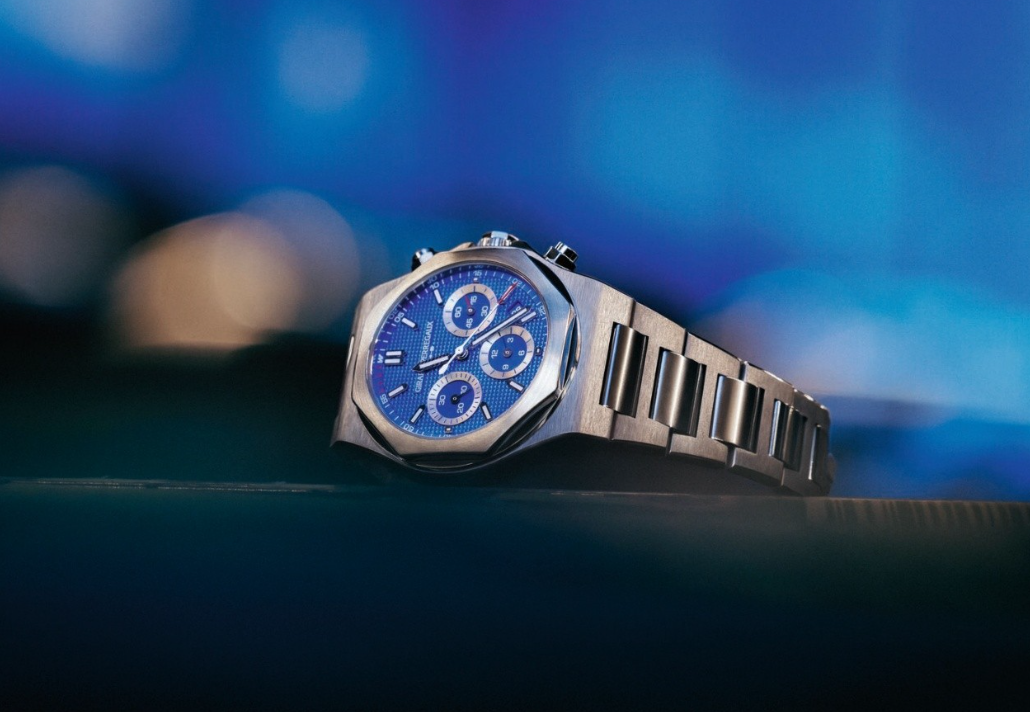
The three-hand model offers the quieter interpretation. Baton-shaped, rhodium-plated hands and hour markers are filled with white-emitting luminescent material, while a date window sits at three o’clock.
The chronograph creates a more obvious connection with motorsport. Three subdials are framed by rhodium-plated rings, with red appearing on the small-seconds hand and the tip of the central chronograph seconds hand.
Both watches measure 42mm across and are water resistant to 100 metres. The standard Laureato has a case thickness of 10.68mm, while the additional mechanics of the chronograph increase its profile to 12.16mm.
Two in-house automatic movements
The Laureato Williams Edition is powered by Girard-Perregaux’s self-winding GP01800 calibre. The movement provides hours, minutes, central seconds and the date, with a minimum power reserve of 54 hours.
The Laureato Chronograph Williams Edition uses the automatic GP03300 calibre, which combines its chronograph functions with a date display and offers a minimum power reserve of 46 hours.
Both movements operate at 28,800 vibrations per hour and can be viewed through their sapphire crystal casebacks.
Their decoration provides a more traditional counterpoint to the Formula 1 association. Finishing techniques include Côtes de Genève, circular graining, bevelling, mirror polishing, satin finishing, engraving and snailing.
The result is less about reproducing the appearance of a racing car than identifying the common ground between two mechanical disciplines: precision, incremental development and the considerable work hidden beneath the finished product.
Parallel histories
The timing of the partnership draws attention to the remarkably similar ages of its two protagonists.
Girard-Perregaux introduced the original Laureato in 1975, establishing an integrated-bracelet sports watch with a distinctive octagonal bezel. Williams entered Formula 1 two years later in 1977.
Both have evolved continuously across the five decades since. The Laureato has moved through different sizes, materials and complications, while retaining its central design language. Williams, meanwhile, has remained one of Formula 1’s most historically significant teams.
That gives the collaboration greater credibility than a simple licensing exercise. Girard-Perregaux and Williams are not being connected solely through the familiar language of speed. Their stronger link is a shared dependence on engineering, testing and the accumulation of specialist knowledge.
The watches are described as the beginning of a longer collaboration, suggesting further Williams editions may follow.
Girard-Perregaux’s international website lists the Laureato Williams Edition at US$16,200 and the Laureato Chronograph Williams Edition at US$20,900. Australian pricing has not been announced.
Specifications
Girard-Perregaux Laureato Williams Edition 42mm
Reference: 81010-11-3680-1GM
Case: Steel
Diameter: 42mm
Thickness: 10.68mm
Crystal: Anti-reflective sapphire crystal
Dial: Blue Clous de Paris pattern
Movement: Automatic GP01800
Functions: Hours, minutes, central seconds and date
Power reserve: Minimum 54 hours
Water resistance: 100 metres
Bracelet: Integrated steel bracelet with triple-folding clasp
International price: US$16,200
Girard-Perregaux Laureato Chronograph Williams Edition 42mm
Reference: 81020-11-3681-1GM
Case: 904L steel
Diameter: 42mm
Thickness: 12.16mm
Crystal: Anti-reflective sapphire crystal
Dial: Blue Clous de Paris pattern with three chronograph counters
Movement: Automatic GP03300
Functions: Chronograph, hours, minutes, small seconds and date
Power reserve: Minimum 46 hours
Water resistance: 100 metres
Bracelet: Integrated 904L steel bracelet with triple-folding clasp
International price: US$20,900
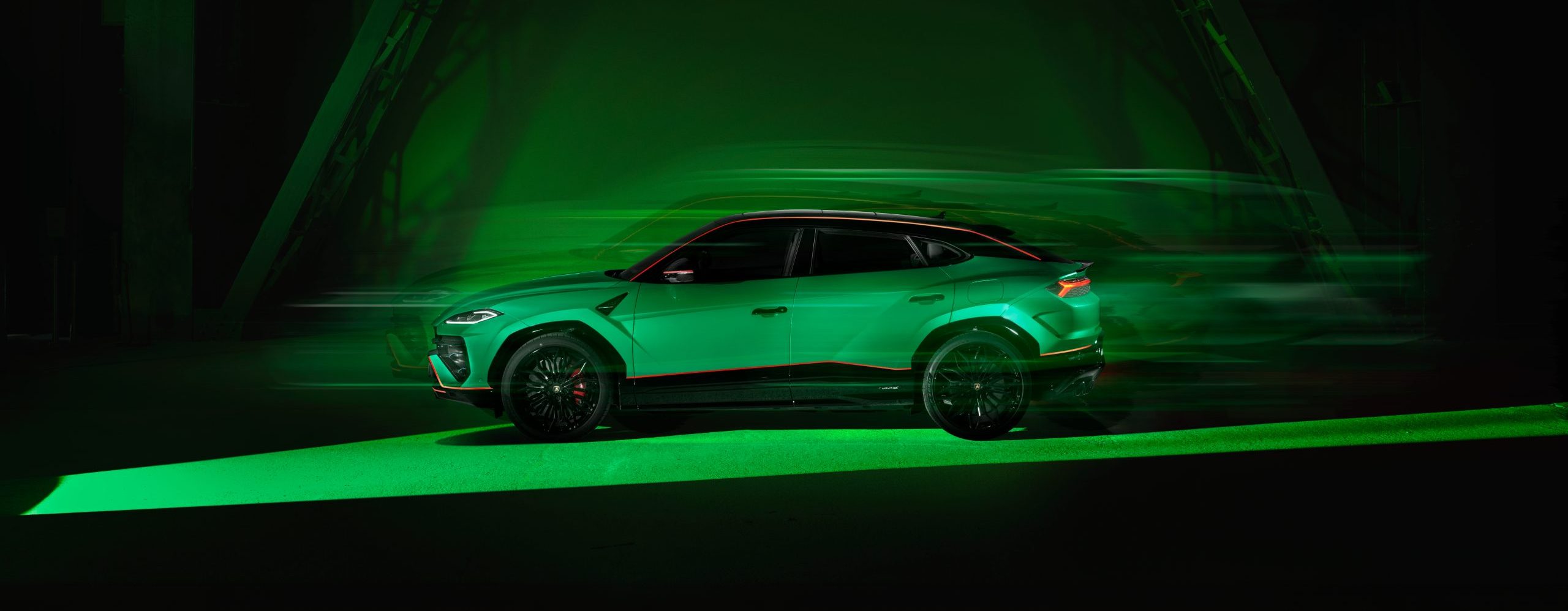
Limited to 630 units, Lamborghini’s latest Urus Capsule pushes personalisation further than ever, blending hybrid performance with over 70 bespoke design combinations.

From Italy’s $93,000-a-night villas to a $20,000 Bowral château, a new global ranking showcases the priciest Airbnbs available in 2026.