THE WORLD’S MOST EXPENSIVE AIRBNBS REVEALED & AUSTRALIA’S SURPRISE ENTRY
From Italy’s $93,000-a-night villas to a $20,000 Bowral château, a new global ranking showcases the priciest Airbnbs available in 2026.
 5 min
5 min
From Italy’s $93,000-a-night villas to a $20,000 Bowral château, a new global ranking showcases the priciest Airbnbs available in 2026.
Airbnb is one of the most recognisable companies in the global hospitality and travel sector.
What started off as a home-swapping (or rather, air-mattress-and-breakfast) platform for travellers in 2007–2008 has evolved into one of the most lucrative short-stay accommodation marketplaces in the world.
Founded in 2008 by Brian Chesky, Joe Gebbia, and Nathan Blecharczyk, the short-stay letting platform now boasts over 8 million active listings across more than 220 countries and regions, and facilitates hundreds of millions of bookings every year.
Whereas homes were previously swapped in a spirit of sharing, many properties now on the short-stay letting market are effectively holiday homes for their owners—residences that are never fully lived in.
While expensive stays are nothing new, have you ever wondered what the most expensive homes on Airbnb are?
A new report from Tradingplatforms has collated listings across the world’s most visited countries, providing a snapshot of the priciest stays available for January 2026.
To compile the ranking, researchers analysed 86 countries with the highest inbound visitor numbers, identifying each nation’s most expensive Airbnb during the period of January 14–17, 2026.
Prices were carefully gathered inclusive of taxes and fees, with any unrealistic or inauthentic listings removed. The study produced a global leaderboard, along with regional breakdowns, and included details on property type, total cost, bedroom and bathroom count, guest capacity, reviews, and premium amenities.
The findings reveal that luxury is spread across multiple continents, with Europe dominating the list.
Italy tops the global ranking with a property priced at €51,921 (AU$92,783) per night, while the second most expensive listing, in Mexico, comes in at €27,474 (AU$49,096) per night.
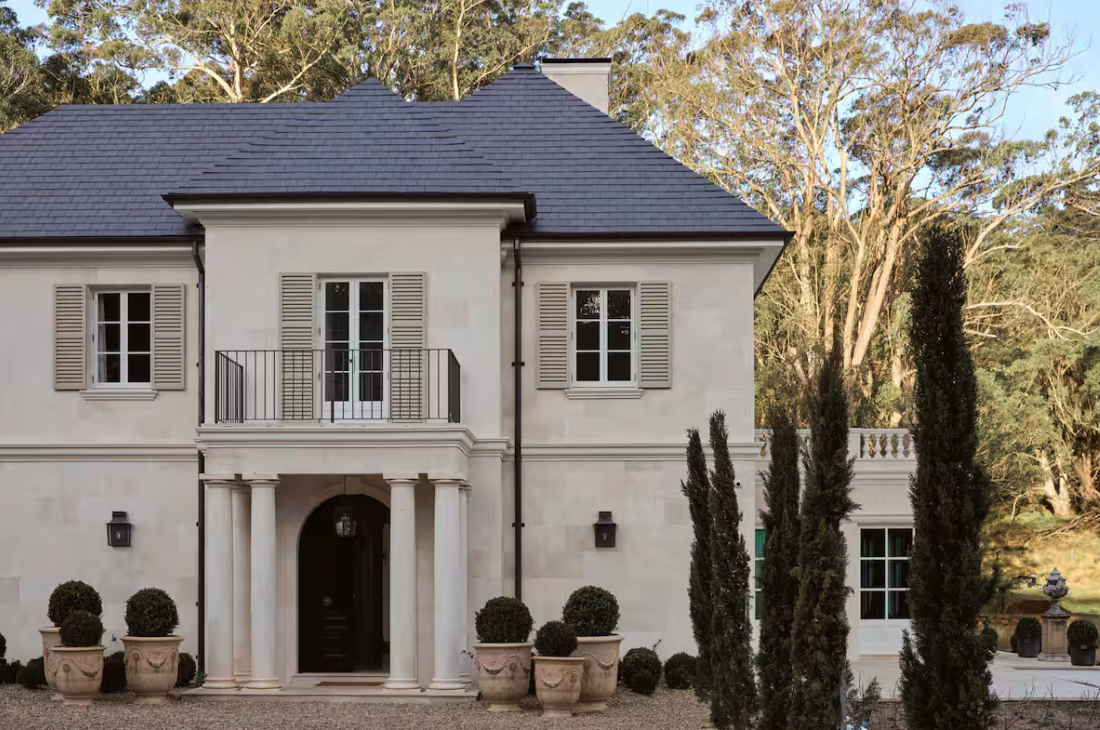
Australia doesn’t make the top 10 list, but a home in Bowral in the Southern Highlands of NSW comes in at number 14. La Gemme Estate, a French château set on 100 acres of private grounds, costs €11,351 a night, or just over $20,000 based on the exchange rate at the time of publication.
The home, at the end of a long, tree-lined driveway which meanders past a private pond with a fountain feature and a bridge, has eight bedrooms, seven bathrooms, a heated swimming pool, steam room, outdoor hot tub, and a library. The property can also host small weddings.
It is owned by Clayton Larcombe, the financial adviser turned fund manager, and his wife Kyara, who bought the “European Palladian style country estate” for $7.4 million in 2021, before undertaking a lavish renovation.
The World’s 10 Most Expensive Airbnbs for January 2026
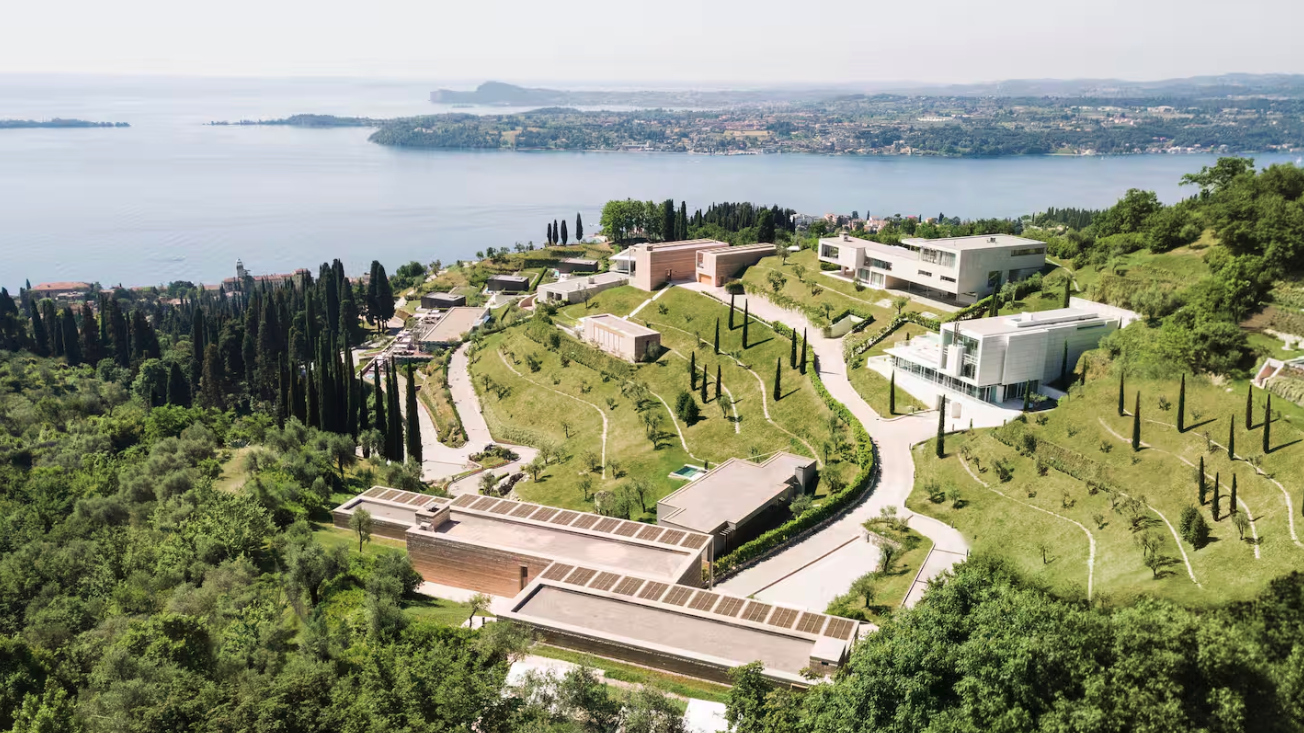
Luxury Lake Garda View Resort, Gardone Riviera, Italy
Price per night: €51,921 (AU$92,783)
The priciest Airbnb in the world is the Lake Garda View Resort in Italy’s Gardone Riviera. The five villas, designed by internationally renowned architects such as David Chipperfield, Richard Meier and Marc Mark, can accommodate 84 guests. There’s even an internal hotel with high-end apartments pitched as being ideal for operational staff, productions, or guests.
Casa Tau: A Luxury Villa, Punta de Mita, Mexico
Price per night: €27,474 (AU$49,096)
Casa Tau is the second priciest Airbnb in the world for January. The 12-bedroom villa, on the beachfront of the prestigious Punta Mita Community in Los Ranchos, Mexico, can host 27 guests across five buildings. The focal point is the central swimming pool and hot tub with adjoining alfresco terrace. Casa Tau comes with twice-daily housekeeping, chef and laundry services, a 12-hour butler, and preference membership to the resort’s golf and beach clubs.
7-Bedroom Ultra-Luxury Villa, Dubai, UAE
Price per night: €25,728 (AU$45,976)
A new villa in Dubai, furnished with iconic pieces from the world’s most prestigious luxury brands like Fendi Casa, Versace Home, Bentley Home, and Roche Bobois, is the priciest in the UAE.
The seven-bedroom home features two private swimming pools — one infinity-edge, one indoor — and a fully equipped private lounge and entertainment club, complete with a bar, high-end audio-visual systems, and ambient lighting.
Country House, La Romana, Dominican Republic, Villa Cahey
Price per night: €25,055 (AU$44,773)
A private beach and a private chef, butler, bartender, and maids are just some of the inclusions at Country House in the Dominican Republic. The exclusive home, with uninterrupted views over the water, can host 24 guests across 12 bedrooms. Guests also have access to Casa de Campo amenities, including golf courses, dining, Minitas Beach Club, tennis courts, equestrian and shooting centres, and water sports.
Villa Riviera Serenity, Mae Nam, Thailand
Price per night: €24,536 (AU$43,846)
Thailand doesn’t have to be cheap. Villa Riviera on the popular island of Koh Samui is the country’s most expensive Airbnb. The five-bedroom villa is tucked into a jungle setting, but just 10 minutes from Bang Por Beach.
Villa Mirasol, Mali Lošinj, Croatia
Price per night: €20,305 (AU$36,285)
Villa Mirasol is an elegant Art Nouveau property boasting a spectacular location on the island of Lošinj, with a distinctive tower overlooking the idyllic Čikat Bay. The gated villa features five bedrooms and a spacious three-bedroom apartment with a separate entrance, as well as a secluded garden with terraces, ocean views, a private swimming pool, and a jacuzzi.
Luttrellstown Castle, Dublin, Ireland
Price per night: €19,090 (AU$34,114)
One of the oldest homes on this list is Luttrellstown Castle, which dates back to the 15th century. The 567-acre property has its own 18-hole championship golf course and a state-of-the-art alpine lodge-style clubhouse, alongside the iconic castle that takes its name from the Luttrell family, who held the estate for more than three centuries until 1811. It is another property well suited for large weddings—it’s where David and Victoria Beckham tied the knot in 1999.
Fantasia Villas, Katastari, Greece, The Imperial Spa Villa
Price per night: €18,880 (AU$33,739)
The Imperial Spa Villa in Katastari, near the island of Kefalonia, has its own private spot on the Greek coastline. The four-bedroom villa spans more than 2,000 sqm of living space and includes three heated swimming pools set among private tropical gardens.
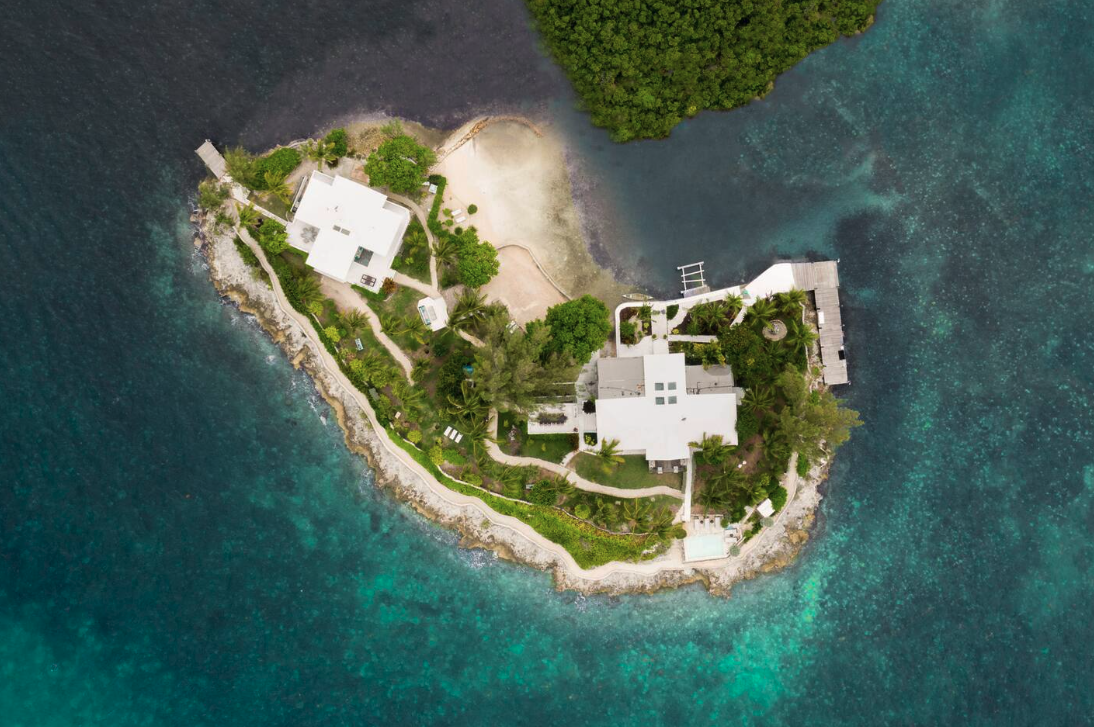
Middle Cay, North Eleuthera, Bahamas
Price per night: €18,040 (AU$32,237)
A private two-acre island in the Bahamas makes the top 10 list of most expensive Airbnbs. The island is home to coconut tree groves, two private docks, a natural island swimming spot, and two open-concept villas that can sleep 19 guests. Guests can also use three underwater sea scooters, with likely sightings of bright tropical fish or a sea turtle or two.
Villa Tomazo, Marrakesh, Morocco
Price per night: €14,978 (AU$26,766)
Villa Tomazo in Marrakesh rounds out the list. The 10-bedroom villa features a large swimming pool, a hot tub, an outdoor fireplace, and a massage service.
From making unpopular decisions to learning when to listen, leaders from five businesses reveal what nobody prepared them for — and how running a company has challenged their expectations.

Technology and semiconductor shares fell sharply as investors questioned the debt financing the AI infrastructure boom and confronted higher rates and Chinese competition.
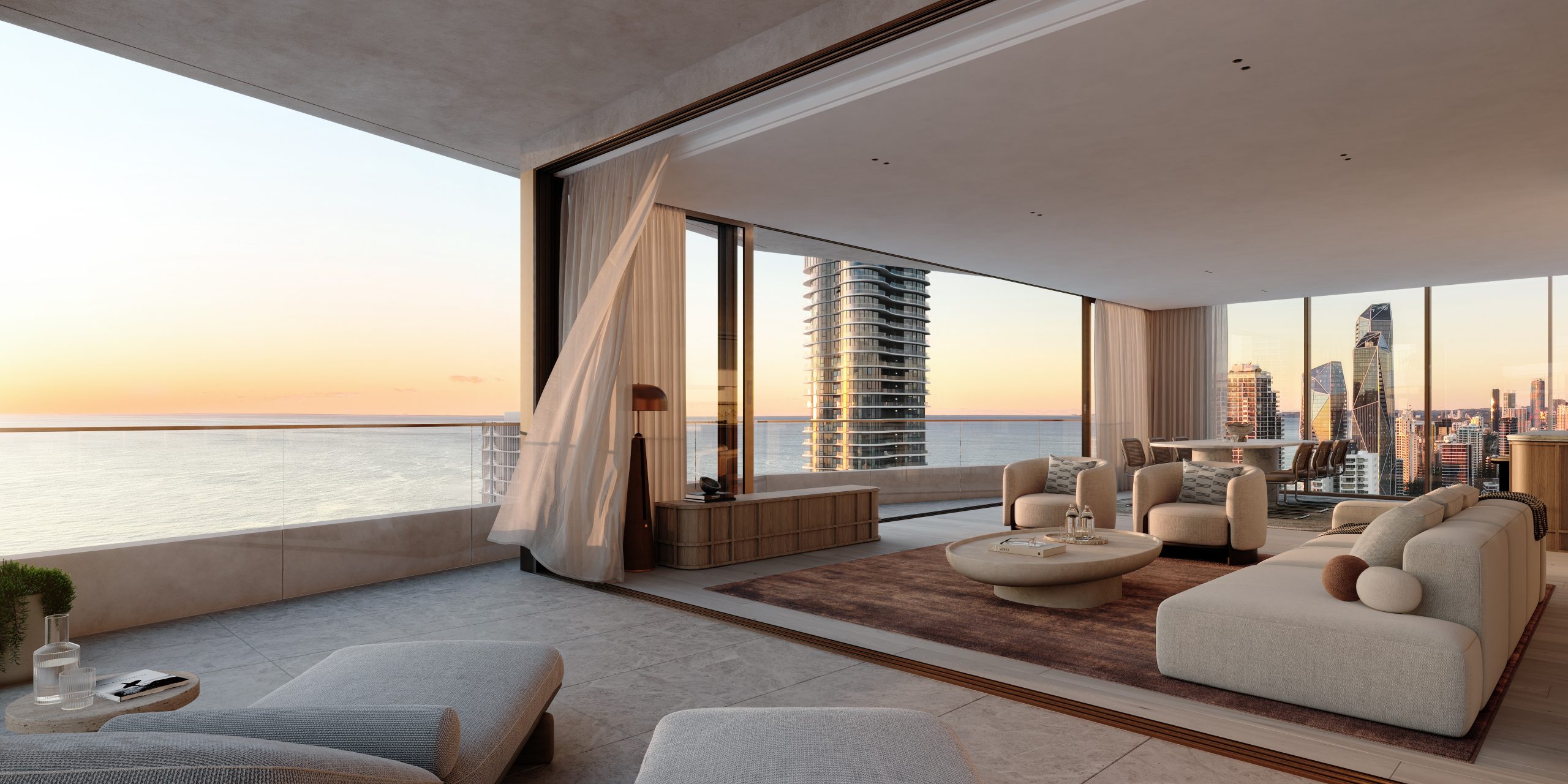
Mirvac’s 45-level Trielle has topped out at Yarra’s Edge, pairing riverfront apartments with wellness facilities, private dining and resident services.
3 min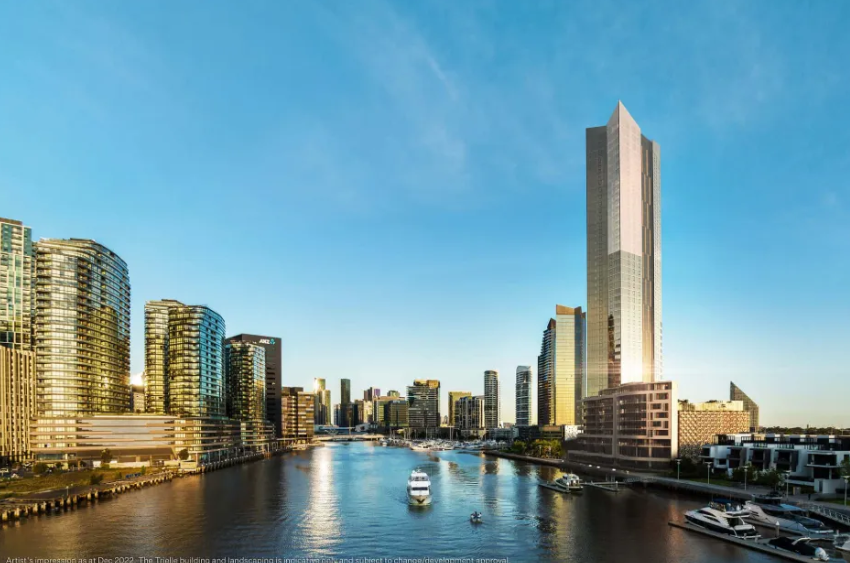
Mirvac has topped out Trielle at Melbourne’s Yarra’s Edge, with more than 70 per cent of the riverfront development sold and approximately 80 per cent of purchasers intending to make their apartment a home.
The figures, released on September 22, point to an owner-occupier audience for one of the precinct’s final residential towers. Mirvac began developing Yarra’s Edge in 2003, and its latest addition occupies one of the remaining absolute riverfront sites.
Mirvac CEO of Development Stuart Penklis said existing residents were among those moving up within the neighbourhood.
“Many purchasers already have a connection to Yarra’s Edge,” Mr Penklis said, describing buyers whose changing needs were encouraging an upgrade within the precinct.
“As one of the final residential towers within Yarra’s Edge, Trielle represents the culmination of more than two decades of creating one of Melbourne’s most established and sought-after waterfront communities,” Penklis said.
“Positioned on the Collins Street axis with absolute river frontage, Trielle offers residents a rare opportunity to enjoy sweeping views across the Yarra River, Melbourne skyline and Port Phillip Bay, while remaining seamlessly connected to the CBD. With Trielle now more than 70 per cent sold, we’re continuing to see strong demand from buyers seeking quality homes in established locations.”
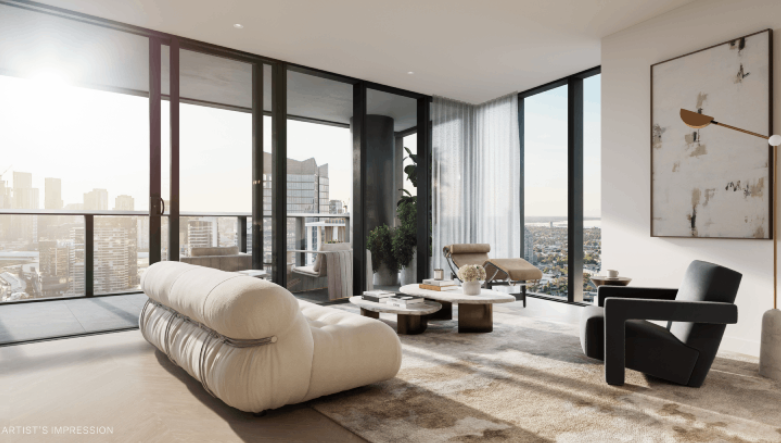
The developer also flagged a penthouse and sub-penthouse collection with larger layouts, premium finishes and broad outlooks. The planned wellness centrepiece, The Oasis, encompasses a 900-square-metre elevated urban rainforest.
Mirvac General Manager Residential Development Victoria Elysa Anderson said Trielle had resonated strongly with buyers seeking a rare lifestyle offering in Melbourne.
“Opportunities to secure a new luxury residence on a riverfront site of this calibre are incredibly rare, particularly within a community like Yarra’s Edge,” Anderson said.
“What makes Trielle unique is the combination of exceptional views, world-class residential facilities and the lifestyle that already exists around it. Residents are buying into a mature waterfront community with parks, promenades, dining, wellness and strong community connections already in place.”
The 45-level tower brings a substantial new presence to that waterfront. Its residential offering spans one-, two-, three- and four-bedroom apartments, with Signature, Prestige and Sub-Penthouse collections accommodating different household sizes. The north-facing position connects the apartments visually to the river and city beyond.
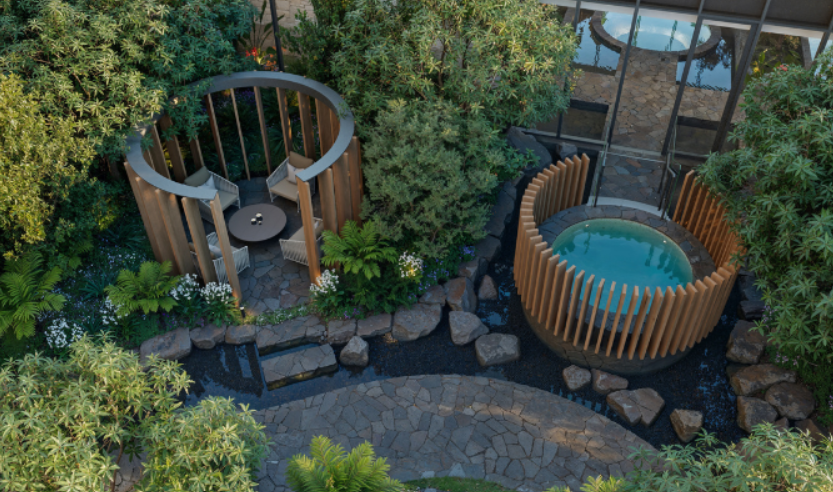
Seven storeys above the promenade, the planned Oasis combines planting and a running stream with a Scandinavian-inspired wellness club developed with spa specialist Naomi Gregory. Facilities include a 25-metre lap pool, hot magnesium pool, sauna, hydrotherapy, a gym, yoga and Pilates room, and treatment spaces.
The amenity extends beyond exercise. Residents will have access to The Biblioteca library and workspaces, ground-floor work pods, and The Salone piano lounge. A private Chef’s Table dining room offers a setting for larger gatherings, while a cinema, games room and sports lounge broaden the entertaining options. Concierge services and a dog-wash area support everyday routines.
Trielle comprises a collection of one, two, three and four-bedroom residences. Reflecting strong demand from owner occupiers, approximately 80 per cent of purchasers to date intend to live in their homes, highlighting the project’s appeal to those seeking a long-term waterfront lifestyle.
Mirvac has recently delivered The Albertine, a premium apartment development on the edge of Melbourne’s CBD, and is nearing completion of Prince & Parade in Brunswick, further strengthening its portfolio of thoughtfully designed apartment communities in some of Melbourne’s most sought-after urban locations.

From Italian vegetable-tanned leather to real-world training insight, Australian brand PK9 Gear is redefining what luxury means for discerning dog owners.
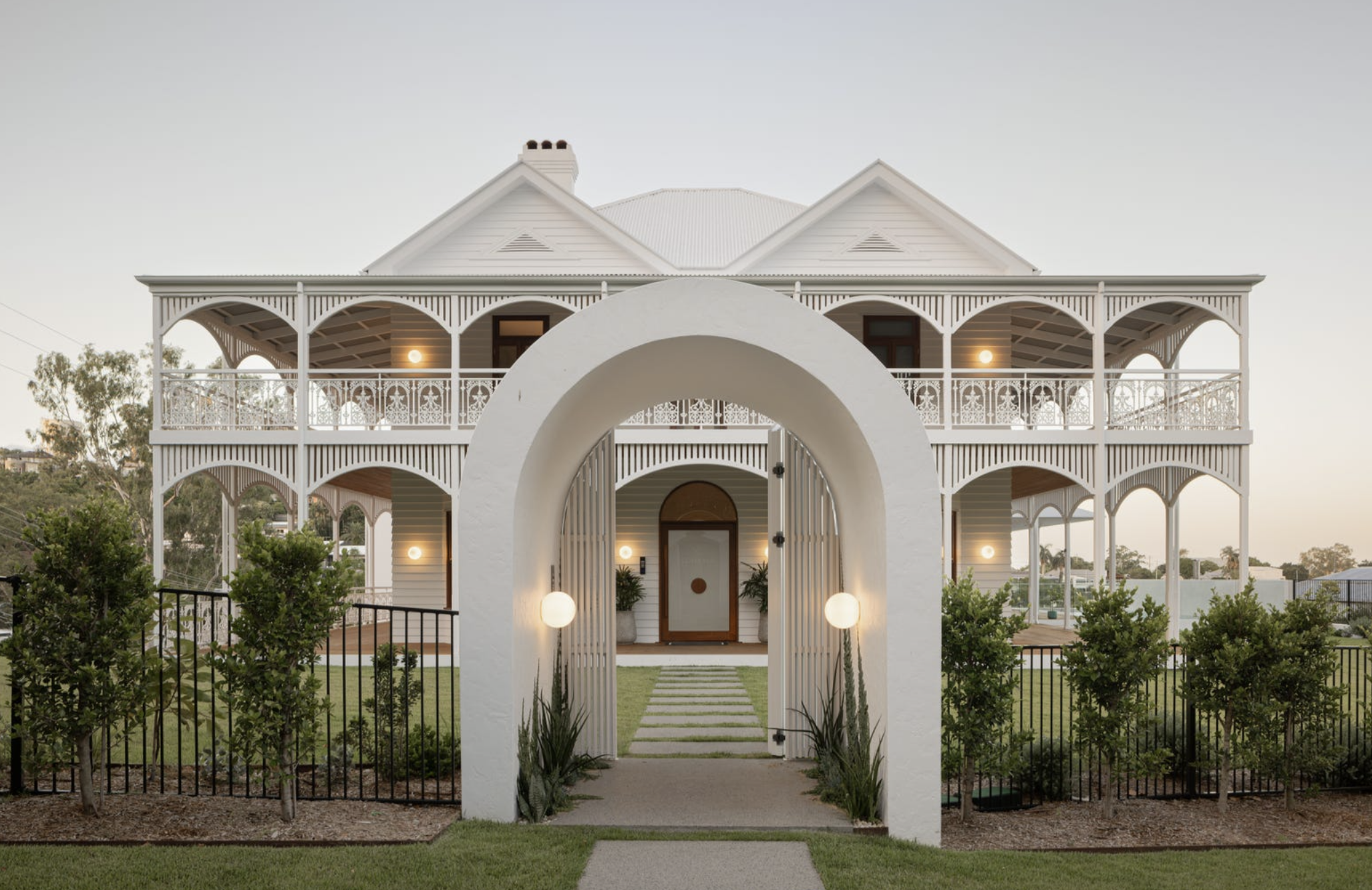
A restored 1860s Brisbane residence transformed by GRAYA has smashed Paddington’s house price record, selling for more than $12 million.