How Russia Profits From Ukraine Invasion by Selling Stolen Grain on a Global Black Market
Moscow’s war ‘is feeding itself’ as friends and backers cash in on crops from occupied territories

 5 min
5 min
KYIV, Ukraine—Beyond the bombs and gunfire of Russia’s war in Ukraine , a parallel economic war is raging.
Its front line is on occupied Ukrainian farmlands, from which Russia and its partners have sold almost $1 billion in stolen grain on a burgeoning black market.
Moscow’s forces in Ukraine since 2022 have occupied some of Europe’s most fertile farmland. The occupiers have either seized harvests or bought them cheaply, often forcibly.
The business involves a wide network of clients who benefit from Moscow’s wartime patronage system, including a Russian shipyard equipping the invasion, a company affiliated with Iran’s Revolutionary Guard and a Crimean businessman who trades with Syria and Israel. Another company sells through the United Arab Emirates.
Trading the looted Ukrainian agricultural products keeps Russia’s allies funded and loyal to Moscow even as it faces mounting economic pressure , offering a sort of off-balance-sheet vehicle financing Kremlin objectives.
The Kremlin didn’t return requests for comment on its exports of Ukrainian crops.
“It’s like the war is feeding itself,” said Pascal Turlan, legal director at rights organization Project Expedite Justice, which is helping Ukrainian prosecutors investigate grain theft. “The illicit trade brings revenue to a Kremlin-sponsored patronage system, which in turn helps the conflict and the occupation to continue.”
The exact commercial value of Russia’s pilferage is difficult to determine amid the war’s chaos and Moscow’s subterfuge, but it is large. Since 2022, the operation has directly shipped at least 4 million tons of grain and other produce from occupied Ukraine to international markets, generating revenue of $800 million, said Markiyan Dmytrasevych, Ukraine’s deputy agriculture minister.
Much more has been exported by land or small ships, according to Ukrainian nonprofit organization Texty, which estimates the total value of grain taken by Russia in occupied territories could be as high as $6.4 billion.
The patronage take many forms. Three bulk vessels that export large volumes of illicit grain are owned through a chain of corporate entities by Russia’s state-run United Shipbuilding Corp., which also produced warships used to shell Ukrainian cities, according to the U.S. government.
A Russian company that exclusively sold grain from the occupied region of Zaporizhzhia donated 10 million rubles, or $111,000, to a battalion fighting in the province, according to a document obtained by KibOrg News, a Ukrainian project that documents Russian economic-looting activities in the occupied territories.
Moscow is also attacking Ukraine’s own grain exports. Late Wednesday, a Russian missile struck at a ship that was carrying Ukrainian wheat just after it had left a Black Sea port for Egypt, Ukraine’s president Volodymyr Zelensky said on his Telegram channel.
From farm to sea
Russia’s illicit agricultural trade begins on Ukrainian farms. Moscow’s forces either compel farmers to sell their crops at below-market prices or steal them, sometimes at gunpoint.
Bohdan Katerenyak, the manager of a silo in Kherson, a southern Ukrainian province conquered by Russia at the beginning of the war, said he was at work in August 2022 when men with machine guns, clad in balaclavas, entered his office.
“We have an order to take over,” one told him in a Chechen accent, handing him an identification card from the FSB, Russia’s domestic security service, Katerenyak said. A few days later, another man, also claiming to be an FSB agent, arrived and impounded the facility’s grain.
“They are bandits,” Katerenyak said of the men. Fearful, he fled to Ukrainian-controlled territory and later learned the silos had been emptied.
From farms like Katerenyak’s, produce is shipped by truck and rail to ports along the Black Sea, some on occupied Ukrainian territory.
Russian authorities say that in the first half of this year they sent 15 ships carrying 81,000 tons of wheat to Turkey from Mariupol, another city conquered during the war.
Turkey bans ships from occupied Ukrainian terminals and cooperates with Kyiv to block illicit trade, the country’s foreign-affairs officials said.
Separately, Ukrainian prosecutor Ihor Ponochovniy in June started tracking a Turkish-owned ship, the Usko MFU, which he suspected had carried stolen grain last year from the Crimean port of Sevastopol . Russia seized Crimea from Ukraine in 2014 and in 2022 linked it with occupied Kherson.
Ukraine’s border force in June told Ponochovniy the Usko MFU had entered Ukrainian waters. He issued a search warrant and police boarded it. Onboard they found records showing it had left Sevastopol last November for Turkey carrying 2,100 tons of crushed sunflower seeds and brown wheat potentially worth half a million dollars.
Investigators said they found onboard a message from the ship’s managers to the captain instructing him to conceal the cargo’s Crimean origin. Ukraine’s border force in July seized the Usko MFU.
The ship’s owner, USKO Shipping Management, didn’t respond to a request for comment. A lawyer representing the vessel’s captain declined to comment.
Mikhail Ganaga, a former professional wrestler and the son of a district governor in Crimea, is among a select group of collaborators who have profited from the grain theft.
Ganaga controls Agro-Fregat LLC, which delivers grain harvested in occupied territories and has shipped grain to Israel and two of its foes, Syria and Iran, according to trade and shipping records and Ganaga himself. Ganaga and Agro-Fregat didn’t return requests for comment.
Pressure to halt shipments
Ukraine is applying diplomatic pressure on importing countries, with some success. In the past two years, Egypt, Israel and Lebanon either canceled loadings or stopped buying grain cargoes after Ukrainian diplomats told them they had departed from Russian-occupied parts of Ukraine , according to Ukrainian officials.
Foreign Ministry spokesman Heorhiy Tykhiy said that Lebanon shifted to Ukrainian grain. Egypt has refused some grain shipments that originated in Russian-occupied territories of Ukraine, according to Ukraine’s military intelligence agency.
Russian allies Iran and Syria have said they won’t abide by sanctions. Iran has supplied the Kremlin deadly weaponry that enhanced Russia’s ability to hit military and civilian targets. This month, Tehran started to supply ballistic missiles to the Kremlin. Iranian politicians said they were in exchange for Russian grain.
Tehran buys barley in Crimea for $140 a ton, a 34% discount from market prices, said Kateryna Yaresko, an analyst at SeaKrime, a nonprofit project in Kyiv that tracks illegal shipments from Crimea and provides information to the Ukrainian authorities.
Traders in Russian-occupied territories are building ties with Tehran’s hard-line circles. Igor Rudetsky, a manager at a grain terminal in occupied Crimea, last year posted on his social-media accounts pictures of himself meeting representatives of Islamic Republic of Iran Shipping Lines, which is sanctioned by the U.S. for shipping weapons on behalf of Iran’s military and nuclear technologies.
Rudetsky, according to his posts, also visited Pars Holding, an agricultural company that is part of a foundation controlled by Iranian Supreme Leader Ali Khamenei . Rudetsky said by text message that he spoke to the companies as part of an international marketing campaign that also included China, India and Africa, though he says he doesn’t sell produce himself.
Rudetsky said grain exports from Russia aren’t restricted by international sanctions and that he bought the port “for real money” in a deal that was “legally impeccable.”
Russia deems Crimea its territory but other countries don’t and consider any exports from it illegal.
Yemen is a new market for Crimean exports. In June, a Russian state-controlled vessel, the Zafar, delivered grains to al-Salif, a port held by the Iranian-backed Houthi faction in Yemen, according to shipping and corporate records.
As Kyiv cracks down, exporters are adopting increasingly complex evasion tactics such as transferring grain to Russia and mixing it with legitimate products before reselling it on international markets. Ukrainian authorities are struggling to keep up.
“We need more people,” said Ponochovniy, the prosecutor.
Ukrainian prosecutors in Kharkiv are probing a trader that it suspects stole grain and resold cargoes to an Emirati company. Helios Plus drew prosecutors’ attention after it removed all 700 tons of grain left at a bread factory flour mill in the nearby town of Kupyansk when Russia seized it in August 2022.
Helios Plus didn’t respond to a request for comment.
The company in 2015 started selling grain out of areas of eastern Ukraine that had come under control of Russian-backed separatists, according to Russian records viewed by The Wall Street Journal. The records were obtained in an investigation by Project Expedite Justice.
The documents indicate Helios Plus took a large volume of grain from other occupied territories in the past two years. It then sold the grain to buyers in Turkey, the U.A.E. and as far as Costa Rica, according to customs declarations.
 Copyright 2020, Dow Jones & Company, Inc. All Rights Reserved Worldwide. LEARN MORE





From making unpopular decisions to learning when to listen, leaders from five businesses reveal what nobody prepared them for — and how running a company has challenged their expectations.

Technology and semiconductor shares fell sharply as investors questioned the debt financing the AI infrastructure boom and confronted higher rates and Chinese competition.

Technology and semiconductor shares fell sharply as investors questioned the debt financing the AI infrastructure boom and confronted higher rates and Chinese competition.
4 minA sharp technology sell-off has exposed a new anxiety on global markets: whether the enormous borrowing behind the artificial-intelligence infrastructure boom can generate sufficient returns as interest rates rise and Chinese competition intensifies.
The artificial-intelligence investment boom has powered technology shares, semiconductor manufacturers and data-centre operators to extraordinary heights. Last week, investors were given a reminder that much of this expansion is being built with borrowed money.
The technology-heavy Nasdaq Composite fell 4.5 per cent over the week ended October 16, its weakest performance since late June. Semiconductor shares suffered an even deeper correction, with the Philadelphia Semiconductor Index losing about 11.4 per cent.
The selling spread quickly through global markets. Micron Technology fell 14.6 per cent over the week, while South Korea’s Samsung Electronics and SK Hynix dropped approximately 18 per cent and 24 per cent respectively.
This was more than a routine bout of profit-taking. Investors were reassessing three interconnected risks: higher interest rates, the rapidly expanding debt burden attached to AI infrastructure and the prospect of stronger competition from Chinese memory-chip manufacturers.
The debt behind the AI build-out
Artificial intelligence requires a physical infrastructure network of enormous scale. Data centres must be built, advanced processors purchased, power supplies secured and cooling systems installed before customers begin generating meaningful revenue from them.
Technology companies are increasingly supplementing their own cash with corporate bonds, syndicated loans, equipment leases, private credit and project-level financing.
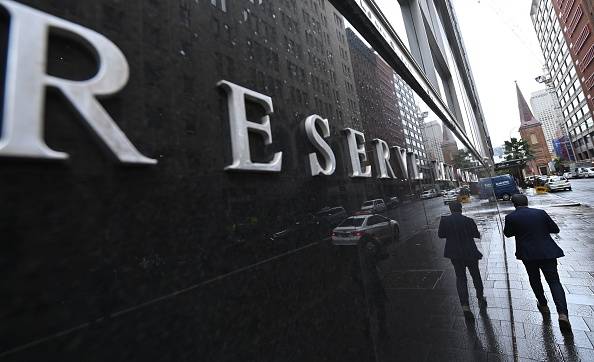
JPMorgan describes the emerging funding model as a combination of conventional corporate borrowing and project finance tied to individual data-centre assets. In Australia, the Reserve Bank estimates that syndicated loans accounted for approximately three-quarters of data-centre financing during 2025 and 2026 to date.
The numbers are becoming large enough to affect broader credit markets. The Federal Reserve Bank of Dallas has cited Wall Street estimates suggesting AI-related investment-grade bond issuance could approach US$300 billion in 2026 alone.
That borrowing is not automatically problematic. Debt can be an efficient way to finance long-lived infrastructure when future revenue is sufficiently predictable. The concern is that AI technology, customer demand and computing economics are changing much faster than the repayment schedules attached to the assets.
A data centre financed today may carry debt for years. Investors must therefore make assumptions about future utilisation rates, electricity prices, chip performance, customer concentration and the amount businesses will ultimately pay for AI computing.
When interest rates rise, those assumptions become less forgiving.
Inflation changes the calculation
September’s US inflation data intensified the pressure. Consumer prices increased 3.7 per cent over the year, ahead of market expectations and up from 3.4 per cent in August.
The hotter reading reduced confidence that interest rates would fall quickly and pushed bond yields higher. That matters particularly for companies whose valuations depend on profits expected well into the future, as well as highly leveraged infrastructure operators that may need to refinance.
CoreWeave has emerged as a closely watched test case. The specialist cloud-computing company has accumulated substantial debt and lease obligations to build AI capacity, while relying on a concentrated group of large technology customers.
Its shares fell sharply during the sell-off, while the cost of insuring its debt against default climbed. CoreWeave has argued that its contracted backlog more than covers its obligations and that financial markets do not always understand its business model. Nevertheless, its securities have become a proxy for investor confidence in debt-funded AI infrastructure.
Oracle, another major investor in AI computing capacity, fell 8.8 per cent in Friday trading, while CoreWeave dropped 15.5 per cent.
The question is shifting from how much AI infrastructure can be built to how profitably it can be operated.
China adds another source of pressure
Interest rates were not the only catalyst. Reports of advances by Chinese memory-chip producer ChangXin Memory Technologies raised concerns that lower-cost Chinese products could increase competition across the global semiconductor industry.
Memory chips are essential to AI systems, but the industry is historically cyclical. Periods of tight supply and high pricing can encourage rapid investment, eventually producing oversupply and falling margins.
The prospect of a well-funded Chinese competitor expanding its technological capabilities unsettled investors in Samsung, SK Hynix and Micron. It also demonstrated that AI-related demand does not insulate chipmakers from conventional competitive pressures.
That combination—slower rate cuts, more expensive financing and potentially cheaper supply—challenged the assumption that every company exposed to AI would enjoy continually expanding margins.
A reset rather than the end of the boom
The sell-off does not establish that the AI boom is ending. Demand for computing power remains strong, the largest technology companies continue to generate formidable cash flows and many infrastructure projects are backed by long-term customer contracts.
What has changed is the market’s willingness to overlook the price and financing structure of that growth.
The most resilient companies are likely to be those able to fund investment from operating cash flow, secure long-duration customers and demonstrate that new capacity will earn returns comfortably above its financing costs.
More speculative operators may face greater scrutiny, particularly where debt is expensive, customers are concentrated or expected revenue depends on demand that has not yet materialised.
For Australian investors, the lesson extends beyond US technology shares. Local data-centre operators, infrastructure funds, electricity suppliers and property groups are increasingly exposed to the same investment cycle.
Artificial intelligence may remain one of the defining growth themes of the decade. But last week’s correction showed that enthusiasm for the technology does not eliminate financial discipline.
The next stage of the AI boom will be judged not only by computing power, model performance or demand for chips, but by something more traditional: whether the assets being financed can generate enough cash to repay the money borrowed to build them.
Fact box
Nasdaq Composite: Down 4.5 per cent for the week ended October 16, 2026
Philadelphia Semiconductor Index: Down approximately 11.4 per cent
Micron Technology: Down approximately 14.6 per cent
Samsung Electronics: Down approximately 18 per cent
SK Hynix: Down approximately 24 per cent
US September inflation: 3.7 per cent annually
Estimated 2026 AI-related investment-grade issuance: Approximately US$300 billion

From farm-to-table Thai to fairy-lit mango trees and Coral Sea vistas, Port Douglas has award-winning dining and plenty of tropical charm on the side.

French luxury-goods giant’s results are a sign that shoppers weren’t splurging on its collections of high-end garments in the run-up to the holiday season.