The New Currency of Wealth: Educating Heirs Before They Inherit
Australia’s wealthy families are shifting focus from building wealth to preparing the next generation to handle it.
 3 min
3 min
For Australia’s high-net-wealth families, the question is no longer how to grow wealth—it’s how to ensure the next generation knows what to do with it.
“Most affluent parents aren’t staying up at night worried about the next investment opportunity,” says wealth adviser Antony Selby. “They’re worried their money will mess up their kids.”
In an era marked by skyrocketing intergenerational transfers of wealth, Selby has observed a dramatic shift in his clients’ priorities. Increasingly, they’re not just seeking financial strategies—they’re seeking guidance on how to prepare their children for the emotional, practical, and psychological burden of inheritance.
“It’s one of the most common requests I get: ‘Can you help educate our children about money?’” Selby says. “There’s a growing realisation among wealthy families that simply leaving money isn’t enough. If the recipients aren’t prepared, that wealth can quickly become a liability instead of a legacy.”
Selby, who has advised Australia’s affluent for decades, says the old model of wealth management—built around transactions and product sales—is obsolete. In its place, a new approach has emerged: one that blends traditional financial advice with legacy planning, values-based education, and even elements of family therapy.
“We’ve moved from preparing money for heirs, to preparing heirs for money,” he explains. “That’s a fundamental change.”
The timing couldn’t be more critical. With Baby Boomers now well into retirement and multi-generational estates becoming more common, the next wave of wealth recipients—many of them in their 20s and 30s—face an unprecedented challenge. Unlike their parents, who often built wealth through work, these heirs risk inheriting it without the context, responsibility, or resilience to manage it.
And that, Selby says, is the real risk.

“Wealth can distort perspective. It can create dependence. It can rob young people of direction, and of the emotional tools they need to live independently,” he says. “That’s why so many of my clients now see their role not just as benefactors, but as mentors.”
What does that mentorship look like? For Selby, it often involves structured conversations about money values and family purpose. It means involving children early in philanthropic decisions, educating them about investment basics, and creating environments where financial literacy is as important as academic success. In some cases, it includes working with external coaches, psychologists, and advisers to help adult children develop their own identity outside the family’s financial narrative.
“There’s no simple formula,” he admits. “But three things make a difference: being intentional about values, developing real-life skills, and giving heirs the right mix of independence and support.”
While popular culture paints the ultra-wealthy as laser-focused on returns and deal flow, Selby says the reality is more nuanced. “Behind closed doors, it’s not about chasing more wealth. It’s about risk management, family cohesion, and the question we hear again and again: ‘How do we make sure this wealth is a force for good?’”
He points to the old proverb, “shirtsleeves to shirtsleeves in three generations,” a warning that’s echoed across cultures. “It’s a reminder that financial inheritance must be matched with emotional and intellectual inheritance too.”
As the face of wealth management continues to change, Selby believes the industry must evolve alongside it—offering not just financial tools, but guidance through some of the most deeply personal challenges families will ever face.
“Money isn’t neutral,” he says. “It shapes families, for better or worse. The difference lies in how well we prepare the next generation to carry it.”
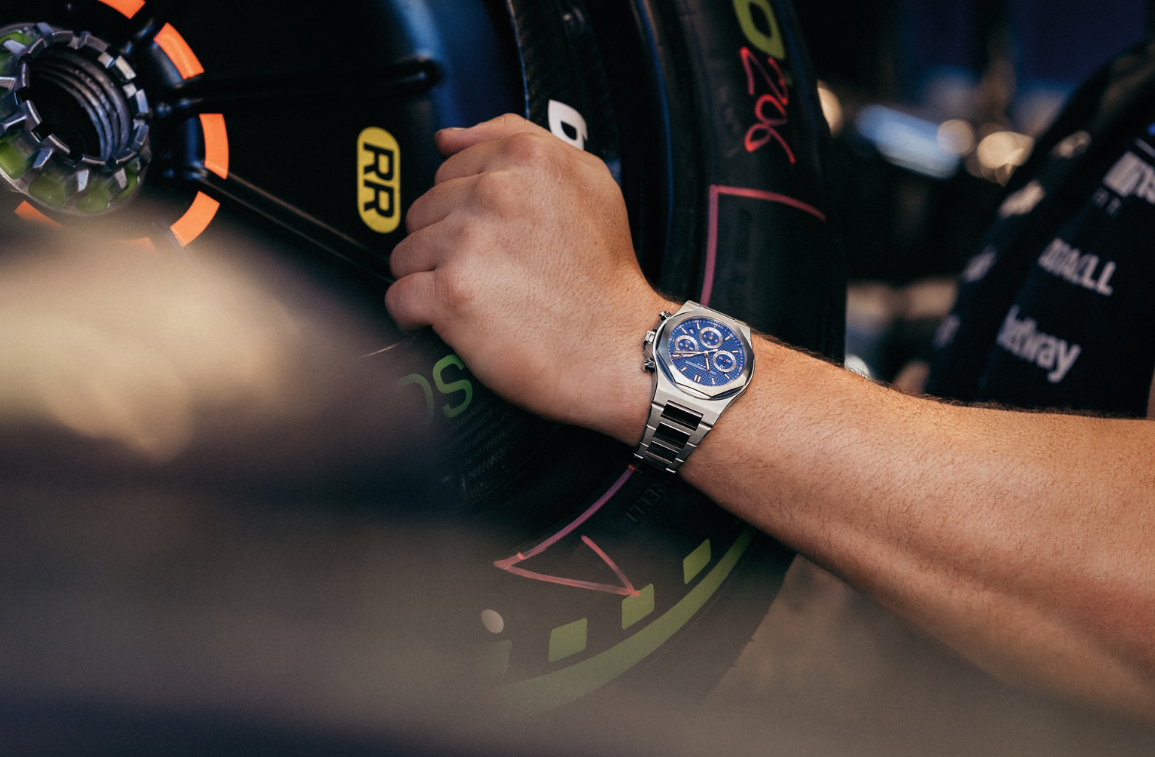
The Swiss watchmaker’s first collaboration with Atlassian Williams F1 Team produces two sporting Laureato models inspired by the team’s 2026 racing car.

Victorian auction buyers will soon receive a piece of information that has traditionally been withheld until bidding reaches it: the vendor’s reserve price. Under new property-sale and underquoting laws, agents must publish the agreed reserve at least seven days before an auction or fixed-date sale. Most changes begin on 1 October 2026 and apply to …
Continue reading “Victoria’s New Auction Rules Will Force Reserve Prices Into the Open”

The Swiss watchmaker’s first collaboration with Atlassian Williams F1 Team produces two sporting Laureato models inspired by the team’s 2026 racing car.
3 minGirard-Perregaux has revealed the first watches created through its partnership with Atlassian Williams F1 Team, bringing the British racing team’s colours to one of Switzerland’s most recognisable integrated-bracelet designs.
The collaboration comprises two 42mm steel watches: the time-and-date Laureato Williams Edition and the more technical Laureato Chronograph Williams Edition.
Both retain the familiar architecture of the Laureato, including its octagonal bezel, integrated bracelet and mix of polished and satin-finished surfaces. The influence of Williams is comparatively restrained, appearing through colour, discreet branding and details inspired by the team’s current Formula 1 car.
It is a welcome departure from the oversized logos and literal automotive references that can characterise motorsport watches.
The Williams FW48 inspires the dial
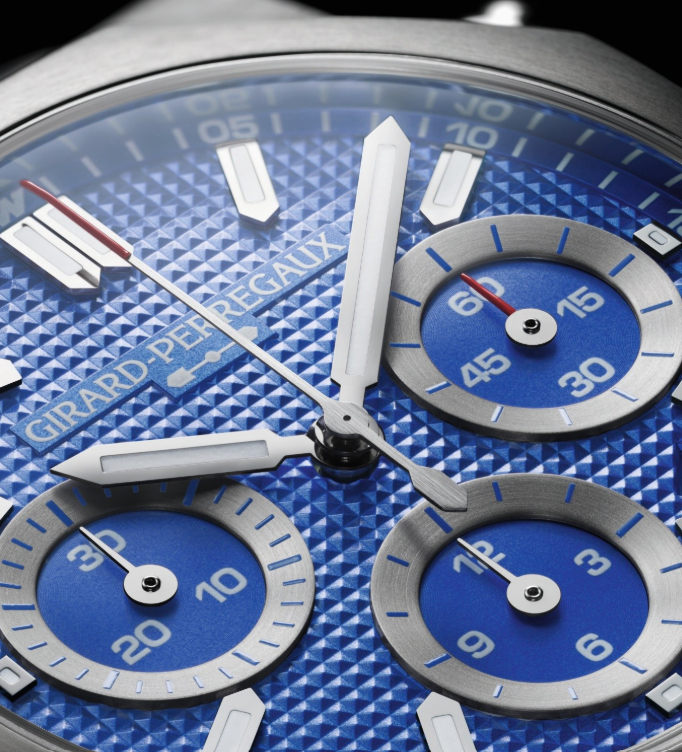
The centrepiece of both models is a blue Clous de Paris dial informed by the livery of the Williams FW48, the car being campaigned by the team during the 2026 Formula 1 season.
A small Williams “W” replaces the conventional marker at 12 o’clock, while the team emblem appears on the sapphire crystal caseback. Red accents echo the keyline used on the FW48 without overwhelming the established Laureato design.

The three-hand model offers the quieter interpretation. Baton-shaped, rhodium-plated hands and hour markers are filled with white-emitting luminescent material, while a date window sits at three o’clock.
The chronograph creates a more obvious connection with motorsport. Three subdials are framed by rhodium-plated rings, with red appearing on the small-seconds hand and the tip of the central chronograph seconds hand.
Both watches measure 42mm across and are water resistant to 100 metres. The standard Laureato has a case thickness of 10.68mm, while the additional mechanics of the chronograph increase its profile to 12.16mm.
Two in-house automatic movements
The Laureato Williams Edition is powered by Girard-Perregaux’s self-winding GP01800 calibre. The movement provides hours, minutes, central seconds and the date, with a minimum power reserve of 54 hours.
The Laureato Chronograph Williams Edition uses the automatic GP03300 calibre, which combines its chronograph functions with a date display and offers a minimum power reserve of 46 hours.
Both movements operate at 28,800 vibrations per hour and can be viewed through their sapphire crystal casebacks.
Their decoration provides a more traditional counterpoint to the Formula 1 association. Finishing techniques include Côtes de Genève, circular graining, bevelling, mirror polishing, satin finishing, engraving and snailing.
The result is less about reproducing the appearance of a racing car than identifying the common ground between two mechanical disciplines: precision, incremental development and the considerable work hidden beneath the finished product.
Parallel histories
The timing of the partnership draws attention to the remarkably similar ages of its two protagonists.
Girard-Perregaux introduced the original Laureato in 1975, establishing an integrated-bracelet sports watch with a distinctive octagonal bezel. Williams entered Formula 1 two years later in 1977.
Both have evolved continuously across the five decades since. The Laureato has moved through different sizes, materials and complications, while retaining its central design language. Williams, meanwhile, has remained one of Formula 1’s most historically significant teams.
That gives the collaboration greater credibility than a simple licensing exercise. Girard-Perregaux and Williams are not being connected solely through the familiar language of speed. Their stronger link is a shared dependence on engineering, testing and the accumulation of specialist knowledge.
The watches are described as the beginning of a longer collaboration, suggesting further Williams editions may follow.
Girard-Perregaux’s international website lists the Laureato Williams Edition at US$16,200 and the Laureato Chronograph Williams Edition at US$20,900. Australian pricing has not been announced.
Specifications
Girard-Perregaux Laureato Williams Edition 42mm
Reference: 81010-11-3680-1GM
Case: Steel
Diameter: 42mm
Thickness: 10.68mm
Crystal: Anti-reflective sapphire crystal
Dial: Blue Clous de Paris pattern
Movement: Automatic GP01800
Functions: Hours, minutes, central seconds and date
Power reserve: Minimum 54 hours
Water resistance: 100 metres
Bracelet: Integrated steel bracelet with triple-folding clasp
International price: US$16,200
Girard-Perregaux Laureato Chronograph Williams Edition 42mm
Reference: 81020-11-3681-1GM
Case: 904L steel
Diameter: 42mm
Thickness: 12.16mm
Crystal: Anti-reflective sapphire crystal
Dial: Blue Clous de Paris pattern with three chronograph counters
Movement: Automatic GP03300
Functions: Chronograph, hours, minutes, small seconds and date
Power reserve: Minimum 46 hours
Water resistance: 100 metres
Bracelet: Integrated 904L steel bracelet with triple-folding clasp
International price: US$20,900

Four decks, 34.5 metres and a made-to-measure interior: step aboard the new Custom Line Navetta 35, unveiled at Cannes.

Margot Robbie and Jacob Elordi star in an adaptation of the classic novel that respects the romance’s slow burn.