The computing revolution investors cannot ignore
Quantum computing is moving from theory to real-world investment. Professor David Reilly says it could reshape finance, security and global technology infrastructure.
 3 min
3 min
For decades, the world’s computing power has quietly expanded at an astonishing pace.
From the first transistor developed at Bell Labs in 1947 to modern processors containing billions and even trillions of transistors, each generation of technology has been faster, smaller and more powerful than the last.
But according to quantum physicist and technology entrepreneur David Reilly, that era of effortless progress is beginning to slow.
Reilly, CEO of Sydney-based Emergence Quantum and Professor of Physics at the University of Sydney, says the computing infrastructure underpinning modern economies is approaching fundamental physical limits.
And that could have enormous implications for finance, artificial intelligence and global investment.
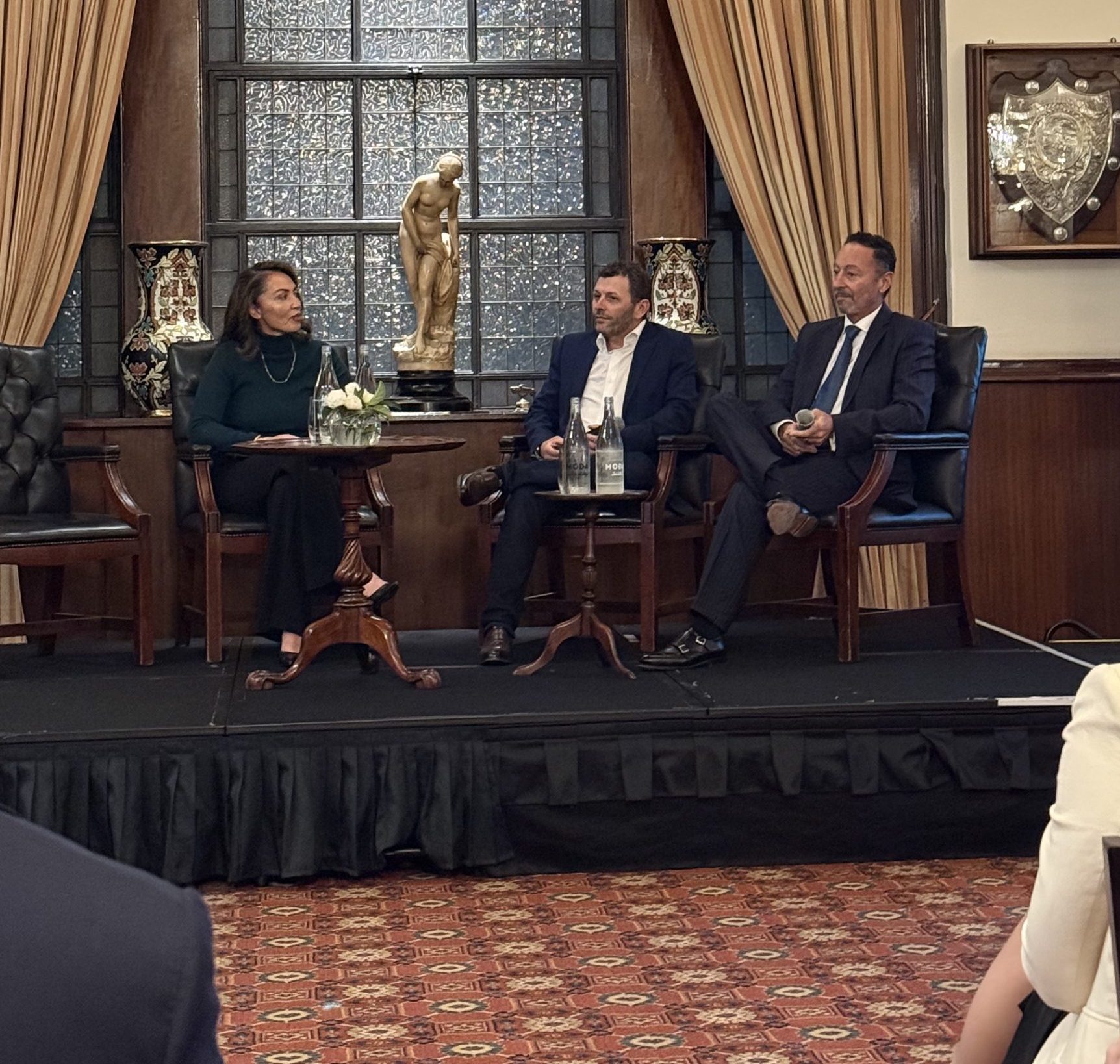
Speaking at an industry event organised by Kanebridge International, Reilly said many critical parts of modern society depend on computing and the infrastructure used to process information.
The slowdown behind the tech boom
For years, the technology industry relied on a steady improvement known as Moore’s Law, where the number of transistors on a chip doubled roughly every two years.
More transistors meant more computing power, allowing faster software, smarter devices and ever-larger data systems.
Today, however, those gains are slowing.
“It feels to me very innate that I’m going to just find that next year there’s going to be another breakthrough,” Reilly said.
“But if you look at the data…there’s a slowing down, a roll off in performance that started some 10, 20 years ago.”
Rather than making chips dramatically faster, manufacturers are now largely increasing computing capacity by packing more transistors onto each processor.
The approach works, but it comes with growing complexity, higher costs and increasing energy demands.
The brute-force race for AI
That challenge is already visible in the massive data centres being built to support artificial intelligence.
In the race to dominate AI, companies are constructing vast computing facilities that consume huge amounts of electricity and water. Reilly described this expansion as a “brute force” approach driven by the global competition to develop advanced AI systems.
Yet the demand for computing power continues to accelerate.
Artificial intelligence, advanced robotics, healthcare research, pharmaceuticals and cybersecurity all require far more processing capacity than today’s systems can easily deliver.
The question now facing the technology sector is whether traditional computing can keep up.
Enter quantum computing
That is where quantum computing enters the conversation.
Unlike conventional computers, which process information using binary switches that represent ones and zeros, quantum computers exploit the unusual behaviour of particles at the atomic scale.
Reilly describes them as a fundamentally different type of machine.
“So a quantum computer is a wave computer,” he said.
Instead of processing information through simple on-off switches, quantum systems can use wave-like properties of particles to process many possible outcomes simultaneously.
Those waves can interact in complex ways, reinforcing correct solutions while cancelling out incorrect ones. In theory, this allows quantum systems to tackle certain types of problems dramatically faster than classical computers.
What it could mean for finance
The concept may sound abstract, but its potential applications are significant.
Quantum computers are expected to transform areas such as materials science, chemical modelling and pharmaceutical development.
They could also help solve complex optimisation problems in logistics, finance and risk management.
For financial institutions in particular, the technology could offer new tools for detecting fraud, analysing market behaviour and optimising portfolios.
But the shift will not happen overnight.
“One message to take away is that quantum is not going to suddenly solve all of your problems,” Reilly said.
Instead, he said quantum systems will likely complement existing computing technologies as part of a broader and more diverse computing ecosystem.
Why data centres may soon “go cold”
One key change already emerging is how computing systems are physically designed.
Many next-generation technologies, including quantum processors, operate far more efficiently at extremely low temperatures. As a result, future data centres may rely heavily on cryogenic cooling systems to manage heat and energy consumption.
Reilly believes that the shift will gradually reshape the computing industry.
“Over the next five years, you’re going to see data centres go cold,” he said.
“And as that happens, they almost drag with them new compute paradigms.”
Emergence Quantum, the company he co-founded, is focused on developing technologies to support that transition, including cryogenic electronics and integrated hardware platforms designed for quantum computing and energy-efficient systems.
A new technological era
For investors and businesses, the technology remains in its early stages. But the scale of global interest is growing rapidly.
Governments, research institutions and technology companies are investing heavily in quantum research, betting it could become a foundational technology for the next generation of computing.
For Reilly, the moment feels similar to earlier technological turning points.
In the 19th century, new discoveries in thermodynamics helped drive the development of steam engines and the Industrial Revolution. In the 20th century, advances in electromagnetism led to radio, television and eventually the internet.
Quantum physics, he suggests, could represent the next chapter in that story.
“Today we have, as a society, in our hands new physics that we’re just beginning to figure out what to do with,” Reilly said.
“But I think it’s an exciting time to be alive and watch what happens over the coming decades.”
The Swiss watchmaker’s first collaboration with Atlassian Williams F1 Team produces two sporting Laureato models inspired by the team’s 2026 racing car.

Victorian auction buyers will soon receive a piece of information that has traditionally been withheld until bidding reaches it: the vendor’s reserve price. Under new property-sale and underquoting laws, agents must publish the agreed reserve at least seven days before an auction or fixed-date sale. Most changes begin on 1 October 2026 and apply to …
Continue reading “Victoria’s New Auction Rules Will Force Reserve Prices Into the Open”

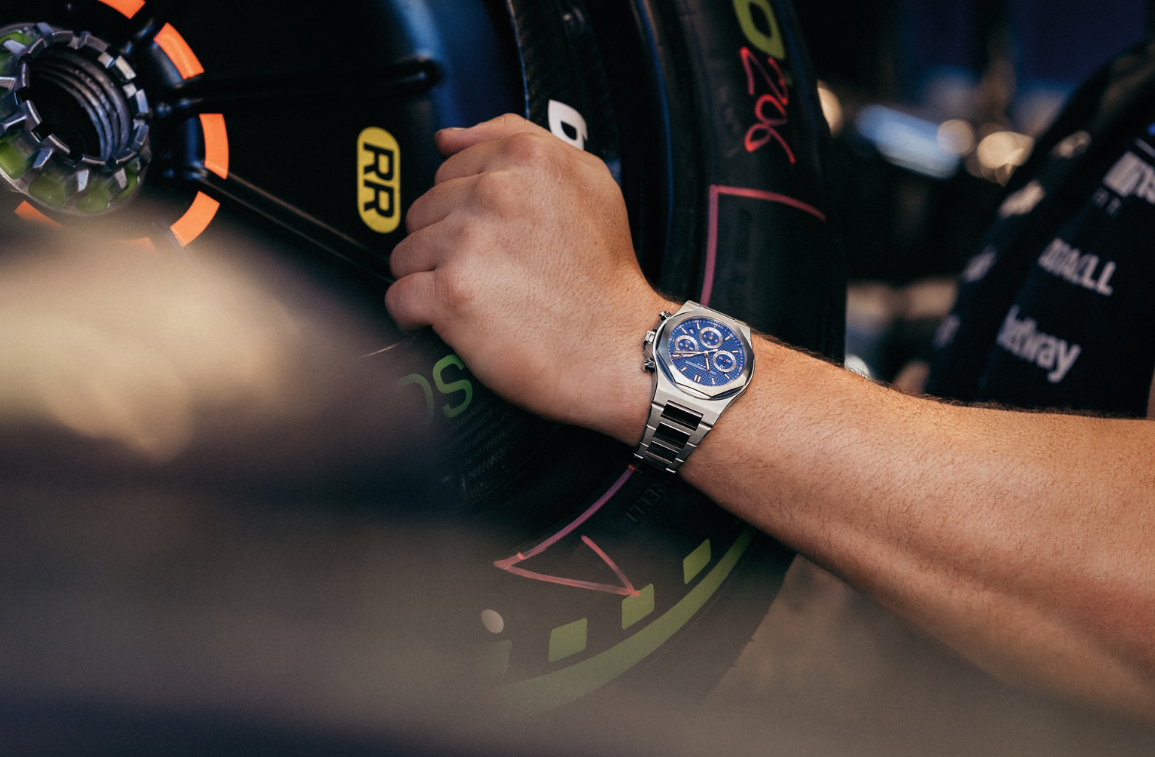
The Swiss watchmaker’s first collaboration with Atlassian Williams F1 Team produces two sporting Laureato models inspired by the team’s 2026 racing car.
3 minGirard-Perregaux has revealed the first watches created through its partnership with Atlassian Williams F1 Team, bringing the British racing team’s colours to one of Switzerland’s most recognisable integrated-bracelet designs.
The collaboration comprises two 42mm steel watches: the time-and-date Laureato Williams Edition and the more technical Laureato Chronograph Williams Edition.
Both retain the familiar architecture of the Laureato, including its octagonal bezel, integrated bracelet and mix of polished and satin-finished surfaces. The influence of Williams is comparatively restrained, appearing through colour, discreet branding and details inspired by the team’s current Formula 1 car.
It is a welcome departure from the oversized logos and literal automotive references that can characterise motorsport watches.
The Williams FW48 inspires the dial
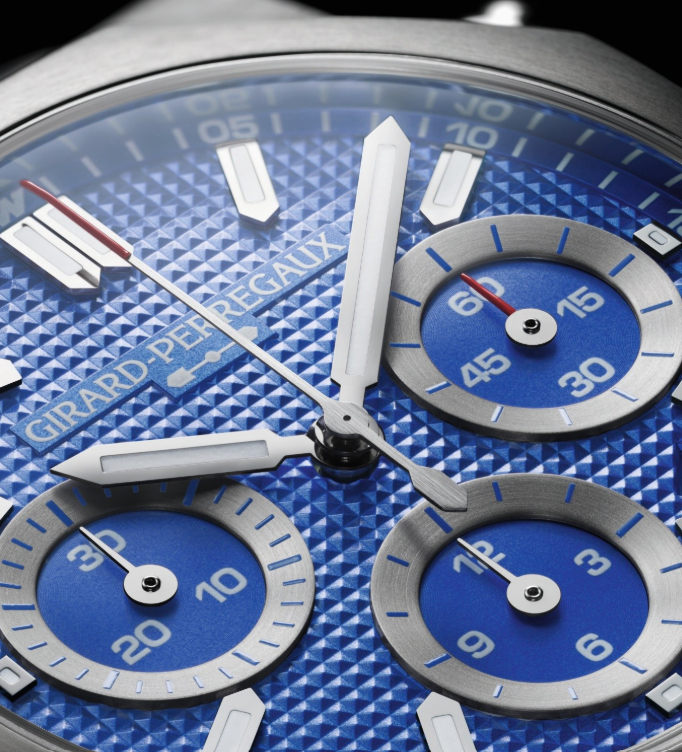
The centrepiece of both models is a blue Clous de Paris dial informed by the livery of the Williams FW48, the car being campaigned by the team during the 2026 Formula 1 season.
A small Williams “W” replaces the conventional marker at 12 o’clock, while the team emblem appears on the sapphire crystal caseback. Red accents echo the keyline used on the FW48 without overwhelming the established Laureato design.
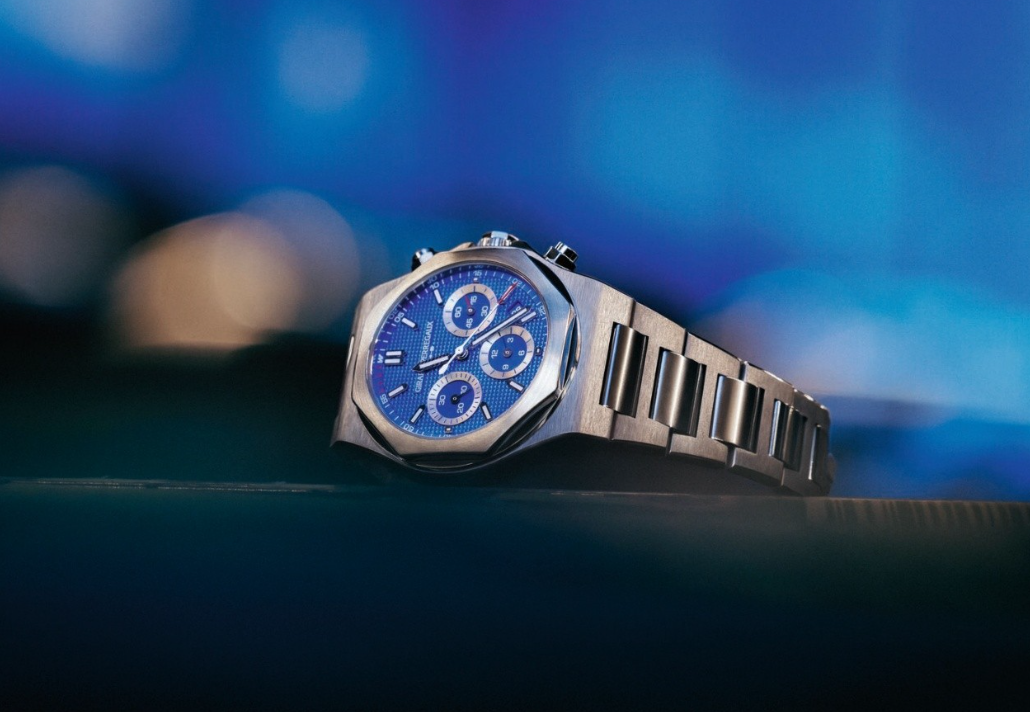
The three-hand model offers the quieter interpretation. Baton-shaped, rhodium-plated hands and hour markers are filled with white-emitting luminescent material, while a date window sits at three o’clock.
The chronograph creates a more obvious connection with motorsport. Three subdials are framed by rhodium-plated rings, with red appearing on the small-seconds hand and the tip of the central chronograph seconds hand.
Both watches measure 42mm across and are water resistant to 100 metres. The standard Laureato has a case thickness of 10.68mm, while the additional mechanics of the chronograph increase its profile to 12.16mm.
Two in-house automatic movements
The Laureato Williams Edition is powered by Girard-Perregaux’s self-winding GP01800 calibre. The movement provides hours, minutes, central seconds and the date, with a minimum power reserve of 54 hours.
The Laureato Chronograph Williams Edition uses the automatic GP03300 calibre, which combines its chronograph functions with a date display and offers a minimum power reserve of 46 hours.
Both movements operate at 28,800 vibrations per hour and can be viewed through their sapphire crystal casebacks.
Their decoration provides a more traditional counterpoint to the Formula 1 association. Finishing techniques include Côtes de Genève, circular graining, bevelling, mirror polishing, satin finishing, engraving and snailing.
The result is less about reproducing the appearance of a racing car than identifying the common ground between two mechanical disciplines: precision, incremental development and the considerable work hidden beneath the finished product.
Parallel histories
The timing of the partnership draws attention to the remarkably similar ages of its two protagonists.
Girard-Perregaux introduced the original Laureato in 1975, establishing an integrated-bracelet sports watch with a distinctive octagonal bezel. Williams entered Formula 1 two years later in 1977.
Both have evolved continuously across the five decades since. The Laureato has moved through different sizes, materials and complications, while retaining its central design language. Williams, meanwhile, has remained one of Formula 1’s most historically significant teams.
That gives the collaboration greater credibility than a simple licensing exercise. Girard-Perregaux and Williams are not being connected solely through the familiar language of speed. Their stronger link is a shared dependence on engineering, testing and the accumulation of specialist knowledge.
The watches are described as the beginning of a longer collaboration, suggesting further Williams editions may follow.
Girard-Perregaux’s international website lists the Laureato Williams Edition at US$16,200 and the Laureato Chronograph Williams Edition at US$20,900. Australian pricing has not been announced.
Specifications
Girard-Perregaux Laureato Williams Edition 42mm
Reference: 81010-11-3680-1GM
Case: Steel
Diameter: 42mm
Thickness: 10.68mm
Crystal: Anti-reflective sapphire crystal
Dial: Blue Clous de Paris pattern
Movement: Automatic GP01800
Functions: Hours, minutes, central seconds and date
Power reserve: Minimum 54 hours
Water resistance: 100 metres
Bracelet: Integrated steel bracelet with triple-folding clasp
International price: US$16,200
Girard-Perregaux Laureato Chronograph Williams Edition 42mm
Reference: 81020-11-3681-1GM
Case: 904L steel
Diameter: 42mm
Thickness: 12.16mm
Crystal: Anti-reflective sapphire crystal
Dial: Blue Clous de Paris pattern with three chronograph counters
Movement: Automatic GP03300
Functions: Chronograph, hours, minutes, small seconds and date
Power reserve: Minimum 46 hours
Water resistance: 100 metres
Bracelet: Integrated 904L steel bracelet with triple-folding clasp
International price: US$20,900

Australia’s housing market defies forecasts as prices surge past pandemic-era benchmarks.

The grand harbourside residence combines sweeping Sydney Heads views, resort-style entertaining and refined designer finishes with a reported $36 million price guide.