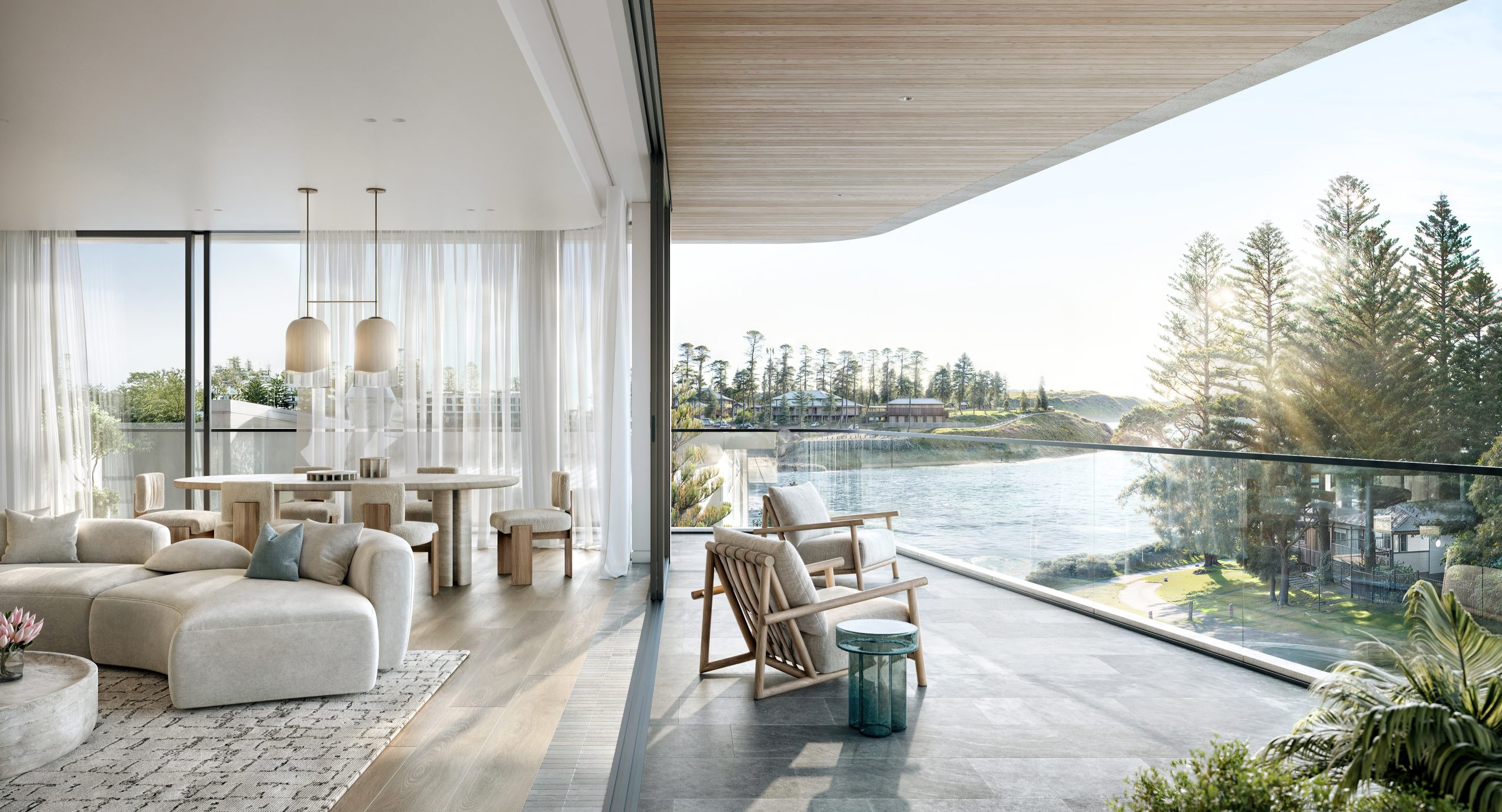


REVEALED: JANE LU’S STRATEGIC PATH TO SUCCESS
From start-up to harbourfront sanctuary, fashion entrepreneur Jane Lu’s home reflects ambition, discipline and a carefully built wealth strategy.
 7 min

Coming home after a day in the office is a time of reckoning for Sydney businesswoman Jane Lu.
The 40-year-old founder of online fashion brand Showpo has built her empire to generate more than $100 million in annual revenue.
But unlocking her front door is a daily reminder of how far she has come in the cut-and-thrust of the business world.
One of the nation’s most iconic businesswomen, Jane, and her husband James Waldie, purchased the Birchgrove home in an off-market deal for $13.75 million in 2023.
The waterfront property in the inner west suburb of Birchgrove, near Sydney, captures breathtaking views of the Sydney Harbour Bridge.
With three bedrooms and three bathrooms, the double-storey house features a striking glass atrium, floor-to-ceiling windows, and double doors opening out to outdoor entertaining areas.
Bathed in natural light, the 1980s home was designed by architect Clark Walton.
The master bedroom features a walk-in robe, ensuite and private balcony.
The property also includes a deep waterfront pontoon, alfresco area and a sizeable boathouse used as an office. There is a double lock-up garage and manicured gardens.
“Living here feels like you own a piece of Sydney Harbour,” Jane tells Kanebridge Quarterly.
“It’s just such an iconic view. When I first bought this home and showed my parents, I was so proud.”
“When we moved to Australia we first lived in a one-bedroom unit in the same suburb, so this place reflects how far we’ve come in a relatively short space of time.”
It was the view that sealed the deal for Jane. The iconic Sydney Harbour Bridge sits perfectly framed in floor-to-ceiling windows, while the sun reflects on the silvery towers of the city’s skyscrapers.
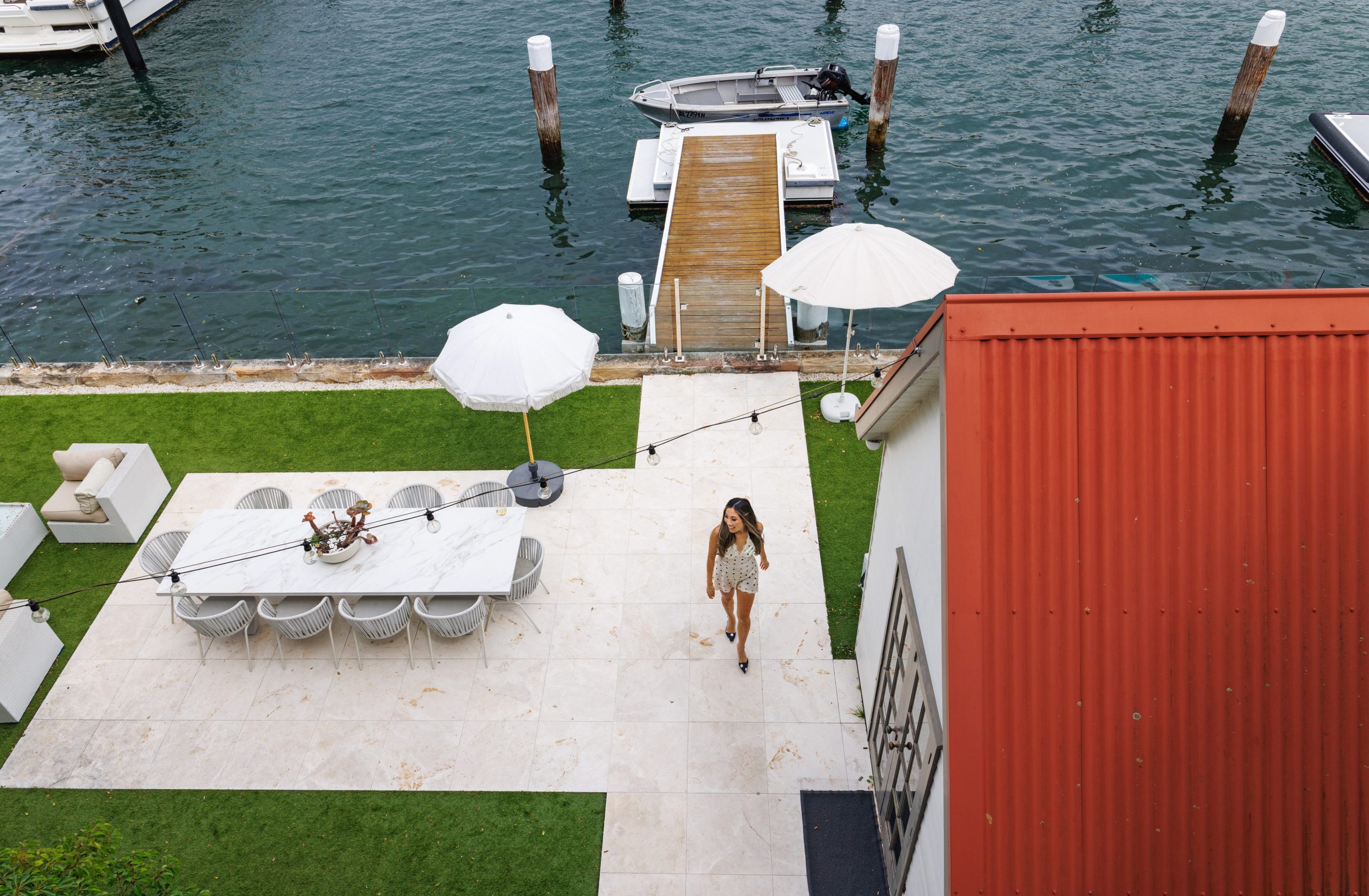
“Living here feels like you own a piece of Sydney Harbour … it’s such an iconic view.”
“Sometimes I think it’s just crazy to be in this house. I’m very fortunate to be in this position,” she says.
Jane and her husband regularly work from home, interspersed with trips into Showpo’s inner-city headquarters. They catch water taxis from the pontoon at the front of the property, or launch their small tinny and head across to a nearby park for some leisure time.
With a background in banking and private equity, Waldie is the CFO and general manager of Showpo. It is the second home the couple have purchased together. They live there with their two children.
Birchgrove will always feel like home for Jane. While the home feels like her forever home, she hopes to renovate some aspects of it.
“We should renovate, but we’re procrastinating because it’s such a huge amount of work,” Jane says.
“We rebuilt the Showpo website last year, and we didn’t feel that we could do that and renovate at the same time.”
“But one day I would like to add my own wardrobe, a cinema room and a pool.”
“You work hard and you want your home to be somewhere to come back to and relax into and unwind. Home is more of a sanctuary for me these days.”
“Our home reminds me of my success. My younger self would be so proud. She would have only ever dreamed to be in a place like this.”
“We love the living room and the backyard area, which fronts onto the water. We love entertaining here with the backdrop of the Sydney Harbour.”
Affordable fashion
Offering global shopping, Showpo provides affordable fashion and accessories to young women. It is now a huge business, but it has been a slog.
Jane is open about quitting her job in corporate accounting to start a fashion business.
To launch Showpo, she lied to her parents, putting on a suit and pretending to go to work every day.
She shares that story in regular Instagram posts as inspirational fodder for others harbouring dreams of making it big.
Jane admits she did not love her time in the corporate world. “I really wanted to prove myself. I wanted to get out of a career that I hated, which was accounting.
“I also wanted to be able to take care of my parents, who sacrificed so much for me when they left everything back in China.”
She has also featured on the Australian Financial Review Young Rich List and appeared on Shark Tank as an investor, sometimes disagreeing with traditional business approaches taken by the other sharks.
She has rebranded herself as the Lazy CEO to highlight her focus on working smarter, not harder.
Regularly making headlines for her clever business prowess and success in business, Lu has cleverly established herself as relatable to the younger women who purchase from Showpo and respected by others in the business fraternity.
A big part of her success is her authentic and humorous approach to business and social media, which provides a glimpse into the glamorous life she’s built for herself through hard work and determination.
She doesn’t take herself too seriously, saying she believes that work should be fun and a place people want to come to every day.

Fashion empire
Jane is a cautious businesswoman who does not jump too early. During the early years of building her fashion empire, the couple rented a home in Darlinghurst, which she describes as more of a crash pad than home.
“At the time, we were busy working and had other priorities,” she says.
“The business was growing and we were young, so the home was part of the chaos. It was messy and small, but it didn’t matter.”
By delaying home ownership, she was able to prioritise liquidity, giving her the flexibility to take risks and move quickly as business opportunities arose during Showpo’s early years. At the time, she was trying to dig out of $60,000 debt.
“The thing that I have carried with me throughout the journey is to always have a bias for action. Always focus on momentum over perfection and just test, iterate and repeat,” she says.
“In business, things aren’t perfect, but just keep going and learn as you go, don’t wait until you’re ready, and mistakes are okay, they’re just valuable lessons.”
“When you’re in business, if you’re not making enough mistakes and you’re not failing enough and doing things differently, then you’ll just blend into the rest of the market and won’t stand out.”
Jane is ambitious about achieving more growth in the business she launched in 2010.
“I’ve had the business 16 years, and it’s been a bit of a roller coaster,” she says.
“There has definitely been tough times, but it’s about understanding that’s okay.
“Success isn’t about avoiding the blows it’s about building the grip to climb out of them.”
But it hasn’t always been smooth sailing. In 2010, Jane was drowning in debt and unhappy in her accounting job.

She had attempted to start a business running pop-up stores selling products from emerging designers, but it eventually folded, leaving her jobless and broke.
With a background in corporate accounting, Jane knows that superannuation offers compound interest.
“I treat super as a long-term wealth vehicle as opposed to an after-thought,” Jane says.
“It would be one of the most tax effective structures in Australia and ignoring it would be financially lazy because once you set things in place, then it compounds.”
“I see super as part of a broader wealth strategy, but you have to be disciplined with it. While not exciting, it can be very impactful over time.”
Given her financial exposure as the founder of a fashion business, Jane focuses on diversification.
“Even though I’m over-indexed in the equity of owning my own business, I’ve got some smaller business investments.”
“I believe success comes from time in the market and allowing that to compound over time,” she says.
But success for Jane is not about wealth and what you can buy.
“Life is about the memories and experiences along the way. Now I’m a mother, it’s about the flexibility to be able to spend time with my family and having freedom, leave and the alignment to become who I am while building the business. That means so much to me.”

Jane admits she does not have time to be a particularly big spender. “I don’t really care for material things. I’m not materialistic. Even now, I could afford designer bags, but I don’t have the time to research it and I don’t care enough about it to research what I want. I rarely have anything to really save for in that respect.
“Because entrepreneurship is so volatile, my personal finances are structured to be more stable.”
“I always keep liquidity, because cash is the bloodline of the business. I don’t over-invest, preferring to keep cash on hand.”
Jane would advise her younger self to keep investing in herself.
“I’d make sure that I invested in learning, invested in taking risks and being okay with those mistakes, and invested in creating memories and experiences. What’s also worked for me is that I’ve also married someone who is more risk averse than me so he can mitigate my chaos.”
Founded in 2010, the business was initially called Show Pony, but the name was changed to Showpo as it was already owned by an American business.
Today, Showpo is a $100m-plus fashion powerhouse known around the world for bringing affordable fashion to the market.
Jane says her social media handle, The Lazy CEO, captures who she is. She’s proud of that title, which American billionaire businessman and philanthropist Bill Gates once said: “I choose a lazy person to do a hard job. Because a lazy person will find an easy way to do it.”
This article appeared in the Winter 26 issue of Kanebridge Quarterly, which you can buy here.
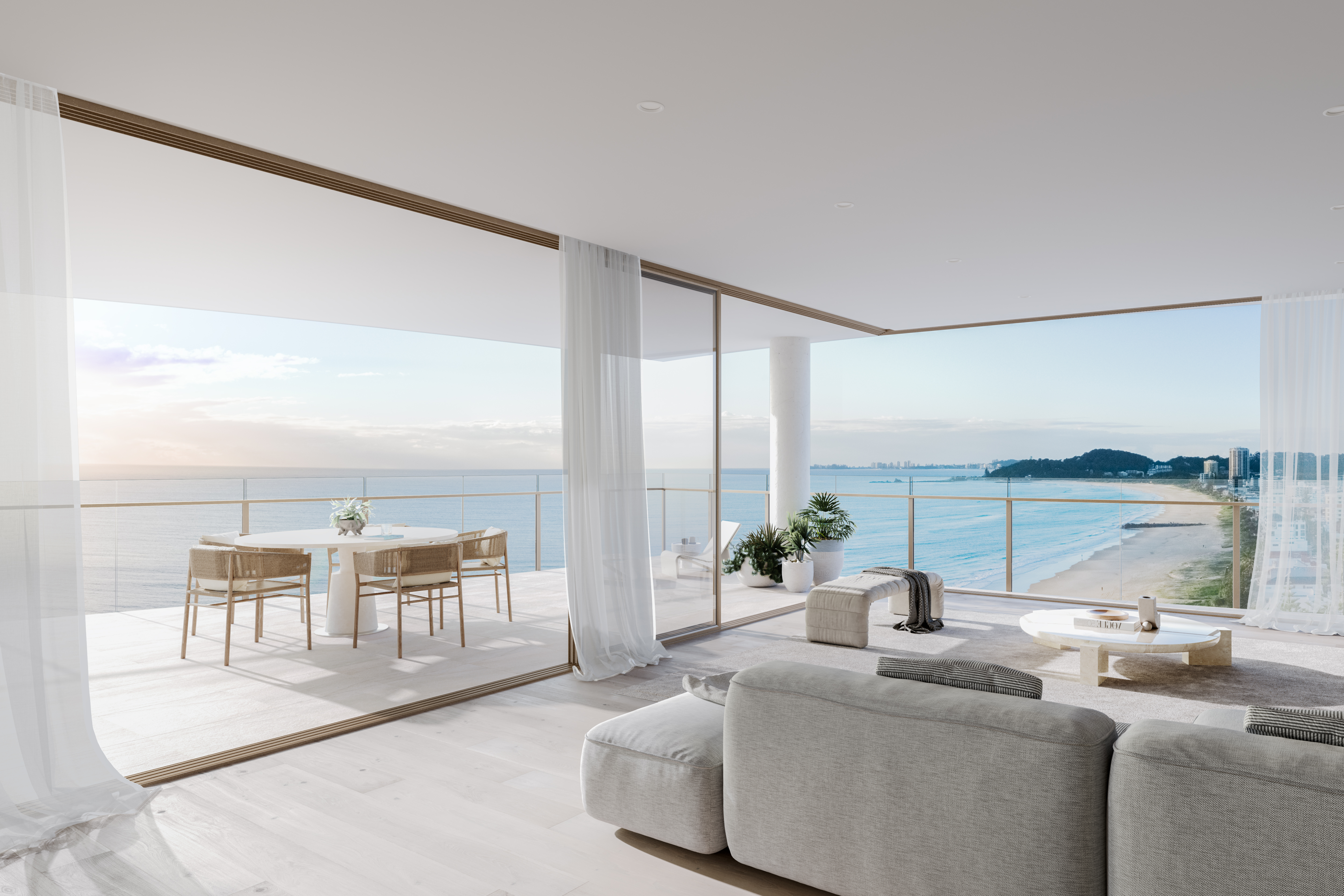
A Sydney couple has paid $15.5 million for the Grand Penthouse at Marquee’s $285 million La Belle Residences beachfront development which is nearing completion at Palm Beach, eclipsing the record for an off-the-plan apartment sale on the southern Gold Coast. The sprawling single level 640 sqm beachfront residence, with sweeping views of the Gold Coast …
Continue reading “$15.5m La Belle Penthouse eclipses southern Gold Coast record”

On the owner’s deck, a 20-metre swimming pool incorporates Feadship’s patented ContraWave technology and extends indoors as a suspended, glass-bottomed infinity pool.

The ASX 200 rose 1.28 per cent in the week ending 30 October as miners rallied, consumer stocks fell and rate-rise expectations climbed
6 min
The Australian sharemarket rose during four of five sessions in the week ending 30 October, but the headline gain concealed a sharp divide between recovering miners, rate-sensitive property stocks and retailers hit by inflation and weaker trading updates.
The Australian sharemarket finished October with a positive week, although the route higher was anything but uniform.
The S&P/ASX 200 closed Friday 30 October at 8,908.1, gaining 112.9 points, or 1.28 per cent, from the previous Friday’s close of 8,795.2.
The All Ordinaries advanced 1.34 per cent to 9,025, while the more concentrated S&P/ASX 20 gained 1.11 per cent.
The benchmark rose during four of the week’s five sessions. It added 0.17 per cent on Monday and 0.46 per cent on Tuesday, before slipping 0.03 per cent on Wednesday. It recovered 0.50 per cent on Thursday and gained another 0.18 per cent on Friday.
The index briefly reached 8,933.3 but again failed to establish itself above the psychologically important 9,000-point mark.
The week’s central tension was between a resources recovery and a less forgiving domestic interest-rate outlook.
Materials gained 4.06 per cent, reclaiming part of the previous week’s heavy fall. Australian real estate investment trusts rose 3.77 per cent, financials gained 1.05 per cent and energy advanced 1.39 per cent.
At the other end of the market, consumer staples fell 5.13 per cent and consumer discretionary shares lost 2.35 per cent. Utilities declined 0.73 per cent and communication services eased 0.68 per cent.
Inflation changes the conversation
Australia’s September inflation data was the week’s pivotal domestic release.
Annual inflation of 4.3 per cent pushed market pricing towards another possible Reserve Bank increase and disrupted Wednesday’s early sharemarket rally.
By Thursday’s close, one widely followed market measure placed the probability of an increase in the cash rate to 4.85 per cent at approximately 80 per cent.
That pricing does not make an increase certain. It does, however, change the framework through which investors assess Australian businesses.
Companies dependent on discretionary household spending face renewed pressure on sales and margins. Property trusts, banks, developers and highly leveraged companies must be considered against the prospect of higher funding costs.
Banks present a more complicated equation. Higher rates can support margins, but they may also slow credit growth and increase arrears.
Miners recover
BHP gained 4.56 per cent across the week to close at $57.56, making a substantial contribution to the benchmark’s rise.
The recovery followed an 8.3 per cent fall during the previous week and helped lift the broader materials sector.
Northern Star Resources added 4.59 per cent, while Goodman Group advanced 6.85 per cent to become the strongest performer in the ASX 20.
The commodities picture was mixed. Gold fell approximately 3.12 per cent on the cited weekly measure, while Brent crude added around 0.68 per cent.
The Australian dollar was little changed at approximately US70.35 cents at the reference point.
Supermarkets and consumer shares retreat
The consumer-staples story was markedly weaker.
Coles fell 11.77 per cent after its first-quarter update, making it one of the largest significant-company declines of the week.
Woolworths lost 3.66 per cent and Wesfarmers fell 4.48 per cent to $76.69 as investors processed company trading commentary against the prospect of another squeeze on household demand.
The moves illustrate how quickly expectations can change when an apparently defensive company disappoints.
Supermarkets still benefit from the recurring need for groceries, but customers can trade down, shift between chains and reduce spending on higher-margin discretionary lines.
Wesfarmers carries exposure to several consumer categories through businesses including Bunnings, Kmart and Officeworks. A renewed rate increase would place more pressure on households already confronting higher prices.
The wider market’s biggest movements
Among companies outside the ASX 20, Mesoblast surged 27.32 per cent, SiteMinder gained 22.74 per cent and Zip rose 22.60 per cent.
The sharpest weekly falls included 4DMedical, down 33.51 per cent; Tuas, down 29.95 per cent; Catalyst Metals, down 17.47 per cent; and Champion Iron, down 13.35 per cent.
Those percentages require context.
The movements in BHP, Commonwealth Bank and other very large companies had substantially more influence on the index than similarly dramatic changes among smaller companies.
A 20 per cent move in a relatively small stock may attract more attention than a two per cent rise in a major bank, but the bank can have the greater effect on the market.
How the ASX 20 moved
The following list uses the S&P/ASX 20 constituents and five-session movements reported at the 30 October close.
Where the component feed did not publish a valid five-day comparison, no figure has been estimated.
BHP Group: Up 4.56 per cent
Commonwealth Bank: Up 1.66 per cent
Rio Tinto: Down 2.20 per cent
National Australia Bank: Up 0.48 per cent
Westpac: Up 0.08 per cent
ANZ Group: Up 1.92 per cent
CSL: Up 2.05 per cent
Macquarie Group: Up 2.19 per cent
Wesfarmers: Down 4.48 per cent
Woodside Energy: Up 1.43 per cent
Goodman Group: Up 6.85 per cent
Telstra: Five-day comparison unavailable from the cited component feed
Woolworths: Down 3.66 per cent
Fortescue: Five-day comparison unavailable from the cited component feed
Transurban: Down 2.40 per cent
QBE Insurance: Down 1.21 per cent
Aristocrat Leisure: Up 0.63 per cent
Northern Star Resources: Up 4.59 per cent
Sigma Healthcare: Down 0.36 per cent
Brambles: Down 1.20 per cent
The companies dominating the conversation
Coles was the week’s standout media-facing company for the wrong reason.
Its trading update produced an outsized repricing and drew attention across the grocery and retail sectors. Woolworths and Wesfarmers were also scrutinised as investors considered how stubborn inflation and another possible rate rise could affect sales volumes.
Bank of Queensland offered a more positive corporate signal.
The bank reported that its FY26 net interest margin had risen six basis points to 1.70 per cent, ahead of the 1.68 per cent expected by the market according to contemporaneous reporting.
Bank of Queensland shares rose 5.8 per cent on Thursday, while the major banks also rallied.
Endeavour Group finished Friday at $3.39, up 4.31 per cent on the day, and released the results of its annual general meeting.
The movement was notable during a week in which investors were highly sensitive to consumer-facing companies. The AGM result should not, however, be presented as the sole cause of the share-price increase without further supporting company guidance.
Mesoblast’s 23.4 per cent Thursday rise and 27.32 per cent weekly gain returned the biotechnology company to the centre of market attention.
For editors, it is important to separate the size of that percentage movement from its influence on the index. Mesoblast was an eye-catching performer, but it did not drive the ASX 200 in the way BHP or Commonwealth Bank did.
Qantas remained part of the broader market conversation as investors watched travel demand and company updates.
However, the primary-source review did not locate a fresh Qantas announcement that justified attributing a major weekly market movement to new company information. The airline should therefore remain on the monitoring list rather than being forced into the week’s causal narrative.
Is Australia’s IPO market reopening?
The official ASX new-listings pipeline remains active but selective.
ASX’s upcoming-floats page included formal applications with offer timetables extending through October and at least one anticipated listing on 30 November.
The exchange notes that its page covers companies for which a formal listing application has been received. It does not represent every company privately exploring a float.
The wider debate concerns whether Australia’s public market is sufficiently competitive when high-growth businesses can pursue capital in the United States or remain privately funded for longer.
ASX has previously raised possible reforms designed to improve the attractiveness of the local market. These include debate about reducing minimum free-float requirements and streamlining aspects of the admissions process.
An enhanced fast-track pathway for qualifying applicants can shorten the review process, reducing the execution risk created when market conditions change during a long IPO timetable.
That does not remove the more fundamental challenge.
New floats still require credible earnings or a convincing growth pathway, sensible pricing and enough genuine free float to support trading after listing.
Investors can already obtain diversified exposure through low-cost exchange-traded funds or buy established, liquid businesses. A float must therefore offer more than novelty.
The current pipeline suggests that the IPO window is open, but it is not indiscriminate.
What investors will watch next
The Reserve Bank’s next decision now sits at the centre of the domestic outlook.
Any change in cash-rate expectations will flow rapidly through banks, retailers, property trusts, listed developers and companies carrying substantial debt.
Investors will also watch whether the materials recovery can continue, whether BHP can hold its rebound and whether consumer companies provide further evidence of slowing demand.
Overseas, technology-sector volatility, commodity prices and the United States interest-rate outlook will continue to shape Australian trading.
The week’s 1.28 per cent headline gain was encouraging, but it was not a broad declaration of confidence.
It was a rotation towards miners, selected financials and property securities—and away from consumer businesses facing a more difficult inflation and interest-rate equation.
Market dashboard
S&P/ASX 200: 8,908.1, up 1.28 per cent for the week
All Ordinaries: 9,025, up 1.34 per cent
S&P/ASX 20: 5,214.7, up 1.11 per cent over five sessions
Best sector: Materials, up 4.06 per cent
Next-best sector: A-REITs, up 3.77 per cent
Weakest sector: Consumer staples, down 5.13 per cent
Major large-cap winner: Goodman Group, up 6.85 per cent
Major large-cap loser: Coles, down 11.77 per cent
AUD/USD: Approximately US70.35 cents at the weekly reference point
Gold: Approximately US$3,885 an ounce, down 3.12 per cent on the cited weekly measure
Brent crude: Approximately US$117.70 a barrel, up 0.68 per cent on the cited weekly measure
A Sydney couple has paid $15.5 million for the Grand Penthouse at Marquee’s $285 million La Belle Residences beachfront development which is nearing completion at Palm Beach, eclipsing the record for an off-the-plan apartment sale on the southern Gold Coast. The sprawling single level 640 sqm beachfront residence, with sweeping views of the Gold Coast …
Continue reading “$15.5m La Belle Penthouse eclipses southern Gold Coast record”

Set on one of the city’s last absolute riverfront sites, The Riversdale by Mosaic combines irreplaceable waterfront ownership with one of Brisbane’s most significant residential opportunities.