Rookie Traders Are Calling It Quits, and Their Families Are Thrilled
Many who picked up investing during the pandemic are cooling on the hobby

 4 min
4 min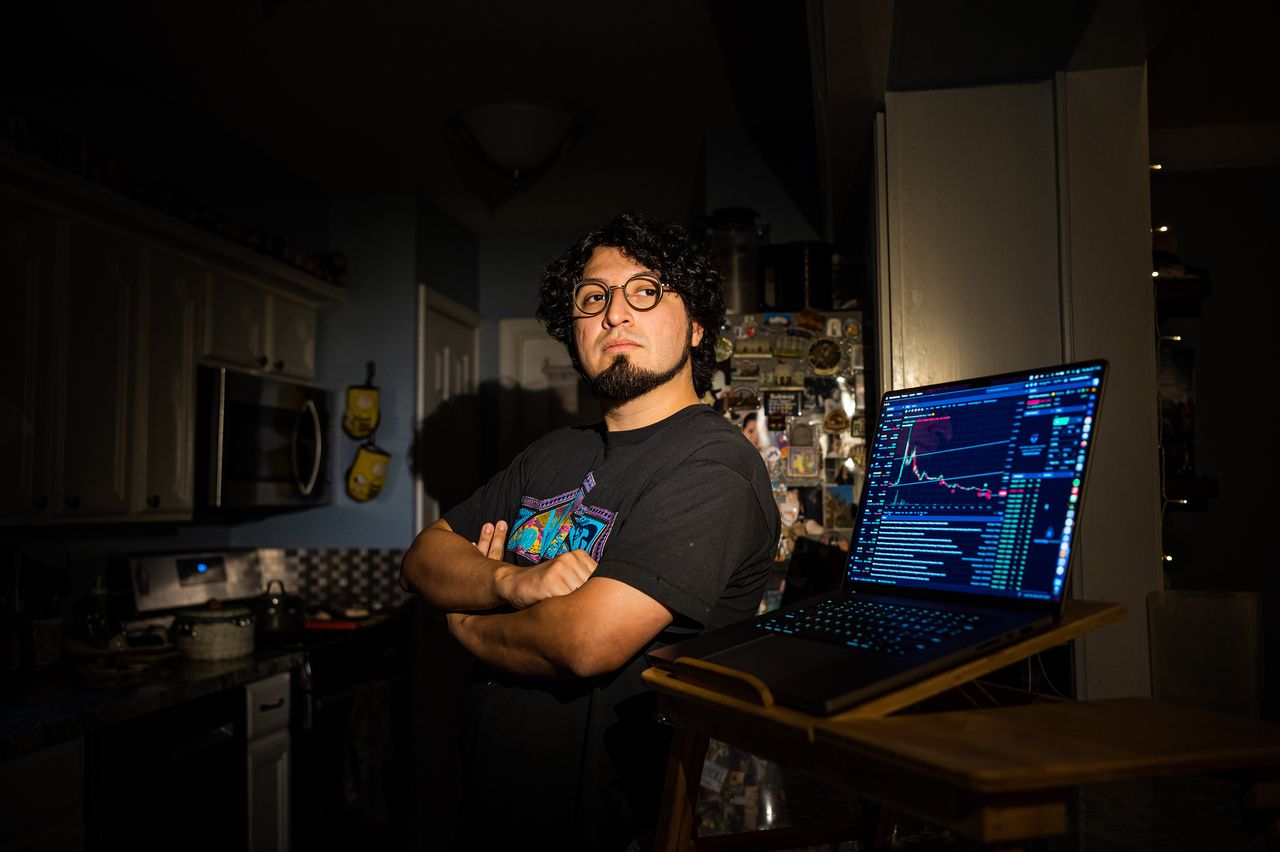
Some novices who took up trading during the pandemic are abandoning the hobby. Their loved ones are breathing a sigh of relief.
Spouses, parents and other family members who were subjected to one too many play-by-plays of market movements say they are happy to have their loved ones back—and equally glad they no longer have to hear about buzzy stocks or cryptocurrencies.
The market swooned in 2022, taking the fun out of day trading for many newbies. The S&P 500, after surging during the pandemic, just wrapped up its worst year since 2008. Bitcoin lost about 65% of its value throughout the year.
Some amateur traders’ families now face the disappearance of the life-changing sums of money they held in their portfolios at the height of the run-up. The stakes are lower for those who put a modest amount into meme stocks or crypto for fun.
Alan Garcia started trading on Webull Financial LLC early in the pandemic, when his work as a musician dried up. Soon, Mr. Garcia was parked at his desk each day from 8:30 a.m. to 3 p.m. to manage his portfolio of about $2,000. He bet heavily on companies like ElectraMeccanica Vehicles Corp., which makes an electric car seating a single person; ticker symbol, SOLO.
The obsession didn’t end when he sat down in the living room with his wife, Adriana Rodriguez, each evening. For about two years, he talked about investing. Mr. Garcia, a 34-year-old Houston resident, even started watching investing videos in bed at night.
“He was here,” Ms. Rodriguez said, “but he wasn’t here.”
In early 2022, Mr. Garcia lost everything in his portfolio on a bad options bet, leaving him in a foul mood. But the next morning, he felt relieved. After Ms. Rodriguez, a lawyer, left for the office, he worked on his music all day instead of checking the market. He hasn’t traded on the app since.
Ms. Rodriguez is thrilled. Mr. Garcia agrees it is for the best—mostly, anyway. “We’ve never been this good in our lives,” he said. “One day I’ll get that $2,000 back though.”
Trading exploded into the mainstream during the pandemic, when many Americans were stuck at home, flush with stimulus checks and eager to pass the time. New apps made it cheap and easy for newbies to trade from the comfort of their cellphone, and many found a sense of community on investing forums online. In 2021, rookie traders fuelled a run-up in meme stocks that put hedge funds on their heels.
Individual investors are broadly staying invested in stocks, unlike previous downturns when many dumped their holdings. But lots of one-time day traders are finding they are now content to buy and hold rather than try to time their investments. Average daily trading volume is down markedly at major brokerage firms that cater to retail customers.
Vince Major took a job in 2021 as head of marketing at a cryptocurrency wallet company, and soon he was subjecting his mother, Vikki Major, to his thoughts on various cryptocurrency projects and how the sector could revolutionise the financial system.
His mother found it unbearable. Mrs. Major, who is 66 and a juvenile probation officer in Phoenix, told her son to knock it off. That inspired him to give a presentation at an October industry conference titled “My Mother Hates Your Project (and Mine!).”
A duly chastened Mr. Major has cut back the crypto talk on morning FaceTime calls with his mother. After trying to speak about crypto in a more understandable way, he even convinced his mom to buy ether and leave it in a virtual wallet using his company’s app.
Mrs. Major’s ether is down about 40% since she bought it in summer 2021, and it is now worth about $14,000 total. Mr. Major, who is 36 and lives in Los Angeles, said the value of his crypto holdings is up overall because he started buying in 2015 when prices were much lower.
Mrs. Major figures her son knows what he is talking about—even if it was in an annoying way at first. “He’s very intelligent,” she said.
Marvin Lahoud went all in on investing when the pandemic hit, spending up to 10 hours a day trading. Mr. Lahoud, who works at a Boston construction-management company and moved to the U.S. from Lebanon in 2017, started wearing an earpiece to listen to CNBC while doing chores.
His wife, Suzie Lahoud, tried to embrace the investing subculture, too, though she thought his interest might peter out as it had for previous obsessions like photography and videogames. The couple sang their daughter a song about investing as a lullaby.
“It’s always nice to see him get excited about something,” said Ms. Lahoud, a doctoral student. “But there were times I would get a little frustrated just because it was taking up so much of his time and mental space.”
In February 2021, Ms. Lahoud told her husband she was pregnant with their second child. His Robinhood Markets Inc. portfolio had just reached nearly $1 million. He posted to Reddit a screenshot of his account and his family’s news. “I’m on track to retire early and spend time with my kids,” he said, earning 2,000 comments. He was rich—on paper at least.
By early 2022, Mr. Lahoud’s investments started dropping and he faced a massive tax bill from gains he had taken in 2021. Mr. Lahoud gave up trading.
Without investing to keep him occupied, Mr. Lahoud said he felt depressed for the first time in his life. He threw himself into a new endeavour: researching the year 536 AD, which a Harvard professor dubbed the worst in history. That year, a volcanic eruption plunged swaths of the world into darkness, causing widespread famine. Reading about it made him feel better.
“My troubles are so small,” Mr. Lahoud said, “and life is too short.”
 Copyright 2020, Dow Jones & Company, Inc. All Rights Reserved Worldwide. LEARN MORE




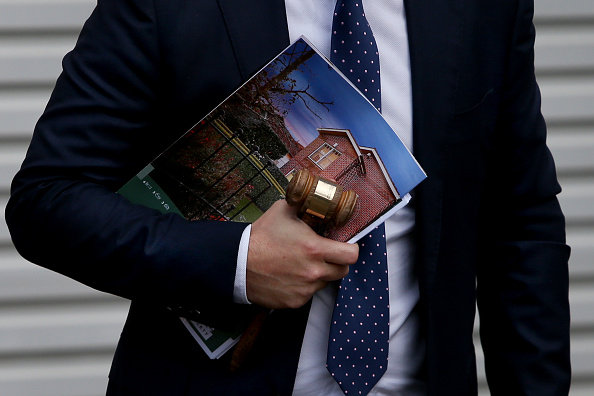
Victorian auction buyers will soon receive a piece of information that has traditionally been withheld until bidding reaches it: the vendor’s reserve price. Under new property-sale and underquoting laws, agents must publish the agreed reserve at least seven days before an auction or fixed-date sale. Most changes begin on 1 October 2026 and apply to …
Continue reading “Victoria’s New Auction Rules Will Force Reserve Prices Into the Open”

Four decks, 34.5 metres and a made-to-measure interior: step aboard the new Custom Line Navetta 35, unveiled at Cannes.
The ASX 200 rose about 0.27% as energy and materials advanced. Woodside and gold miners gained while financials and technology weakened.
2 min
The Australian sharemarket rebounded from its lowest close in three months on Wednesday, with energy and materials companies leading a cautious recovery.
The S&P/ASX 200 finished approximately 23 points, or 0.27 per cent, higher at 8,695.6 on 16 September. A second data source placed the closing index at 8,696.5, up 24 points or 0.28 per cent. The official close should be confirmed through a licensed feed before publication.
The broader All Ordinaries added 25.2 points, or 0.28 per cent, to 8,874.5.
Energy was the strongest sector, rising 2.19 per cent as Australian producers reflected the previous overnight increase in global oil prices. Woodside gained 2.84 per cent. Brent had settled near US$108.75 a barrel before the local session, although it later traded around US$107.68.
Materials advanced 1.28 per cent and provided the largest positive contribution to the index. Gold producers featured prominently among the strongest stocks, with Pantoro rising 9.3 per cent and St Barbara gaining 8.18 per cent. BCI Minerals added 7.48 per cent.
Financials fell 0.37 per cent, detracting from the benchmark despite earlier strength. Rate expectations remained a significant influence after Westpac joined the other major banks in forecasting a possible Reserve Bank increase in November. Higher rates can expand bank margins in some circumstances but also raise funding costs and increase the risk of loan stress and slower credit growth.
Technology remained weak. Life360 declined 5.46 per cent, while healthcare names that had rallied during Tuesday’s sell-off gave back ground. 4DMedical lost 5.35 per cent and Telix Pharmaceuticals fell 4.96 per cent.
James Hardie dropped 5.23 per cent. Codan moved against the weaker technology tone, gaining 7.51 per cent.
The session produced positive breadth, with more advancers than decliners among the largest 250 stocks, but the broader backdrop remains unsettled. Oil prices have revived inflation concerns, bond yields are elevated and investors are assessing the prospect of further monetary tightening in Australia and the United States.
The rebound therefore recovered only part of Tuesday’s 0.9 per cent decline. For Thursday, investors will be watching overnight central-bank developments, energy markets and whether gains can broaden beyond resources.
Market dashboard — 16 September 2026
S&P/ASX 200* Approximately 8,695.6, up 23.1 points or 0.27 per cent; verify the official closing print
All Ordinaries: 8,874.5, up 25.2 points or 0.28 per cent
Best-performing sector: Energy, up 2.19 per cent
Materials: Up 1.28 per cent
Weak sector: Financials, down 0.37 per cent
Leading mover: Pantoro, up 9.30 per cent
Notable large-cap mover: Woodside, up 2.84 per cent
Notable loser: Sunrise Energy Metals, down 6.22 per cent
Life360: Down 5.46 per cent
Australian dollar: About US71.3 cents in the preceding market snapshot
Gold: Approximately US$4,375 an ounce in the afternoon snapshot
Brent crude: Approximately US$107.68 a barrel in the afternoon snapshot

A bold new era for Australian luxury: MAISON de SABRÉ launches The Palais, a flagship handbag eight years in the making.

Formula 1 may be the world’s most glamorous sport, but for Oscar Piastri, it’s also one of the most lucrative. At just 24, Australia’s highest-paid athlete is earning more than US$40 million a year.