America’s Obsession With Weight-Loss Drugs Is Affecting the Economy of Denmark
Novo Nordisk’s market capitalisation has matched the GDP of its home country

 2 min
2 min
Ozempic and Wegovy are tilting the scales of Denmark’s economy.
Their Danish manufacturer, Novo Nordisk, has generated billions of dollars of revenue and supercharged the company’s market capitalisation. That has led to lower interest rates in the country, according to a bank report and economists.
The market value of Denmark’s biggest company has risen by more than a third so far this year to about $419 billion, bigger than the country’s gross domestic product of about $406 billion. The measures aren’t synonymous: market capitalisation is the value of all Novo Nordisk shares, while GDP measures goods and services produced in a year. But the comparison demonstrates how Novo Nordisk has surged past companies such as Lego and Carlsberg to sway the economy of its nordic homeland.
Take foreign-exchange management for one example.
Denmark’s currency, the krone, is pegged to the euro. Central bankers in Copenhagen adjust interest rates and make other interventions to keep its value steady with that of the continent’s common currency.
Novo Nordisk’s U.S. sales of Ozempic and Wegovy have been so strong that it has had to convert dollars into kroner in unusually large quantities, raising the krone’s value relative to the euro, said Danske Bank director Jens Naervig Pedersen.
“Because the pharmaceutical industry’s exports have grown so much, it’s creating a big influx of currency into the Danish economy,” he said.
Denmark’s central bankers have responded by keeping interest rates below the European Central Bank’s, weakening the krone, said Pedersen.
Denmark’s central bank declined to comment.
Novo Nordisk’s success with drugs used for weight loss and diabetes is overall a boon to the Danish economy, which will benefit from more jobs created by the company’s growth as it invests domestically, economists said. Lower interest rates also benefit home buyers who can secure mortgage rates somewhat lower than in the rest of Europe, they said.
“It is an embarrassment of riches—this is good for the Danish economy and they’re getting a lot of export revenues,” said Gian Maria Milesi-Ferretti, an economist and senior fellow at the Brookings Institution.
For small countries, having a domestic company play such a disproportionate role in the economy carries risks. For years, fellow Nordic nation Finland’s economy was dominated by telecom Nokia, which at its peak in 2000 accounted for 4% of the country’s GDP, more than a fifth of exports and some 70% of value on its stock exchange. It played a significant role in Finland’s growth from 1995-2007, when GDP per capita rose 55%, nearly double the increase in the U.S.
Nokia’s decline also coincided with a decade of economic stagnation in Finland after 2008. The collapse of Nokia’s handset market, largely because of competition from the iPhone that Apple introduced in 2007, exacerbated Finland’s economic woes, which under austerity policies and the eurozone crisis saw its per capita income decline over the next decade.
Novo Nordisk is now the second-most valuable public company in Europe after luxury brand LVMH Moët Hennessy Louis Vuitton.
Analysts estimate Novo Nordisk’s weight-loss drug sales to be $6.1 billion this year and to reach nearly $15 billion annually in 2027, according to data provider FactSet.
 Copyright 2020, Dow Jones & Company, Inc. All Rights Reserved Worldwide. LEARN MORE




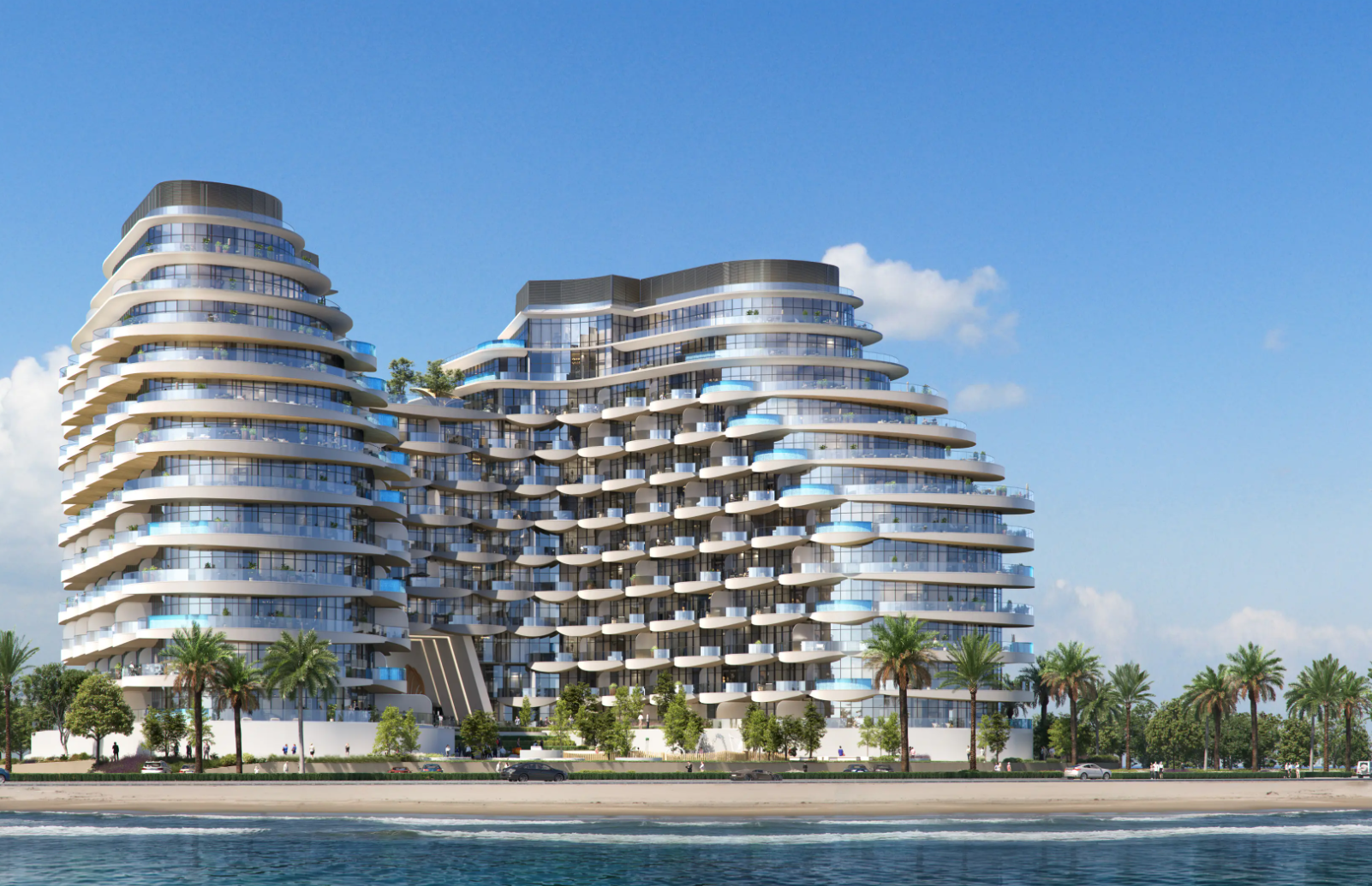
BNW Developments has established a Sydney presence, joining Arada and Sobha Realty among the growing number of UAE developers pursuing Australian buyers and development opportunities.

Australian shares fell on Thursday as Wall Street weakness, rising oil and persistent rate concerns weighed on most of the market. The S&P/ASX 200 declined 0.72 per cent to 8,702. The All Ordinaries lost 0.66 per cent to finish at 8,897. Mining stocks were hit particularly hard, while real estate also dragged on the index. …
Continue reading “ASX falls 0.7 per cent as miners and property stocks retreat”
 2 min
2 minAustralian shares fell on Thursday as Wall Street weakness, rising oil and persistent rate concerns weighed on most of the market.
The S&P/ASX 200 declined 0.72 per cent to 8,702. The All Ordinaries lost 0.66 per cent to finish at 8,897. Mining stocks were hit particularly hard, while real estate also dragged on the index.
Energy was the notable exception, gaining more than one per cent as Brent crude traded above US$103 a barrel. Oil had moved higher amid uncertainty surrounding potential US diesel-export restrictions and broader geopolitical supply risks. The move supported energy producers but renewed concern about inflation inputs across transport and the wider economy.
Gold shares were weak even as spot bullion remained historically elevated. The All Ordinaries Gold index fell about 2.25 per cent, showing that equity performance can diverge from the commodity because of valuation, currency, operating and company-specific factors.
Zip was a prominent loser, falling 11.38 per cent after the company reported short sales after the previous close. Nine Entertainment also weakened after UBS analysts warned of near-term revenue challenges associated with its advertising-supported subscription tier.
Premier Investments led larger winners despite caution about the retail environment. Breville, in which Premier owns a significant stake, also appeared among leading movers. In the broader ASX 300 screen, Myer gained 11.43 per cent and MAAS Group rose 7.93 per cent, while Lotus Resources fell 10.53 per cent. These percentage moves should be checked against company announcements and trading liquidity before attributing causes.
The Australian dollar was broadly flat at US70.38 cents. Spot gold was around US$4,280 an ounce, Brent crude approximately US$103.08 a barrel and iron ore near US$96.90 a tonne late in the session.
The rate outlook remains the central domestic catalyst. Labour-market weakness has not eliminated the possibility of an RBA increase next week, leaving banks, listed property and other rate-sensitive sectors exposed to changing expectations.
Market dashboard
S&P/ASX 200: 8,702, down 0.72 per cent.
All Ordinaries: 8,897, down 0.66 per cent.
Best sector: Energy, up more than one per cent.
Weakest areas: Real estate and materials were the major drags; confirm final sector percentages before publication.
Material winner: Premier Investments led the large-company gainers. Confirm its final closing move from the ASX before publication.
Material loser: Zip, down 11.38 per cent.
ASX 300 percentage leader: Myer, up 11.43 per cent.
ASX 300 percentage laggard: Zip, down 11.38 per cent.
AUD/USD: Approximately US$0.7038, broadly flat.

Porsche has revealed a one-off 911 GT2 RS that brings the extraordinary silhouette of its 935/78 “Moby Dick” racing car onto the road. Created by Porsche Sonderwunsch with Manthey, the commission began with a near-new GT2 RS. The owner requested greater performance, a Slantnose profile and a rear wing influenced by the limited 911 GT3 …
Continue reading “Porsche Builds a Road-Going “Moby Dick” From a 911 GT2 RS”

Scotch whisky expert, luxury hospitality strategist and Keeper of the Quaich inductee Ross Blainey is bringing a new philosophy of luxury experiences to Citizen Kanebridge.