Iger Lays Out Vision for Disney’s Future
CEO says streaming, parks, studios and ESPN are the building blocks of the company

 4 min
4 min
Nearly a year after returning to Disney as chief executive, Bob Iger laid out his vision of the company’s future, putting streaming and live entertainment at the centre, fed by a studio business that he plans to personally help reinvent.
Iger told investors in a fourth-quarter earnings call that Disney will focus on four “building blocks” that provide the foundation for future growth: streaming, theme parks and cruises, studios and the ESPN sports network.
Disney said Wednesday it would slash $2 billion more in costs than previously planned as the company sharply narrowed losses in its streaming business.
There are still major challenges to overcome. Disney’s streaming business has lost nearly $11 billion since the launch of Disney+ in late 2019. Its movie studio is in the midst of a box-office slump that has been exacerbated by delays caused by Hollywood strikes, and ESPN is looking for strategic partners as it plans to eventually transform into a streaming-only business by 2025.
“A lot of time and effort was spent on fixing in the last year,” Iger said during a conference call Wednesday. The company’s progress means Disney can “move beyond this period of fixing and begin building our businesses again,” he said.
Iger said the studio would focus more on quality than quantity and that it lost some of its focus during and after the pandemic. “We’re all rolling up our sleeves, including myself, to do just that,” he said.
Some of Disney’s core franchises, including its Marvel superhero movies and series, have struggled to attract big audiences to theaters in recent years.
Lucasfilm, the Disney-owned studio behind the lucrative and popular “Star Wars” movies, hasn’t released a feature film since 2019 and doesn’t have one in production currently, meaning it will likely be several years before the next one comes out. And Pixar, the marquee computer animation studio that has dominated the box office for the last several decades, has had a series of box-office flops.
The common thread underlying Disney’s recent challenges and potential opportunities is the transition from traditional media like film and legacy TV to streaming, which has upended Hollywood’s business model and roiled nearly every entertainment company.
In his comments Wednesday, Iger stressed the importance of getting streaming right. The company’s main streaming service, Disney+, added 6.9 million “core” subscribers—those in North America and other markets such as Europe and Asia, excluding India, where it is able to charge higher subscription prices—in the most recent quarter, about twice what Wall Street analysts polled by FactSet predicted. Disney+ added 500,000 domestic subscribers.
The company highlighted the popularity on Disney+ of recent movies including “Elemental,” the Marvel superhero film “Guardians of the Galaxy Vol. 3” and the recent live-action remake of “The Little Mermaid.”
“One thing that we have recently really come to appreciate is the performance of our big title films,” Iger said. The strength of its films on streaming means Disney can spend less on TV series, which is a differentiator for the company, Iger said.
The entertainment giant said Wednesday it is seeking $7.5 billion in cost cuts, up from the $5.5 billion it targeted at the beginning of this year.
Disney reported that its streaming business is making progress in narrowing its losses. The business, which also includes Hulu and ESPN+, lost $387 million in the most recent quarter, down from $1.47 billion a year earlier. The company reiterated that it believes streaming will break even by next September.
Disney has begun reporting more detailed results from its ESPN sports network as it seeks strategic partners to invest in the flagship sports network’s future.
ESPN’s operating income for fiscal 2023 fell 1.7% to $2.8 billion, while revenue rose 2% to $16.4 billion. Disney owns 80% of ESPN through a joint venture with Hearst, and Iger has said the company is working to transform the network into a fully direct-to-consumer platform, with live sports and other sports content streamed to consumers outside the cable bundle.
Excluding ESPN, Disney’s traditional TV networks saw revenue fall 9.1% for the quarter to $2.62 billion. Operating income from the networks was flat at $805 million.
During a CNBC interview Wednesday, Iger said the company has been considering strategic options for each of its TV networks, though “not necessarily all of them,” and has been reviewing its TV operations for opportunities to reduce costs and improve the business. This past summer, he said the legacy networks may not be core to Disney, suggesting it could sell them.
Other bright spots in Wednesday’s quarterly earnings included Disney’s experiences segment, which includes theme parks, cruise ships, a family-adventure travel-guide business and merchandise licensing. The unit’s operating income rose 31% from the year-earlier quarter to $1.76 billion. Disney has raised prices at its theme parks and announced major investments in its cruise ship business in the hopes of capitalising on rising demand for in-person entertainment experiences.
The entertainment giant, which just passed its 100th birthday, generated sales of $21.2 billion for the quarter, up 5% from a year earlier. Revenue for the period was slightly below the $21.4 billion predicted by analysts polled by FactSet.
Disney’s net income rose to $264 million in the September quarter, from $162 million a year earlier. Disney’s earnings per share, excluding certain items, were 82 cents, beating Wall Street’s projections by 11 cents.
Disney shares rose nearly 3% in after-hours trading. Before the earnings report, the stock had fallen 2.7% in 2023.
Overall, Disney+ ended the quarter with 150.2 million global subscribers, including those signed up to its Hotstar service in India. That service has shed millions of customers over the last year after Disney lost a bidding war for the rights to stream matches from a popular cricket league, and Disney is exploring a sale of its India unit, The Journal has reported.
Although the company fended off an activist campaign by Nelson Peltz earlier this year, Iger now faces the specter of another battle.
The Wall Street Journal reported in October that Peltz’s Trian Fund Management is planning a fresh push for board seats. Billionaire and former Marvel executive Isaac “Ike” Perlmutter has said he has entrusted his stake in Disney to Trian for that effort, giving the investment fund control over a stake worth upward of $2.5 billion.
Iger said in the CNBC interview that he had spoken recently with Peltz but he doesn’t “know what Nelson is really after.”
 Copyright 2020, Dow Jones & Company, Inc. All Rights Reserved Worldwide. LEARN MORE





BNW Developments has established a Sydney presence, joining Arada and Sobha Realty among the growing number of UAE developers pursuing Australian buyers and development opportunities.

Australian shares fell on Thursday as Wall Street weakness, rising oil and persistent rate concerns weighed on most of the market. The S&P/ASX 200 declined 0.72 per cent to 8,702. The All Ordinaries lost 0.66 per cent to finish at 8,897. Mining stocks were hit particularly hard, while real estate also dragged on the index. …
Continue reading “ASX falls 0.7 per cent as miners and property stocks retreat”

 2 min
2 minAustralian shares fell on Thursday as Wall Street weakness, rising oil and persistent rate concerns weighed on most of the market.
The S&P/ASX 200 declined 0.72 per cent to 8,702. The All Ordinaries lost 0.66 per cent to finish at 8,897. Mining stocks were hit particularly hard, while real estate also dragged on the index.
Energy was the notable exception, gaining more than one per cent as Brent crude traded above US$103 a barrel. Oil had moved higher amid uncertainty surrounding potential US diesel-export restrictions and broader geopolitical supply risks. The move supported energy producers but renewed concern about inflation inputs across transport and the wider economy.
Gold shares were weak even as spot bullion remained historically elevated. The All Ordinaries Gold index fell about 2.25 per cent, showing that equity performance can diverge from the commodity because of valuation, currency, operating and company-specific factors.
Zip was a prominent loser, falling 11.38 per cent after the company reported short sales after the previous close. Nine Entertainment also weakened after UBS analysts warned of near-term revenue challenges associated with its advertising-supported subscription tier.
Premier Investments led larger winners despite caution about the retail environment. Breville, in which Premier owns a significant stake, also appeared among leading movers. In the broader ASX 300 screen, Myer gained 11.43 per cent and MAAS Group rose 7.93 per cent, while Lotus Resources fell 10.53 per cent. These percentage moves should be checked against company announcements and trading liquidity before attributing causes.
The Australian dollar was broadly flat at US70.38 cents. Spot gold was around US$4,280 an ounce, Brent crude approximately US$103.08 a barrel and iron ore near US$96.90 a tonne late in the session.
The rate outlook remains the central domestic catalyst. Labour-market weakness has not eliminated the possibility of an RBA increase next week, leaving banks, listed property and other rate-sensitive sectors exposed to changing expectations.
Market dashboard
S&P/ASX 200: 8,702, down 0.72 per cent.
All Ordinaries: 8,897, down 0.66 per cent.
Best sector: Energy, up more than one per cent.
Weakest areas: Real estate and materials were the major drags; confirm final sector percentages before publication.
Material winner: Premier Investments led the large-company gainers. Confirm its final closing move from the ASX before publication.
Material loser: Zip, down 11.38 per cent.
ASX 300 percentage leader: Myer, up 11.43 per cent.
ASX 300 percentage laggard: Zip, down 11.38 per cent.
AUD/USD: Approximately US$0.7038, broadly flat.

A long-standing cultural cruise and a new expedition-style offering will soon operate side by side in French Polynesia.
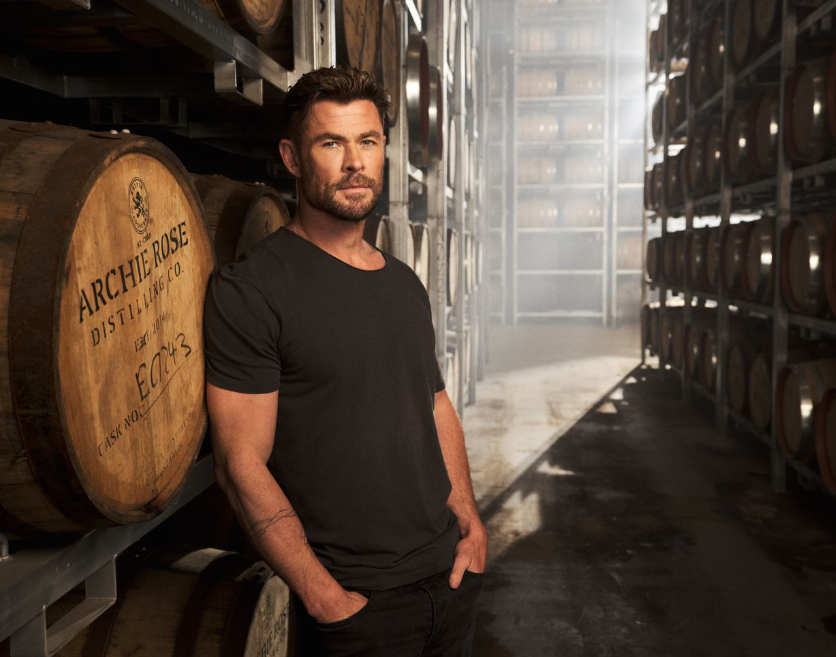
Australian actor Chris Hemsworth has joined Archie Rose Distilling Co. as co-owner and strategic business partner as the Sydney spirits company prepares to enter the United States. The partnership brings Hemsworth together with Archie Rose founder Will Edwards, with the pair aiming to build greater international recognition for Australian whisky. Founded in Sydney in 2014, …
Continue reading “Chris Hemsworth Joins Archie Rose as Co-Owner Ahead of Global Expansion”