





American Fashion in Crisis? Not at These Shows

 4 min
4 min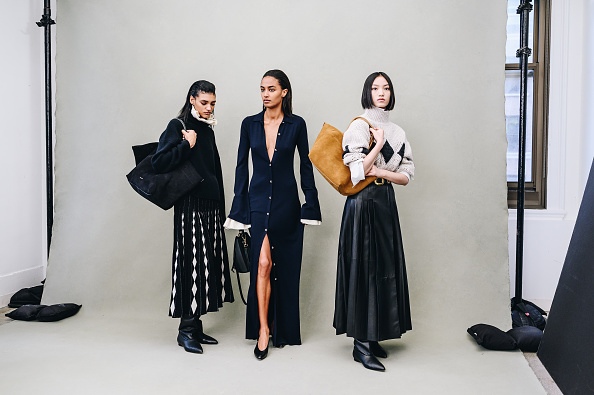
In the 1990s, New York fashion had the Big Three: Donna Karan, Ralph Lauren and Calvin Klein. Of them, only Lauren remains a fashion force. Klein’s brand now only calls to mind Jeremy Allen White in boxer briefs. A recent reboot of the Donna Karan brand, sans Donna, drew yawns. In their heydays, these designers set the fashion agenda for the United States, and to some extent, the world. But in recent years, many have bemoaned the state of American fashion and wondered whether its fashion week should even exist.
Crisis of confidence no more! This past week, several New York designers made compelling cases for a new era in American fashion, one ruled more by a rigorous approach to separates than splashy marketing campaigns. As the luxury industry slows its roll , designers here showed the value of playing it safe, with investment-worthy coats, work-appropriate tailoring and go-everywhere dresses. Of course, in fashion, “safe” might also include sans-pants looks and four-figure shearling coats, many of which were also on display.
“I thought it was a really strong season for New York,” said independent fashion critic Jeremy Lewis. After years of streetwear, irony and everyone wanting to be “extra,” he said, “It’s led to more sober and grown-up clothes.” Lewis, like many of the commentators and retailers I spoke to, named Proenza Schouler as a standout. He said that its “exquisite tailoring” was “relevant to a daily, city-centric wardrobe.”
The new energy around realistic wardrobing was visible in many collections, from downtown darlings Eckhaus Latta and Kallmeyer all the way up to megabrand Michael Kors. On fashion runways, it’s more common than one would think to see unzipped zippers, nipple slips and faulty shoes (or abandoned shoes, which happened at at least two shows). The most successful designers working in New York today—highlighted below—are the ones that are focusing on fit, integrity and a connection to their customer.
Altuzarra’s Calculated Whimsy
For his 15th-anniversary show, Joseph Altuzarra revealed his strongest collection perhaps ever by zeroing in on idiosyncrasy and eschewing influencer culture. To a room of about 100 editors and buyers, he presented unique looks with notes of equestrian culture, harlequin-inspired whimsy and Princess Diana polished quirk. Gabriella Karefa-Johnson, who styled the collection, said that it “felt like the kind of wardrobe we dream to collect over years of our lives.” That mix looks like: a pair of jodhpurs found in an attic; a sweater from Portobello Road; wool joggers stolen from an ex-boyfriend.
“People’s wardrobes are not merchandised,” Altuzarra explained about this way of dressing. “When you walk into your closet, there’s this feeling of eclecticism.” He wanted to emphasize that one-of-a-kind feeling. It’s creating a wardrobe, he said—not of basics but of “preciousness and emotion.”
It’s a strategy that could have a positive effect on the brand’s business, as fashion becomes, in Altuzarra’s words, “more item-driven.” Rather than offering an overwhelming array of options, he said, “I want there to be a unique proposition.”
Proenza Schouler’s No-Nonsense Manifesto
Lazaro Hernandez and Jack McCollough have always made clothes for the women of their own generation, with muses including artist Olympia Scarry, entrepreneur Lauren Santo Domingo and creative director Jen Brill. They’ve followed these women from their it-bag and party-dress days into their 40s . Today, those muses (like many of us) are far more likely to require a bag that holds a computer and a warm coat they can wear for 10 years than a pair of super-high boots to pose in.
Liane Wiggins, head of womenswear for retailer MatchesFashion.com, has told me how crucial coats are to the women’s designer business these days. A good coat can last forever. You can throw it over a simple WFH outfit. It keeps you warm in today’s weird, ever-changing weather. Proenza Schouler’s coats, in hand-sheared shearling, leather and double-face cashmere, are superlative. Hernandez and McCollough describe them as “strong and soft layers of protection.” Which you will certainly need if you decide to try one of the brand’s more risqué sheer-organza tops.
Willy Chavarria’s Character-Driven Separates
Willy Chavarria, who cut his teeth at legendary American brands Calvin Klein and Ralph Lauren, presented a sprawling show, including a short film and staged banquet recalling “The Last Supper,” in a warehouse in Brooklyn. Although his work is categorised as menswear, the show featured models of all genders, and a diverse range of backgrounds. The signature look—broad-shouldered blazers with nipped-ankle pants—would truly work on anyone.
While Chavarria’s collections have veered costumey in the past, this one struck a more wearable note. In his second season of wholesaling the brand, he said he was happily becoming more commercial. His cable-knit sweaters, camel suiting and aviator leather jackets are positioning him as a new-gen Ralph Lauren.
Michael Kors’s Pitch-Perfect Restraint
Although Kors sometimes gets a bad rap for being too commercial, his recent collections have had a smidge of an edge. Much in the same way that Tory Burch has recently gone from safe to cool, Kors is primed to reach a new audience with his canny sampling of 1990s and early 2000s minimalism. Unlike many of the designers that are mining that pared-back period, Kors was actually designing clothes back then. His work for Celine during that period , including straight knee-length skirts, animal prints and simple coats, is finding new lift on the resale market among younger women. undefined undefined So he’s smart to go full Carolyn Bessette-Kennedy for his eponymous multi-billion-dollar business. Shown in the old Barneys building in Chelsea, a temple of bygone chic, his dark skirt suits, pleated trousers and lace slip dresses felt convincing. And 50-year-old supermodel Amber Valletta, bare-legged with a leopard-printed coat and black pumps, is a contender for look of the season.
Sergio Hudson’s Unapologetic Power Dressing
As the Lox’s 1990s rap anthem “Money, Power & Respect” boomed from the loudspeaker, Sergio Hudson’s boardroom babes strutted defiantly down the runway. Hudson, a favorite of Kamala Harris and Michelle Obama, has built a solid reputation on monochromatic dresses and 1970s-inflected suiting. Hudson said that his vision was about presenting “that boss diva that we aim to please.”
This collection, Hudson’s most cohesive in recent memory, made me think that the fashion world hasn’t been taking Hudson seriously enough. Tom Ford, vulnerable after Peter Hawkings’s derivative debut last season, might do well to pay attention to Hudson, with his strong tailoring and unabashed sensuality.
The designer, who had attendees smiling and bopping in their seats, said that he aimed to “bring back the joy of New York fashion week.” And what’s more, “to bring back the great days when New York sportswear was held in high regard across the world. That’s been a bit lost.”
 Copyright 2020, Dow Jones & Company, Inc. All Rights Reserved Worldwide. LEARN MORE





Australian shares fell on Thursday as Wall Street weakness, rising oil and persistent rate concerns weighed on most of the market. The S&P/ASX 200 declined 0.72 per cent to 8,702. The All Ordinaries lost 0.66 per cent to finish at 8,897. Mining stocks were hit particularly hard, while real estate also dragged on the index. …
Continue reading “ASX falls 0.7 per cent as miners and property stocks retreat”

Borrowers cannot control the Reserve Bank, but they can control how exposed their household budget is to its next decision. The RBA meets on 29 September with inflation concerns still elevated and major-bank economists increasingly bringing forward their rate-rise calls. Fixed mortgage rates have also been moving, reducing the value of waiting for perfect certainty. …
Continue reading “What mortgage holders should do before the next RBA decision”

 2 min
2 minAustralian shares fell on Thursday as Wall Street weakness, rising oil and persistent rate concerns weighed on most of the market.
The S&P/ASX 200 declined 0.72 per cent to 8,702. The All Ordinaries lost 0.66 per cent to finish at 8,897. Mining stocks were hit particularly hard, while real estate also dragged on the index.
Energy was the notable exception, gaining more than one per cent as Brent crude traded above US$103 a barrel. Oil had moved higher amid uncertainty surrounding potential US diesel-export restrictions and broader geopolitical supply risks. The move supported energy producers but renewed concern about inflation inputs across transport and the wider economy.
Gold shares were weak even as spot bullion remained historically elevated. The All Ordinaries Gold index fell about 2.25 per cent, showing that equity performance can diverge from the commodity because of valuation, currency, operating and company-specific factors.
Zip was a prominent loser, falling 11.38 per cent after the company reported short sales after the previous close. Nine Entertainment also weakened after UBS analysts warned of near-term revenue challenges associated with its advertising-supported subscription tier.
Premier Investments led larger winners despite caution about the retail environment. Breville, in which Premier owns a significant stake, also appeared among leading movers. In the broader ASX 300 screen, Myer gained 11.43 per cent and MAAS Group rose 7.93 per cent, while Lotus Resources fell 10.53 per cent. These percentage moves should be checked against company announcements and trading liquidity before attributing causes.
The Australian dollar was broadly flat at US70.38 cents. Spot gold was around US$4,280 an ounce, Brent crude approximately US$103.08 a barrel and iron ore near US$96.90 a tonne late in the session.
The rate outlook remains the central domestic catalyst. Labour-market weakness has not eliminated the possibility of an RBA increase next week, leaving banks, listed property and other rate-sensitive sectors exposed to changing expectations.
Market dashboard
S&P/ASX 200: 8,702, down 0.72 per cent.
All Ordinaries: 8,897, down 0.66 per cent.
Best sector: Energy, up more than one per cent.
Weakest areas: Real estate and materials were the major drags; confirm final sector percentages before publication.
Material winner: Premier Investments led the large-company gainers. Confirm its final closing move from the ASX before publication.
Material loser: Zip, down 11.38 per cent.
ASX 300 percentage leader: Myer, up 11.43 per cent.
ASX 300 percentage laggard: Zip, down 11.38 per cent.
AUD/USD: Approximately US$0.7038, broadly flat.
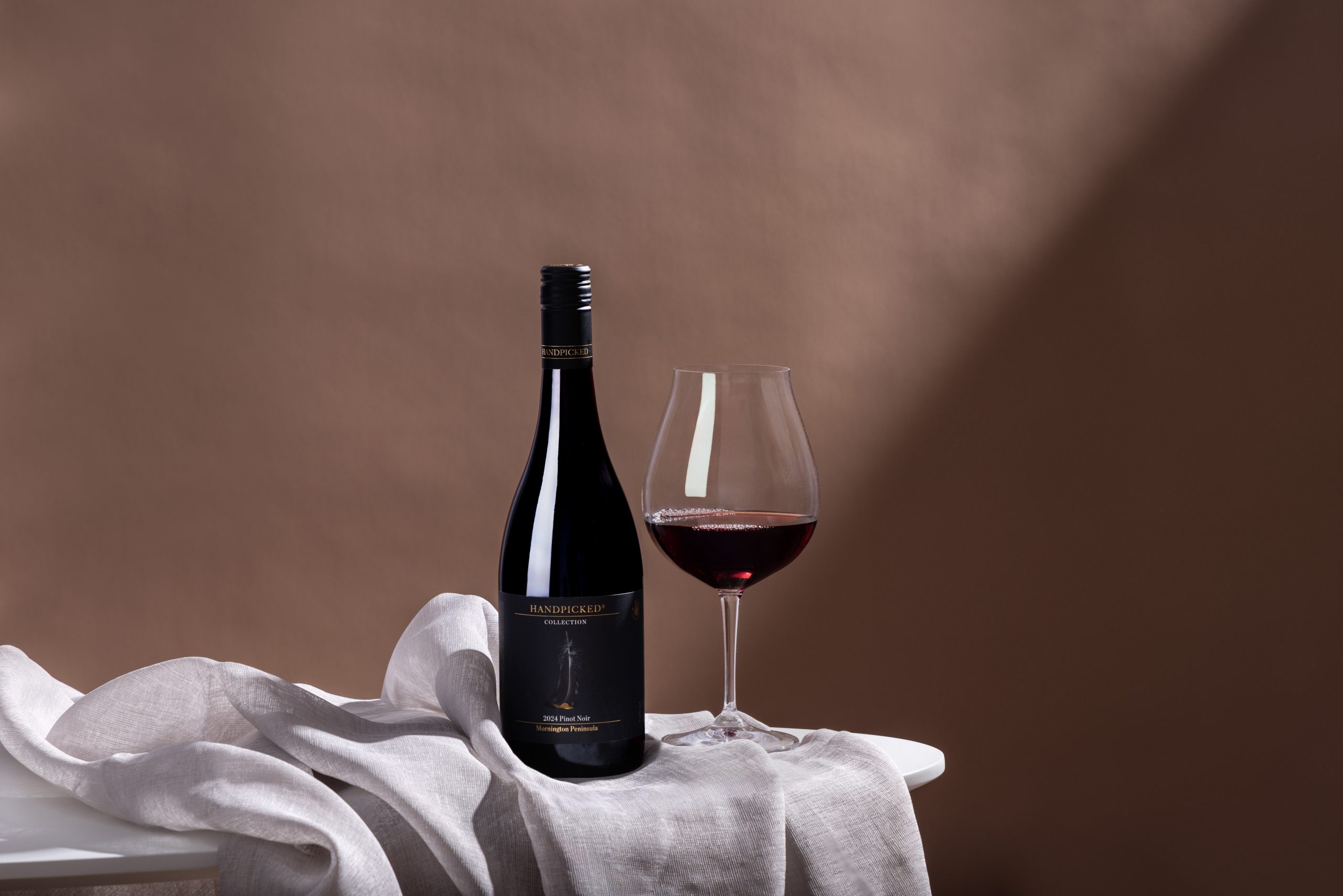
As the season turns, Handpicked Wines’ latest Pinot Noir and Chardonnay releases reveal how subtle shifts in place shape what ends up in the glass.

A thoughtful timber-led renovation in Byron Bay has reimagined an existing house as a warm, resort-style family sanctuary grounded in natural materials.


