Salma Hayek Pinault Redefined Hollywood. Now She’s Redefining Philanthropy.
In the worlds of Hollywood, fashion and activism, there’s never been anyone quite like Salma.

 8 min
8 min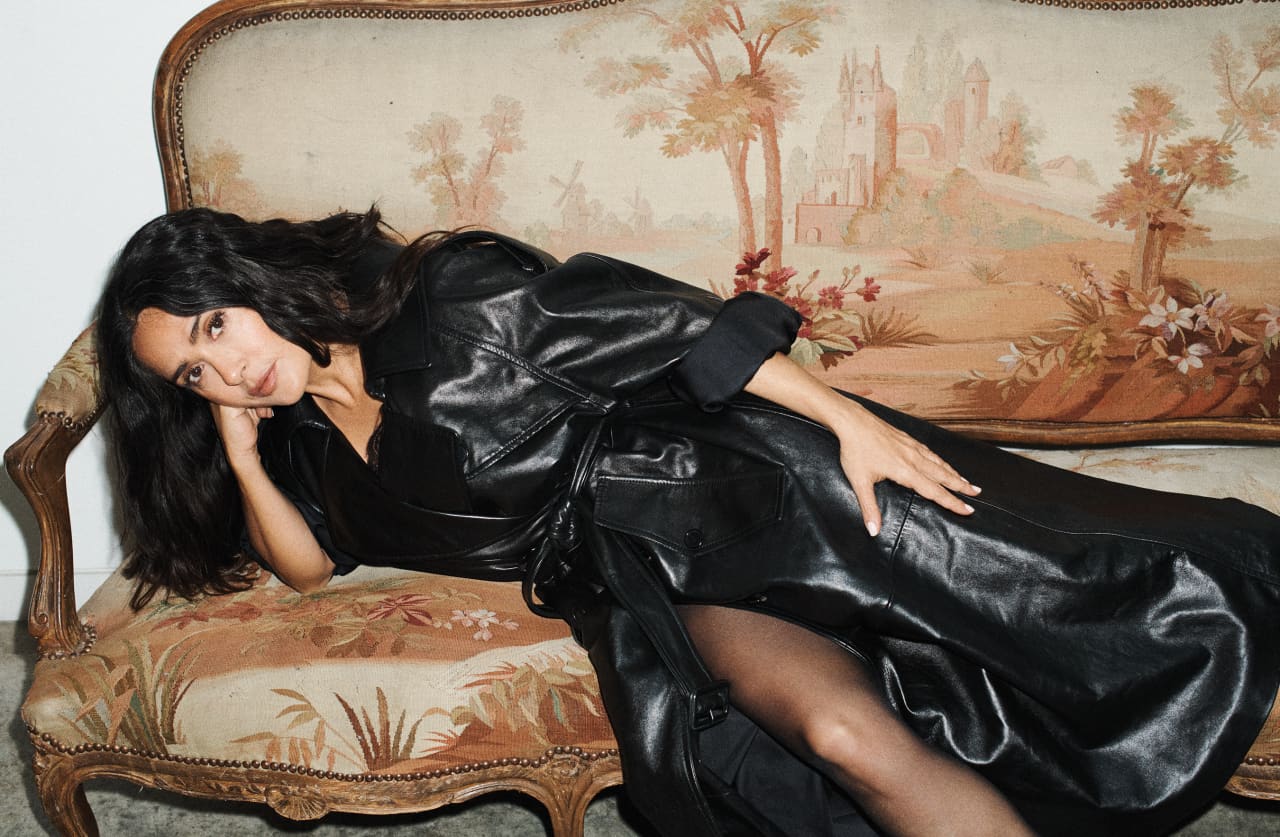
I N THE COURSE of one conversation, Salma Hayek Pinault mourns the death of her pet rescue owl, reveals that she never signed a prenup in her marriage to French billionaire François-Henri Pinault and bemoans the obnoxiousness of certain wealthy people who assume they’re interesting just because they’re rich.
But ask about her typical day, and she has no words.
“Nothing in my life is typical,” she says, her smoky voice filling the low-ceilinged room in a London pub, where she shows up on an overcast Monday afternoon awash in head-to-toe Gucci and perfume drawn from ingredients that include Mexican tuberose and queen of the night, an opulent cactus with flowers that each bloom just once a year in the dark.
The Mexican-born actress, 58, famous for her curves and sultry accent, took the objectification of Salma Hayek and bent it to her will: She used her Hollywood clout to create roles for Latina women that defy ethnic stereotypes and channeled her influence into a decadeslong fight against domestic violence. She defied the odds to become one of a tiny handful of Latina leading ladies in the 1990s, and then, while working to preserve that status, developed parallel careers as a producer and a philanthropist.
“I’m talking with my mouth full,” she says after dipping some crust from a sourdough boule into melted rosemary and garlic Camembert, on-brand for a person who professes no strict fitness regimen. “Emotional intelligence,” she’s saying of the forces that drive her. “Human, real connection.”
She’s got a high-drama aura but she’s also pragmatic, a trait visible in her charity work. “I’m passionate,” she says, “but I’m a strategist.” In just three years, Hayek Pinault has turned the Kering Foundation’s annual fundraising dinner in New York, Caring for Women, into a mini Met Gala. The event sponsored by her husband’s luxury goods company Kering sprang fully formed onto the fashion circuit—it wasn’t a slow-building phenomenon like the behemoth Met Gala—and in many ways it’s an expression of Hayek Pinault herself. Every detail runs through her for a gathering that, while raising roughly $3 million, brings attention to the fight against gender-based violence.
As a charity hostess, who on red carpets often appears bejewelled like a modern Elizabeth Taylor, she has curated her own group of tastemakers with guests including Jessica Chastain, Leonardo DiCaprio and Viola Davis.
“She gets you on board,” says friend Eva Longoria, “and she doesn’t take no for undefined an answer.”
I T’S TEMPTING to think of Hayek Pinault’s story as a rags-to-riches tale: The young actress from a small town in southern Mexico gets cast in the leading role on a telenovela and leapfrogs to stardom. In fact, she came from a wealthy family in the coastal city of Coatzacoalcos. Her father was an oil executive of Lebanese descent, her mother an opera singer with Spanish roots, and she grew up with four live-in maids. She saw Europe as a 2-year-old and traveled by private jet. She loved her pet bobcat.
After she moved to L.A. in her mid-20s, her father lost his fortune, Hayek Pinault says. She was a struggling actress with the stress of supporting herself and her family back in Mexico. “That’s when I became the best version of myself,” she says.
In Hollywood, studios first saw her accent as a liability. But director Robert Rodriguez cast her in the 1995 drug-crime western Desperado , followed a year later by his cult hit From Dusk Till Dawn , where she dances with a huge yellow python slung around her shoulders and sticks her toes in Quentin Tarantino’s mouth. Her breakthrough came in 1997 with Fools Rush In , a shotgun-marriage rom-com co-starring Matthew Perry.
With her success came Hollywood money. But her finances leapt into another dimension with her 2009 marriage to Pinault, the chief executive of Kering, a corporate giant that owns Gucci, Saint Laurent and other major luxury brands. The reality of marrying into extreme wealth surprised her.
“To me, the excitement about having a lot of money was that I didn’t have to think about money, and it turned out all people wanted to talk to me about was money,” she says of her life after joining the Pinault family. “Strangers coming to me that aren’t even friends, but they think we should be friends because they’re rich, too.”
She and Pinault keep their finances separate, she says, and there’s no prenuptial agreement dividing assets. The more she thinks about it lately, she says, the more she’d like to increase her own net worth.
“I support a lot of the aspects of my life and myself,” she says. “I have the pressure to make a certain amount of money, and I like it. And now, I decided, I want to make more.”
With their 17-year-old daughter, Valentina, on the cusp of adulthood, Hayek Pinault is pursuing business ideas, which she isn’t ready to reveal. Pinault likes this ambition, she says. “I think he finds it kind of sexy.”
ONE ATTRIBUTE that’s made Hayek Pinault famous is her body. Much has been made of her breasts: Talk-show hosts ask her questions about them, her movie characters comment on them, her red-carpet fashions flaunt them. During our interview, when I say I want to ask her a trivia question, she assumes I’m after her bra size.
No, I tell her in a total left turn, I want to learn about the time on the Frida movie set when her monkey co-star bit her, specifically where it bit her. Coincidentally, I’d just gotten a video of a monkey bite in a group chat so I thought I’d show Hayek Pinault a screenshot. It was a picture of a raised pink welt on pale skin—actually a bite on a man’s back—but Hayek Pinault assumed it was an R-rated close-up of a topless woman.
“It is a thing about the boobs,” she scolds when she sees the photo. I explain she’s looking at a monkey bite on a man’s back. “Oh. This isn’t a monkey bite in the boobs?” she asks. No, I tell her, but is she saying that’s where the monkey bit her? No, she replies. This is turning into a who’s-on-first of monkey bites and lady parts. “Can I tell you something?” she says, clutching her breasts with both hands, still horrified by the photo. “My nipples began to hurt when I saw that.”
It turns out, the Frida monkey bit her on the right hand between her thumb and forefinger, and she needed rabies shots. I asked if those were painful and she said, “Yes, yes. Stop it.” She and the monkey, whose name was Tyson, were alone in her trailer, and he started throwing all her CDs at the walls and breaking them. They got into a tug-of-war over a disc, and he bit her. “They should have told me the monkey has been possessed by the devil,” she says.
Frida was her passion project, a major moment for her now 25-year-old production company, Ventanarosa—Spanish for “pink window”—and a big learning opportunity for her. It had been a fight for her to control the material. In one meeting, while trying to wrest back the project from a studio she’d decided against, she had her agent’s attorney friend come as a prop to intimidate executives. “You sit there, nod your head, look mean,” she told him.
The strategy worked. The project was ultimately made at Miramax, the studio co-founded by Harvey Weinstein. Later, she would write a searing op-ed about being sexually harassed by Weinstein.
Hayek Pinault described in the piece having to film a “senseless” full-frontal nude love scene with another woman to placate Weinstein so he wouldn’t block the completion of Frida . Hayek Pinault, distraught over Weinstein’s tactics, vomited for the length of the shoot.
In a statement, Weinstein’s spokesman says “he apologises to Ms. Hayek for ever making her feel sad or uncomfortable.” He says that Weinstein has “a different memory of those times but isn’t looking to talk about them.”
The roughly $12 million film went on to gross $56 million worldwide and made Hayek Pinault one of the first Latinas ever to be nominated for a best actress Oscar.
With Ugly Betty , an American version of a popular Colombian telenovela, Hayek Pinault initially met resistance from ABC, she says. The actress personally presold international rights and advertising to prove the show’s worth. The series, which supercharged the career of actress America Ferrera, was considered a risk partly because it featured a Latina lead who was not Hollywood’s idea of universal beauty. Hayek Pinault pushed back when some executives wanted to give Betty a makeover. “It got really heated,” she says. Ferrera went on to win the Emmy for best actress in a comedy in 2007.
Most of Ventanarosa’s film and TV works are in Spanish and do not feature Hayek Pinault. Recent titles include the 2019 TV series Monarca , a Succession -style drama on Netflix about a family’s tequila empire, and the Spanish-language HBO series Like Water for Chocolate , premiering this fall. Separately, she continues her own work as an actress, recently premiering the Angelina Jolie–directed wartime film Without Blood at the Toronto International Film Festival.
Hayek Pinault’s longtime producing partner, José “Pepe” Tamez, says the two have been looking at shows like Squid Game , the blockbuster Korean series, to get Latinos in front of a worldwide audience in a similar way. The company had focused on the U.S. and Latin American markets for years, but now they’re thinking more globally. That’s where the opportunity is, Tamez says.
In pitch meetings, Hayek Pinault’s ability to read her audience has been a secret weapon. “Maybe this has to do with the fact that she’s an actress,” Tamez says. “She knows how to listen.”
HAYEK PINAULT’S WORK as a producer did not inform her philanthropy, she says: Her philanthropy made her a better producer.
Her interest in volunteering began in childhood, and her efforts fighting violence against women stretch back to her early days in 2004 working with the Avon Foundation. On a 2009 Unicef trip to Sierra Leone, she famously breast-fed another woman’s baby, a newborn the same age as her own daughter, to combat a regional stigma around breast-feeding. The moment was captured on camera for ABC’s Nightline .
Pinault was keenly interested in her philanthropy. Once when the two were dating and she was volunteering in South America, he asked on the phone about her day. “I said, ‘Oh, it was great. We were with the prostitutes all morning in the red-light district,’ ” she recalls. She talked for an hour, then asked about his day. “He said, ‘I’m embarrassed to tell you what was my day.’ ”
In 2008, a year before they married, the couple began working together to build the Kering Foundation, which Pinault had created to focus on women’s causes.
Over time, Hayek Pinault realised she could broaden her reach even further. In 2013, she and Beyoncé Knowles-Carter founded Gucci Chime for Change, a global campaign by the Kering brand to promote gender equality.
For her signature event, the Caring for Women dinner and charity auction in New York, Hayek Pinault keeps the scope small. The evening’s 200 guests can see each other at 20 tables around a cozy room. For an event that kicks out press, it gets a ton. This year and last, Lauren Sánchez, who is engaged to Amazon’s Jeff Bezos, got in a tabloid-perfect bidding war with Kim Kardashian over a Balenciaga couture lot.
Last year, Hayek Pinault adorned the space with plants and played bird sound effects. She personally wrote fellow celebrities to make sure they’d come. Before they arrived, she lit copal, a rock incense used in Mexican rituals, and waved it around for spiritual cleansing.
“My spirit,” she says, “wants to micromanage.”
O N THIS DAY at the pub, Hayek Pinault is mourning the death of Kering, a rescue owl who became famous on her Instagram. A fox got into the aviary on the grounds of their London estate and ate Kering not long ago. The owl slept in her bedroom many nights, though not that evening. “We had our own way of communicating,” Hayek Pinault says. “She would hold my hand and play and try to pull me.” Kering was a pet but also a wild animal. “I never took that owl in if she didn’t want to come in,” she says. The actress knows her owl would have been eaten by a predator long ago if she’d lived in nature. “She had a good life,” she says.
Over the past decade, Hayek Pinault has dealt with losses like this and life’s other challenges by practicing meditation.
A session might take three hours. She knows a meditation DJ who plays music while she lets go in her mindfulness space, which is the smallest room in her house. Sometimes she’s dancing. She’s usually blindfolded, which makes standing on her head tricky. The DJ later debriefs her because she loses herself so completely that she can’t always recall what’s just happened. She finds herself accomplishing physical feats she could never achieve otherwise. She is sparing on details. “I do strange things,” she says.
In the meditation sessions, nothing hurts, she feels elastic in body and spirit. “I’m ready to go in a room wanting nothing and not knowing what to do or what you’re supposed to do—surrendering and understanding your instincts,” she says. “It’s very advanced.”
Like much in Hayek Pinault’s world, the practice is unconventional. “It’s completely the opposite of no pain, no gain,” she says. “It’s completely the opposite of what everyone does.”
Hair, Nao Kawakami; makeup, Wendy Rowe; manicure, Kate Williamson; set design, Max Bellhouse and Tilly Power; production, Bellhouse.
 Copyright 2020, Dow Jones & Company, Inc. All Rights Reserved Worldwide. LEARN MORE




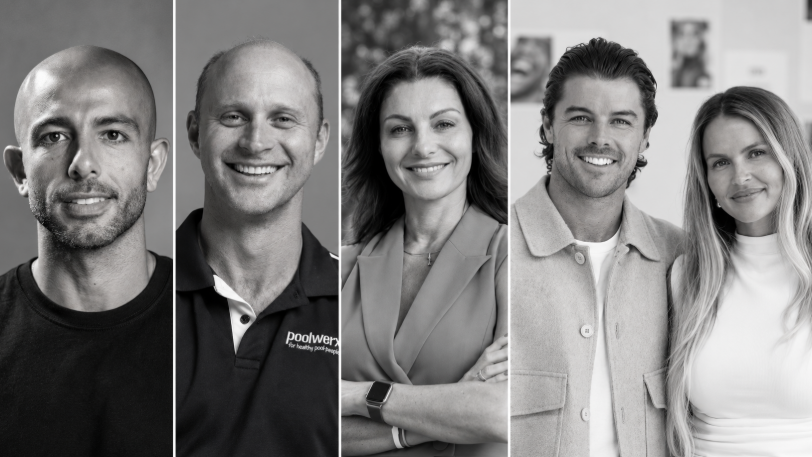
From making unpopular decisions to learning when to listen, leaders from five businesses reveal what nobody prepared them for — and how running a company has challenged their expectations.

Technology and semiconductor shares fell sharply as investors questioned the debt financing the AI infrastructure boom and confronted higher rates and Chinese competition.

Technology and semiconductor shares fell sharply as investors questioned the debt financing the AI infrastructure boom and confronted higher rates and Chinese competition.
4 minA sharp technology sell-off has exposed a new anxiety on global markets: whether the enormous borrowing behind the artificial-intelligence infrastructure boom can generate sufficient returns as interest rates rise and Chinese competition intensifies.
The artificial-intelligence investment boom has powered technology shares, semiconductor manufacturers and data-centre operators to extraordinary heights. Last week, investors were given a reminder that much of this expansion is being built with borrowed money.
The technology-heavy Nasdaq Composite fell 4.5 per cent over the week ended October 16, its weakest performance since late June. Semiconductor shares suffered an even deeper correction, with the Philadelphia Semiconductor Index losing about 11.4 per cent.
The selling spread quickly through global markets. Micron Technology fell 14.6 per cent over the week, while South Korea’s Samsung Electronics and SK Hynix dropped approximately 18 per cent and 24 per cent respectively.
This was more than a routine bout of profit-taking. Investors were reassessing three interconnected risks: higher interest rates, the rapidly expanding debt burden attached to AI infrastructure and the prospect of stronger competition from Chinese memory-chip manufacturers.
The debt behind the AI build-out
Artificial intelligence requires a physical infrastructure network of enormous scale. Data centres must be built, advanced processors purchased, power supplies secured and cooling systems installed before customers begin generating meaningful revenue from them.
Technology companies are increasingly supplementing their own cash with corporate bonds, syndicated loans, equipment leases, private credit and project-level financing.
JPMorgan describes the emerging funding model as a combination of conventional corporate borrowing and project finance tied to individual data-centre assets. In Australia, the Reserve Bank estimates that syndicated loans accounted for approximately three-quarters of data-centre financing during 2025 and 2026 to date.
The numbers are becoming large enough to affect broader credit markets. The Federal Reserve Bank of Dallas has cited Wall Street estimates suggesting AI-related investment-grade bond issuance could approach US$300 billion in 2026 alone.
That borrowing is not automatically problematic. Debt can be an efficient way to finance long-lived infrastructure when future revenue is sufficiently predictable. The concern is that AI technology, customer demand and computing economics are changing much faster than the repayment schedules attached to the assets.
A data centre financed today may carry debt for years. Investors must therefore make assumptions about future utilisation rates, electricity prices, chip performance, customer concentration and the amount businesses will ultimately pay for AI computing.
When interest rates rise, those assumptions become less forgiving.
Inflation changes the calculation
September’s US inflation data intensified the pressure. Consumer prices increased 3.7 per cent over the year, ahead of market expectations and up from 3.4 per cent in August.
The hotter reading reduced confidence that interest rates would fall quickly and pushed bond yields higher. That matters particularly for companies whose valuations depend on profits expected well into the future, as well as highly leveraged infrastructure operators that may need to refinance.
CoreWeave has emerged as a closely watched test case. The specialist cloud-computing company has accumulated substantial debt and lease obligations to build AI capacity, while relying on a concentrated group of large technology customers.
Its shares fell sharply during the sell-off, while the cost of insuring its debt against default climbed. CoreWeave has argued that its contracted backlog more than covers its obligations and that financial markets do not always understand its business model. Nevertheless, its securities have become a proxy for investor confidence in debt-funded AI infrastructure.
Oracle, another major investor in AI computing capacity, fell 8.8 per cent in Friday trading, while CoreWeave dropped 15.5 per cent.
The question is shifting from how much AI infrastructure can be built to how profitably it can be operated.
China adds another source of pressure
Interest rates were not the only catalyst. Reports of advances by Chinese memory-chip producer ChangXin Memory Technologies raised concerns that lower-cost Chinese products could increase competition across the global semiconductor industry.
Memory chips are essential to AI systems, but the industry is historically cyclical. Periods of tight supply and high pricing can encourage rapid investment, eventually producing oversupply and falling margins.
The prospect of a well-funded Chinese competitor expanding its technological capabilities unsettled investors in Samsung, SK Hynix and Micron. It also demonstrated that AI-related demand does not insulate chipmakers from conventional competitive pressures.
That combination—slower rate cuts, more expensive financing and potentially cheaper supply—challenged the assumption that every company exposed to AI would enjoy continually expanding margins.
A reset rather than the end of the boom
The sell-off does not establish that the AI boom is ending. Demand for computing power remains strong, the largest technology companies continue to generate formidable cash flows and many infrastructure projects are backed by long-term customer contracts.
What has changed is the market’s willingness to overlook the price and financing structure of that growth.
The most resilient companies are likely to be those able to fund investment from operating cash flow, secure long-duration customers and demonstrate that new capacity will earn returns comfortably above its financing costs.
More speculative operators may face greater scrutiny, particularly where debt is expensive, customers are concentrated or expected revenue depends on demand that has not yet materialised.
For Australian investors, the lesson extends beyond US technology shares. Local data-centre operators, infrastructure funds, electricity suppliers and property groups are increasingly exposed to the same investment cycle.
Artificial intelligence may remain one of the defining growth themes of the decade. But last week’s correction showed that enthusiasm for the technology does not eliminate financial discipline.
The next stage of the AI boom will be judged not only by computing power, model performance or demand for chips, but by something more traditional: whether the assets being financed can generate enough cash to repay the money borrowed to build them.
Fact box
Nasdaq Composite: Down 4.5 per cent for the week ended October 16, 2026
Philadelphia Semiconductor Index: Down approximately 11.4 per cent
Micron Technology: Down approximately 14.6 per cent
Samsung Electronics: Down approximately 18 per cent
SK Hynix: Down approximately 24 per cent
US September inflation: 3.7 per cent annually
Estimated 2026 AI-related investment-grade issuance: Approximately US$300 billion

Brickworks has enlisted acclaimed architecture studio Kennedy Nolan to explore how homes could become more adaptable, energy-efficient and connected to community.

Borrowers cannot control the Reserve Bank, but they can control how exposed their household budget is to its next decision. The RBA meets on 29 September with inflation concerns still elevated and major-bank economists increasingly bringing forward their rate-rise calls. Fixed mortgage rates have also been moving, reducing the value of waiting for perfect certainty. …
Continue reading “What mortgage holders should do before the next RBA decision”