

Sebastian Maniscalco Says Work-Life Balance Is No Joke

 5 min
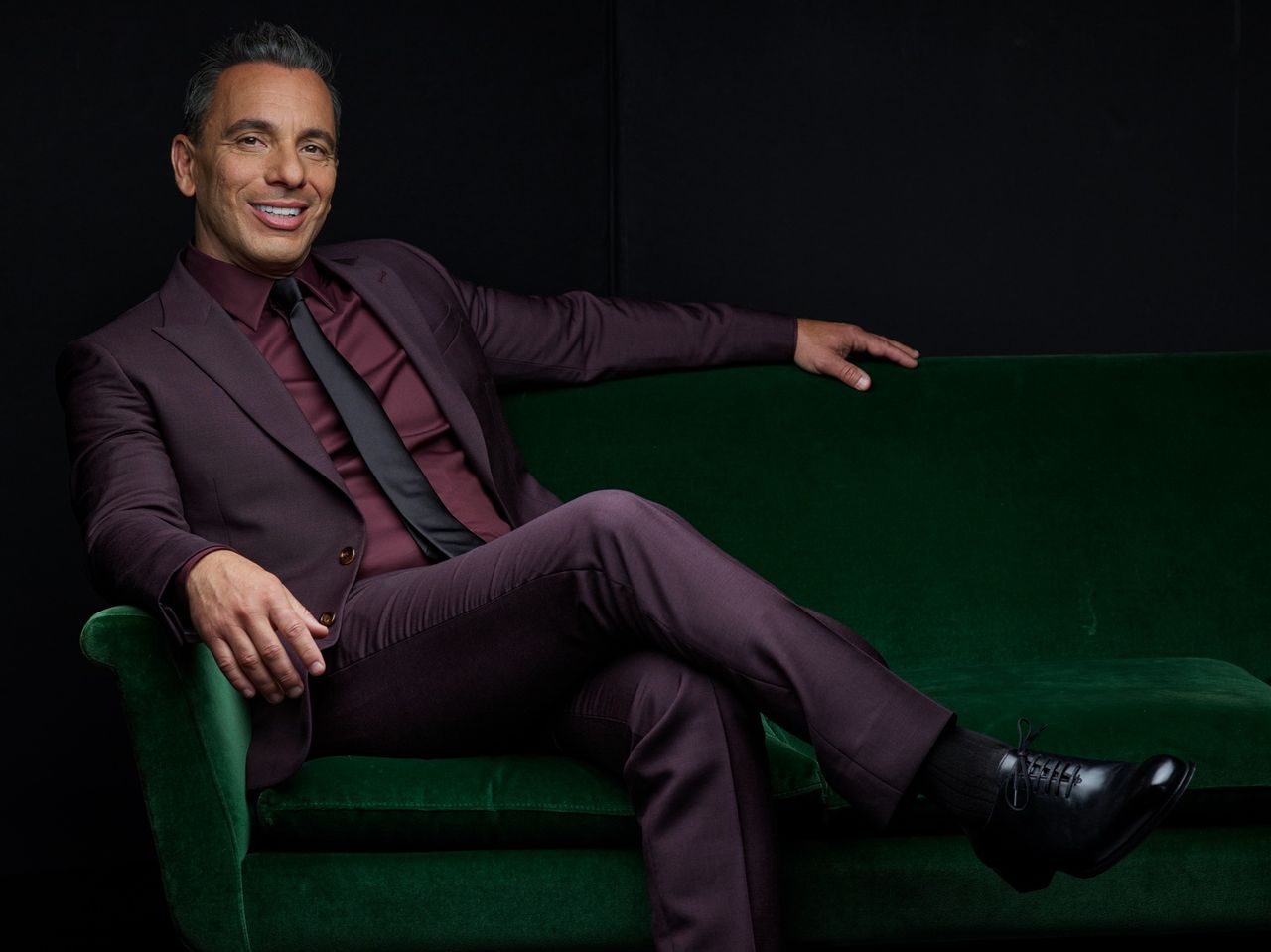
Comedian Sebastian Mansicalco says he’s made some changes to his work-life balance in the wake of a wildly successful 2022—one that saw him sit atop of Pollstar’s rankings of the highest-grossing comedy tours..
“I will always do standup … it is my first love,” he says. “However, I think I need a break from traveling, and I’d like to spend more time with my wife and kids.”
Known for his distinctive physical brand of comedy, Maniscalco is turning 50 next month, and as he puts it, has been working non-stop his whole life.
“I think a lot of times people get caught up in work-work-work and before you know it they’re 85 years old in a wheelchair and wondering what happened to their life,” he says. “I’ve determined that I have not been enjoying the fruits of my labor. I want to start experiencing what life has to offer and creating more memories with my family.”
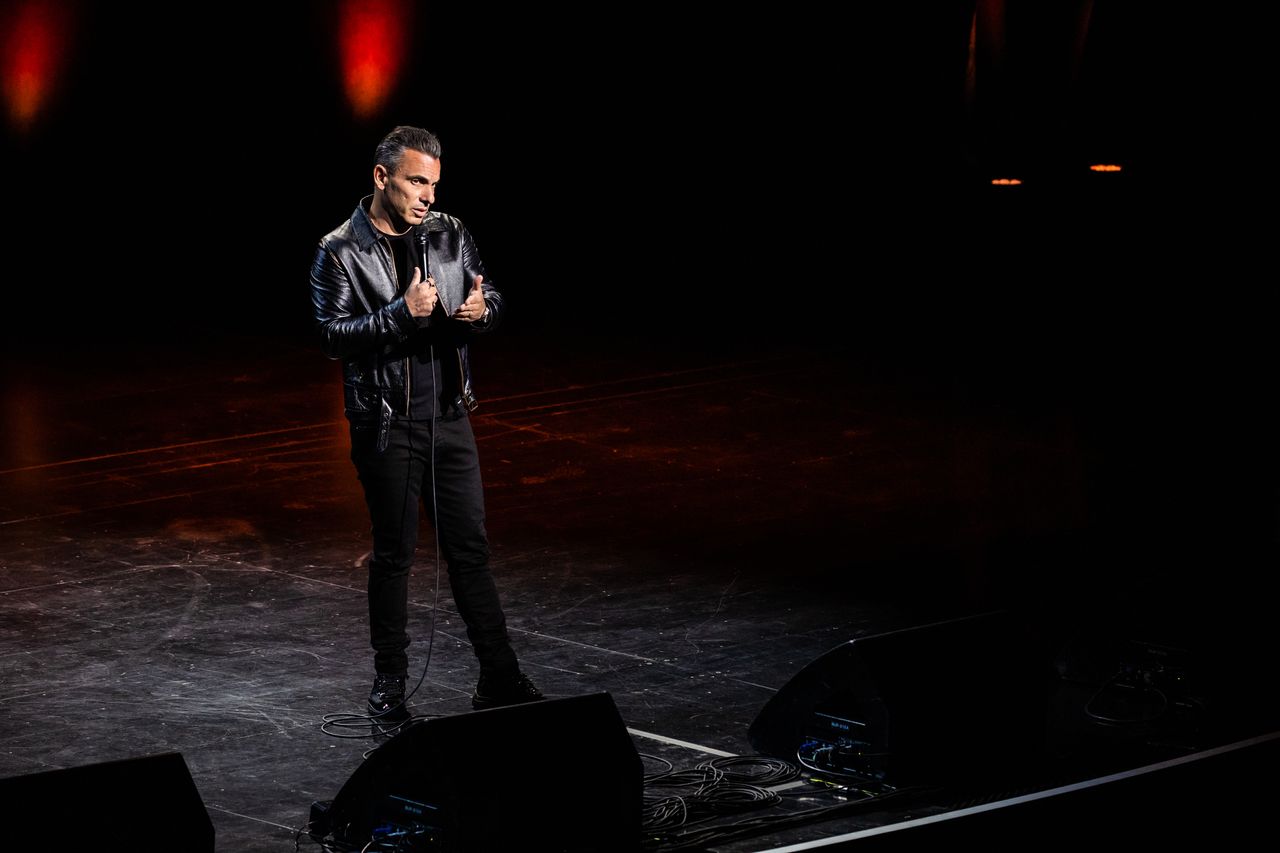
As part of his approach to take a step back, Maniscalco has cut down on his successful touring career—in 2022 he was only one of three comedians, along with Kevin Hart and John Mulaney, to crack Billboard’s top 50 grossing tours overall—and is exclusively making only a handful of performances during his “Sebastian Maniscalco: Live from Las Vegas,” which is currently scheduled to run into early October at Wynn Las Vegas.
“I love performing in Las Vegas because you get a good cross-section of the globe when performing there,” he says. “Vegas is a great place for me to work while I am not on a major tour. It’s close to home and the Encore Theater is such an intimate setting. It almost feels like I’m performing in a comedy club.”
While taking a break from touring, Maniscalco has been shooting a new HBOMax series, “How to Be a Bookie,” while also devoting time to his two podcasts, “The Pete and Sebastian Show, with co-host Pete Correale, and Daddy vs Doctor.
Also taking up his time is the Tag You’re It! Foundation, which he started in 2016 with his wife, Lana Gomez, to support causes that speak to the couple’s personal experiences. These days, the fund, set up with California Community Foundation, supports causes relating to U.S. veterans, Alzheimer’s disease, and education.
“I 100% fund the foundation with my own personal earnings, as well as donations I win on game shows,” he explains. “My family had to deal with Alzheimer’s when my grandfather was diagnosed with it, my father is a veteran of the army, and I have two beautiful kids which inspires me to donate to children’s education.”
A proud second-generation Italian-American, Maniscalco’s career came full circle in May with his biggest movie role yet.
“I moved out to Los Angeles in 1998 from Arlington Heights, Ill., and my career has always been a slow burn. There wasn’t one thing that put me on the map in regards to a TV or film project,” he says. “I waited tables at the Four Seasons for seven years and during my time there waited on Robert De Niro in 2002 … fast forward 20 years, and here I am starring opposite him in a movie I co-wrote.”
Looking back, Maniscalco describes his experience making the movie–About My Father hit theaters on Memorial Day weekend—as one filled with anxiety.
“I could’ve never imagined starring in a movie with Robert De Niro loosely based on my life. The movie experience as a whole is laborious and slow,” he says. “I prefer live stand-up comedy because you know in the moment, whether or not you’re funny. When filming a movie, sometimes you’re unaware of how good or bad your performance is.”
Maniscalco, who resides in Los Angeles with his wife and two children, recently spoke with Penta about his favourite things.
The best book I’ve read in the last year is…Unreasonable Hospitality by Will Guidera. I spent the early part of my life in the world of hospitality. I worked at fine dining restaurants and five-star hotels. I learned in my experience to always anticipate the guests’ needs. This book takes that philosophy above and beyond anywhere I could’ve imagined. I would recommend this book to anybody who owns a business, or for anybody who gets pleasure out of providing people with happiness and exceptional experiences.
Something I do to relax is… Cook…for me, the kitchen is my sanctuary. I love to get lost in a recipe. I love cooking steak. It sounds easy, however, it is an art form to cook a steak and achieve the same temperature throughout. I like to put it in the oven at 275 degrees for about 45 to 55 minutes depending on the thickness and then let it sit for 15 minutes and then sear it in a cast iron skillet for two minutes on each side. I then cut and serve immediately. There is nothing better to me than watching people enjoy the food you cook. I almost get as much pleasure cooking as I do stand-up comedy.
My idea of a perfect meal (and/or night out) is… Pizza at Lucali in Brooklyn with my wife. I have been to this restaurant twice and absolutely love the vibe. I feel like I’ve been transported back into the 50s eating at an old school pizzeria. The owner Mark is an amazing host, and you almost feel like you are dining at his home. The ingredients he uses are so simple yet so fresh. I would have to say it’s the best pizza I have ever had in my life. He also makes an outstanding calzone, and a penne vodka sauce that you want to take home for a late night snack.
A passion of mine that few people know about is… Throwing parties. My wife and I really like to go above and beyond people’s expectations when it comes to a party. For example, we had a Christmas party last year and decorated our backyard and covered patio to make it look like a chalet. We rented some real large, comfortable couches, hired a singer and piano player and served eggnog all night long.
My travel uniform is… Jeans and a sweater and a light jacket. Currently I’m really into the brand Celine particularly their jackets and shoes. They are extremely comfortable and I’m really liking what they’re doing with their colour patterns.
The first thing I do when I check into a hotel is… Shower and unpack. I like to have everything in order before I start my adventure in a new city. I am also a sucker for turndown service. A lot of people don’t tip on turndown service, but I tend to leave 10 to 20 bucks on the bed. Housekeeping does an exceptional job when you leave them a little money for turndown. All your toiletries are organised and the room is left immaculate.
My favourite comfort dish is… Pasta. I grew up eating my grandmother’s pasta every Sunday and it just makes me feel good. My wife and I just had pasta from Jon & Vinny’s last night here in Los Angeles, but if I’m going to go out for pasta, we prefer Madeo, which is an L.A. institution. My preference is penne pasta with a red sauce, but I’m also a sucker for spaghetti with a little olive oil and pecorino Romano cheese.
My go-to drink is… A bottle of Tignanello. For my wife and I there’s nothing better than putting the kids down, cracking open a bottle and sitting outside watching the sunset. I also love enjoying the wine with red meat. I fell in love with wine about 15 years ago when my father-in-law introduced me to a world of wine that I was completely unaware of. Every time we go to their house for the holidays or a visit he whips out an amazing assortment of wines from Napa to France.
The one trip I’ve taken that I would love to do again… I would love to re-create my honeymoon with my wife in Italy. We absolutely loved experiencing all the different cuisine in three regions: Venice, Tuscany, and the Amalfi Coast and. The highlight was taking a boat to the island of Capri for the day and on the way back stopping off on a remote island to have a spaghetti lobster lunch. We got an opportunity to swim in the grotto and coming out of the water felt like we were dipped in a case of medicine. It was as if all our aches and pains went away and we had mental clarity.
This interview has been edited for length and clarity.
 Copyright 2020, Dow Jones & Company, Inc. All Rights Reserved Worldwide. LEARN MORE


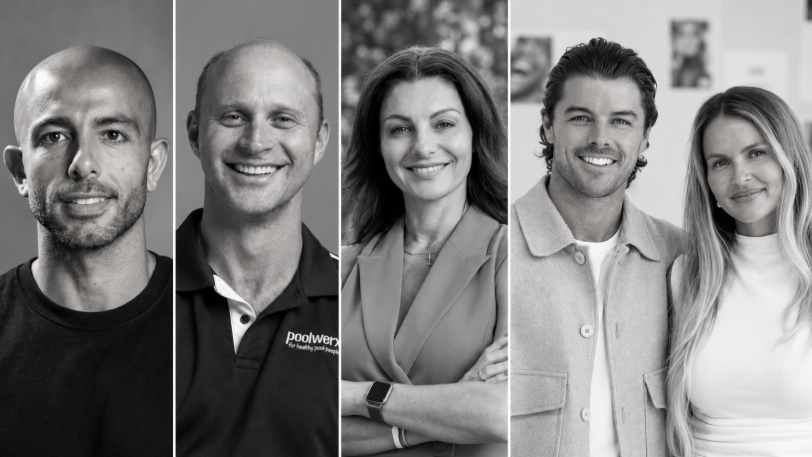
From making unpopular decisions to learning when to listen, leaders from five businesses reveal what nobody prepared them for — and how running a company has challenged their expectations.

Technology and semiconductor shares fell sharply as investors questioned the debt financing the AI infrastructure boom and confronted higher rates and Chinese competition.

Technology and semiconductor shares fell sharply as investors questioned the debt financing the AI infrastructure boom and confronted higher rates and Chinese competition.
4 minA sharp technology sell-off has exposed a new anxiety on global markets: whether the enormous borrowing behind the artificial-intelligence infrastructure boom can generate sufficient returns as interest rates rise and Chinese competition intensifies.
The artificial-intelligence investment boom has powered technology shares, semiconductor manufacturers and data-centre operators to extraordinary heights. Last week, investors were given a reminder that much of this expansion is being built with borrowed money.
The technology-heavy Nasdaq Composite fell 4.5 per cent over the week ended October 16, its weakest performance since late June. Semiconductor shares suffered an even deeper correction, with the Philadelphia Semiconductor Index losing about 11.4 per cent.
The selling spread quickly through global markets. Micron Technology fell 14.6 per cent over the week, while South Korea’s Samsung Electronics and SK Hynix dropped approximately 18 per cent and 24 per cent respectively.
This was more than a routine bout of profit-taking. Investors were reassessing three interconnected risks: higher interest rates, the rapidly expanding debt burden attached to AI infrastructure and the prospect of stronger competition from Chinese memory-chip manufacturers.
The debt behind the AI build-out
Artificial intelligence requires a physical infrastructure network of enormous scale. Data centres must be built, advanced processors purchased, power supplies secured and cooling systems installed before customers begin generating meaningful revenue from them.
Technology companies are increasingly supplementing their own cash with corporate bonds, syndicated loans, equipment leases, private credit and project-level financing.
JPMorgan describes the emerging funding model as a combination of conventional corporate borrowing and project finance tied to individual data-centre assets. In Australia, the Reserve Bank estimates that syndicated loans accounted for approximately three-quarters of data-centre financing during 2025 and 2026 to date.
The numbers are becoming large enough to affect broader credit markets. The Federal Reserve Bank of Dallas has cited Wall Street estimates suggesting AI-related investment-grade bond issuance could approach US$300 billion in 2026 alone.
That borrowing is not automatically problematic. Debt can be an efficient way to finance long-lived infrastructure when future revenue is sufficiently predictable. The concern is that AI technology, customer demand and computing economics are changing much faster than the repayment schedules attached to the assets.
A data centre financed today may carry debt for years. Investors must therefore make assumptions about future utilisation rates, electricity prices, chip performance, customer concentration and the amount businesses will ultimately pay for AI computing.
When interest rates rise, those assumptions become less forgiving.
Inflation changes the calculation
September’s US inflation data intensified the pressure. Consumer prices increased 3.7 per cent over the year, ahead of market expectations and up from 3.4 per cent in August.
The hotter reading reduced confidence that interest rates would fall quickly and pushed bond yields higher. That matters particularly for companies whose valuations depend on profits expected well into the future, as well as highly leveraged infrastructure operators that may need to refinance.
CoreWeave has emerged as a closely watched test case. The specialist cloud-computing company has accumulated substantial debt and lease obligations to build AI capacity, while relying on a concentrated group of large technology customers.
Its shares fell sharply during the sell-off, while the cost of insuring its debt against default climbed. CoreWeave has argued that its contracted backlog more than covers its obligations and that financial markets do not always understand its business model. Nevertheless, its securities have become a proxy for investor confidence in debt-funded AI infrastructure.
Oracle, another major investor in AI computing capacity, fell 8.8 per cent in Friday trading, while CoreWeave dropped 15.5 per cent.
The question is shifting from how much AI infrastructure can be built to how profitably it can be operated.
China adds another source of pressure
Interest rates were not the only catalyst. Reports of advances by Chinese memory-chip producer ChangXin Memory Technologies raised concerns that lower-cost Chinese products could increase competition across the global semiconductor industry.
Memory chips are essential to AI systems, but the industry is historically cyclical. Periods of tight supply and high pricing can encourage rapid investment, eventually producing oversupply and falling margins.
The prospect of a well-funded Chinese competitor expanding its technological capabilities unsettled investors in Samsung, SK Hynix and Micron. It also demonstrated that AI-related demand does not insulate chipmakers from conventional competitive pressures.
That combination—slower rate cuts, more expensive financing and potentially cheaper supply—challenged the assumption that every company exposed to AI would enjoy continually expanding margins.
A reset rather than the end of the boom
The sell-off does not establish that the AI boom is ending. Demand for computing power remains strong, the largest technology companies continue to generate formidable cash flows and many infrastructure projects are backed by long-term customer contracts.
What has changed is the market’s willingness to overlook the price and financing structure of that growth.
The most resilient companies are likely to be those able to fund investment from operating cash flow, secure long-duration customers and demonstrate that new capacity will earn returns comfortably above its financing costs.
More speculative operators may face greater scrutiny, particularly where debt is expensive, customers are concentrated or expected revenue depends on demand that has not yet materialised.
For Australian investors, the lesson extends beyond US technology shares. Local data-centre operators, infrastructure funds, electricity suppliers and property groups are increasingly exposed to the same investment cycle.
Artificial intelligence may remain one of the defining growth themes of the decade. But last week’s correction showed that enthusiasm for the technology does not eliminate financial discipline.
The next stage of the AI boom will be judged not only by computing power, model performance or demand for chips, but by something more traditional: whether the assets being financed can generate enough cash to repay the money borrowed to build them.
Fact box
Nasdaq Composite: Down 4.5 per cent for the week ended October 16, 2026
Philadelphia Semiconductor Index: Down approximately 11.4 per cent
Micron Technology: Down approximately 14.6 per cent
Samsung Electronics: Down approximately 18 per cent
SK Hynix: Down approximately 24 per cent
US September inflation: 3.7 per cent annually
Estimated 2026 AI-related investment-grade issuance: Approximately US$300 billion

ABC Bullion has launched a pioneering investment product that allows Australians to draw regular cashflow from their precious metal holdings.
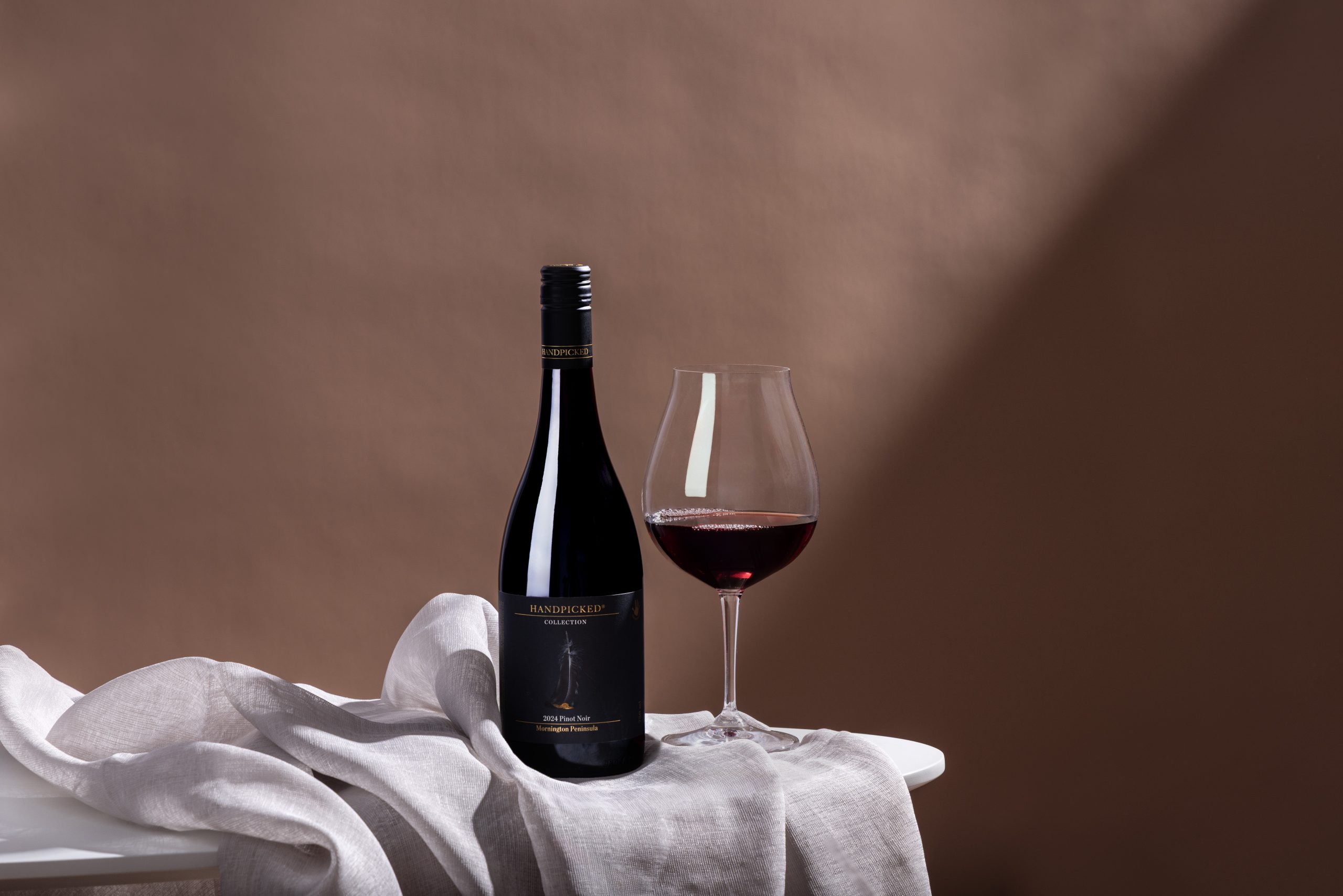
As the season turns, Handpicked Wines’ latest Pinot Noir and Chardonnay releases reveal how subtle shifts in place shape what ends up in the glass.