Trump’s Golden Age Begins With a Brutal Trade War
If tariffs evolve from a negotiating tactic to a new normal, economic and diplomatic costs to all of North America will grow

 4 min
4 min
President Trump won last fall’s election on the pledge of a new “golden age.” Public confidence perked up and the stock markets leapt.
This week showed the dark side of that promised golden age. On Tuesday, as Trump boasted to Congress that “America’s momentum is back,” he was allowing steep new tariffs on Mexico and Canada to take effect, initiating what may become the most brutal trade war since the 1930s.
Stocks have largely surrendered their postelection euphoria, consumer confidence has wilted, and economists talk of stagflation —a spell of slow to stagnant growth and higher inflation.
Mindful of the fallout, Trump’s advisers have pressed for ways to delay or modify the tariffs. A 30-day carve-out for autos was announced Wednesday, and on Thursday Trump said tariffs on some Mexican and Canadian goods would be delayed until April 2.
Don’t assume, though, that anything will fundamentally change. Trump is early in his term, enjoys complete control of his party and Congress, and is counting on tax cuts to revive confidence. Lower interest rates and oil prices may soften the sting of tariffs. All that gives him freedom to indulge his most deeply held instincts on trade.
His decision to effectively repudiate the North American free-trade pact he himself negotiated in 2018 flows from a lifelong belief that allies and trading partners are freeloaders who diminish rather than augment American wealth and security. A similar mindset explains his decision to cut off aid to Ukraine and signal diminished support for Western European security.
He insists tariffs will make America rich. But this is true only in a relative sense.
If the tariffs stay, Canada and Mexico are likely both headed into deep recessions followed by years of painful adjustment to lost access to the massive U.S. market.
The fallout for the U.S. will be much less thanks to its size, wealth and entrepreneurial dynamism; but it will be negative, nonetheless. The U.S. would lose the efficiency and economies of scale that a continentwide market affords and the trust that has kept relations with its neighbors placid and predictable.
Trump’s real endgame
Outsiders have struggled to discern Trump’s endgame because he and his advisers advance multiple, conflicting motives for his behavior.
His advisers describe him as a dealmaker for whom tariffs are a means to an end. But through his actions, Trump has shown that tariffs are the end.
The stated justification for tariffs on Canada and Mexico was to reduce the inflow of fentanyl and illegal migrants. They complied: Illegal crossings at the southern border came to a near halt and Mexico extradited 29 drug bosses to the U.S. Seizures of fentanyl across the northern border, already low, plummeted in January, according to U.S. data.
Trump went ahead with the tariffs anyway. And in remarks Monday, he made his motives clear. “It’s going to be very costly for people to take advantage of this country,” he explained. “They can’t come in and steal our money and steal our jobs and take our factories and take our businesses and expect not to be punished.”
He is seeking not just to eliminate drugs, illegal immigration or even trade deficits, but to appropriate the industrial bases of Mexico and Canada. “What they have to do is build their car plants, frankly, and other things, in the United States, in which case you have no tariffs,” he said.
With Canada, his aims are more ambitious, and ominous. He has said Canada can avoid the tariffs by becoming part of the U.S. “What he wants is to see a total collapse of the Canadian economy, because that’ll make it easier to annex us,” outgoing Prime Minister Justin Trudeau said Tuesday.
The near and far costs
The U.S. market is too big to ignore so many multinationals will indeed choose to locate in the U.S. rather than Canada, Mexico or elsewhere.
That will benefit some American workers and companies. U.S. steelmakers are thrilled that prices are already up about 30% since January, before Trump announced tariffs on the metal.
Studies of past tariffs, though, show that gains to producers are more than offset by losses to consumers. Steel users are already complaining. Based on previous tariff episodes, Goldman Sachs expects consumers to pay 70% of the new tariffs on Mexico, Canada and China, amounting to $260 billion a year.
The cost to consumers comes not just in the form of higher prices, but the products they never buy because they aren’t available or are too expensive.
Anderson Economic Group, a business consulting firm, estimates tariffs will add $4,000 to $10,000 to the cost of a North American-built vehicle. For models with few substitutes, 75% to 80% of that will be passed on to consumers, reducing affordability and thus sales, said President Patrick Anderson. In addition, some models and options will simply no longer be available because they can’t be built at a price acceptable to the consumer, he said.
Every action has a reaction
Trump proceeds on the assumption that other countries have much more to lose from an economic or geopolitical rupture than the U.S. and will thus accede to his demands. Thus far, he’s been mostly right.
But should Mexico and Canada conclude that tariffs are not a negotiation but the endgame, their strategy will shift, from trying to please Trump to fortifying themselves against a newly capricious and threatening neighbor.
Until the 1990s, relations between the U.S. and Mexico were marked by mistrust and lack of cooperation on a broad range of political and economic issues.
“Our whole DNA was anti-U.S.,” said Jorge Guajardo, a former Mexican ambassador to China who is now with DGA Group, a global risk consulting firm. Free trade, he said, changed that. If it goes away, Mexico would revert to “complete mistrust of the northern neighbor,” reducing cooperation on crime, immigration, health and climate.
In Canada, Trump’s tariffs and professed aim of annexation have aroused a wave of nationalism and anger with little modern precedent.
The forthcoming federal election has been transformed from a referendum on the unpopular Trudeau, to a contest over who can best stand up to Trump.
“I don’t think Canada can ever again look upon the U.S. as a reliable economic partner,” said John Manley , a former deputy prime minister. “It has to develop its own strategy for building its own economy and looking elsewhere.”
Write to Greg Ip at greg.ip@wsj.com
 Copyright 2020, Dow Jones & Company, Inc. All Rights Reserved Worldwide. LEARN MORE





From making unpopular decisions to learning when to listen, leaders from five businesses reveal what nobody prepared them for — and how running a company has challenged their expectations.

Technology and semiconductor shares fell sharply as investors questioned the debt financing the AI infrastructure boom and confronted higher rates and Chinese competition.

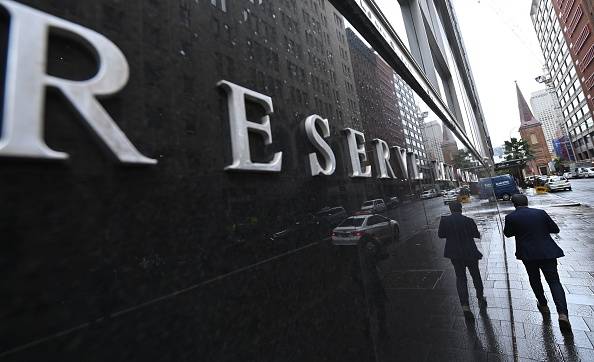
Technology and semiconductor shares fell sharply as investors questioned the debt financing the AI infrastructure boom and confronted higher rates and Chinese competition.
4 minA sharp technology sell-off has exposed a new anxiety on global markets: whether the enormous borrowing behind the artificial-intelligence infrastructure boom can generate sufficient returns as interest rates rise and Chinese competition intensifies.
The artificial-intelligence investment boom has powered technology shares, semiconductor manufacturers and data-centre operators to extraordinary heights. Last week, investors were given a reminder that much of this expansion is being built with borrowed money.
The technology-heavy Nasdaq Composite fell 4.5 per cent over the week ended October 16, its weakest performance since late June. Semiconductor shares suffered an even deeper correction, with the Philadelphia Semiconductor Index losing about 11.4 per cent.
The selling spread quickly through global markets. Micron Technology fell 14.6 per cent over the week, while South Korea’s Samsung Electronics and SK Hynix dropped approximately 18 per cent and 24 per cent respectively.
This was more than a routine bout of profit-taking. Investors were reassessing three interconnected risks: higher interest rates, the rapidly expanding debt burden attached to AI infrastructure and the prospect of stronger competition from Chinese memory-chip manufacturers.
The debt behind the AI build-out
Artificial intelligence requires a physical infrastructure network of enormous scale. Data centres must be built, advanced processors purchased, power supplies secured and cooling systems installed before customers begin generating meaningful revenue from them.
Technology companies are increasingly supplementing their own cash with corporate bonds, syndicated loans, equipment leases, private credit and project-level financing.
JPMorgan describes the emerging funding model as a combination of conventional corporate borrowing and project finance tied to individual data-centre assets. In Australia, the Reserve Bank estimates that syndicated loans accounted for approximately three-quarters of data-centre financing during 2025 and 2026 to date.
The numbers are becoming large enough to affect broader credit markets. The Federal Reserve Bank of Dallas has cited Wall Street estimates suggesting AI-related investment-grade bond issuance could approach US$300 billion in 2026 alone.
That borrowing is not automatically problematic. Debt can be an efficient way to finance long-lived infrastructure when future revenue is sufficiently predictable. The concern is that AI technology, customer demand and computing economics are changing much faster than the repayment schedules attached to the assets.
A data centre financed today may carry debt for years. Investors must therefore make assumptions about future utilisation rates, electricity prices, chip performance, customer concentration and the amount businesses will ultimately pay for AI computing.
When interest rates rise, those assumptions become less forgiving.
Inflation changes the calculation
September’s US inflation data intensified the pressure. Consumer prices increased 3.7 per cent over the year, ahead of market expectations and up from 3.4 per cent in August.
The hotter reading reduced confidence that interest rates would fall quickly and pushed bond yields higher. That matters particularly for companies whose valuations depend on profits expected well into the future, as well as highly leveraged infrastructure operators that may need to refinance.
CoreWeave has emerged as a closely watched test case. The specialist cloud-computing company has accumulated substantial debt and lease obligations to build AI capacity, while relying on a concentrated group of large technology customers.
Its shares fell sharply during the sell-off, while the cost of insuring its debt against default climbed. CoreWeave has argued that its contracted backlog more than covers its obligations and that financial markets do not always understand its business model. Nevertheless, its securities have become a proxy for investor confidence in debt-funded AI infrastructure.
Oracle, another major investor in AI computing capacity, fell 8.8 per cent in Friday trading, while CoreWeave dropped 15.5 per cent.
The question is shifting from how much AI infrastructure can be built to how profitably it can be operated.
China adds another source of pressure
Interest rates were not the only catalyst. Reports of advances by Chinese memory-chip producer ChangXin Memory Technologies raised concerns that lower-cost Chinese products could increase competition across the global semiconductor industry.
Memory chips are essential to AI systems, but the industry is historically cyclical. Periods of tight supply and high pricing can encourage rapid investment, eventually producing oversupply and falling margins.
The prospect of a well-funded Chinese competitor expanding its technological capabilities unsettled investors in Samsung, SK Hynix and Micron. It also demonstrated that AI-related demand does not insulate chipmakers from conventional competitive pressures.
That combination—slower rate cuts, more expensive financing and potentially cheaper supply—challenged the assumption that every company exposed to AI would enjoy continually expanding margins.
A reset rather than the end of the boom
The sell-off does not establish that the AI boom is ending. Demand for computing power remains strong, the largest technology companies continue to generate formidable cash flows and many infrastructure projects are backed by long-term customer contracts.
What has changed is the market’s willingness to overlook the price and financing structure of that growth.
The most resilient companies are likely to be those able to fund investment from operating cash flow, secure long-duration customers and demonstrate that new capacity will earn returns comfortably above its financing costs.
More speculative operators may face greater scrutiny, particularly where debt is expensive, customers are concentrated or expected revenue depends on demand that has not yet materialised.
For Australian investors, the lesson extends beyond US technology shares. Local data-centre operators, infrastructure funds, electricity suppliers and property groups are increasingly exposed to the same investment cycle.
Artificial intelligence may remain one of the defining growth themes of the decade. But last week’s correction showed that enthusiasm for the technology does not eliminate financial discipline.
The next stage of the AI boom will be judged not only by computing power, model performance or demand for chips, but by something more traditional: whether the assets being financed can generate enough cash to repay the money borrowed to build them.
Fact box
Nasdaq Composite: Down 4.5 per cent for the week ended October 16, 2026
Philadelphia Semiconductor Index: Down approximately 11.4 per cent
Micron Technology: Down approximately 14.6 per cent
Samsung Electronics: Down approximately 18 per cent
SK Hynix: Down approximately 24 per cent
US September inflation: 3.7 per cent annually
Estimated 2026 AI-related investment-grade issuance: Approximately US$300 billion

A haven for hedge-fund titans and Hollywood grandees, Greenwich is one of the world’s most expensive residential enclaves, where eye-watering prices meet unapologetic grandeur.

Scotch whisky expert, luxury hospitality strategist and Keeper of the Quaich inductee Ross Blainey is bringing a new philosophy of luxury experiences to Citizen Kanebridge.