PANORAMA HOUSE: MELBOURNE’S $16M BAYSIDE MASTERPIECE ON THE MARKET
Panorama House is where contemporary art meets bayside luxury. This award-winning five-bedroom Middle Park home boasts panoramic Port Phillip Bay views.
 2 min
2 min


Part contemporary art gallery, part bayside mansion, Panorama House is a landmark Melbourne home without parallel.
The award-winning Middle Park house is the dream home of self-tan mogul, Kirstie Kirkham, who founded MineTan Body Skin a decade ago.
Now the beauty empire boss has listed her unrivalled residence for $15.9 million to $16.3 million with Kay & Burton director Andrew Sahhar and Danielle Horne alongside co-agent Hugh Jones of Agency Outcomes.
Kirkham is apparently moving on after reportedly paying more than $30 million for the Toorak home of hospitality industry couple Robert and Elizabeth Zagame.
On the corner of bustling Beaconsfield Pde and tree-lined Harold St, the five-bedroom Middle Park property took home two accolades in the 2025 Australian Interior Design Awards; Residential Decoration and Residential Design Best of State (Victoria).
Panorama House, so named thanks to its expansive 270-degree Port Phillip Bay and city views, has appeared in Vogue Living magazine, Yellowtrace, Est and Living Etc.
Melbourne-based interior designer Sally Knibbs of Sally Caroline studio was commissioned to transform the 2018 home built by Visioneer, which Kirkham bought in 2022 from Computershare co-founder Penelope Maclagan for $11.5 million.
Behind its unique raw brick and steel facade, luxury materials are abundant including Travertine Pewter, Green Onyx, and Calacatta marbles including, Romano, Verde, Corchia, Tanotti Green, and Menta.
Surrounded by a sea of traditional yet classically renovated Federation bungalows, the 21st century building is a statement piece in a coveted waterfront location. The home’s own website declares it is a “design that does’t shout. It simply belongs.”
From the ground up, the three-level floor plan makes use of every square centimetre on the 423sq m corner block.
The spacious basement car park offers the homeowner a four-car garage, made possible thanks to a sleek turntable. Underground amenities also include a cellar with wine fridge and a meat dry ager, plus a home gym.
One level up and the ground floor is home to a vast open plan entertaining zone combining a lounge area and wet bar that spills out to an internal landscaped courtyard with retractable roof.
Two bedrooms and two bathrooms, plus a large family-friendly laundry, also sit on the same entry level.
A private lift connects all three layouts with the first floor featuring more everyday entertaining spaces.
A large lounge room is warmed by an Oblica fireplace and frames beach views, while the sophisticated chef’s kitchen has Gaggenau and Sub-Zero appliances, a statement island bench, and a walk-in pantry. The formal dining room has its own dramatic sweeping CBD backdrop.
In the palatial main bedroom suite there is a walk-in wardrobe, a double shower ensuite, as well as access to the private barbecue terrace. A neighbouring glass-walled office has an inspiring panorama of the bay.
Added extras at Panorama House include a Tesla home battery, solar energy integration, and provisions for a pool.
While the bay is on the doorstep, the Beaconsfield Pde home is also close to St Kilda, Armstrong St and Victoria Ave eateries, Albert Park, and loads of city-bound transport.
Co-agents Kay & Burton Bayside and Agency Outcomes are marketing Panorama House via in expressions of interest campaign, closing on September 15, at 5pm

From making unpopular decisions to learning when to listen, leaders from five businesses reveal what nobody prepared them for — and how running a company has challenged their expectations.

Technology and semiconductor shares fell sharply as investors questioned the debt financing the AI infrastructure boom and confronted higher rates and Chinese competition.

Mirvac’s 45-level Trielle has topped out at Yarra’s Edge, pairing riverfront apartments with wellness facilities, private dining and resident services.
3 min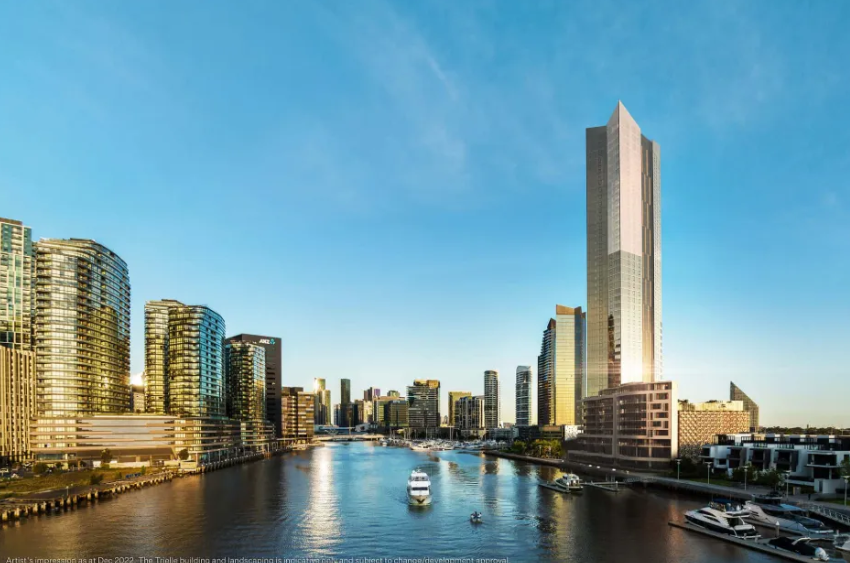
Mirvac has topped out Trielle at Melbourne’s Yarra’s Edge, with more than 70 per cent of the riverfront development sold and approximately 80 per cent of purchasers intending to make their apartment a home.
The figures, released on September 22, point to an owner-occupier audience for one of the precinct’s final residential towers. Mirvac began developing Yarra’s Edge in 2003, and its latest addition occupies one of the remaining absolute riverfront sites.
Mirvac CEO of Development Stuart Penklis said existing residents were among those moving up within the neighbourhood.
“Many purchasers already have a connection to Yarra’s Edge,” Mr Penklis said, describing buyers whose changing needs were encouraging an upgrade within the precinct.
“As one of the final residential towers within Yarra’s Edge, Trielle represents the culmination of more than two decades of creating one of Melbourne’s most established and sought-after waterfront communities,” Penklis said.
“Positioned on the Collins Street axis with absolute river frontage, Trielle offers residents a rare opportunity to enjoy sweeping views across the Yarra River, Melbourne skyline and Port Phillip Bay, while remaining seamlessly connected to the CBD. With Trielle now more than 70 per cent sold, we’re continuing to see strong demand from buyers seeking quality homes in established locations.”
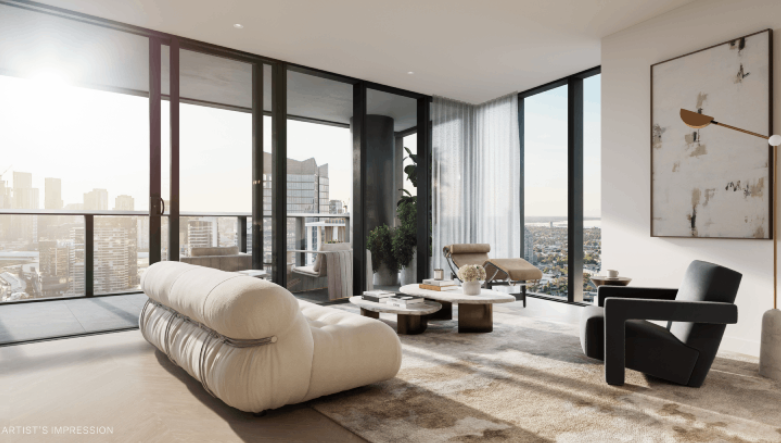
The developer also flagged a penthouse and sub-penthouse collection with larger layouts, premium finishes and broad outlooks. The planned wellness centrepiece, The Oasis, encompasses a 900-square-metre elevated urban rainforest.
Mirvac General Manager Residential Development Victoria Elysa Anderson said Trielle had resonated strongly with buyers seeking a rare lifestyle offering in Melbourne.
“Opportunities to secure a new luxury residence on a riverfront site of this calibre are incredibly rare, particularly within a community like Yarra’s Edge,” Anderson said.
“What makes Trielle unique is the combination of exceptional views, world-class residential facilities and the lifestyle that already exists around it. Residents are buying into a mature waterfront community with parks, promenades, dining, wellness and strong community connections already in place.”
The 45-level tower brings a substantial new presence to that waterfront. Its residential offering spans one-, two-, three- and four-bedroom apartments, with Signature, Prestige and Sub-Penthouse collections accommodating different household sizes. The north-facing position connects the apartments visually to the river and city beyond.
Seven storeys above the promenade, the planned Oasis combines planting and a running stream with a Scandinavian-inspired wellness club developed with spa specialist Naomi Gregory. Facilities include a 25-metre lap pool, hot magnesium pool, sauna, hydrotherapy, a gym, yoga and Pilates room, and treatment spaces.
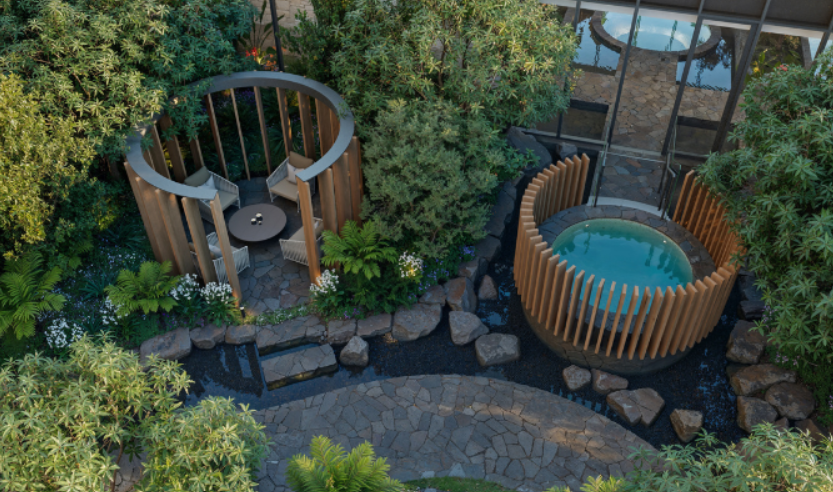
The amenity extends beyond exercise. Residents will have access to The Biblioteca library and workspaces, ground-floor work pods, and The Salone piano lounge. A private Chef’s Table dining room offers a setting for larger gatherings, while a cinema, games room and sports lounge broaden the entertaining options. Concierge services and a dog-wash area support everyday routines.
Trielle comprises a collection of one, two, three and four-bedroom residences. Reflecting strong demand from owner occupiers, approximately 80 per cent of purchasers to date intend to live in their homes, highlighting the project’s appeal to those seeking a long-term waterfront lifestyle.
Mirvac has recently delivered The Albertine, a premium apartment development on the edge of Melbourne’s CBD, and is nearing completion of Prince & Parade in Brunswick, further strengthening its portfolio of thoughtfully designed apartment communities in some of Melbourne’s most sought-after urban locations.
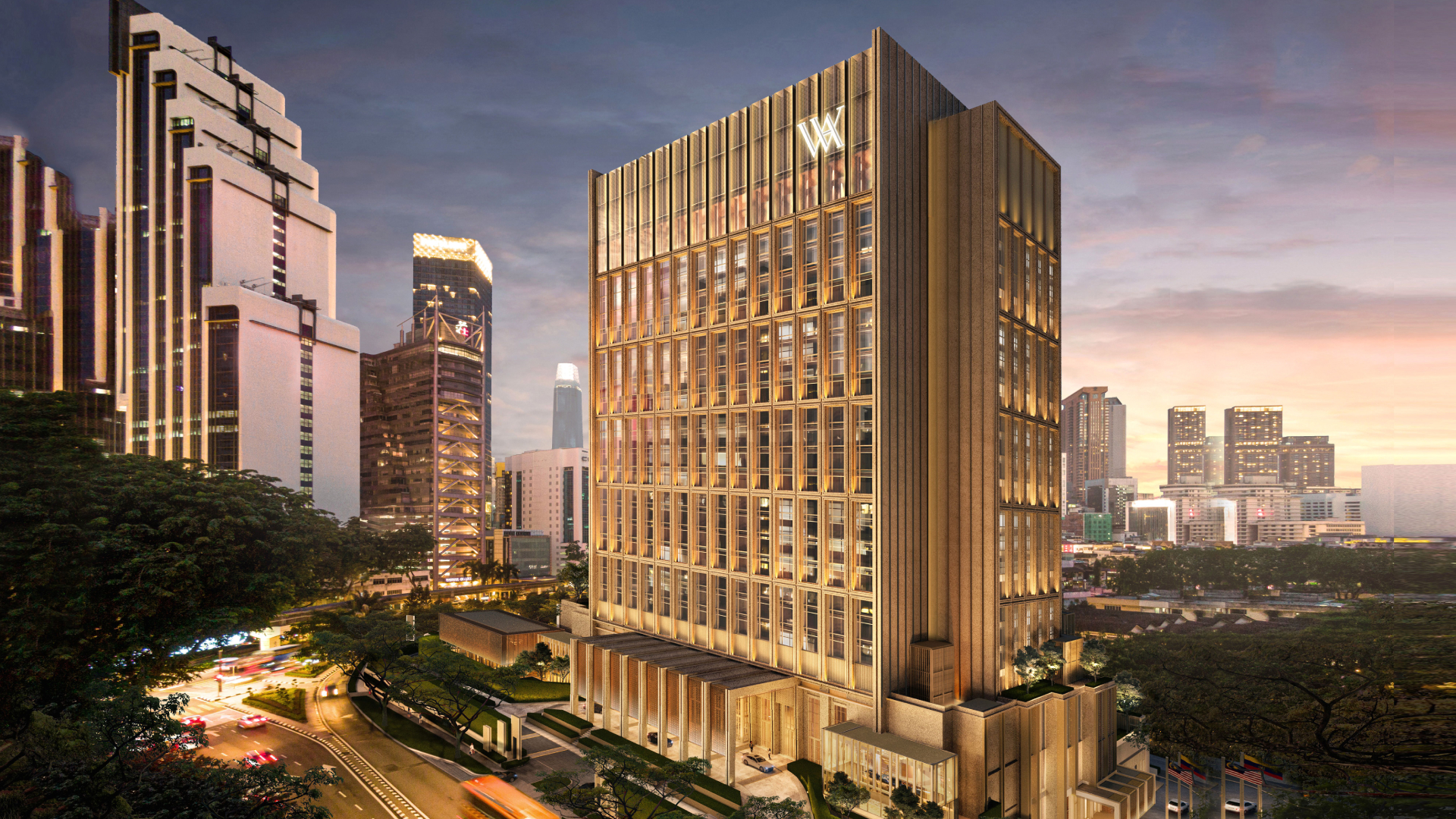
Waldorf Astoria Kuala Lumpur is scheduled to open on 30 October, introducing the Hilton luxury brand to Malaysia with an all-suite hotel in the city’s Golden Triangle.

From Italian vegetable-tanned leather to real-world training insight, Australian brand PK9 Gear is redefining what luxury means for discerning dog owners.