Why First-Home Buyer Schemes Are Becoming a Stealth Investment Strategy
First-home incentives can still form part of a long-term investment plan if used strategically.
 3 min
3 min
Australia’s home prices continue to grow, and while that makes them great investments, they are also some of the most unaffordable in the world.
That’s why first-home buyer schemes such as the First Home Owner Grant, the First Home Guarantee, and stamp duty concessions have become so valuable.
These programs are designed to reduce upfront costs and fast-track people into homeownership.
But the question many aspiring investors are now asking is can these schemes be used as part of an investment strategy? These government initiatives aren’t designed for investors, but they can still play a key role in your long-term investment journey if used strategically.
What the schemes actually allow
Every first-home buyer incentive in Australia is created to support owner-occupiers, not investors.
Whether it’s a cash grant, reduced deposit requirement, or a stamp duty discount, the catch is always the same in that you must live in the property for a set period of time. For example, the First Home Owner Grant often requires you to live in the property for at least six to twelve months, depending on the state.
The First Home Guarantee allows you to purchase with just a 5 per cent deposit without paying lenders’ mortgage insurance, but again, you’re required to live in the property for at least one year.
Likewise, state-based stamp duty concessions are only available for properties intended as a principal place of residence. If your intention from the outset is to buy a property solely for rental income, you won’t be eligible. However, if you’re open to living in the property initially, then transitioning it into an investment, there’s a path forward.
A strategy that works
Rentvesting has emerged as one of the most practical ways for first-time buyers to take advantage of these schemes while also laying the groundwork for a property portfolio.
The concept is simply, buying a property in an area you can afford (using the first-home buyer schemes to assist), live in it for the minimum required period, and then rent it out after fulfilling the occupancy condition.
This approach lets you legally access the benefits of first-home buyer schemes while building equity and entering the market sooner. Instead of waiting years to save a full 20 per cent deposit for an investment property, or getting priced out altogether, you get your foot in the door with reduced upfront costs.
Once you’ve satisfied the live-in requirement, the property can become an income-generating asset and even serve as collateral for your next purchase.
What to look for in a rentvestment property
If you plan to eventually convert the property into an investment, you need to think beyond your short-term living experience. It’s essential to buy a property that performs well both as a home and as a long-term asset.
That means looking at key fundamentals like location, rental demand, and growth potential. Suburbs with strong infrastructure, access to employment hubs, good transport links, and low vacancy rates should be high on your list.
A balanced price-to-rent ratio will help ensure manageable holding costs once the property transitions to an investment.
Established low-density areas often outperform high-rise apartment developments that flood the market with supply and limit capital growth. And ideally, your property should offer scope for future improvements, whether that’s a cosmetic renovation, granny flat addition, or potential to subdivide down the track.
Mistakes to avoid
There are a few common missteps that can undermine this strategy. The first is selling too soon. Some grants and stamp duty concessions include clawback provisions if you offload the property within a short period, which could see you lose the benefits or even owe money back.
It’s also a mistake to let the lure of a government handout sway your purchasing decision. A $10,000 grant doesn’t justify compromising on location, growth prospects, or property fundamentals.
Another pitfall is failing to consider the financial impact once the property becomes an investment. Repayments, tax treatment, and outgoings may change, so it’s important to stress-test your position from day one.
Lastly, beware of buying into oversupplied areas simply because they’re marketed to first-home buyers. Not all new builds are good investments. If hundreds of identical properties are being built nearby, your long-term growth could be seriously limited.
With the right approach, your first home can be the foundation for an entire property portfolio. It starts with using available government support to lower your entry cost.
From there, you occupy the property for the required time, convert it to an investment, and leverage the equity and rental income to fund your next purchase.
Many of the most successful investors today began with a single, strategically chosen property purchased using these exact schemes. By buying well, you can turn your first home into the launchpad for long-term wealth.
Abdullah Nouh is the Founder of Mecca Property Group (MPG), a buyers’ advisory firm specialising in investment opportunities in residential and commercial real estate. In recent years, his team has acquired over $300 million worth of assets for 250+ clients across Australia.

From making unpopular decisions to learning when to listen, leaders from five businesses reveal what nobody prepared them for — and how running a company has challenged their expectations.

Technology and semiconductor shares fell sharply as investors questioned the debt financing the AI infrastructure boom and confronted higher rates and Chinese competition.


Mirvac’s 45-level Trielle has topped out at Yarra’s Edge, pairing riverfront apartments with wellness facilities, private dining and resident services.
3 min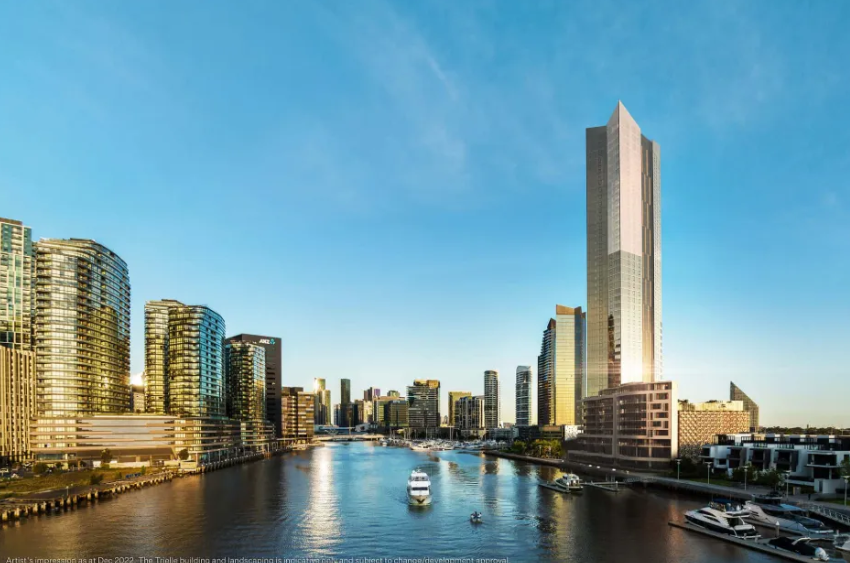
Mirvac has topped out Trielle at Melbourne’s Yarra’s Edge, with more than 70 per cent of the riverfront development sold and approximately 80 per cent of purchasers intending to make their apartment a home.
The figures, released on September 22, point to an owner-occupier audience for one of the precinct’s final residential towers. Mirvac began developing Yarra’s Edge in 2003, and its latest addition occupies one of the remaining absolute riverfront sites.
Mirvac CEO of Development Stuart Penklis said existing residents were among those moving up within the neighbourhood.
“Many purchasers already have a connection to Yarra’s Edge,” Mr Penklis said, describing buyers whose changing needs were encouraging an upgrade within the precinct.
“As one of the final residential towers within Yarra’s Edge, Trielle represents the culmination of more than two decades of creating one of Melbourne’s most established and sought-after waterfront communities,” Penklis said.
“Positioned on the Collins Street axis with absolute river frontage, Trielle offers residents a rare opportunity to enjoy sweeping views across the Yarra River, Melbourne skyline and Port Phillip Bay, while remaining seamlessly connected to the CBD. With Trielle now more than 70 per cent sold, we’re continuing to see strong demand from buyers seeking quality homes in established locations.”

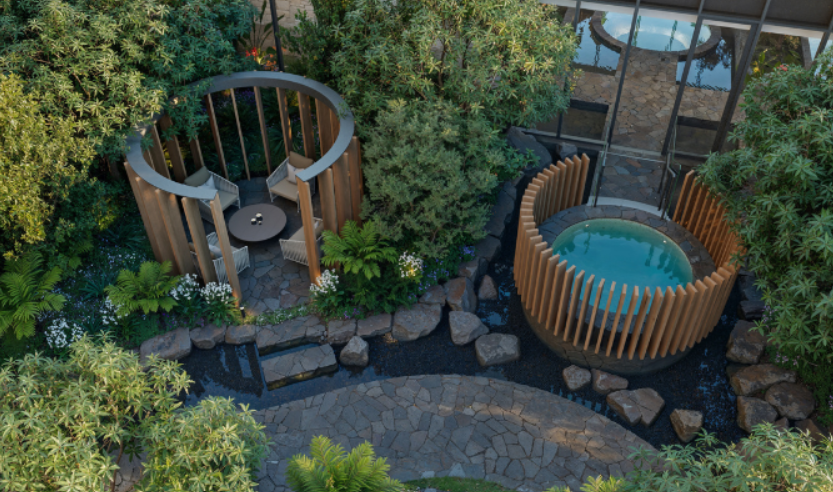
The developer also flagged a penthouse and sub-penthouse collection with larger layouts, premium finishes and broad outlooks. The planned wellness centrepiece, The Oasis, encompasses a 900-square-metre elevated urban rainforest.
Mirvac General Manager Residential Development Victoria Elysa Anderson said Trielle had resonated strongly with buyers seeking a rare lifestyle offering in Melbourne.
“Opportunities to secure a new luxury residence on a riverfront site of this calibre are incredibly rare, particularly within a community like Yarra’s Edge,” Anderson said.
“What makes Trielle unique is the combination of exceptional views, world-class residential facilities and the lifestyle that already exists around it. Residents are buying into a mature waterfront community with parks, promenades, dining, wellness and strong community connections already in place.”
The 45-level tower brings a substantial new presence to that waterfront. Its residential offering spans one-, two-, three- and four-bedroom apartments, with Signature, Prestige and Sub-Penthouse collections accommodating different household sizes. The north-facing position connects the apartments visually to the river and city beyond.
Seven storeys above the promenade, the planned Oasis combines planting and a running stream with a Scandinavian-inspired wellness club developed with spa specialist Naomi Gregory. Facilities include a 25-metre lap pool, hot magnesium pool, sauna, hydrotherapy, a gym, yoga and Pilates room, and treatment spaces.
The amenity extends beyond exercise. Residents will have access to The Biblioteca library and workspaces, ground-floor work pods, and The Salone piano lounge. A private Chef’s Table dining room offers a setting for larger gatherings, while a cinema, games room and sports lounge broaden the entertaining options. Concierge services and a dog-wash area support everyday routines.
Trielle comprises a collection of one, two, three and four-bedroom residences. Reflecting strong demand from owner occupiers, approximately 80 per cent of purchasers to date intend to live in their homes, highlighting the project’s appeal to those seeking a long-term waterfront lifestyle.
Mirvac has recently delivered The Albertine, a premium apartment development on the edge of Melbourne’s CBD, and is nearing completion of Prince & Parade in Brunswick, further strengthening its portfolio of thoughtfully designed apartment communities in some of Melbourne’s most sought-after urban locations.

Porsche’s Cayenne Turbo Electric produces up to 1,156PS and reaches 100km/h in a claimed 2.5 seconds.

Pure Amazon has begun journeys deep into Peru’s Pacaya-Samiria National Reserve, combining contemporary design, Indigenous craftsmanship and intimate wildlife encounters in one of the richest ecosystems on Earth.