For These Collectors, It’s Still All About the Cash
Rare banknotes can yield big bucks, if you know what to look for

 4 min
4 min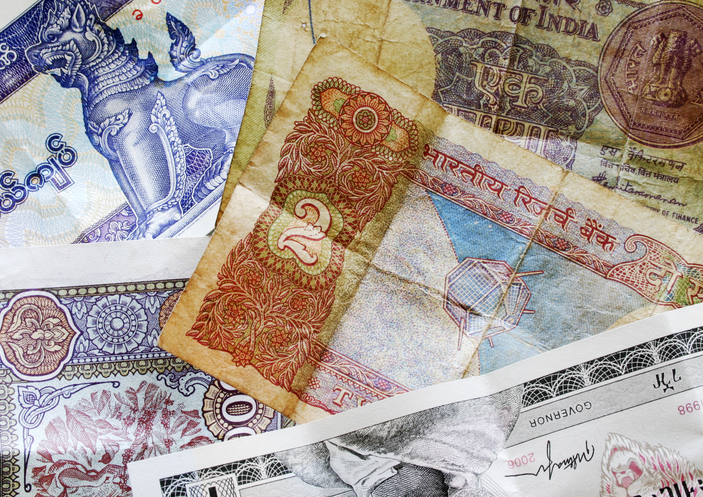
Even as the world increasingly moves toward digitised commerce, where transactions are conducted with the tap of a credit card and billions of dollars are moved electronically between banks, there is one group of people for whom hard cash is still king: collectors.
As an alternative asset class, collectible banknotes offer significant potential value to investors, and the market for these paper artefacts is thriving. Aris Maragoudakis , director of world currency auctions at Stack’s Bowers Galleries in Costa Mesa, Calif., estimates the hobby sees annual trade of well over $500 million globally.
In fiscal year 2016, the World Paper Money department at Stack’s recorded about $4 million in sales. By fiscal year 2024, this figure had risen to $14.5 million. The company reported an 18% increase in sales for world paper money (which doesn’t include U.S. paper-money numbers) in fiscal year 2023, followed by 25% growth in fiscal year 2024.
Elsewhere, the Noonans Mayfair London realised £5 million, or about $6.5 million, in world banknote sales in 2023, up from £2.5 million the previous year, a representative said.
The rise of digital technology has helped broaden the base of collectors. Online auctions, forums and databases have made it easier for collectors to connect, trade and research. Greater access to information about collectible money, as well as to collectible banknotes themselves, have transformed the hobby from a game of chance to a strategic pursuit where enthusiasts can actively search for and acquire valuable pieces.
“The advent of social media such as Instagram and WhatsApp have brought in a spate of new collectors, especially youngsters,” says Rezwan Razack , a specialist in vintage banknotes and chairman of the Indian chapter of the International Bank Notes Society, or IBNS.
While social media has made more people aware of older paper currencies and their histories, the declining use of physical banknotes has made them even more alluring and fascinating to collectors.
Where is the value?
Banknotes routinely become obsolete due to political shifts, security upgrades, monetary policies and technological advancements. The question is: Which ones are worthy possessions?
A plethora of factors underpin the desirability of collectible paper money. The major ones are:
• Condition: The condition of a piece can have a significant impact on its value. “There are bills that sell for $1,000 with a fold or two, but finding one free of any folds, stains, or tears could be worth several times that,” says Maragoudakis.
The condition of a bill is evaluated based on a 30-point scale ranging from poor to uncirculated crisp. Within each condition, a bill is given a number grade; a higher number—on a scale typically from 1 to 70—means the banknote is in better shape.
For example, a 10,000-yuan note issued in 1951 by the People’s Bank of China, graded Very Fine 20, sold for $150,000 at a Stack’s Bowers auction. Three years later at another Stack’s Bowers auction, a similar note in better condition, graded Almost Uncirculated 50, fetched $358,500.
• Serial number : Banknotes with striking serial numbers are often worth more to collectors than those without. On eBay, a rare polymer £20 bill with the serial number AA44 444444 received 16 bids and sold for more than £317.
A set of four exceptionally rare Chinese 1953 10 yuan notes from the People’s Bank of China recently sold for $432,000 because in addition to their quality, they were consecutive in serial number.
• Scarcity : The appeal and worth of banknotes, as with other collectibles, are often tied to their rarity.
For instance, high-value banknotes were often printed in limited quantities due to their significant purchasing power, says Hakim Hamdani , director at large and a collector at the Netherlands branch of the IBNS. When these high-denomination notes are discontinued, many people cash them in rather than keeping them as collectibles.
Take the 1921 10,000-shilling note from British East Africa (now Kenya and Tanzania), of which few were printed and issued. At that time, it was equivalent to about $2,000, a substantial sum in 1920s colonial Africa. When they were demonetized, most were redeemed, making the few remaining in private hands highly desirable.
Dennis Hengeveld , president of World Banknote Auctions in Sacramento, Calif., says that depending on the condition, some of these notes have fetched between $35,000 and just over $100,000 at auctions.
A rare $500 Canadian bill from 1911 brought C$528,750 (about $386,400) at a recent auction, the largest sum ever paid for a Canadian banknote. The specimen features the image of Queen Mary and is one of only four of the bills known to exist.
• Error notes : Governments often withdraw banknotes from circulation to deter counterfeiting, but also due to printing anomalies such as incorrect signatures, numerical discrepancies, misprints and typographical errors. Such deviations can elevate their value among enthusiasts.
In the U.S., double denominations—such as a front displaying a $10 bill and the reverse displaying a $20 bill—are the most prized error notes. The value of some of these pieces could top $85,000, according to Heritage Auctions.
How can I get started?
Despite the potential for a lucrative return, experts say the primary motivation for building a collection should be enjoyment and an appreciation of the history that banknotes provide. It would be best to build a collection with the idea of having fun, says Hengeveld of World Banknote Auctions, which was recently acquired by Stack’s Bowers.
Of course, it’s essential to do your due diligence to avoid fraud. Always buy notes from established dealers and confirm their authenticity with reputable grading services. Independent grading companies such as Paper Money Guaranty and Professional Coin Grading Service provide authentication and grading to ensure notes are genuine and their condition accurately assessed.
Auction houses and local dealers offer currency notes in different price ranges. Online retailers (eBay, Amazon.com, Collectibles & Currency), dealers and galleries (Certified Coin Exchange, George H. LaBarre), and numismatic shows (the MIF Paper Money Fair and World’s Fair of Money) are other useful sources.
As well, there is no shortage of stories where people discovered highly valuable collectible banknotes in attics, books, dressers and photo frames of deceased family members. In Ontario, a rare Canadian $500 bill from 1911 was discovered among the personal belongings of a deceased individual. The nearly discarded banknote, one of only three in existence, brought $322,000 at auction.
Those looking to dip their toes into collectible money may find valuable insights in trade magazines including Bank Note Reporter and the Greensheet, or books such as the U.S. Error Note Encyclopedia and Standard Guide to Small-Size U.S. Paper Money.
Additionally, Paper Money Guaranty, the Smithsonian Learning Lab and other websites can offer a wealth of information on various aspects of grading, collecting and how to properly care for banknotes.
 Copyright 2020, Dow Jones & Company, Inc. All Rights Reserved Worldwide. LEARN MORE





Australian shares fell on Thursday as Wall Street weakness, rising oil and persistent rate concerns weighed on most of the market. The S&P/ASX 200 declined 0.72 per cent to 8,702. The All Ordinaries lost 0.66 per cent to finish at 8,897. Mining stocks were hit particularly hard, while real estate also dragged on the index. …
Continue reading “ASX falls 0.7 per cent as miners and property stocks retreat”

Borrowers cannot control the Reserve Bank, but they can control how exposed their household budget is to its next decision. The RBA meets on 29 September with inflation concerns still elevated and major-bank economists increasingly bringing forward their rate-rise calls. Fixed mortgage rates have also been moving, reducing the value of waiting for perfect certainty. …
Continue reading “What mortgage holders should do before the next RBA decision”

 2 min
2 minAustralian shares fell on Thursday as Wall Street weakness, rising oil and persistent rate concerns weighed on most of the market.
The S&P/ASX 200 declined 0.72 per cent to 8,702. The All Ordinaries lost 0.66 per cent to finish at 8,897. Mining stocks were hit particularly hard, while real estate also dragged on the index.
Energy was the notable exception, gaining more than one per cent as Brent crude traded above US$103 a barrel. Oil had moved higher amid uncertainty surrounding potential US diesel-export restrictions and broader geopolitical supply risks. The move supported energy producers but renewed concern about inflation inputs across transport and the wider economy.
Gold shares were weak even as spot bullion remained historically elevated. The All Ordinaries Gold index fell about 2.25 per cent, showing that equity performance can diverge from the commodity because of valuation, currency, operating and company-specific factors.
Zip was a prominent loser, falling 11.38 per cent after the company reported short sales after the previous close. Nine Entertainment also weakened after UBS analysts warned of near-term revenue challenges associated with its advertising-supported subscription tier.
Premier Investments led larger winners despite caution about the retail environment. Breville, in which Premier owns a significant stake, also appeared among leading movers. In the broader ASX 300 screen, Myer gained 11.43 per cent and MAAS Group rose 7.93 per cent, while Lotus Resources fell 10.53 per cent. These percentage moves should be checked against company announcements and trading liquidity before attributing causes.
The Australian dollar was broadly flat at US70.38 cents. Spot gold was around US$4,280 an ounce, Brent crude approximately US$103.08 a barrel and iron ore near US$96.90 a tonne late in the session.
The rate outlook remains the central domestic catalyst. Labour-market weakness has not eliminated the possibility of an RBA increase next week, leaving banks, listed property and other rate-sensitive sectors exposed to changing expectations.
Market dashboard
S&P/ASX 200: 8,702, down 0.72 per cent.
All Ordinaries: 8,897, down 0.66 per cent.
Best sector: Energy, up more than one per cent.
Weakest areas: Real estate and materials were the major drags; confirm final sector percentages before publication.
Material winner: Premier Investments led the large-company gainers. Confirm its final closing move from the ASX before publication.
Material loser: Zip, down 11.38 per cent.
ASX 300 percentage leader: Myer, up 11.43 per cent.
ASX 300 percentage laggard: Zip, down 11.38 per cent.
AUD/USD: Approximately US$0.7038, broadly flat.

From bushland greens to valley reds, the country’s most awarded designers are proving that the best colour palette was never on a swatch card; it was outside the window all along.

Scotch whisky expert, luxury hospitality strategist and Keeper of the Quaich inductee Ross Blainey is bringing a new philosophy of luxury experiences to Citizen Kanebridge.