Charles Forte on Carving His Own Path in the Family Hotel Business

 3 min
3 min
There’s a tradition in the Forte family of starting on the lowest rungs of the hospitality ladder and working their way up.
In 1911, Rocco Forte emigrated from Italy to Scotland to open a cafe that would mark the first hospitality establishment in the namesake family business. He would go on to open several more restaurants in the U.K., which his son would continue to grow.
Although the hotel group has ebbed and flowed through the decades, it finds itself in a new era with all three adult members of the current generation working for the company.
Charles Forte, 32, is one of those three and followed in the steps of his grandfather by starting in hospitality service. At age 15, he was a waiter at London’s Brown’s Hotel—owned by Rocco Forte Hotels since 2003—and has worked in almost every area of the hotel and restaurant industry since.
Today, he is the group’s director of development, responsible for steering external partnerships and capital investments.
“My role is to find new opportunities and develop ourselves on a much smaller scale,” he says.
In January, Saudi Arabia’s PIF sovereign wealth fund took a 49% investment stake in Rocco Forte Hotels—a deal Charles helped complete. He says that the investment will help guide the group’s next growth phase, which includes a target of three hotels per year and expansion in the Middle East, among other regions. Through 2027, the group is opening four new properties in Italy and working on a project in Marrakesh, Morocco.
The family’s roots are Italian and that’s where many of the group’s most notable properties reside, although according to Charles, more than 40% of the company’s business is within the U.S.
Alongside his two sisters Lydia and Irene, Charles is connecting the Forte name to a new generation of luxury travellers through partnership deals with brands like the Macallan and smaller, longer-term property builds in Italy and elsewhere.
Penta caught up with Forte by phone from his office in London.
PENTA: Do you think working in a family business brings more challenges or opportunities?
Charles Forte: Being in a family business like this affords opportunities you wouldn’t have otherwise. My sisters and I worked in all the different departments of the hotels, and I realistically always wanted to join the business. At other times, I did want to be a filmmaker, but I wanted to be a part of the family legacy. My dad is a good mentor and I’ve never really looked back.
How do you differentiate yourself in an extremely competitive luxury hotel market?
It’s very challenging to differentiate ourselves. Sometimes I struggle to differentiate between us and other luxury brands because a lot of the products are very similar. There’s an international luxury aesthetic that’s very copy and paste, and a lot of the bigger guys are trying to create new brands within their own stable of brands. Our hotels are very design-oriented and not so traditional, for example.
What differentiates us is the family aspect. There’s a real family behind this, and it creates value in our brand. We have this “quiet luxury” aesthetic.
MORE: U.S. Renews Program to Root out Money Laundering in Real Estate Ahead of Larger Crackdown
What is your philosophy on hotel partnerships? Do you find yourself chasing partnerships with big-name brands to stay on par with your competitors?
Partnerships have value if they have relevance and the partner is relevant to the destination. We don’t chase partnerships because if we did, it would mean that something is missing from the hotel. These partnerships should be organic. I’m excited because we recently brought in a new director of marketing who worked at Six Senses, and that will help us do more meaningful and special collaborations and partnerships.
Do you think that’s creating more appeal for Rocco Forte Hotels among the younger generation of luxury travellers?
There’s a broad range of pace in this space, considering how competitive the operator landscape has become. We’re finding that younger travellers aren’t geared towards any specific trend. I think we’re slightly more classic in appeal. We’re not ostentatious. There’s no substitute for beautiful design and great service—we’re not looking to reinvent the world. Depending on which hotel they visit, some people know us as a brand, others as a specific independent hotel, and we’d like consumers to know which brand is behind the property.
In August, we opened Rocco Forte House Milan, which features more longer-stay keys, where stays can be two weeks, a month or a year. We’re finding that’s something more travellers want and we can build a nice client base for those who want longer stays.
This article has been edited for length and clarity.
 Copyright 2020, Dow Jones & Company, Inc. All Rights Reserved Worldwide. LEARN MORE





Australian shares fell on Thursday as Wall Street weakness, rising oil and persistent rate concerns weighed on most of the market. The S&P/ASX 200 declined 0.72 per cent to 8,702. The All Ordinaries lost 0.66 per cent to finish at 8,897. Mining stocks were hit particularly hard, while real estate also dragged on the index. …
Continue reading “ASX falls 0.7 per cent as miners and property stocks retreat”

Borrowers cannot control the Reserve Bank, but they can control how exposed their household budget is to its next decision. The RBA meets on 29 September with inflation concerns still elevated and major-bank economists increasingly bringing forward their rate-rise calls. Fixed mortgage rates have also been moving, reducing the value of waiting for perfect certainty. …
Continue reading “What mortgage holders should do before the next RBA decision”

 2 min
2 minAustralian shares fell on Thursday as Wall Street weakness, rising oil and persistent rate concerns weighed on most of the market.
The S&P/ASX 200 declined 0.72 per cent to 8,702. The All Ordinaries lost 0.66 per cent to finish at 8,897. Mining stocks were hit particularly hard, while real estate also dragged on the index.
Energy was the notable exception, gaining more than one per cent as Brent crude traded above US$103 a barrel. Oil had moved higher amid uncertainty surrounding potential US diesel-export restrictions and broader geopolitical supply risks. The move supported energy producers but renewed concern about inflation inputs across transport and the wider economy.
Gold shares were weak even as spot bullion remained historically elevated. The All Ordinaries Gold index fell about 2.25 per cent, showing that equity performance can diverge from the commodity because of valuation, currency, operating and company-specific factors.
Zip was a prominent loser, falling 11.38 per cent after the company reported short sales after the previous close. Nine Entertainment also weakened after UBS analysts warned of near-term revenue challenges associated with its advertising-supported subscription tier.
Premier Investments led larger winners despite caution about the retail environment. Breville, in which Premier owns a significant stake, also appeared among leading movers. In the broader ASX 300 screen, Myer gained 11.43 per cent and MAAS Group rose 7.93 per cent, while Lotus Resources fell 10.53 per cent. These percentage moves should be checked against company announcements and trading liquidity before attributing causes.
The Australian dollar was broadly flat at US70.38 cents. Spot gold was around US$4,280 an ounce, Brent crude approximately US$103.08 a barrel and iron ore near US$96.90 a tonne late in the session.
The rate outlook remains the central domestic catalyst. Labour-market weakness has not eliminated the possibility of an RBA increase next week, leaving banks, listed property and other rate-sensitive sectors exposed to changing expectations.
Market dashboard
S&P/ASX 200: 8,702, down 0.72 per cent.
All Ordinaries: 8,897, down 0.66 per cent.
Best sector: Energy, up more than one per cent.
Weakest areas: Real estate and materials were the major drags; confirm final sector percentages before publication.
Material winner: Premier Investments led the large-company gainers. Confirm its final closing move from the ASX before publication.
Material loser: Zip, down 11.38 per cent.
ASX 300 percentage leader: Myer, up 11.43 per cent.
ASX 300 percentage laggard: Zip, down 11.38 per cent.
AUD/USD: Approximately US$0.7038, broadly flat.

A bold new era for Australian luxury: MAISON de SABRÉ launches The Palais, a flagship handbag eight years in the making.
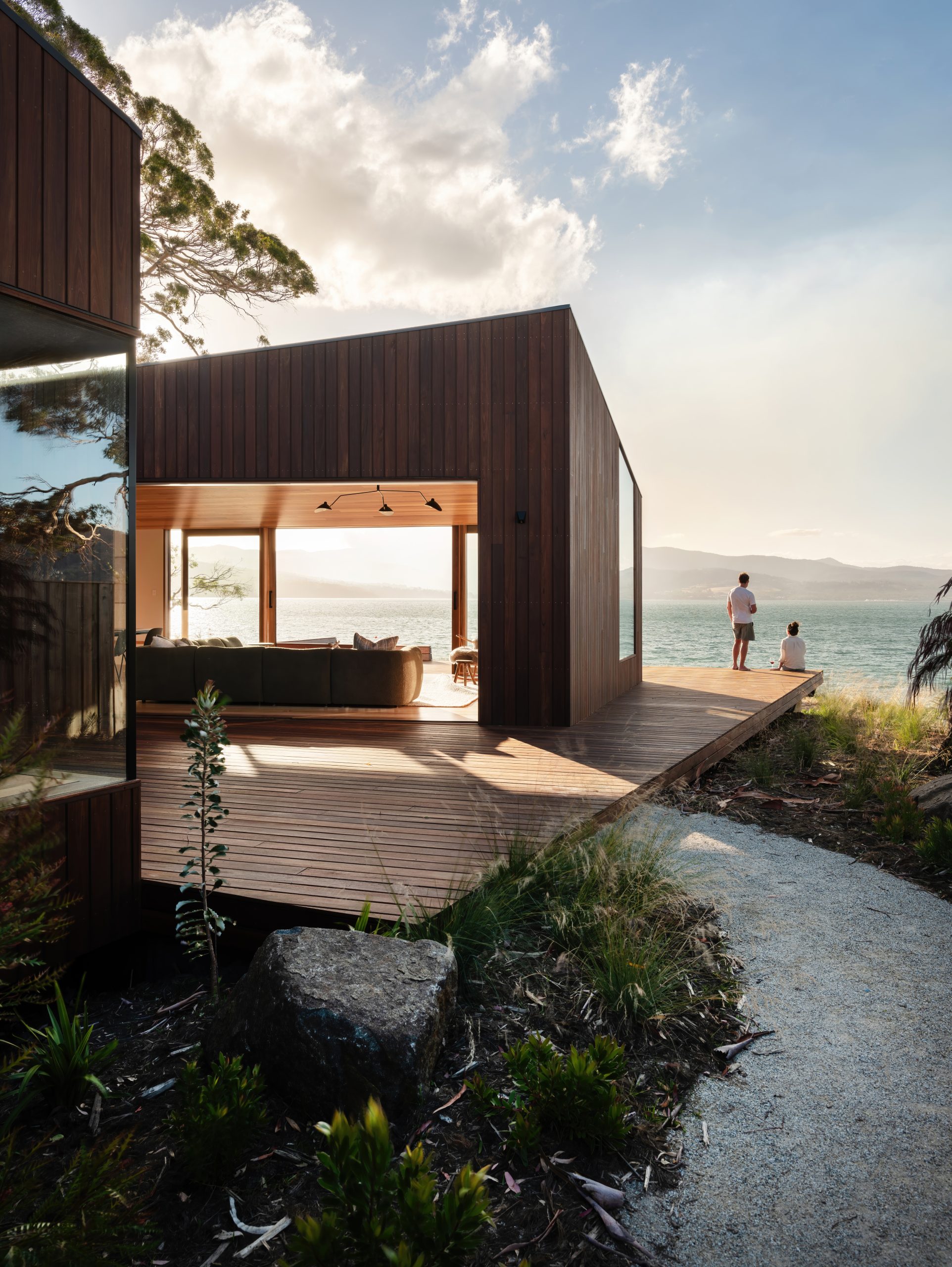
From the shacks of yesterday to the sculptural sanctuaries of today, Australia’s coastal architecture has matured into a global benchmark for design.