Spending is down for some Australians, but one group continues to thrive
As cost of living pressures bite, retailers are taking bold steps to draw out cautious buyers
 2 min
2 min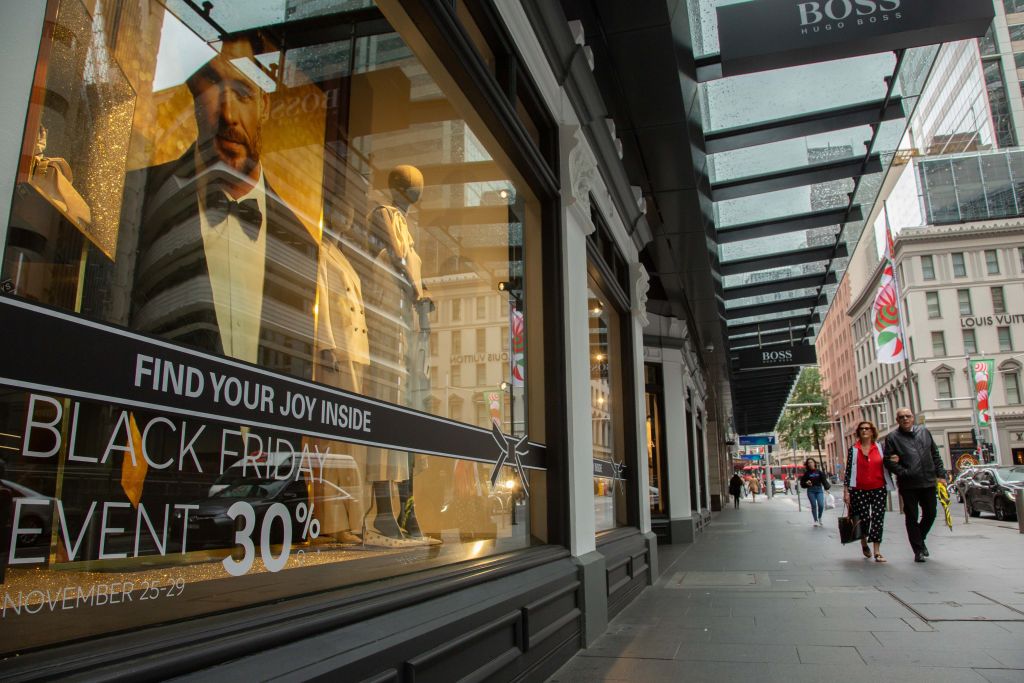
Spending continues to trail inflation as Australians head into the final quarter of the year, new data from the Commonwealth Bank has revealed.
The CommBank iQ Cost of Living Insights report showed the amount of money being spent on essentials halved in the past year, down to 1.7 percent, driven by a fall in petrol prices, down 6 percent, and lower spending on utilities, down 3 percent.
However, there is a marked difference across age groups, with Australians between 18 and 29 years cutting back on spending more than any other age group, down 2 percent over the past year. At the other end of the scale, Australians aged between 60 and 69 years increased spending over the same period, up 3.9 percent, while spending among those over 70 rose 7.7 percent.
Wade Tubman, CommBank iQ Head of Innovation and Analytics said it was further evidence of the widening generational gap when it comes to cost of living pressures.
“Lower petrol prices and government energy relief programs have eased the pressure on essential spending and July’s income tax cuts have increased take home pay for many Australians, however there continues to be a discrepancy between the spending power of older and younger Australians,” he said. “In fact, we’ve seen those all the way up to 40 years-old cut back on spending, highlighting the large swathe of the population feeling cost of living pressure.”
The report also showed that spending had risen in some areas, with value and convenience identified as key drivers. The ‘General Retail’ category saw a 5 percent increase in spending, with online marketplace sale increasing by 20 percent, food delivery up by 6 percent and streaming services experiencing a 13 percent rise.
The news comes as Australian retailers embrace the US-style Black Friday sales. Traditionally held the day after US Thanksgiving — November 29 this year — a number of leading retailers offering ‘early’ sales deals to draw in budget conscious shoppers ahead of the Christmas season. Amazon is among those who officially kicked off their sales period today.
Choice reported the Black Friday four-day period accounted for $8.7 billion in spending last year, based on NAB data, up from $7.1 billion in 2022. Data from the Australian Bureau of Statistics showed last year’s spend in that period overtook the December period, indicating Australians are bringing their Christmas spending forward.
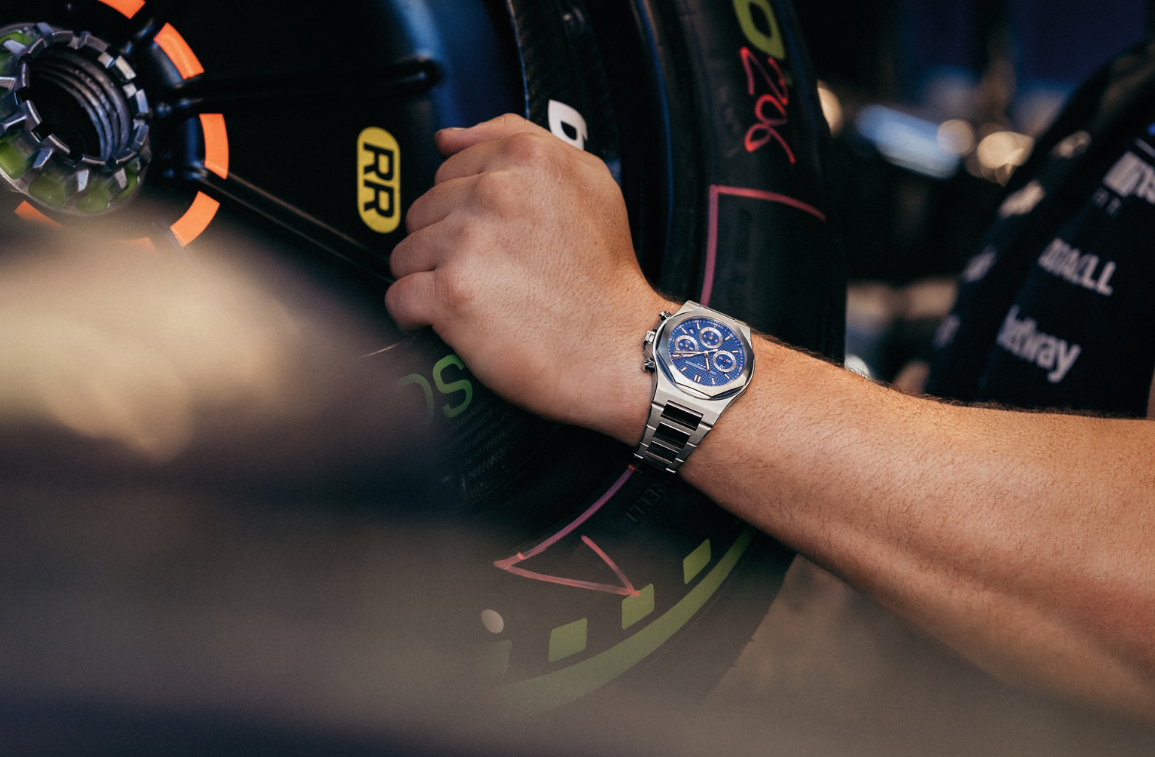
The Swiss watchmaker’s first collaboration with Atlassian Williams F1 Team produces two sporting Laureato models inspired by the team’s 2026 racing car.
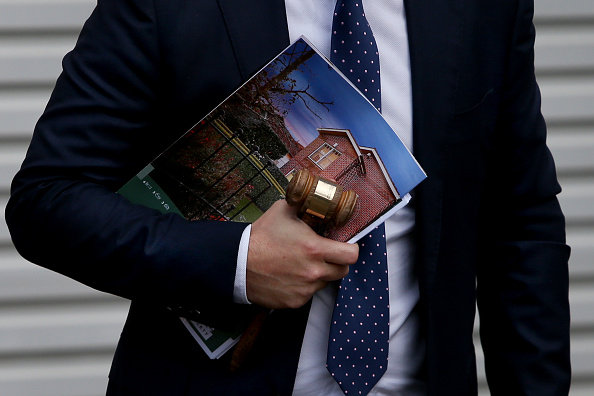
Victorian auction buyers will soon receive a piece of information that has traditionally been withheld until bidding reaches it: the vendor’s reserve price. Under new property-sale and underquoting laws, agents must publish the agreed reserve at least seven days before an auction or fixed-date sale. Most changes begin on 1 October 2026 and apply to …
Continue reading “Victoria’s New Auction Rules Will Force Reserve Prices Into the Open”

The Swiss watchmaker’s first collaboration with Atlassian Williams F1 Team produces two sporting Laureato models inspired by the team’s 2026 racing car.
3 minGirard-Perregaux has revealed the first watches created through its partnership with Atlassian Williams F1 Team, bringing the British racing team’s colours to one of Switzerland’s most recognisable integrated-bracelet designs.
The collaboration comprises two 42mm steel watches: the time-and-date Laureato Williams Edition and the more technical Laureato Chronograph Williams Edition.
Both retain the familiar architecture of the Laureato, including its octagonal bezel, integrated bracelet and mix of polished and satin-finished surfaces. The influence of Williams is comparatively restrained, appearing through colour, discreet branding and details inspired by the team’s current Formula 1 car.
It is a welcome departure from the oversized logos and literal automotive references that can characterise motorsport watches.
The Williams FW48 inspires the dial
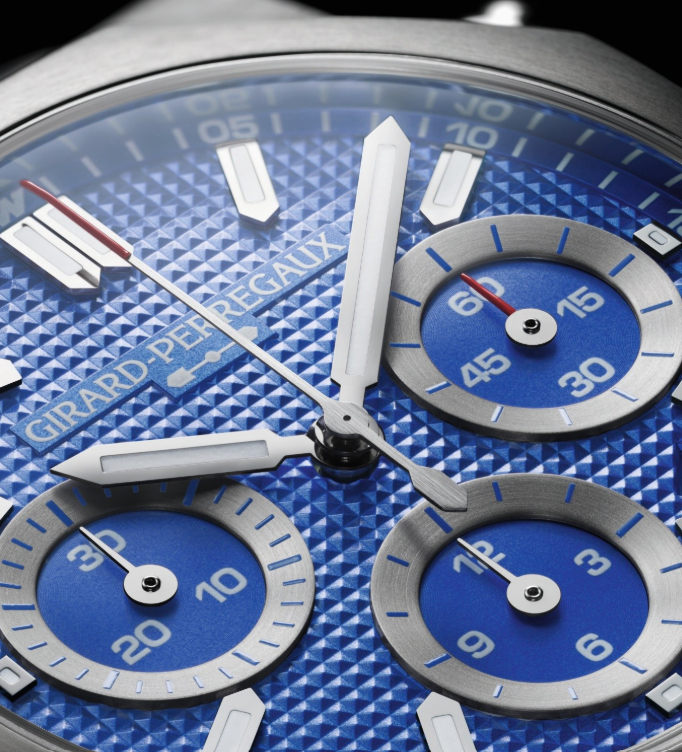
The centrepiece of both models is a blue Clous de Paris dial informed by the livery of the Williams FW48, the car being campaigned by the team during the 2026 Formula 1 season.
A small Williams “W” replaces the conventional marker at 12 o’clock, while the team emblem appears on the sapphire crystal caseback. Red accents echo the keyline used on the FW48 without overwhelming the established Laureato design.
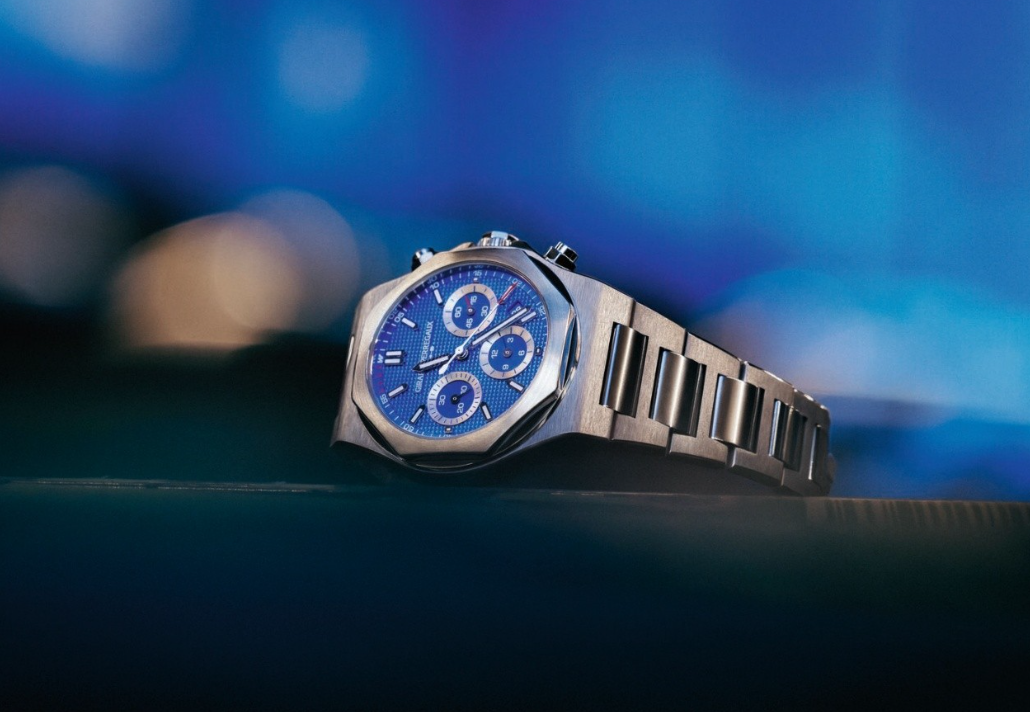
The three-hand model offers the quieter interpretation. Baton-shaped, rhodium-plated hands and hour markers are filled with white-emitting luminescent material, while a date window sits at three o’clock.
The chronograph creates a more obvious connection with motorsport. Three subdials are framed by rhodium-plated rings, with red appearing on the small-seconds hand and the tip of the central chronograph seconds hand.
Both watches measure 42mm across and are water resistant to 100 metres. The standard Laureato has a case thickness of 10.68mm, while the additional mechanics of the chronograph increase its profile to 12.16mm.
Two in-house automatic movements
The Laureato Williams Edition is powered by Girard-Perregaux’s self-winding GP01800 calibre. The movement provides hours, minutes, central seconds and the date, with a minimum power reserve of 54 hours.
The Laureato Chronograph Williams Edition uses the automatic GP03300 calibre, which combines its chronograph functions with a date display and offers a minimum power reserve of 46 hours.
Both movements operate at 28,800 vibrations per hour and can be viewed through their sapphire crystal casebacks.
Their decoration provides a more traditional counterpoint to the Formula 1 association. Finishing techniques include Côtes de Genève, circular graining, bevelling, mirror polishing, satin finishing, engraving and snailing.
The result is less about reproducing the appearance of a racing car than identifying the common ground between two mechanical disciplines: precision, incremental development and the considerable work hidden beneath the finished product.
Parallel histories
The timing of the partnership draws attention to the remarkably similar ages of its two protagonists.
Girard-Perregaux introduced the original Laureato in 1975, establishing an integrated-bracelet sports watch with a distinctive octagonal bezel. Williams entered Formula 1 two years later in 1977.
Both have evolved continuously across the five decades since. The Laureato has moved through different sizes, materials and complications, while retaining its central design language. Williams, meanwhile, has remained one of Formula 1’s most historically significant teams.
That gives the collaboration greater credibility than a simple licensing exercise. Girard-Perregaux and Williams are not being connected solely through the familiar language of speed. Their stronger link is a shared dependence on engineering, testing and the accumulation of specialist knowledge.
The watches are described as the beginning of a longer collaboration, suggesting further Williams editions may follow.
Girard-Perregaux’s international website lists the Laureato Williams Edition at US$16,200 and the Laureato Chronograph Williams Edition at US$20,900. Australian pricing has not been announced.
Specifications
Girard-Perregaux Laureato Williams Edition 42mm
Reference: 81010-11-3680-1GM
Case: Steel
Diameter: 42mm
Thickness: 10.68mm
Crystal: Anti-reflective sapphire crystal
Dial: Blue Clous de Paris pattern
Movement: Automatic GP01800
Functions: Hours, minutes, central seconds and date
Power reserve: Minimum 54 hours
Water resistance: 100 metres
Bracelet: Integrated steel bracelet with triple-folding clasp
International price: US$16,200
Girard-Perregaux Laureato Chronograph Williams Edition 42mm
Reference: 81020-11-3681-1GM
Case: 904L steel
Diameter: 42mm
Thickness: 12.16mm
Crystal: Anti-reflective sapphire crystal
Dial: Blue Clous de Paris pattern with three chronograph counters
Movement: Automatic GP03300
Functions: Chronograph, hours, minutes, small seconds and date
Power reserve: Minimum 46 hours
Water resistance: 100 metres
Bracelet: Integrated 904L steel bracelet with triple-folding clasp
International price: US$20,900

A long-standing cultural cruise and a new expedition-style offering will soon operate side by side in French Polynesia.
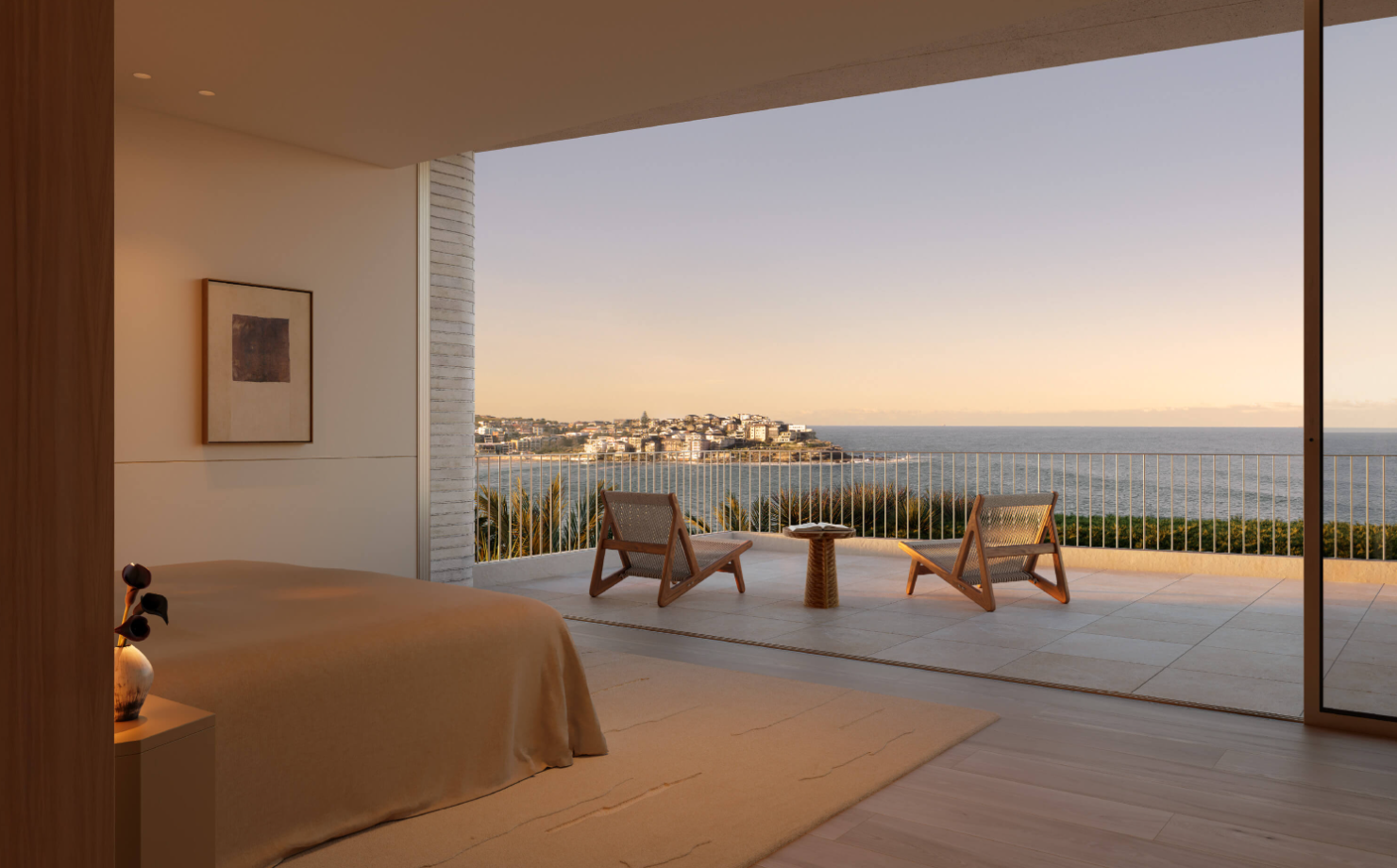
For Central Element, the start of work at Pearl represents another step in the company’s growing eastern suburbs pipeline.