American Companies Are Stocking Up to Get Ahead of Trump’s China Tariffs
Businesses plan to stockpile, raise prices and accelerate shift to manufacturing elsewhere

 5 min
5 min
By 9 p.m. on election night, it had become clear to Jason Junod that Donald Trump was returning to the White House. That night, he contacted his skin-care company’s suppliers in China to order a year’s worth of inventory for about $50,000—as much as he could afford to buy and had room to store.
His hope is that the roughly 30,000 body brushes and exfoliating gloves make it to Bare Botanics’ facility in Madison, Wis., before Inauguration Day. He thinks Trump is serious about his campaign promise to impose tariffs of 60% on all Chinese goods.
American businesses are dusting off a playbook they used during Trump’s first term: stocking up on imported goods before tariffs are enacted. They are also considering how to cope with the levies if and when enacted—whether they will be able to raise prices and whether they will need to find alternatives to their Chinese manufacturers.
“The biggest consideration is, do we stay in China?” Junod said.
When Trump began his trade war against China in 2018, U.S. businesses scrambled to front-load imports before tariffs were implemented, according to an International Monetary Fund analysis. As a result, the U.S.’s trade deficit with China—how much imports exceed exports—rose in 2018 before falling in 2019.

Already, exports from China surged last month, which some economists think could have been driven at least in part by front-loading amid uncertainty around election results. Outbound shipments from China rose nearly 13% in October from a year earlier, well above consensus expectations and up sharply from 2.4% growth in September.
Chinese exports growth should remain strong through the next few months because of front-loading, Wall Street economists said.
China remains the world’s top exporter of goods and the U.S. its top buyer. American companies bought roughly $430 billion of Chinese goods last year, with computer and electronic products making up the biggest chunk.
Wan Junhui, who works in marketing for an electronics manufacturer in Guangdong province, said his company has observed an increase in inquiries and “noticeable unease” from its U.S. clients recently. He said that tariffs so far haven’t affected sales significantly, but that buyers end up absorbing the levies and sometimes raising prices for their end customers.
“We’ll do our best to focus on reducing costs to help ease the situation and make it through this harsh winter,” he said.
Though China’s share of U.S. imports has declined to roughly 14% in 2023, from 22% in 2017, rising tariffs between the U.S. and China have done little to curb the overall U.S. trade deficit in global trade or China’s overall trade surplus.

The persistent trade imbalance is driven by strong demand from American consumers and weakening domestic demand in China, according to the IMF. U.S. firms have boosted their share of imports from places such as Vietnam, while China has increased exports to regions including Southeast Asia.
Tariffs aren’t paid by exporters, but rather by businesses that import products. Economists say those businesses usually pass on the bulk of the cost to consumers by raising prices.
Some economists doubt the U.S. will succeed in raising tariffs to 60% across the board on Chinese products. Economists at Goldman Sachs predict additional duties on China could average out to a 20 percentage-point increase in the effective tariff rate.
In addition to duties on Chinese goods, Trump proposed tariffs of 10% to 20% on imports from all countries.
That would be the worst-case scenario for Leah Dark-Fleury, co-founder of Stone Fleury, a natural-stone and porcelain wholesaler in San Francisco. She has been buying natural stone from the same supplier in China for two decades and imports most of her other materials from Europe.
When Trump imposed a tariff on Chinese natural stone during his first term, Dark-Fleury continued buying from China as usual. The company raised prices to compensate, but tried to not charge the full increase to stay competitive.
This week, she asked her supplier in China about the possibility of ordering about two shipping containers’ worth of natural stone under a payment plan to try to get ahead of tariffs. That could cost up to around $100,000 and last her between a few months and a year, depending on customer demand. In the longer run, she expects to raise prices on materials from China and shift some sourcing to Vietnam.
“I wish that I could buy enough to get us through the four years,” she said.
Toni Norton , owner of Fine Fit Sisters in Charlotte, N.C., sources body oil from China that is popular with customers in the summertime. She normally wouldn’t be stocking up until the new year, but is trying to order about 20,000 units before the end of the year.
If tariffs on Chinese products indeed reach 60%, Norton said she might have to stop selling body oil and focus more on her fitness-coaching services. She said she doesn’t think she has much room to raise prices on the body oil, which she mostly advertises on TikTok and sells for about $13, because “people like cheap things.”
Front-loading imports “is a short-term solution,” said Chris Tang , a professor of supply-chain management at the University of California, Los Angeles. Businesses are likely to need additional strategies in a world with persistently higher and broader tariffs.
Companies have already been moving manufacturing from China to places such as Southeast Asia and Latin America, a trend that is expected to continue—if buyers are able to find a suitable alternative to Chinese production.
A 2024 survey by Bain & Company found that 69% of chief executives and chief operating officers plan to reduce their company’s dependence on China, up from 55% in 2022.
Ryan Bursky , CEO of Lucidity Lights, a maker of lighting products in Boston, said the expectation of new tariffs is only accelerating a process under way at his company. Lucidity Lights made a strategic decision last year to begin sourcing outside of China, where it had previously done all of its production, in part because of the first phase of the trade war.
The company is on track to do about 15% of production in Cambodia this year, with plans to move about half of production out of China next year. He believes it is a better use of resources to invest in supply-chain diversification, rather than stockpiling.
Bursky said it has taken some time to find the right suppliers in Cambodia, which is still growing its manufacturing capacity and speed. But he thinks that the products made in Cambodia are better quality and that there is more attention to detail.
Joe Jurken , the founder and managing director of the ABC Group in Milwaukee, which helps U.S. businesses manage supply chains in Asia, expects China to still dominate manufacturing somewhat, even as his clients have beefed up sourcing from countries such as Vietnam, India and Cambodia.
China has developed infrastructure, communication and transaction channels that make doing business easy for Western companies, while those systems are still being developed in other countries, he said. Plus, it is hard for manufacturers in other countries to beat Chinese suppliers’ low prices.
“China will never be replaced,” Jurken said. “Other markets are an alternative.”
Junod, who started his skin-care business in 2020, has considered looking for manufacturers in Southeast Asia, but believes it would be difficult to replicate the low cost and high quality he has come to rely on from his Chinese suppliers.
“It feels like we’re being punished because there isn’t really anywhere else for us to turn domestically,” he said of Trump’s proposed tariffs. “We have no choice, really, but to pay them.”
 Copyright 2020, Dow Jones & Company, Inc. All Rights Reserved Worldwide. LEARN MORE




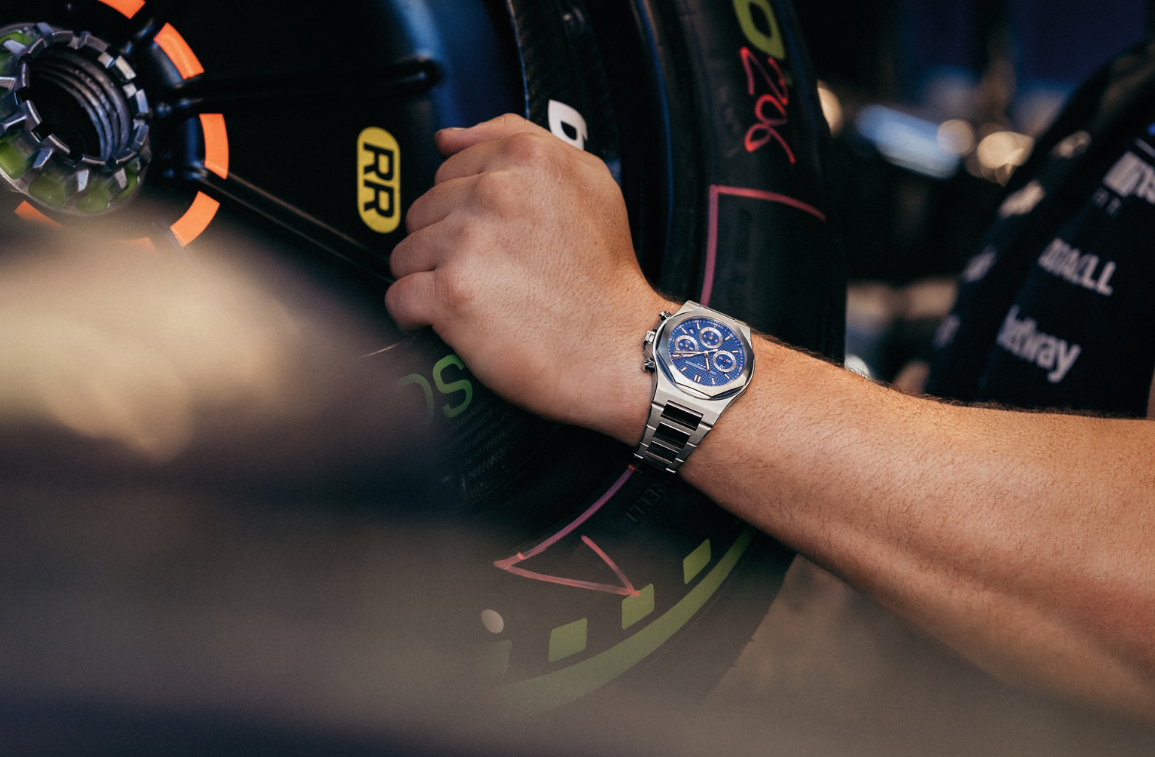
The Swiss watchmaker’s first collaboration with Atlassian Williams F1 Team produces two sporting Laureato models inspired by the team’s 2026 racing car.

Victorian auction buyers will soon receive a piece of information that has traditionally been withheld until bidding reaches it: the vendor’s reserve price. Under new property-sale and underquoting laws, agents must publish the agreed reserve at least seven days before an auction or fixed-date sale. Most changes begin on 1 October 2026 and apply to …
Continue reading “Victoria’s New Auction Rules Will Force Reserve Prices Into the Open”

The Swiss watchmaker’s first collaboration with Atlassian Williams F1 Team produces two sporting Laureato models inspired by the team’s 2026 racing car.
3 minGirard-Perregaux has revealed the first watches created through its partnership with Atlassian Williams F1 Team, bringing the British racing team’s colours to one of Switzerland’s most recognisable integrated-bracelet designs.
The collaboration comprises two 42mm steel watches: the time-and-date Laureato Williams Edition and the more technical Laureato Chronograph Williams Edition.
Both retain the familiar architecture of the Laureato, including its octagonal bezel, integrated bracelet and mix of polished and satin-finished surfaces. The influence of Williams is comparatively restrained, appearing through colour, discreet branding and details inspired by the team’s current Formula 1 car.
It is a welcome departure from the oversized logos and literal automotive references that can characterise motorsport watches.
The Williams FW48 inspires the dial
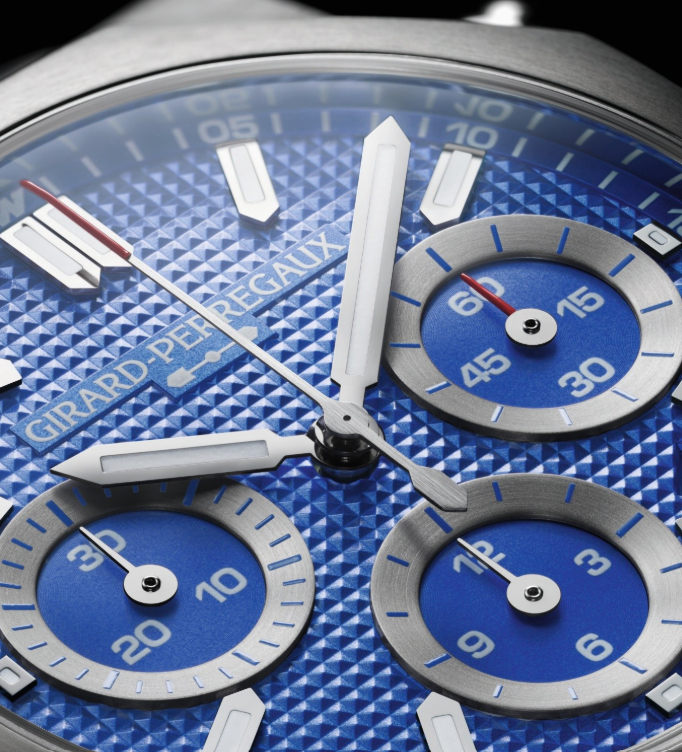
The centrepiece of both models is a blue Clous de Paris dial informed by the livery of the Williams FW48, the car being campaigned by the team during the 2026 Formula 1 season.
A small Williams “W” replaces the conventional marker at 12 o’clock, while the team emblem appears on the sapphire crystal caseback. Red accents echo the keyline used on the FW48 without overwhelming the established Laureato design.
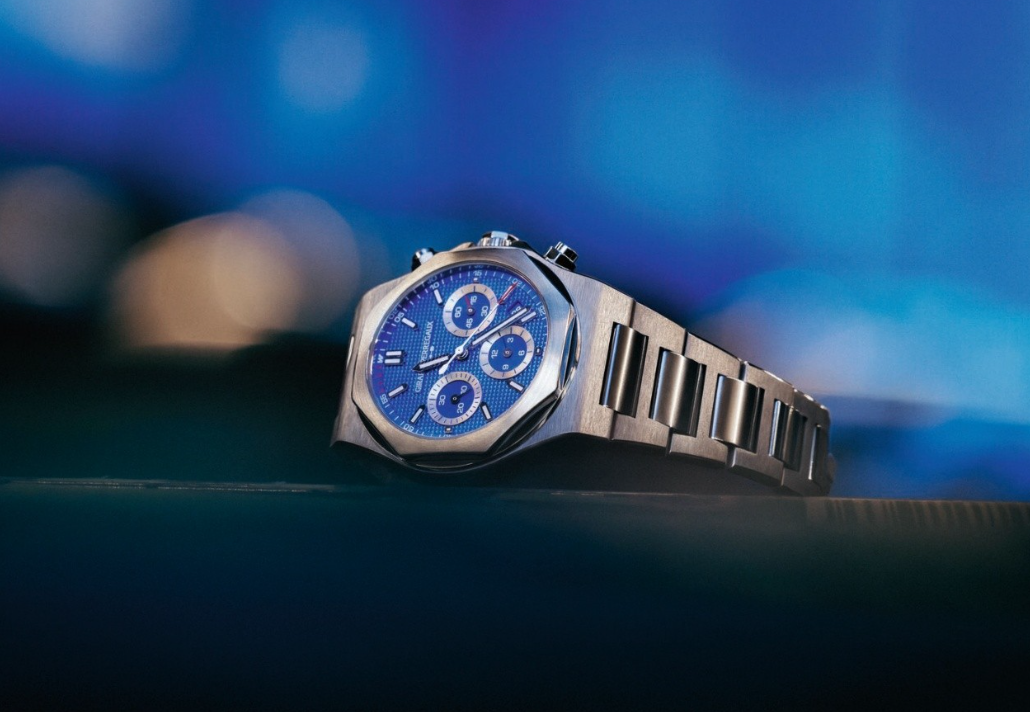
The three-hand model offers the quieter interpretation. Baton-shaped, rhodium-plated hands and hour markers are filled with white-emitting luminescent material, while a date window sits at three o’clock.
The chronograph creates a more obvious connection with motorsport. Three subdials are framed by rhodium-plated rings, with red appearing on the small-seconds hand and the tip of the central chronograph seconds hand.
Both watches measure 42mm across and are water resistant to 100 metres. The standard Laureato has a case thickness of 10.68mm, while the additional mechanics of the chronograph increase its profile to 12.16mm.
Two in-house automatic movements
The Laureato Williams Edition is powered by Girard-Perregaux’s self-winding GP01800 calibre. The movement provides hours, minutes, central seconds and the date, with a minimum power reserve of 54 hours.
The Laureato Chronograph Williams Edition uses the automatic GP03300 calibre, which combines its chronograph functions with a date display and offers a minimum power reserve of 46 hours.
Both movements operate at 28,800 vibrations per hour and can be viewed through their sapphire crystal casebacks.
Their decoration provides a more traditional counterpoint to the Formula 1 association. Finishing techniques include Côtes de Genève, circular graining, bevelling, mirror polishing, satin finishing, engraving and snailing.
The result is less about reproducing the appearance of a racing car than identifying the common ground between two mechanical disciplines: precision, incremental development and the considerable work hidden beneath the finished product.
Parallel histories
The timing of the partnership draws attention to the remarkably similar ages of its two protagonists.
Girard-Perregaux introduced the original Laureato in 1975, establishing an integrated-bracelet sports watch with a distinctive octagonal bezel. Williams entered Formula 1 two years later in 1977.
Both have evolved continuously across the five decades since. The Laureato has moved through different sizes, materials and complications, while retaining its central design language. Williams, meanwhile, has remained one of Formula 1’s most historically significant teams.
That gives the collaboration greater credibility than a simple licensing exercise. Girard-Perregaux and Williams are not being connected solely through the familiar language of speed. Their stronger link is a shared dependence on engineering, testing and the accumulation of specialist knowledge.
The watches are described as the beginning of a longer collaboration, suggesting further Williams editions may follow.
Girard-Perregaux’s international website lists the Laureato Williams Edition at US$16,200 and the Laureato Chronograph Williams Edition at US$20,900. Australian pricing has not been announced.
Specifications
Girard-Perregaux Laureato Williams Edition 42mm
Reference: 81010-11-3680-1GM
Case: Steel
Diameter: 42mm
Thickness: 10.68mm
Crystal: Anti-reflective sapphire crystal
Dial: Blue Clous de Paris pattern
Movement: Automatic GP01800
Functions: Hours, minutes, central seconds and date
Power reserve: Minimum 54 hours
Water resistance: 100 metres
Bracelet: Integrated steel bracelet with triple-folding clasp
International price: US$16,200
Girard-Perregaux Laureato Chronograph Williams Edition 42mm
Reference: 81020-11-3681-1GM
Case: 904L steel
Diameter: 42mm
Thickness: 12.16mm
Crystal: Anti-reflective sapphire crystal
Dial: Blue Clous de Paris pattern with three chronograph counters
Movement: Automatic GP03300
Functions: Chronograph, hours, minutes, small seconds and date
Power reserve: Minimum 46 hours
Water resistance: 100 metres
Bracelet: Integrated 904L steel bracelet with triple-folding clasp
International price: US$20,900

The completed penthouse at Park Residences showcases a considered approach to luxury apartment living, combining northern light, curated interiors and the privacy of a whole-floor residence.
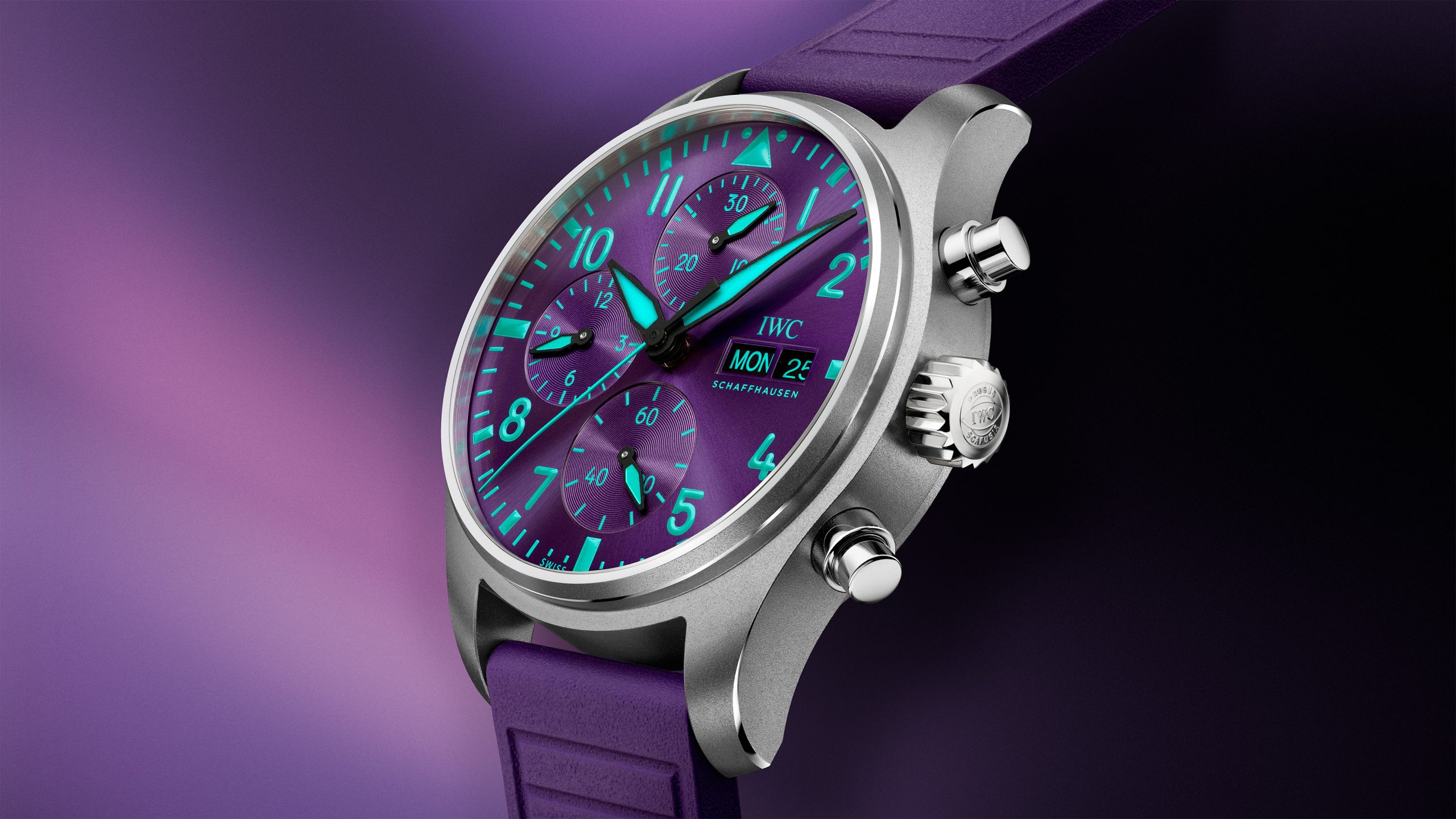
Singapore’s Formula 1 weekend has always looked different. Held beneath floodlights on the Marina Bay Street Circuit, the race transforms the city into a nocturnal spectacle of speed, heat and saturated colour. It is this distinctive atmosphere — and one of Singapore’s most important natural symbols — that has shaped IWC Schaffhausen’s latest motorsport-inspired watch. …
Continue reading “IWC’s purple Formula 1 chronograph pays tribute to Singapore after dark”