Here’s What It’s Like to Retire in America at Age 55 or Younger
Retirees open up about their finances and how they spend their time.

 7 min
7 min
Ask people when they expect to retire and they are likely to say age 65. But that is not how it usually plays out.
Some stay at their jobs into their 70s and 80s, and many hang it up far earlier. About one in five retirees reported leaving a career at age 55 or younger, according to the Employee Benefit Research Institute, below the median retirement age of 62.
Early retirement doesn’t look much like the polished social-media posts made by “ financial independence, retire early ” influencers. Many retire early because they lose interest in their jobs or lose them altogether. Some want to reduce their stress or pursue hobbies. Others need to take care of aging relatives. It is common to pick up a part-time job.
Retiring early often means more free time to enjoy good health and grandchildren. It also means having to make savings last longer. And early retirees must wait for benefits such as Social Security and Medicare to start.
“The decision to retire early should be carefully considered, as the impact can be very significant” said Craig Copeland, director, wealth benefits research at EBRI.
We spoke with five retirees about how they are making it work:
Mike Judd retired a decade before he initially planned.
The 58-year-old resident of Lansing, N.Y., was the head of a 50-person pharmacy department at a health system with two hospitals. After leadership changes, he was feeling sidelined.
“All of a sudden I was the oldest guy in the room,” said Judd, who felt “covert ageism.”
After the pandemic hit, he worked round-the-clock navigating drug shortages and overseeing the procurement of vaccines. The burnout cemented his decision to retire in 2022.
His pension and the financial support of his wife, Bonnie Judd, 57, made the decision easier. She is also a pharmacist and has a steady paycheck, with dental and health insurance.
“I wouldn’t be retired today without her,” said Judd.
For years a do-it-yourself investor, Judd hired a financial adviser before leaving his job and began saving the maximum amount allowed in his employer’s 401(k)-like plan. He was already saving the limit in his IRA. Getting a thumbs-up from the adviser gave him confidence to retire.
His pension hands him $20,000 a year pretax. He puts the after-tax proceeds into one of two brokerage accounts that together hold $800,000.
He and Bonnie have $1.5 million in retirement accounts. They plan to claim Social Security at 67, when they’ll get $6,800 a month. Bonnie’s pension will be about $60,000.
The Judds earn $195,000, down from a peak of $300,000.
That includes income from his part-time work. He works one day a week as a pharmacist. For a few days every couple months, he inspects medication storage rooms in prisons for a company that supplies inmates with prescription drugs.
“It gets me out of the house and gets my brain moving,” said Judd, who wants to avoid his parents’ main retirement activity, watching TV.
The first few months of retirement were a shock. “For the first time in 35 years, I didn’t have to be someplace at a specific time,” he said.
He took a cross-country road trip with a friend and relearned the art of hanging out, something he hadn’t done much since high school. A bass guitarist, Judd joined a band. He spends time with his baby granddaughter and recently rebuilt an outdoor staircase.
The couple spend about $154,000 before taxes, have no debt and own their house outright. Expenses include $50,000 annually for federal, state and local taxes. They spend $2,000 a month for groceries. Last year, they put $35,000 into home repairs, including a new furnace. He hopes their cars, ages seven and 10, will hold up.
The Judds plan to go to Vancouver this summer and might eventually move south, where their son lives and the cost of living is lower.
Jim Lee realized he had saved enough to retire by age 54, and took that as a sign it was time. Because he was living below his means, he figured the longer he worked, the more he would end up leaving the charities in his will.
Lee, now 60, was a vice president at a health research and consulting nonprofit. His unit used mathematical models to forecast the impact of cancer therapies and advise clients where to open medical facilities.
As he entered his 50s, he found it increasingly stressful. “You’re either bringing money in or laying people off,” said the Chelsea, Mich., resident.
Before leaving his job in 2018, Lee consulted a financial adviser who said he was in good shape.
Lee and his former wife divorced in 2022, dividing their $4.5 million in assets.
He met Susan Buyaki, 56, in 2023. The two live together but keep their finances separate. Buyaki, a social worker, plans to work several more years.
Soon after retiring, Lee enrolled in accounting classes at a local college and volunteered to do free tax returns for an AARP program. He is now the program’s coordinator in Michigan, where he oversees more than 100 sites and works three days a week during tax season.
“It’s a dream job,” he said. “I don’t have to worry about revenue.”
Lee also serves on the boards of a food bank, an Ann Arbor folk music venue and a cycling club.
He has $2.2 million, including $1.1 million in a traditional IRA; $757,000 in a Roth IRA; and $142,000 in a health-savings account, which permits tax-free withdrawals for medical expenses.
He splits his portfolio evenly between stock and bond index funds.
When interest rates rose in late 2022, Lee put $200,000 into an immediate annuity that pays him $1,150 a month. He has $300,000 in Treasury inflation-protected securities maturing over the next three decades, given the longevity in his family.
He plans to claim Social Security at age 70, when his monthly benefit will be around $4,500.
Lee spends about $65,000 a year.
He takes about $57,000 from his traditional IRA and supplements that with tax-free Roth withdrawals. That keeps his taxable income low enough to qualify for health insurance premium subsidies under Obamacare. He pays $85 a month for a plan with an $8,000 annual deductible.
His $5,500 monthly budget includes a $1,600 mortgage payment. He and Buyaki each put $1,000 into an account for utilities, property taxes and groceries. He set aside $100,000 for long-term care.
Lee and Buyaki recently bought a $500,000 house on 10 acres. If egg prices remain high, they might buy chickens.
After more than 33 years as a structural firefighter in California’s Sacramento County, Troy Simonick was ready to retire. “All those years of helping people on their worst day finally caught up with me,” said Simonick, who retired at 51.
Gone are the 48-hour shifts. He no longer misses Christmas.
Now 55, the retired fire captain lives in a one-story home in Foresthill, Calif., in the foothills of the Sierra Nevadas. On weekdays, he reads, goes on walks with his two dogs and tends to his two cats.
His property has nearly 100 trees, so there is always yardwork to do, especially after a windy day. Wildfire season is nerve-racking, even for him. He has had to evacuate once so far.
His wife, Joy Simonick, still works for the county education department but plans to retire this year.
The couple met online and married more than five years ago. Troy’s three adult sons are independent, which made leaving Sacramento easier. The couple keep their finances largely separate but share a joint account for some household expenses and travel.
Troy has saved about $270,000 for retirement in an employer-sponsored 457(b) retirement plan. He wishes he had more, but lost almost all of his savings when he divorced at 40, he said. Joy has about $70,000 saved for retirement and stands to receive a pension of about $2,000 a month, plus Social Security.
Troy has a nearly $8,300 monthly pension after taxes. His healthcare is largely covered by the fire department, but he is responsible for dental and vision coverage. He bought long-term-care insurance when he was around 30 and pays about $80 a month in premiums.
The couple spend roughly $6,000 a month, about $2,800 of which goes to their mortgage. Home insurance is a rising expense they are worried about. Last year, he paid about $3,600 through the Fair Plan, California’s insurer of last resort . This year, he is expecting to pay around $5,000.
Troy is trying to see how many audiobooks he can listen to in a year (100 total so far in retirement). He occasionally meets up with other retired firefighters for breakfast.
He occasionally contemplates a part-time job. If he did get one, he would like to help people when they are happiest.
“Maybe I’ll become a bartender on a beach,” he joked.
Wes Weiner, a retired Army Colonel, had a near 32-year career that included deployments to Bosnia and Morocco. He retired as an inspector general at 55. Shortly beforehand, he experienced severe complications from a flu shot, resulting in slurred speech and balance problems.
Now 71, he is almost fully recovered. He exercises three to four hours daily. On most days, he walks about two hours, usually with a rescued Australian Shepherd. He volunteers approximately 10 hours a month as a board member with various military organizations.
He and Ida Weiner, who have been married for more than 40 years, bought a home in San Antonio for about $940,000 in cash about two years ago. Their home came with two koi ponds.
Ida retired from the Army at 43 as a major and a combat veteran. She took a break for around four years, then spent about six years as a civilian senior intelligence analyst. She retired again at 54.
Now 68, she spends around four hours daily in their garden. She has also taught swimming to children and seniors, taken up strength training, volunteered with foster children and raised funds for animals.
“As a retiree, I have no regrets,” she said.
The couple spend about $100,000 annually on travel. They also spend roughly $93,000 a year on household expenses such as property taxes. They invest about $94,000 annually in limited liability companies in which they are partners.
They have no debt. They have roughly $350,000 in after-tax income, including military pensions, disability payments, Social Security and income from their LLC investments. They also have about $1 million saved in individual retirement accounts, about $2.5 million invested in individual stocks and stock funds and an additional roughly $1.25 million in LLCs.
The Army paid for their healthcare when they retired before 65. Once they reached 65, they filed for Medicare as their primary healthcare insurance and Army insurance became their secondary coverage.
Since they have no children, Wes is worried about what would happen to Ida if she needs care after he dies. Two years ago, Wes paid about $40,000 to put their names on the wait list of a continuing-care community in Texas.
They have arranged their wills to provide for close relatives and favorite charities.
Meanwhile, they are seeing the world. Wes has spent more than 600 days on cruises since retiring, and Ida has spent about 300. Wes is planning a 40-day cruise from West Africa to Lisbon.
“Travel now because no one is promised tomorrow and your health can change in the blink of an eye,” he said.
 Copyright 2020, Dow Jones & Company, Inc. All Rights Reserved Worldwide. LEARN MORE





Victorian auction buyers will soon receive a piece of information that has traditionally been withheld until bidding reaches it: the vendor’s reserve price. Under new property-sale and underquoting laws, agents must publish the agreed reserve at least seven days before an auction or fixed-date sale. Most changes begin on 1 October 2026 and apply to …
Continue reading “Victoria’s New Auction Rules Will Force Reserve Prices Into the Open”

Four decks, 34.5 metres and a made-to-measure interior: step aboard the new Custom Line Navetta 35, unveiled at Cannes.

The ASX 200 rose about 0.27% as energy and materials advanced. Woodside and gold miners gained while financials and technology weakened.
2 min
The Australian sharemarket rebounded from its lowest close in three months on Wednesday, with energy and materials companies leading a cautious recovery.
The S&P/ASX 200 finished approximately 23 points, or 0.27 per cent, higher at 8,695.6 on 16 September. A second data source placed the closing index at 8,696.5, up 24 points or 0.28 per cent. The official close should be confirmed through a licensed feed before publication.
The broader All Ordinaries added 25.2 points, or 0.28 per cent, to 8,874.5.
Energy was the strongest sector, rising 2.19 per cent as Australian producers reflected the previous overnight increase in global oil prices. Woodside gained 2.84 per cent. Brent had settled near US$108.75 a barrel before the local session, although it later traded around US$107.68.
Materials advanced 1.28 per cent and provided the largest positive contribution to the index. Gold producers featured prominently among the strongest stocks, with Pantoro rising 9.3 per cent and St Barbara gaining 8.18 per cent. BCI Minerals added 7.48 per cent.
Financials fell 0.37 per cent, detracting from the benchmark despite earlier strength. Rate expectations remained a significant influence after Westpac joined the other major banks in forecasting a possible Reserve Bank increase in November. Higher rates can expand bank margins in some circumstances but also raise funding costs and increase the risk of loan stress and slower credit growth.
Technology remained weak. Life360 declined 5.46 per cent, while healthcare names that had rallied during Tuesday’s sell-off gave back ground. 4DMedical lost 5.35 per cent and Telix Pharmaceuticals fell 4.96 per cent.
James Hardie dropped 5.23 per cent. Codan moved against the weaker technology tone, gaining 7.51 per cent.
The session produced positive breadth, with more advancers than decliners among the largest 250 stocks, but the broader backdrop remains unsettled. Oil prices have revived inflation concerns, bond yields are elevated and investors are assessing the prospect of further monetary tightening in Australia and the United States.
The rebound therefore recovered only part of Tuesday’s 0.9 per cent decline. For Thursday, investors will be watching overnight central-bank developments, energy markets and whether gains can broaden beyond resources.
Market dashboard — 16 September 2026
S&P/ASX 200* Approximately 8,695.6, up 23.1 points or 0.27 per cent; verify the official closing print
All Ordinaries: 8,874.5, up 25.2 points or 0.28 per cent
Best-performing sector: Energy, up 2.19 per cent
Materials: Up 1.28 per cent
Weak sector: Financials, down 0.37 per cent
Leading mover: Pantoro, up 9.30 per cent
Notable large-cap mover: Woodside, up 2.84 per cent
Notable loser: Sunrise Energy Metals, down 6.22 per cent
Life360: Down 5.46 per cent
Australian dollar: About US71.3 cents in the preceding market snapshot
Gold: Approximately US$4,375 an ounce in the afternoon snapshot
Brent crude: Approximately US$107.68 a barrel in the afternoon snapshot

The era of the gorgeous golden retriever is over. Today’s most coveted pooches have frightful faces bred to tug at our hearts.
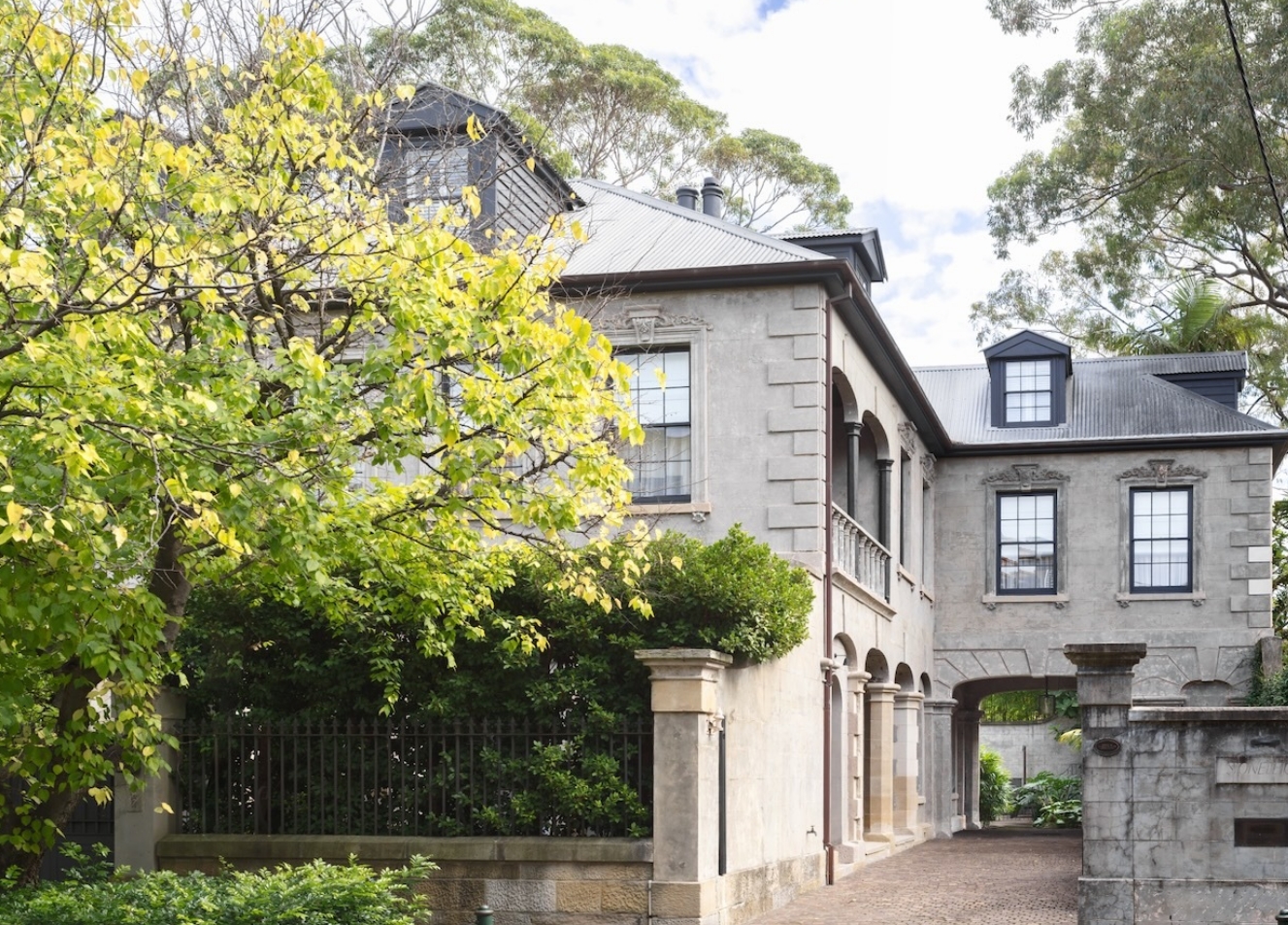
The 1860s Darlinghurst mansion Stoneleigh could become Sydney’s most expensive home ever sold under the hammer when it goes to auction. Clint Ballard is giving buyers a $28 million guide for the heritage-listed mansion on Darley Street, opposite Iona, the former home of Hollywood royalty Baz Luhrmann. Stoneleigh is being offered for sale for the …