Fed Approves Quarter-Point Rate Hike, Signals More Increases Likely
Officials are slowing interest-rate increases as they debate when to pause

 4 min
4 min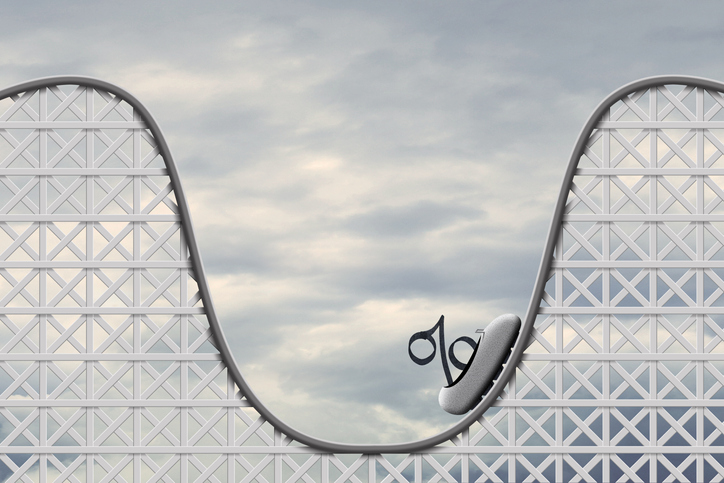
WASHINGTON—The Federal Reserve approved an interest-rate increase of a quarter-percentage-point and signalled plans to raise rates again next month to continue lowering inflation.
The decision Wednesday followed six consecutive rate rises that were larger, including an increase of a half-point in December and a 0.75-point increase in November.
Officials nodded to recent improvement in inflation readings but didn’t significantly alter their guidance in a policy statement released after the meeting regarding coming rate moves.
“The committee anticipates that ongoing increases” in interest rates “will be appropriate in order to attain a stance of monetary policy that is sufficiently restrictive,” said the statement, using the same language included in policy statements since last March.
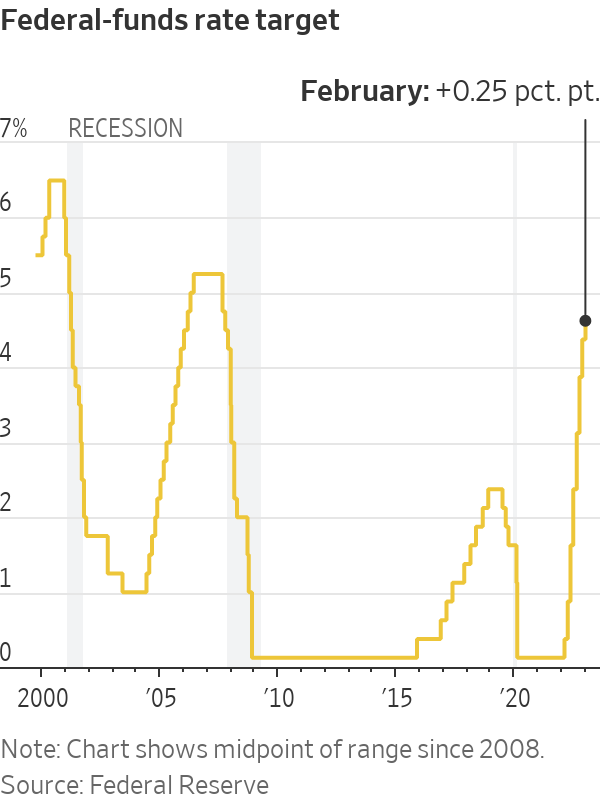
The latest increase caps a year in which the Fed lifted its benchmark federal-funds rate from near zero to a range between 4.5% and 4.75%, a level last reached in 2007. That extends the central bank’s most rapid pace of rate increases since the early 1980s to fight inflation, which hit a 40-year high last year.
One big question heading into Wednesday’s meeting was the extent to which recent economic data had given Fed officials more confidence that inflation and wage pressures had peaked.
In December, most of them penciled in raising the fed-funds rate to a range between 5% and 5.25% this year. After the hike they approved Wednesday, that projection would imply additional quarter-point increases at the Fed’s meetings in March and May, followed by a pause in rate rises.
Many officials had repeated in recent weeks that they still saw such a rate path as appropriate given strong wage pressures, a tight labour market and high service-sector inflation. But officials also said they would base their decisions on how the economy performs in the coming months.
“We can now say for the first time, the disinflationary process has started,” said Fed Chair Jerome Powell at a news conference after Wednesday’s meeting. But he added, “The job is not fully done.”
Mr. Powell said the central bank was trying to manage the risk of raising rates too much and causing unnecessary economic harm with that of not doing enough to bring down inflation. In repeating his longstanding view that the latter mistake would be harder to fix, Mr. Powell said he didn’t want to be in a position where six or 12 months from now, after a halt to raising rates, the Fed would belatedly conclude that it hadn’t done enough to bring down inflation this year and would have to raise rates higher.
“We’re going to be cautious about declaring victory and sending signals that we think the game is won,” he said. “Certainty is just not appropriate here.”
The fed-funds rate influences other borrowing costs throughout the economy, including rates on mortgages, credit cards and auto loans. The Fed is raising rates to cool inflation by slowing economic growth. It believes those policy moves work through financial markets by tightening financial conditions, such as by raising borrowing costs or lowering prices of stocks and other assets.
Officials have been guarded in recent weeks about providing any guidance that might ignite market rallies that could undermine their efforts to fight inflation.
In recent weeks, markets have rallied partly because investors anticipated that the Fed would slow its rate increases this week and remove uncertainty over the rate outlook, which reduces interest-rate volatility. Lower volatility can ease financial conditions.
Markets have also been cheered by news that inflation and wage growth might have peaked last year, which could make the Fed more comfortable in pausing rate increases. Since Fed officials met in December, economic activity has been mixed. Consumer spending has moderated, and manufacturing activity has weakened. But hiring has held steady, pushing the unemployment down to 3.5% in December, a half-century low.
Investors in bond markets increasingly expect that the Fed will cut interest rates later this year because of a sharp slowdown in economic activity that lowers inflation faster than policy makers expect.
Fed officials and some economists, meanwhile, are concerned that the recent decline in inflation could reflect the long-anticipated easing of supply-chain bottlenecks—and that might not be enough to bring inflation down to the Fed’s 2% goal.
“I’m somewhat worried that the market view is based more on hope,” said Karen Dynan, an economist at Harvard University who served in the Obama administration. “Labor markets still look really tight.”
Officials’ deliberations over how much more to raise rates this year and how long to hold rates at some higher level could hinge over how much they think their past increases will slow the economy this year. Debates could also turn on the degree to which wage and price pressures might slow without significant weakness in the job market.
Officials agreed to slow rate rises to gain more time to study the effects of their moves.
Inflation fell to 4.4% in December from 5.2% in September, as measured by the 12-month change in the personal consumption expenditures price index excluding food and energy. Though still above the Fed’s 2% goal, it moderated in the October-to-December period to an annualised 2.9% rate.
“Inflation has eased somewhat but remains elevated,” said the Fed’s policy statement.
Overall inflation is slowing largely because prices of energy and other goods are falling. Large increases in housing costs have slowed, but haven’t filtered through to official price gauges yet. As a result, Mr. Powell and several colleagues shifted attention recently toward a narrower subset of labor-intensive services by excluding prices for food, energy, shelter and goods.
Mr. Powell has said prices in this category, which rose 4% in December from a year earlier, offer the best gauge of higher wage costs passing through to consumer prices.
 Copyright 2020, Dow Jones & Company, Inc. All Rights Reserved Worldwide. LEARN MORE




The Swiss watchmaker’s first collaboration with Atlassian Williams F1 Team produces two sporting Laureato models inspired by the team’s 2026 racing car.

Victorian auction buyers will soon receive a piece of information that has traditionally been withheld until bidding reaches it: the vendor’s reserve price. Under new property-sale and underquoting laws, agents must publish the agreed reserve at least seven days before an auction or fixed-date sale. Most changes begin on 1 October 2026 and apply to …
Continue reading “Victoria’s New Auction Rules Will Force Reserve Prices Into the Open”

The Swiss watchmaker’s first collaboration with Atlassian Williams F1 Team produces two sporting Laureato models inspired by the team’s 2026 racing car.
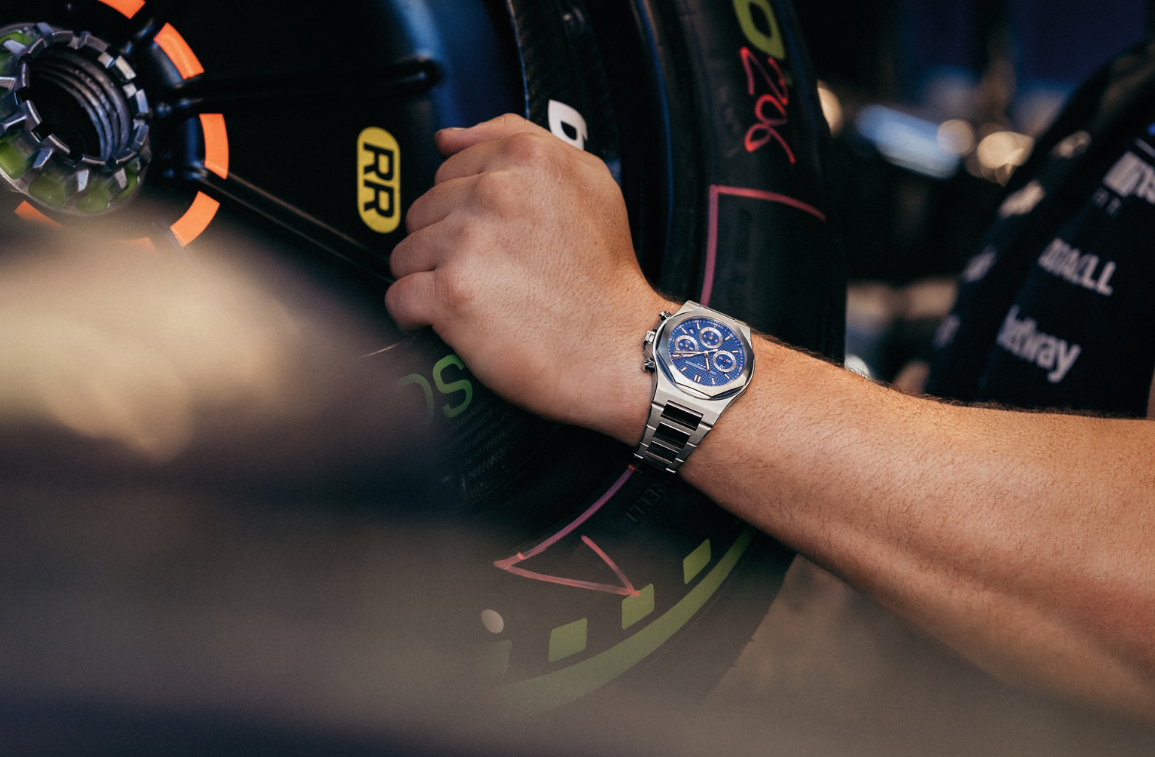
3 minGirard-Perregaux has revealed the first watches created through its partnership with Atlassian Williams F1 Team, bringing the British racing team’s colours to one of Switzerland’s most recognisable integrated-bracelet designs.
The collaboration comprises two 42mm steel watches: the time-and-date Laureato Williams Edition and the more technical Laureato Chronograph Williams Edition.
Both retain the familiar architecture of the Laureato, including its octagonal bezel, integrated bracelet and mix of polished and satin-finished surfaces. The influence of Williams is comparatively restrained, appearing through colour, discreet branding and details inspired by the team’s current Formula 1 car.
It is a welcome departure from the oversized logos and literal automotive references that can characterise motorsport watches.
The Williams FW48 inspires the dial
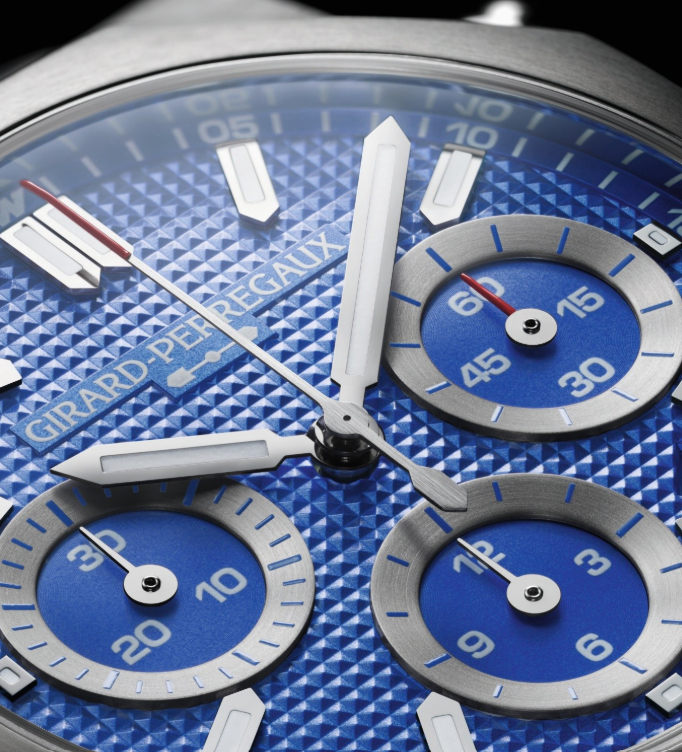
The centrepiece of both models is a blue Clous de Paris dial informed by the livery of the Williams FW48, the car being campaigned by the team during the 2026 Formula 1 season.
A small Williams “W” replaces the conventional marker at 12 o’clock, while the team emblem appears on the sapphire crystal caseback. Red accents echo the keyline used on the FW48 without overwhelming the established Laureato design.
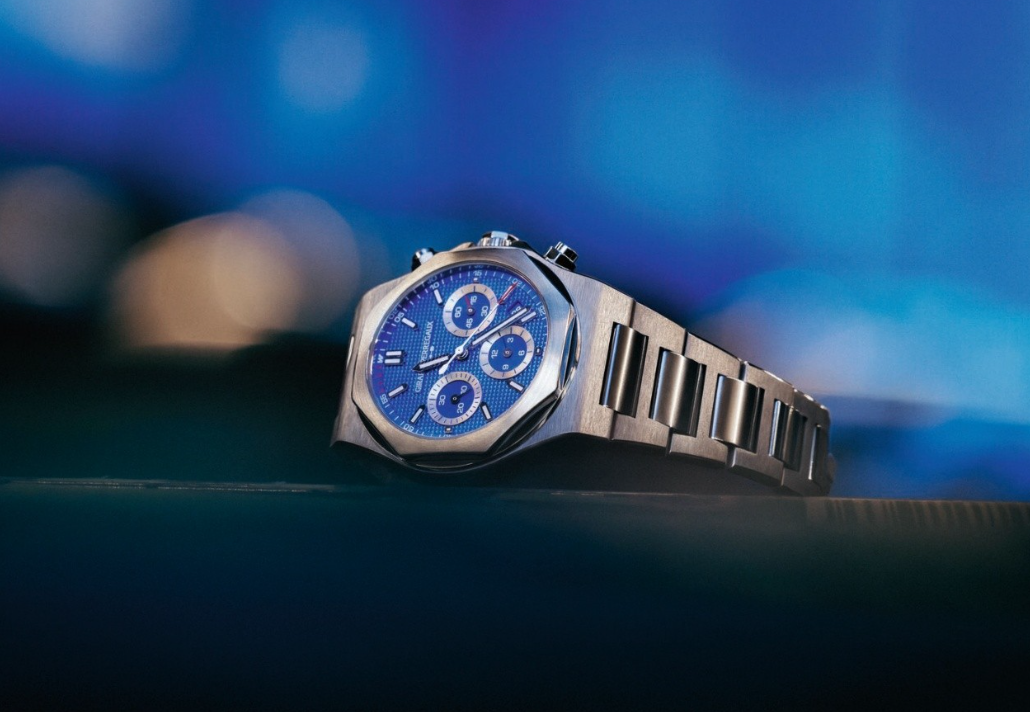
The three-hand model offers the quieter interpretation. Baton-shaped, rhodium-plated hands and hour markers are filled with white-emitting luminescent material, while a date window sits at three o’clock.
The chronograph creates a more obvious connection with motorsport. Three subdials are framed by rhodium-plated rings, with red appearing on the small-seconds hand and the tip of the central chronograph seconds hand.
Both watches measure 42mm across and are water resistant to 100 metres. The standard Laureato has a case thickness of 10.68mm, while the additional mechanics of the chronograph increase its profile to 12.16mm.
Two in-house automatic movements
The Laureato Williams Edition is powered by Girard-Perregaux’s self-winding GP01800 calibre. The movement provides hours, minutes, central seconds and the date, with a minimum power reserve of 54 hours.
The Laureato Chronograph Williams Edition uses the automatic GP03300 calibre, which combines its chronograph functions with a date display and offers a minimum power reserve of 46 hours.
Both movements operate at 28,800 vibrations per hour and can be viewed through their sapphire crystal casebacks.
Their decoration provides a more traditional counterpoint to the Formula 1 association. Finishing techniques include Côtes de Genève, circular graining, bevelling, mirror polishing, satin finishing, engraving and snailing.
The result is less about reproducing the appearance of a racing car than identifying the common ground between two mechanical disciplines: precision, incremental development and the considerable work hidden beneath the finished product.
Parallel histories
The timing of the partnership draws attention to the remarkably similar ages of its two protagonists.
Girard-Perregaux introduced the original Laureato in 1975, establishing an integrated-bracelet sports watch with a distinctive octagonal bezel. Williams entered Formula 1 two years later in 1977.
Both have evolved continuously across the five decades since. The Laureato has moved through different sizes, materials and complications, while retaining its central design language. Williams, meanwhile, has remained one of Formula 1’s most historically significant teams.
That gives the collaboration greater credibility than a simple licensing exercise. Girard-Perregaux and Williams are not being connected solely through the familiar language of speed. Their stronger link is a shared dependence on engineering, testing and the accumulation of specialist knowledge.
The watches are described as the beginning of a longer collaboration, suggesting further Williams editions may follow.
Girard-Perregaux’s international website lists the Laureato Williams Edition at US$16,200 and the Laureato Chronograph Williams Edition at US$20,900. Australian pricing has not been announced.
Specifications
Girard-Perregaux Laureato Williams Edition 42mm
Reference: 81010-11-3680-1GM
Case: Steel
Diameter: 42mm
Thickness: 10.68mm
Crystal: Anti-reflective sapphire crystal
Dial: Blue Clous de Paris pattern
Movement: Automatic GP01800
Functions: Hours, minutes, central seconds and date
Power reserve: Minimum 54 hours
Water resistance: 100 metres
Bracelet: Integrated steel bracelet with triple-folding clasp
International price: US$16,200
Girard-Perregaux Laureato Chronograph Williams Edition 42mm
Reference: 81020-11-3681-1GM
Case: 904L steel
Diameter: 42mm
Thickness: 12.16mm
Crystal: Anti-reflective sapphire crystal
Dial: Blue Clous de Paris pattern with three chronograph counters
Movement: Automatic GP03300
Functions: Chronograph, hours, minutes, small seconds and date
Power reserve: Minimum 46 hours
Water resistance: 100 metres
Bracelet: Integrated 904L steel bracelet with triple-folding clasp
International price: US$20,900

A 30-metre masterpiece unveiled in Monaco brings Lamborghini’s supercar drama to the high seas, powered by 7,600 horsepower and unmistakable Italian design.

From Tokyo backstreets to quiet coastal towns and off-grid cabins, top executives reveal where they holiday and why stepping away makes the grind worthwhile.