They Can’t Even: A Generation Avoids Facing Its Finances
Pandemic whiplash and inflation make managing a budget a challenge for young people

 3 min
3 min
Many young adults overwhelmed by financial stress cope by ignoring the problem.
Some tune out bank and credit-card balances, lose track of their spending and rack up debt. Average credit-card debt rose 29% to $5,800 in March from a year earlier for millennials and increased 40% to $2,800 for Gen Z, Credit Karma said. Younger people were also more likely to have paid late fees or taken advances from their credit cards, a survey from NerdWallet found.
Psychologists call these behaviours financial avoidance and say it is a typical habit among younger people in any era.
But the pandemic’s economic whiplash followed by high inflation is making such avoidance more common, say economists and financial advisers. The consequences of ignoring bank and credit-card accounts include overspending, damaged credit and deep debt. Millennials in their 30s had the steepest increase in debt of any age group since the pandemic. Avoidance can complicate later milestones, such as buying a home or retiring.
Spending tends to be more satisfying than budgeting or tracking your expenses, “even if cognitively you know it’s not really the healthiest coping choice to engage in,” said Dr. Vaile Wright, a senior director at the American Psychological Association, who studies stress and anxiety.
Avoidance is a common coping mechanism for all forms of anxiety. Someone with social anxiety avoids parties. Someone with a fear of heights may avoid getting on a plane. The APA’s Stress in America 2022 survey found that 83% of adults reported inflation as a source of stress.
James Gay, 22, said he is reckoning with the effects of his financial avoidance since the pandemic.
In 2020, Mr. Gay moved from Mayo, Fla., to Tallahassee to attend Florida State University, sharing a three-bedroom apartment with two friends. With everything closed and his classes completely online, he said he ordered from DoorDash instead of cooking and shopped online to counter his uncertainty and boredom.
“That was my outlet to really enjoy my college experience,” he said.
He developed a particular affinity for Crocs, and now owns about 15 pairs.
“My budgeting plan was very loose,” said Mr. Gay, who was also responsible for his own health insurance, phone bill, utilities and car maintenance. “Sometimes I’d forget about the bills.”
He dipped into his savings to cover rent and utilities. Mr. Gay eventually received a call from his father, who had checked his credit-card account and saw he had used 90% of his $500 limit. After that he changed his ways.
Avoidance seems greatest among Gen Zs and millennials, a survey last month by Credit Karma suggests: 28% in each of those generations said they often or always feel a sense of financial dissociation. That is compared with 4% of baby boomers or older Americans.
“Our culture is really big on overconsumption. We’re constantly spending on things just to self-soothe,” said Alexis Howard, a 28-year-old financial adviser at Mariner Wealth Advisors in Emeryville, Calif.
Ms. Howard noticed this in her own spending behaviour. She ordered clothes and furniture on Amazon during the pandemic, small purchases that would snowball into bigger expenses than she realized. At one point she was spending about $500 a month on online shopping and takeout.
This year, she embarked on a challenge to keep her discretionary spending under $50 monthly. As a financial adviser, she said she knows how easy it can be to lose sight of bigger goals.
“People are really just prioritising happiness, and a lot of folks see happiness in traveling, eating out but simultaneously value larger long term goals like owning a home and retiring with wealth,” Ms. Howard said.
Young adults with lower-wage jobs may avoid budgeting and checking their bills because it makes them feel helpless, said Abigail Sussman, a professor of marketing at the University of Chicago’s Booth School of Business.
“If you feel like you’re really behind, then budgeting also is a reminder of how behind you are,” Prof. Sussman said. “If you set goals that are too high, it can be demotivating.”
It can also help to review what you spent in the past month with a financial buddy, said Jeff Kreisler, head of behavioural science at J.P. Morgan Private Bank. This should be someone who isn’t a romantic partner or family member but whom you trust enough to talk through certain purchases.
“It’s forcing yourself to examine your own decisions,” Mr. Kreisler said.
He recommends setting financial goals with friends. For example, if you are planning on going on vacation with someone, you can both agree to set aside $50 each week for the trip for the next four months, he said. That way, you are both holding each other accountable.
 Copyright 2020, Dow Jones & Company, Inc. All Rights Reserved Worldwide. LEARN MORE





From making unpopular decisions to learning when to listen, leaders from five businesses reveal what nobody prepared them for — and how running a company has challenged their expectations.

Technology and semiconductor shares fell sharply as investors questioned the debt financing the AI infrastructure boom and confronted higher rates and Chinese competition.

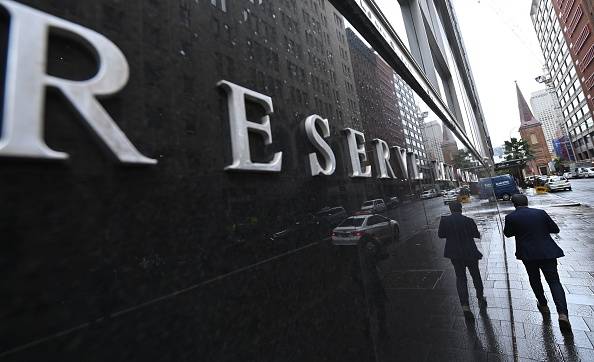
Technology and semiconductor shares fell sharply as investors questioned the debt financing the AI infrastructure boom and confronted higher rates and Chinese competition.
4 minA sharp technology sell-off has exposed a new anxiety on global markets: whether the enormous borrowing behind the artificial-intelligence infrastructure boom can generate sufficient returns as interest rates rise and Chinese competition intensifies.
The artificial-intelligence investment boom has powered technology shares, semiconductor manufacturers and data-centre operators to extraordinary heights. Last week, investors were given a reminder that much of this expansion is being built with borrowed money.
The technology-heavy Nasdaq Composite fell 4.5 per cent over the week ended October 16, its weakest performance since late June. Semiconductor shares suffered an even deeper correction, with the Philadelphia Semiconductor Index losing about 11.4 per cent.
The selling spread quickly through global markets. Micron Technology fell 14.6 per cent over the week, while South Korea’s Samsung Electronics and SK Hynix dropped approximately 18 per cent and 24 per cent respectively.
This was more than a routine bout of profit-taking. Investors were reassessing three interconnected risks: higher interest rates, the rapidly expanding debt burden attached to AI infrastructure and the prospect of stronger competition from Chinese memory-chip manufacturers.
The debt behind the AI build-out
Artificial intelligence requires a physical infrastructure network of enormous scale. Data centres must be built, advanced processors purchased, power supplies secured and cooling systems installed before customers begin generating meaningful revenue from them.
Technology companies are increasingly supplementing their own cash with corporate bonds, syndicated loans, equipment leases, private credit and project-level financing.
JPMorgan describes the emerging funding model as a combination of conventional corporate borrowing and project finance tied to individual data-centre assets. In Australia, the Reserve Bank estimates that syndicated loans accounted for approximately three-quarters of data-centre financing during 2025 and 2026 to date.
The numbers are becoming large enough to affect broader credit markets. The Federal Reserve Bank of Dallas has cited Wall Street estimates suggesting AI-related investment-grade bond issuance could approach US$300 billion in 2026 alone.
That borrowing is not automatically problematic. Debt can be an efficient way to finance long-lived infrastructure when future revenue is sufficiently predictable. The concern is that AI technology, customer demand and computing economics are changing much faster than the repayment schedules attached to the assets.
A data centre financed today may carry debt for years. Investors must therefore make assumptions about future utilisation rates, electricity prices, chip performance, customer concentration and the amount businesses will ultimately pay for AI computing.
When interest rates rise, those assumptions become less forgiving.
Inflation changes the calculation
September’s US inflation data intensified the pressure. Consumer prices increased 3.7 per cent over the year, ahead of market expectations and up from 3.4 per cent in August.
The hotter reading reduced confidence that interest rates would fall quickly and pushed bond yields higher. That matters particularly for companies whose valuations depend on profits expected well into the future, as well as highly leveraged infrastructure operators that may need to refinance.
CoreWeave has emerged as a closely watched test case. The specialist cloud-computing company has accumulated substantial debt and lease obligations to build AI capacity, while relying on a concentrated group of large technology customers.
Its shares fell sharply during the sell-off, while the cost of insuring its debt against default climbed. CoreWeave has argued that its contracted backlog more than covers its obligations and that financial markets do not always understand its business model. Nevertheless, its securities have become a proxy for investor confidence in debt-funded AI infrastructure.
Oracle, another major investor in AI computing capacity, fell 8.8 per cent in Friday trading, while CoreWeave dropped 15.5 per cent.
The question is shifting from how much AI infrastructure can be built to how profitably it can be operated.
China adds another source of pressure
Interest rates were not the only catalyst. Reports of advances by Chinese memory-chip producer ChangXin Memory Technologies raised concerns that lower-cost Chinese products could increase competition across the global semiconductor industry.
Memory chips are essential to AI systems, but the industry is historically cyclical. Periods of tight supply and high pricing can encourage rapid investment, eventually producing oversupply and falling margins.
The prospect of a well-funded Chinese competitor expanding its technological capabilities unsettled investors in Samsung, SK Hynix and Micron. It also demonstrated that AI-related demand does not insulate chipmakers from conventional competitive pressures.
That combination—slower rate cuts, more expensive financing and potentially cheaper supply—challenged the assumption that every company exposed to AI would enjoy continually expanding margins.
A reset rather than the end of the boom
The sell-off does not establish that the AI boom is ending. Demand for computing power remains strong, the largest technology companies continue to generate formidable cash flows and many infrastructure projects are backed by long-term customer contracts.
What has changed is the market’s willingness to overlook the price and financing structure of that growth.
The most resilient companies are likely to be those able to fund investment from operating cash flow, secure long-duration customers and demonstrate that new capacity will earn returns comfortably above its financing costs.
More speculative operators may face greater scrutiny, particularly where debt is expensive, customers are concentrated or expected revenue depends on demand that has not yet materialised.
For Australian investors, the lesson extends beyond US technology shares. Local data-centre operators, infrastructure funds, electricity suppliers and property groups are increasingly exposed to the same investment cycle.
Artificial intelligence may remain one of the defining growth themes of the decade. But last week’s correction showed that enthusiasm for the technology does not eliminate financial discipline.
The next stage of the AI boom will be judged not only by computing power, model performance or demand for chips, but by something more traditional: whether the assets being financed can generate enough cash to repay the money borrowed to build them.
Fact box
Nasdaq Composite: Down 4.5 per cent for the week ended October 16, 2026
Philadelphia Semiconductor Index: Down approximately 11.4 per cent
Micron Technology: Down approximately 14.6 per cent
Samsung Electronics: Down approximately 18 per cent
SK Hynix: Down approximately 24 per cent
US September inflation: 3.7 per cent annually
Estimated 2026 AI-related investment-grade issuance: Approximately US$300 billion

Australian shares finished higher on Tuesday, September 22, as a technology rally and lower oil prices outweighed weakness in energy companies and continued anxiety about domestic interest rates. The S&P/ASX 200 closed 25.9 points, or 0.30 per cent, higher at 8,757.8. The All Ordinaries gained 0.36 per cent to 8,951.0, while the All Technology index …
Continue reading “ASX Wrap: Technology lifts the ASX as falling oil relieves inflation pressure”

Rising rates, construction inflation and shrinking investor confidence are pushing Australia deeper into a dangerous housing spiral that monetary policy alone cannot fix.