MEET THE MAN CURATING CITIZEN KANEBRIDGE’S NEXT CHAPTER
Scotch whisky expert, luxury hospitality strategist and Keeper of the Quaich inductee Ross Blainey is bringing a new philosophy of luxury experiences to Citizen Kanebridge.
 4 min
4 min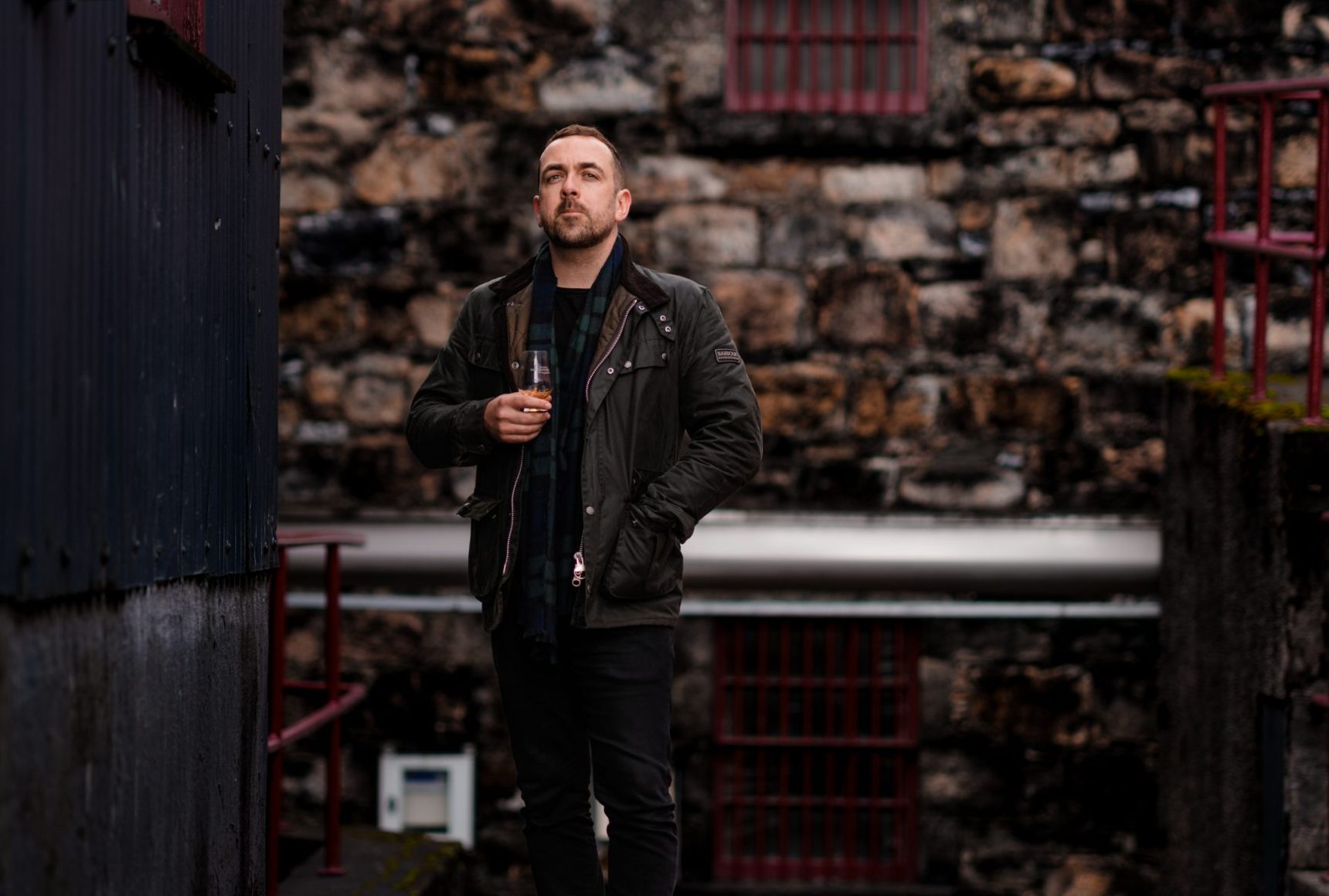
From Scotch whisky and luxury retreats to fashion collaborations and world-class hospitality, Ross Blainey has spent years shaping high-end experiences around one idea: modern luxury is no longer just about what you own.
It is about access, connection and moments money alone cannot buy.
As Citizen Kanebridge continues to grow as one of Australia’s most sought-after private members’ clubs, Blainey, the club’s new Head of Membership, says the future lies in creating experiences members cannot find anywhere else.
“The ultimate memorable experiences are the money can’t buy moments,” Blainey said.
“The things that you can’t just put together anytime or any place. They make up something that is greater than the sum of its parts.”
On June 4, Blainey will bring that philosophy to life when he hosts an exclusive whisky evening for Citizen Kanebridge members at Sydney’s Royal Automobile Club of Australia.
Titled A Journey Through Whisky, the intimate event will see Blainey guide members through a curated selection of rare and unreleased whiskies drawn from his personal archive, alongside stories gathered across years working at the highest levels of the Scotch whisky world.
The evening will also include reflections on Blainey’s induction as a Keeper of the Quaich at Blair Castle in Scotland last year, one of the whisky industry’s rarest global honours.
A career built around experience
Before joining Citizen Kanebridge, Blainey built a career spanning luxury hospitality, Scotch whisky, premium lifestyle brands and experiential events.
But he says one industry above all others shaped the way he thinks about people and community: Scotch whisky.
“At its core, at its heart and throughout its whole history, Scotch has been about sharing, enjoyment, telling stories, meeting people and generally having a good time,” he said.
“Whisky can be that shared moment of laughter, and it can also be a shared moment of just slowing down, taking stock and contemplating. These are so key to building community.”
Blainey’s deep involvement in the whisky world culminated in 2025 when he was inducted as a Keeper of the Quaich at Blair Castle, a recognition is reserved for a select group of individuals who have made an outstanding contribution to Scotch whisky internationally.
“I was inducted last year, 2025, an incredible honour,” he said.
“There were a couple of teary-eyed moments as I stood in Blair Castle, on historic ground, realising that this was a moment I would remember forever.”
The next chapter for Citizen Kanebridge
Looking ahead, Blainey says Citizen Kanebridge will continue to focus on highly curated experiences, exclusive access, and bringing together like-minded members from Australia’s property, finance, and investment sectors.
“Our baseline of Car of the Year is already one of the most impressive events on the social calendar of Australia,” he said.
“My job is to find a way of raising the bar, taking things to the absolute top level for access, experiences and events.”
Blainey said the long-term goal was not simply to create another networking group or luxury club, but to build a community centred around meaningful relationships and unforgettable experiences.
“We provide the access, the money can’t buy memories, and we will be making those happen regularly,” he said.
“If we start with how amazing Car of the Year is and the only way is up, we are going to have some mind-blowing moments for our members.”
Hospitality at its absolute best
Another major influence on Blainey’s thinking came through his connection with world-famous New York restaurant Eleven Madison Park, once named the best restaurant in the world.
He says two concepts from the restaurant’s owners still shape the way he approaches luxury experiences today: “enlightened hospitality” and “unreasonable hospitality”.
“Enlightened hospitality is a way of doing business that looks at not just the product of what you serve, but how it makes people feel,” Blainey said.
“Unreasonable hospitality is more about striving for the absolute best all the time. If you’re going to do something, do it to an unreasonable level that blows everything else out of the water.”
It is a philosophy, he says, which aligns closely with where Citizen Kanebridge is heading next.
“That’s what we’re doing here with CK, taking members’ experiences to another level,” he said.
Fashion, whisky and creative collaborations
Blainey’s career has also included working with Glenfiddich as a Creative Collaborations Lead, where his role centred on bringing luxury experiences and partnerships to life through designers, chefs, artists and bartenders.
Among the projects were runway collaborations with leading Australian fashion designers, with pieces from the partnerships now housed inside Sydney’s Powerhouse Museum.
“My job was to find a creative way of bringing the brand to life,” he said.
“How do we make something that none of us could make on our own? Searching for the things that will resonate with people.”
What luxury consumers want now
Beyond whisky and events, Blainey also played a key role in building Blackbird Byron, the boutique Byron Bay hinterland retreat later recognised in Tatler’s Top 101 Hotels list.
The property, known for its dramatic views, minimalist architecture, and secluded atmosphere, helped shape his understanding of how luxury consumers are changing.
“I think I learned that people looking for luxury in hotels want memorable moments, considered design and the ability to get away from the hustle and bustle of modern life,” he said.
“To feel at home without being at home is important.”
More broadly, he believes today’s luxury consumers are increasingly driven by authenticity and emotional connection.
“For luxury consumers overall, I think it comes down to craft, story and connection,” he said.
“The product itself has to be impeccable, the story behind it builds your reason for looking at it, and then you need to make a genuine connection with people.”
Interested in becoming a member of Citizen Kanebridge? You can contact Ross here.
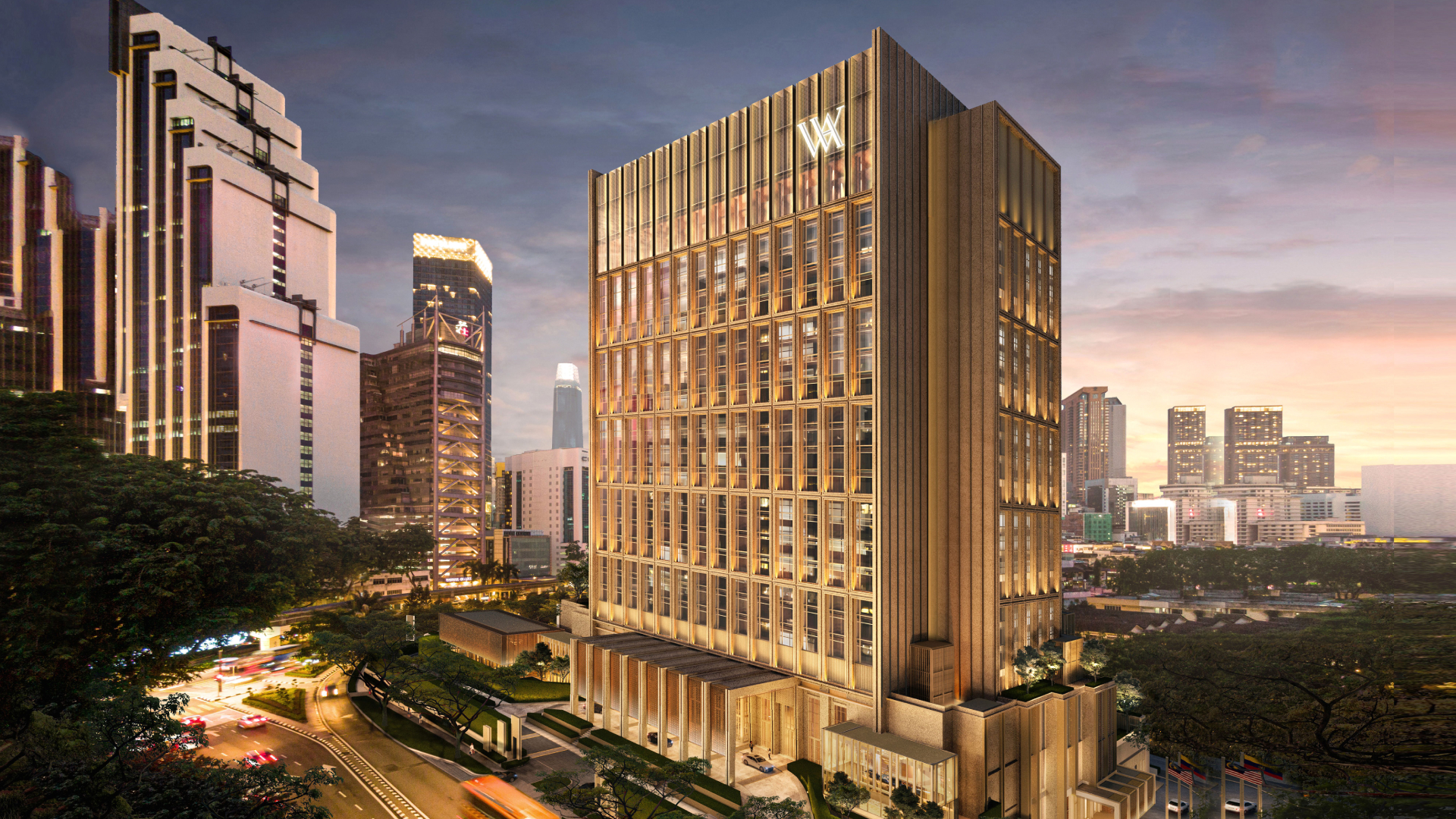
Waldorf Astoria Kuala Lumpur is scheduled to open on 30 October, introducing the Hilton luxury brand to Malaysia with an all-suite hotel in the city’s Golden Triangle.
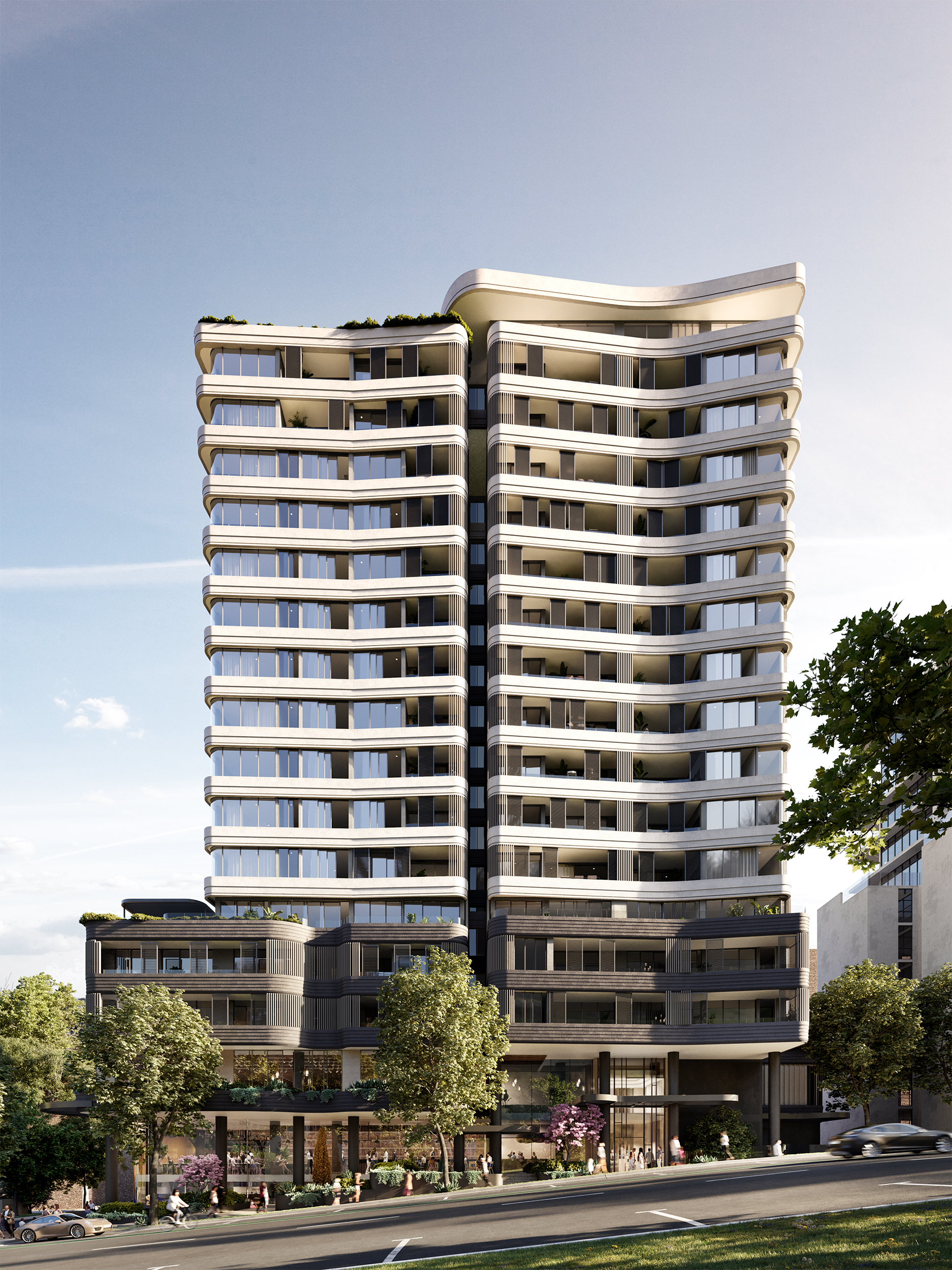
Located steps from Crows Nest Metro, the near-complete development brings luxury living to Sydney’s Lower North Shore.
3 min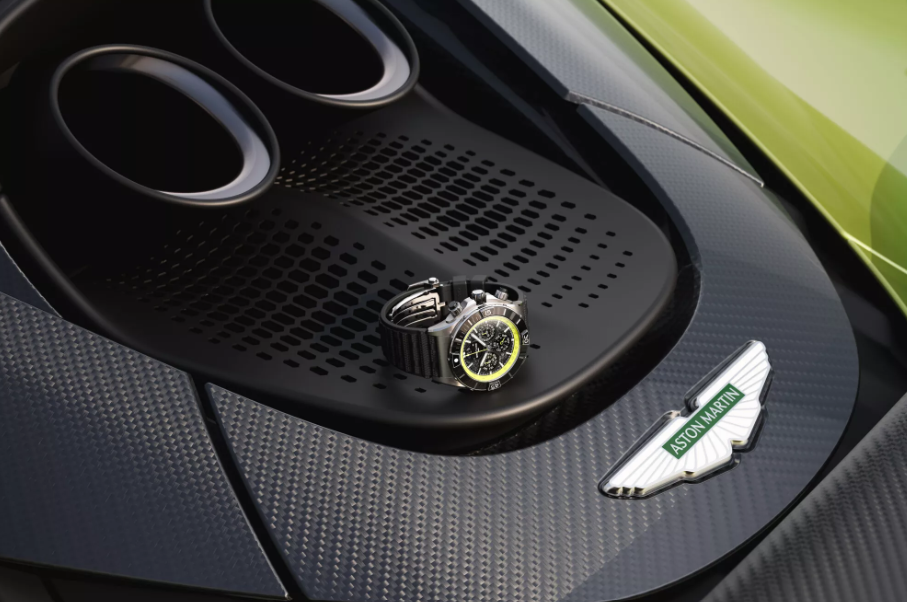
Buyers of Aston Martin’s 1,079PS Valhalla can commission one of two bespoke Breitling Super Chronomat watches, with colours and personalised details inspired by their individual car.
The relationship between cars and watches has produced countless branded chronographs, racing editions and logo-bearing collaborations. Breitling and Aston Martin are taking a more personal route with a new watch program reserved exclusively for owners of the Valhalla supercar.
Rather than offering every customer the same limited-edition watch, Breitling is opening part of its Super Chronomat design process to Valhalla owners. A dedicated configurator will allow each buyer to commission a timepiece inspired by the specification of their car and their individual tastes.

Two Super Chronomat models are available: a technically ambitious 44mm perpetual-calendar chronograph and a more compact 38mm automatic watch.
The flagship is the Super Chronomat B19 44 Perpetual Calendar Chronograph. Presented in a 44mm titanium case with Breitling’s distinctive Rouleaux bracelet, it combines a carbon-fibre dial with one of mechanical watchmaking’s most sophisticated complications.
Its automatic perpetual calendar accounts for months of different lengths, leap years and the phases of the moon. Provided it continues running, the calendar will not require manual correction until 2100—the next centurial year that will not be recognised as a leap year.
The B19 movement also provides a 96-hour power reserve, allowing the watch to be left unworn for four days without stopping. A display caseback exposes the movement and black rotor.
Valhalla owners can customise the colour of the inner bezel, seconds hand and chronograph counter hands. The rotor can also be engraved, creating a more permanent connection between the watch and its owner.
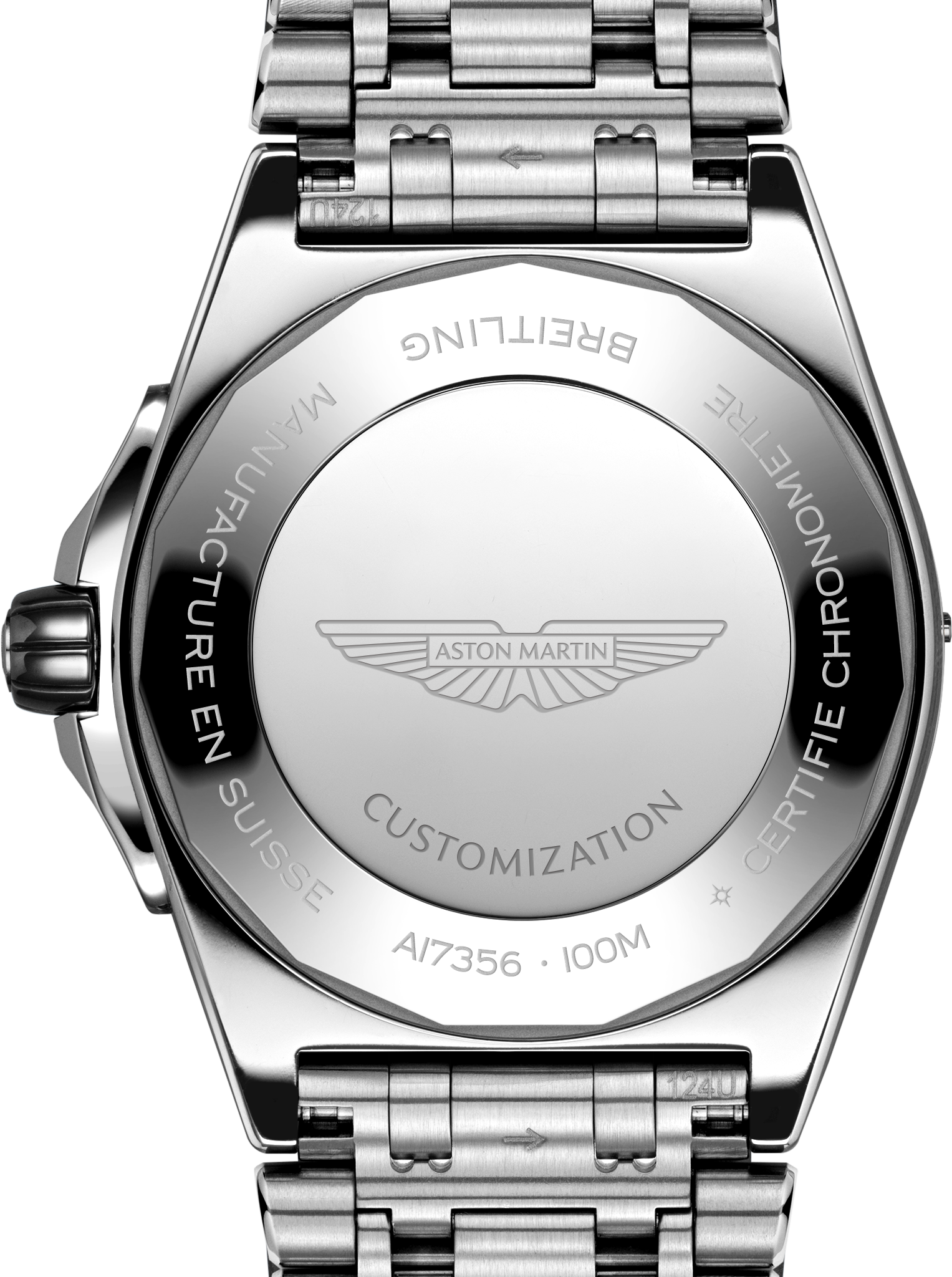
The second option, the Super Chronomat Automatic 38, offers a less complicated and more restrained interpretation.
Its 38mm stainless-steel case is paired with a textured carbon-fibre dial, a titanium crown and a diamond-set bezel. The automatic three-hand display incorporates a date window at six o’clock, while customisation extends to the colours used for the inner bezel and hands, together with a personalised caseback engraving.
The combination of carbon fibre and diamonds might appear contradictory, but it captures the dual character of the Valhalla: a car built around highly technical performance that remains unmistakably positioned as a luxury object.
The watch program draws directly from Aston Martin’s first series-production, mid-engined plug-in hybrid supercar.
Valhalla combines a 4.0-litre twin-turbocharged V8 with three electric motors to produce 1,079PS. Aston Martin claims it can accelerate from zero to 62mph—approximately 100km/h—in 2.5 seconds and reach 217mph, or about 349km/h.

Production is limited to 999 examples worldwide.
Formula One-derived technology and aerodynamic development have played central roles in the car’s engineering, but customisation is equally important to its ownership proposition. Breitling’s configurator extends that process from the Aston Martin specification studio to the wrist.
Each car will be produced at Aston Martin’s headquarters in Gaydon, England, while the watches will be made at Breitling’s Chronometrie in La Chaux-de-Fonds, Switzerland.
The program also reflects a broader change in the luxury market. Exclusivity is increasingly being defined by access rather than the simple production of another numbered edition. These watches cannot be purchased merely by joining a waiting list or paying a premium on the secondary market; the commission begins with ownership of the corresponding car.
That restriction gives the project greater authenticity than a conventional co-branded release. The strongest configurations should be those that use colour and engraving to create a subtle relationship with a particular Valhalla, rather than attempting to reproduce the car too literally.
For Valhalla buyers, the choice ultimately comes down to two very different expressions of the same idea. The 44mm B19 is the serious collector’s proposition, built around a rare combination of perpetual calendar and chronograph. The Automatic 38 is simpler, smaller and likely more versatile as an everyday watch.
Both turn the usual automotive-watch collaboration into something more individual: a timepiece configured alongside one of Aston Martin’s most significant new cars.
Watch summary
Program: Bespoke Breitling Super Chronomat watches for Aston Martin Valhalla owners
Available models: Super Chronomat B19 44 Perpetual Calendar Chronograph and Super Chronomat Automatic 38
B19 case: 44mm titanium
B19 power reserve: Approximately 96 hours
B19 complication: Automatic perpetual calendar chronograph
Automatic 38 case: 38mm stainless steel
Shared design element: Textured carbon-fibre dial
Customisation: Selected colours and personalised engraving
Availability: Exclusively for Aston Martin Valhalla owners
Valhalla production: Limited to 999 cars worldwide

Wealthy Aussies are swapping large family homes for high-end apartments, with sales of prestige units tripling over the past decade.
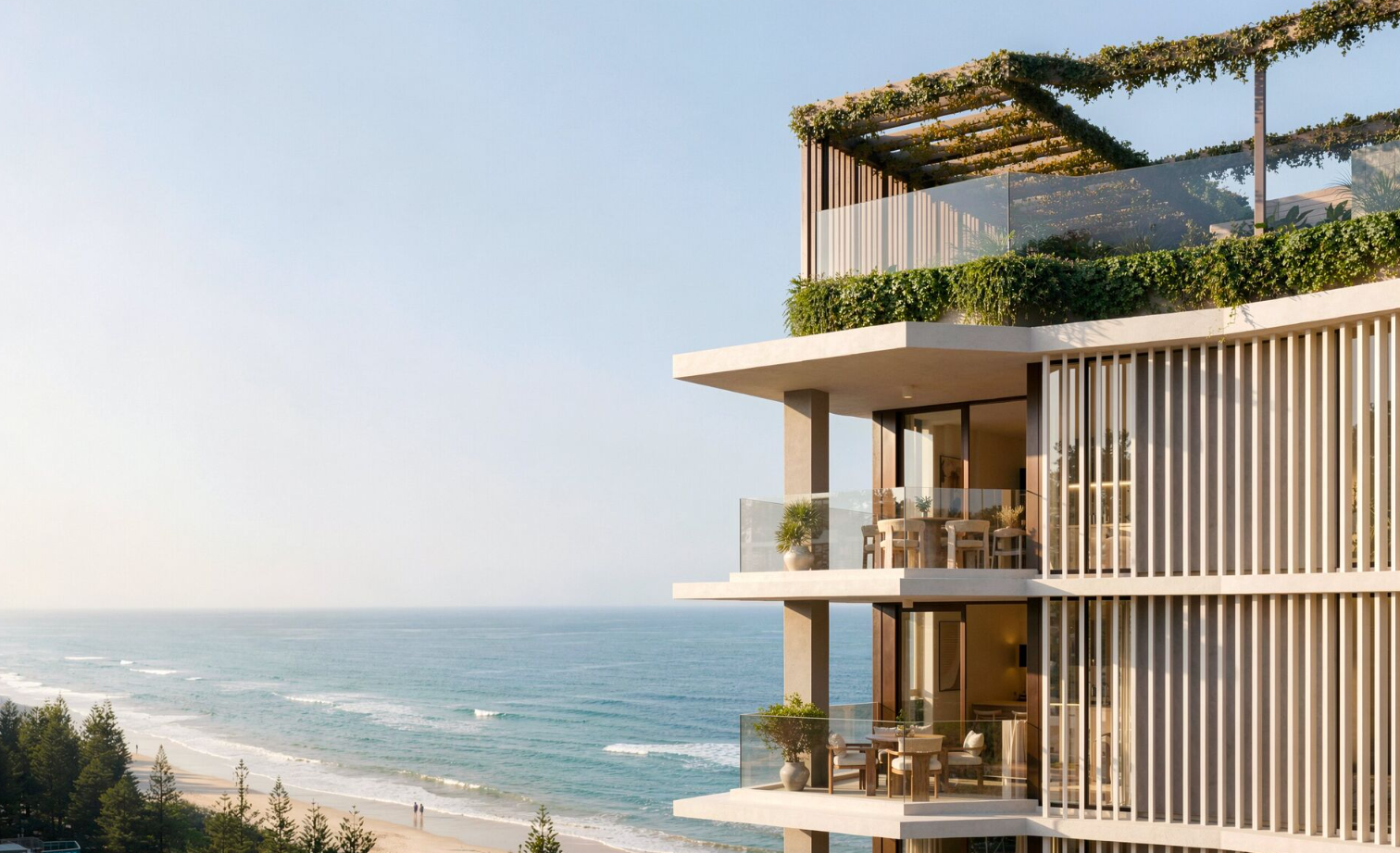
Studio apartments have almost disappeared from new Australian developments. Lura is bringing them back to Burleigh Heads from $495,000.