INSIDE ONE OF THE WORLD’S MOST EXCLUSIVE POSTCODES
A haven for hedge-fund titans and Hollywood grandees, Greenwich is one of the world’s most expensive residential enclaves, where eye-watering prices meet unapologetic grandeur.
 4 min
4 min
Greenwich, Connecticut, is in New England (just barely), but that doesn’t mean it’s a quaint, sleepy small town with covered bridges and white churches on the green.
It’s leafy, certainly, but it’s also a luxury-minded power centre close to New York City, with many celebrity residents (director Ron Howard, singer Diana Ross, actor Meryl Streep and, at one time, Australia’s own Mel Gibson).
The main shopping street, Greenwich Avenue, is home to brand stores such as Hermès, Kate Spade, Saks Fifth Avenue, and Tiffany & Co.
And Greenwich, particularly in the “back country” north of the Merritt Parkway, is host to some of the most exclusive real estate in the world.
The average price for a single-family home in the second quarter of 2025 was USD $3.25 million (AUD $4.9 million). But that’s merely an entry point, buying a smaller home in one of the town’s less desirable neighbourhoods.
What does USD $43 million (AUD $66 million) buy in Greenwich?
Last autumn’s most expensive listing offered a 1,068-square-metre waterfront home with eight bedrooms and 11 bathrooms, plus “Gatsby-like lawns”, a gym, games room, party room, wine cellar, fruit orchard, pool and spa. The front and side porches have heated floors.
Prefer something more traditional and secluded? For USD $33 million (AUD $50 million), buyers could close on an 11,760-square-metre Georgian manor on 3.2 hectares, featuring eight fireplaces, an elevator, and a dumbwaiter.

The first floor features a three-storey cascading chandelier. For bibliophiles, there’s a two-storey mahogany library. If bocce is more your pace, a similar USD $25 million compound on 7.5 hectares, built for a liquor magnate in 2009, may appeal. Fourteen bathrooms should suffice.
The Greenwich market is strong, but not without challenges.
“The big problem is that there’s no inventory,” said Evangela Brock, an agent with Douglas Elliman. “It’s extremely low at all price points.”
In November, just 15 properties under USD $1 million (AUD $1.52 million) were listed without contracts, compared with 23 above USD $10 million (AUD $15.2 million). Of those, six had contracts pending. Greenwich has more than 17,000 single-family homes.
Kanebridge Quarterly toured two mid-priced houses in Greenwich. “You don’t lose money in Greenwich real estate,” said Beth MacGillivray, a realtor with the Higgins Group. “This is the hot spot.”
MacGillivray opened the door to a 733.9-square-metre Georgian colonial in the Sherwood Farms Association development her family built in 2005. The house was expected to sell for about USD $5 million (AUD $7,743,535).
The six-bedroom, four-level house is move-in ready, with staged furniture showing its potential and many of the amenities that buyers in this range expect.
Visitors enter through a two-storey foyer with a marble floor. A circular staircase leads to an airy living room with double-height ceilings.
There’s a main bedroom with his-and-hers bathrooms, a cherry-panelled library with cigar-smoke venting, five fireplaces, and a state-of-the-art kitchen with a breakfast nook by Greenwich-based designer Christopher Peacock.
Most rooms have huge walk-in wardrobes. Even the laundry room has granite countertops. Custom millwork, cabinetry and fixtures are evident throughout.
The drawbacks? A smaller yard and no pool. Still, refugees from the city would marvel at the abundant interior space.
Not far away, an entirely different house was on the market for USD $2.66 million.
The imposing 696.7-square-metre, nine-bedroom, seven-bath Georgian/Federal home on Shady Lane in the Glenville neighbourhood was built in 1900. Its good bones and inherent grandeur were apparent, as was a clear need for updating.
“It’s a good project for someone,” said realtor Kaori Higgins. “It needs the right buyer, someone who is looking to return it to its stately original condition.”
Given the hot market, some buyers may be tempted to tear it down and build anew.
But the house is filled with charming period details, including hand-built stone fireplaces, reading nooks, pocket doors, leaded windows and beautiful original millwork.
The second floor offers a vast veranda with views of Long Island Sound and a built-in swimming pool.
The drawbacks? Bathrooms that were awkwardly redesigned in the 1970s, unsightly flooring on the upper levels, and crumbling exterior elements.
Higgins noted that a nearby sister property, fully renovated, sold for USD $11 million (AUD $17 million). Any buyer of Shady Lane’s faded elegance would need both imagination and deep pockets.
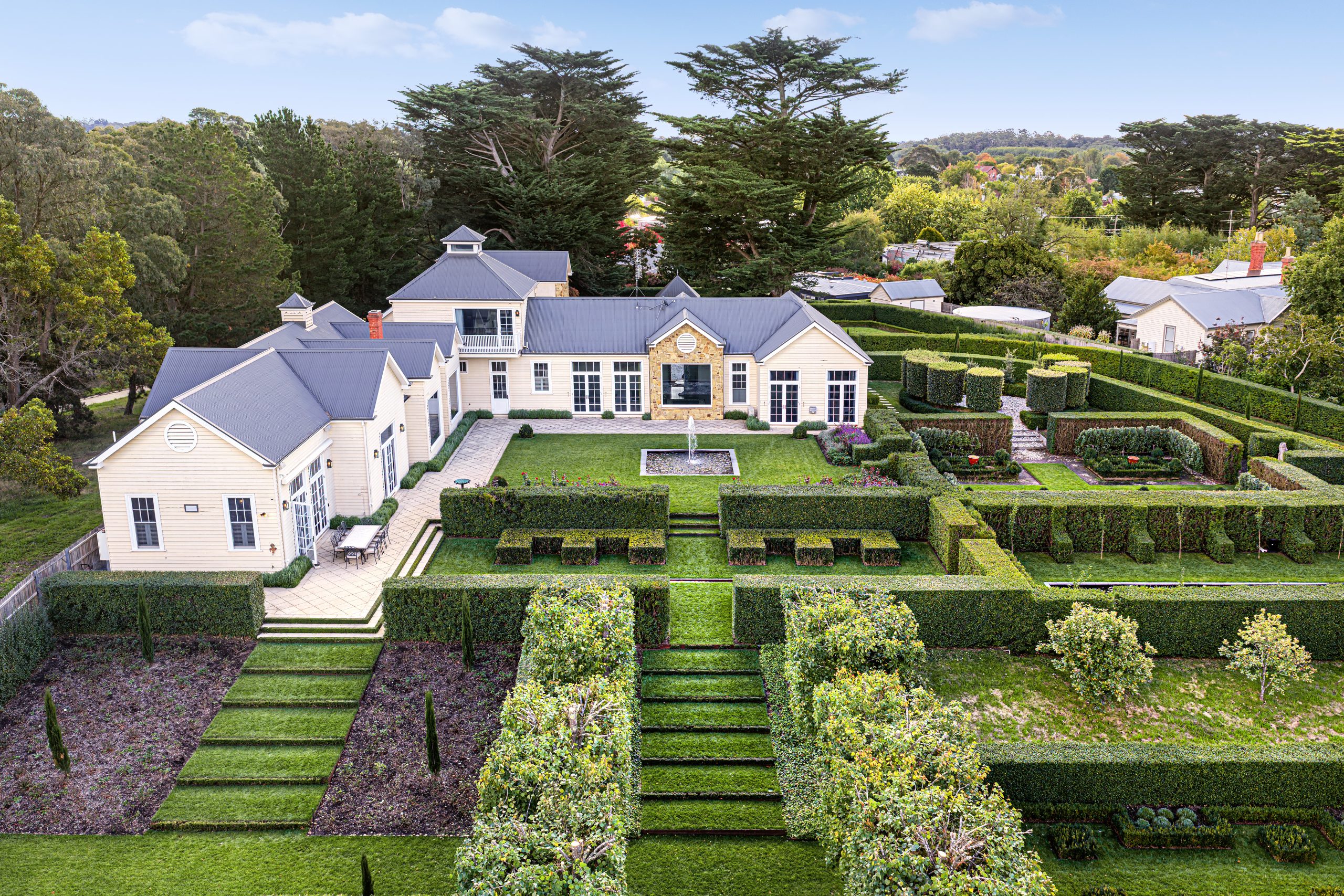
For contrast, Kanebridge Quarterly left Greenwich for nearby Fairfield’s upscale Greenfield Hill neighbourhood to visit Lion’s Gate, a 595 square metre Tudor Revival home built as a modest dwelling in the 1920s but extensively expanded and remodelled in 2000.
With three acres of land, a guest cottage, an artist’s studio and a pool house, the asking price is USD $3.3 million (AUD $5 million). Like the Sherwood home, Lion’s Gate is flawlessly move-in ready, with designer touches throughout.
The entire second floor was added during the renovation and features parquet flooring, a massive main suite, arched doorways and 2.74-metre ceilings.
Many rooms include walk-in wardrobes, extensive carved millwork and built-ins. The wood-panelled library (on the site of the former stable) is warm and inviting.
The expansive kitchen includes a window seat with a hand-painted ceiling, a wine cooler and a butler’s pantry.
Realtor Lorelei Atwood said Fairfield faces the same inventory shortage as Greenwich.
“Demand is growing as more New York-based executives are being told they have to report to the office,” she said. “Fairfield has always been a commuter town.”
Why is this home USD $3.3 million (AUD $5 million), and the Sherwood property around USD $5 million (AUD $7,743,535)?
Location. Greenfield Hill is lovely, but Greenwich real estate occupies a rarefied class of its own.
Note: Thanks to realtor Sherri Steeneck for chaperoning.
This story appeared in the Autumn issue of Kanebridge Quarterly, which you can buy here.

Technology and semiconductor shares fell sharply as investors questioned the debt financing the AI infrastructure boom and confronted higher rates and Chinese competition.
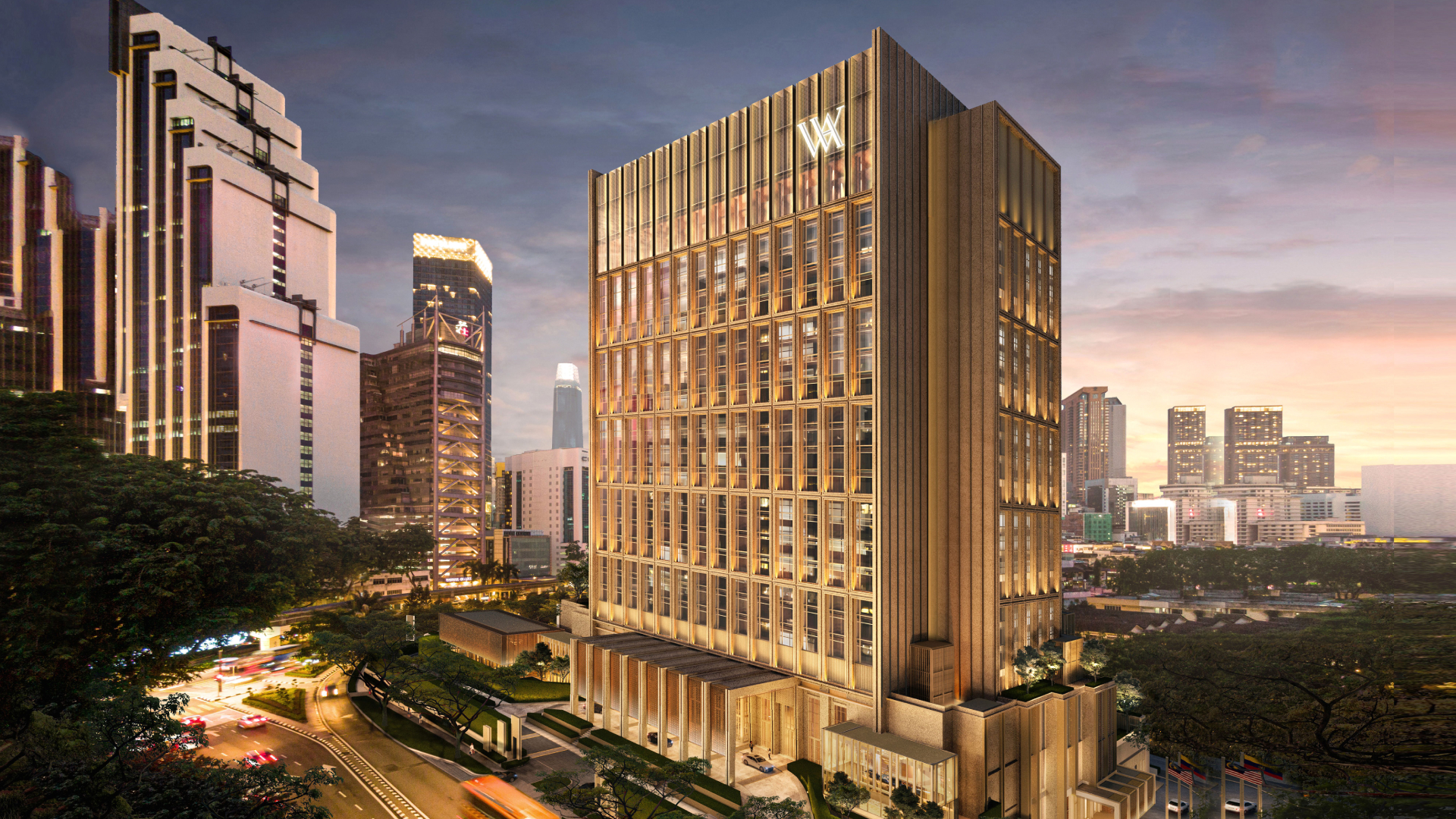
Waldorf Astoria Kuala Lumpur is scheduled to open on 30 October, introducing the Hilton luxury brand to Malaysia with an all-suite hotel in the city’s Golden Triangle.
Employment fell by 39,300 and unemployment held at a revised 4.7 per cent, giving the RBA more room to pause in November.
2 min
Australia’s labour market weakened in September, reducing—but not eliminating—the case for another Reserve Bank rate rise in November.
The seasonally adjusted unemployment rate was 4.7 per cent, according to the Australian Bureau of Statistics. August was revised to the same level, while September employment fell by 39,300 people. The number of unemployed Australians increased by 8,900 to 732,000.
The weakness extended beyond the headline rate. The employment-to-population ratio fell 0.3 percentage points to 63.6 per cent, participation declined 0.2 points to 66.8 per cent and underemployment edged up to 6.3 per cent. Part-time employment fell by 73,700, partly offset by a 34,400 increase in full-time work.
For the RBA, this is a clearer sign that restrictive monetary policy is cooling demand. Higher unemployment and falling employment reduce wage pressure over time and increase the risk that another rate rise would push the economy harder than necessary.
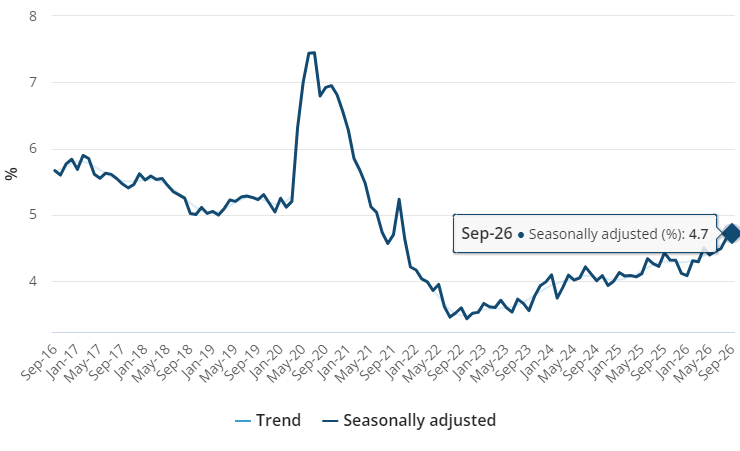
That makes a November increase less certain. It does not make a hold inevitable. The RBA must balance labour-market softness against inflation, and the September-quarter consumer price index due later in October will carry more direct weight in the decision.
For mortgage holders and property investors, the practical conclusion is not to trade one data release. Borrowers should continue testing repayments at higher rates, preserve liquidity and avoid basing a purchase on an assumed near-term reversal. Refinancing decisions should be assessed against total cost, not simply the advertised rate.
Property markets may initially welcome a reduced probability of another increase because borrowing capacity and sentiment are highly rate-sensitive. But a weakening labour market is not unambiguously positive for housing: job security supports mortgage serviceability, rental demand and buyer confidence.
The September numbers have given the RBA a credible reason to wait. Inflation will determine whether it can use it.

Paine Schwartz joins BERO as a new investor as the year-old company seeks to triple sales.
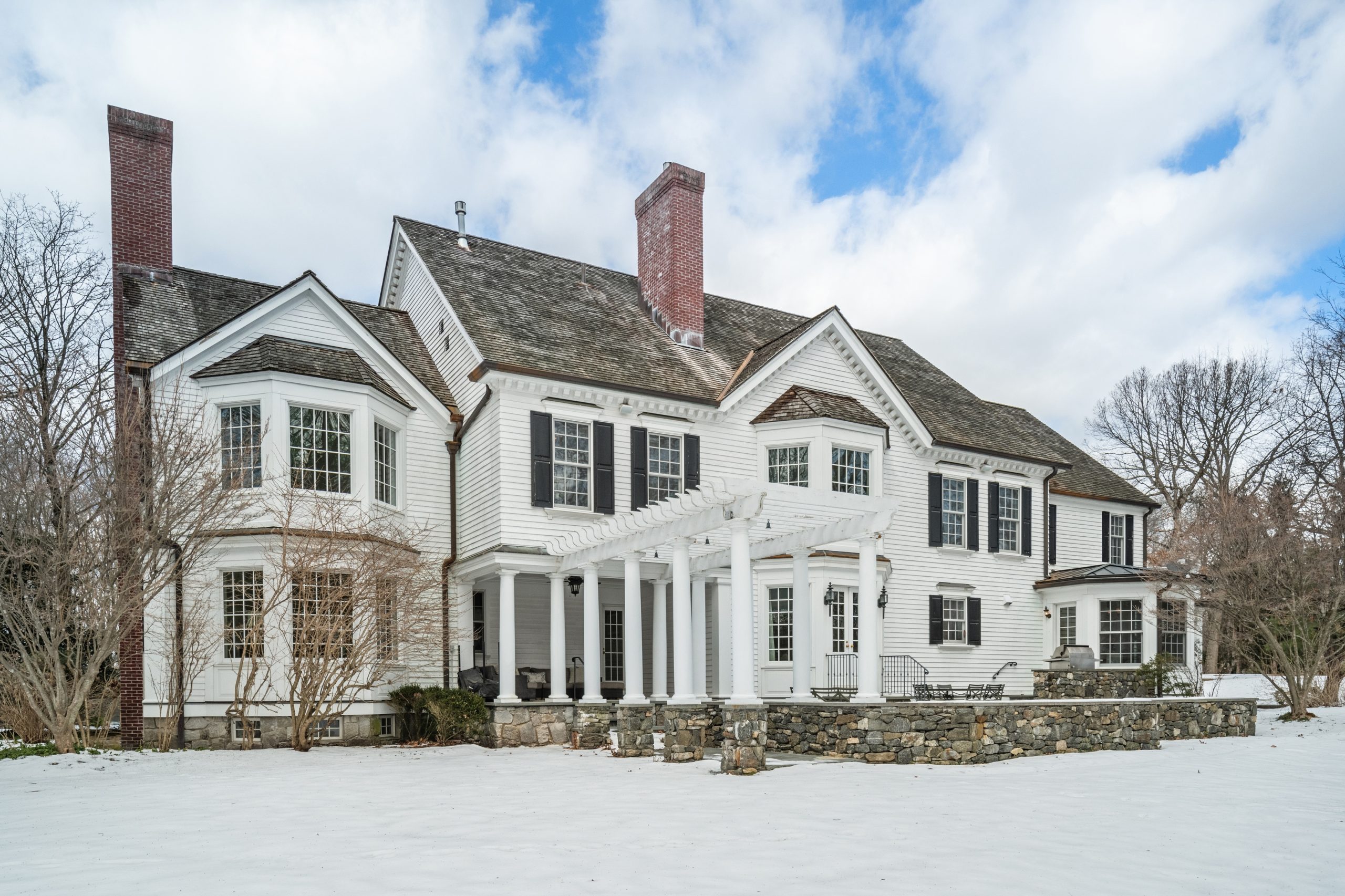
A haven for hedge-fund titans and Hollywood grandees, Greenwich is one of the world’s most expensive residential enclaves, where eye-watering prices meet unapologetic grandeur.