Face It, That $6,000 Vacation Isn’t Worth It Right Now
Vacationers scratching their travel itch this season are sending prices through the roof. Here’s how some are making trade-offs.

 3 min
3 min
Capri Coffer socks away $600 a month to help fund her travels. The Atlanta health-insurance account executive and her husband couldn’t justify a family vacation to the Dominican Republic this summer, though, given what she calls “astronomical” plane ticket prices of $800 each.
The price was too high for younger family members, even with Coffer defraying some of the costs.
Instead, the family of six will pile into a rented minivan come August and drive to Hilton Head Island, S.C., where Coffer booked a beach house for $650 a night. Her budget excluding food for the two-night trip is about $1,600, compared with the $6,000 price she was quoted for a three-night trip to Punta Cana.
“That way, everyone can still be together and we can still have that family time,” she says.
With hotel prices and airfares stubbornly high as the 2023 travel rush continues—and overall inflation squeezing household budgets—this summer is shaping up as the season of travel trade-offs for many of us.
Average daily hotel rates in the top 25 U.S. markets topped $180 year-to-date through April, increasing 9.9% from a year ago and 15.6% from 2019, according to hospitality-data firm STR.
Online travel sites report more steep increases for summer ticket prices, with Kayak pegging the increase at 35% based on traveler searches. (Perhaps there is no more solid evidence of higher ticket prices than airline executives’ repeated gushing about strong demand, which gives them pricing power.)
The high prices and economic concerns don’t mean we’ll all be bunking in hostels and flying Spirit Airlines with no luggage. Travellers who aren’t going all-out are compromising in a variety of ways to keep the summer vacation tradition alive, travel agents and analysts say.
“They’re still out there and traveling despite some pretty real economic headwinds,” says Mike Daher, Deloitte’s U.S. transportation, hospitality and services leader. “They’re just being more creative in how they spend their limited dollars.”
For some, that means a cheaper hotel. Hotels.com says global search interest in three-star hotels is up more than 20% globally. Booking app HotelTonight says nearly one in three bookings in the first quarter were for “basic” hotels, compared with 27% in the same period in 2019.
For other travellers, the trade-offs include a shorter trip, a different destination, passing on premium seat upgrades on full-service airlines or switching to no-frills airlines. Budget-airline executives have said on earnings calls that they see evidence of travellers trading down.
Deloitte’s 2023 summer travel survey, released Tuesday, found that average spending on “marquee” trips this year is expected to decline to $2,930 from $3,320 a year ago. Tighter budgets are a factor, he says.
Too much demand
Wendy Marley is no economics teacher, but says she’s spent a lot of time this year refreshing clients on the basics of supply and demand.
The AAA travel adviser, who works in the Boston area, says the lesson comes up every time a traveler with a set budget requests help planning a dreamy summer vacation in Europe.
“They’re just having complete sticker shock,” she says.
Marley has become a pro at Plan B destinations for this summer.
For one client celebrating a 25th wedding anniversary with a budget of $10,000 to $12,000 for a five-star June trip, she switched their attention from the pricey French Riviera or Amalfi Coast to a luxury resort on the Caribbean island of St. Barts.
To Yellowstone fans dismayed at ticket prices into Jackson, Wyo., and three-star lodges going for six-star prices, she recommends other national parks within driving distance of Massachusetts, including Acadia National Park in Maine.
For clients who love the all-inclusive nature of cruising but don’t want to shell out for plane tickets to Florida, she’s been booking cruises out of New York and New Jersey.
Not all of Marley’s clients are tweaking their plans this summer.
Michael McParland, a 78-year-old consultant in Needham, Mass., and his wife are treating their family to a luxury three-week Ireland getaway. They are flying business class on Aer Lingus and touring with Adventures by Disney. They initially booked the trip for 2020, so nothing was going to stand in the way this year.
McParland is most excited to take his teen grandsons up the mountain in Northern Ireland where his father tended sheep.
“We decided a number of years ago to give our grandsons memories,” he says. “Money is money. They don’t remember you for that.”
Fare first, then destination
Chima Enwere, a 28-year old piano teacher in Fayetteville, N.C., is also headed to the U.K., but not by design.
Enwere, who fell in love with Europe on trips the past few years, let airline ticket prices dictate his destination this summer to save money.
He was having a hard time finding reasonable flights out of Raleigh-Durham, N.C., so he asked for ideas in a Facebook travel group. One traveler found a round-trip flight on Delta to Scotland for $900 in late July with reasonable connections.
He was budgeting $1,500 for the entire trip—he stays in hostels to save money—but says he will have to spend more given the pricier-than-expected plane ticket.
“I saw that it was less than four digits and I just immediately booked it without even asking questions,” he says.
 Copyright 2020, Dow Jones & Company, Inc. All Rights Reserved Worldwide. LEARN MORE




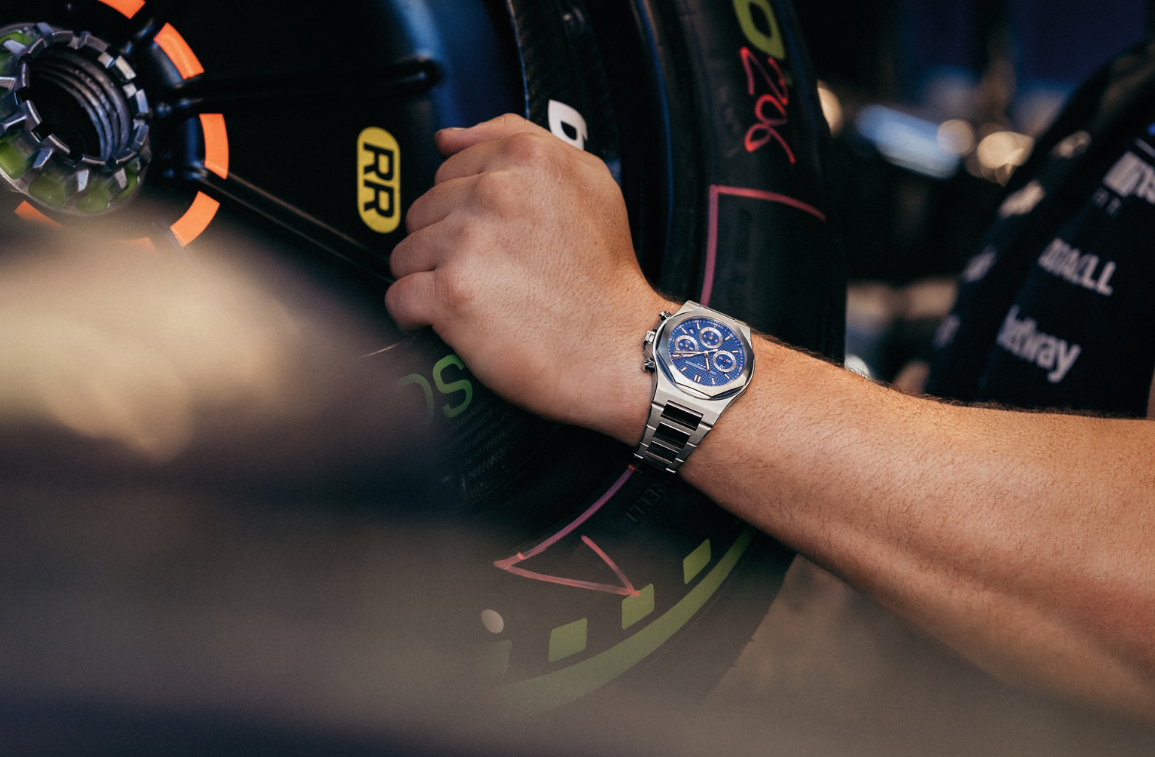
The Swiss watchmaker’s first collaboration with Atlassian Williams F1 Team produces two sporting Laureato models inspired by the team’s 2026 racing car.
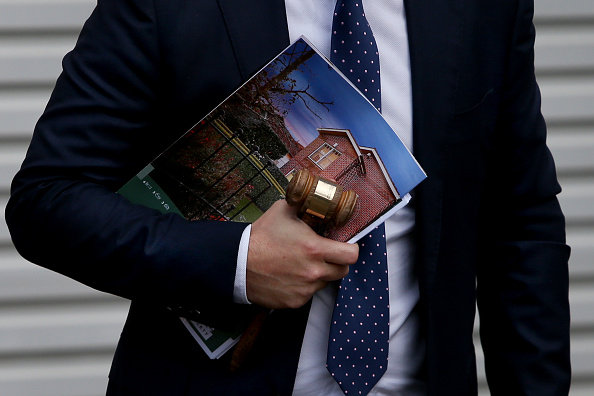
Victorian auction buyers will soon receive a piece of information that has traditionally been withheld until bidding reaches it: the vendor’s reserve price. Under new property-sale and underquoting laws, agents must publish the agreed reserve at least seven days before an auction or fixed-date sale. Most changes begin on 1 October 2026 and apply to …
Continue reading “Victoria’s New Auction Rules Will Force Reserve Prices Into the Open”

The Swiss watchmaker’s first collaboration with Atlassian Williams F1 Team produces two sporting Laureato models inspired by the team’s 2026 racing car.
3 minGirard-Perregaux has revealed the first watches created through its partnership with Atlassian Williams F1 Team, bringing the British racing team’s colours to one of Switzerland’s most recognisable integrated-bracelet designs.
The collaboration comprises two 42mm steel watches: the time-and-date Laureato Williams Edition and the more technical Laureato Chronograph Williams Edition.
Both retain the familiar architecture of the Laureato, including its octagonal bezel, integrated bracelet and mix of polished and satin-finished surfaces. The influence of Williams is comparatively restrained, appearing through colour, discreet branding and details inspired by the team’s current Formula 1 car.
It is a welcome departure from the oversized logos and literal automotive references that can characterise motorsport watches.
The Williams FW48 inspires the dial
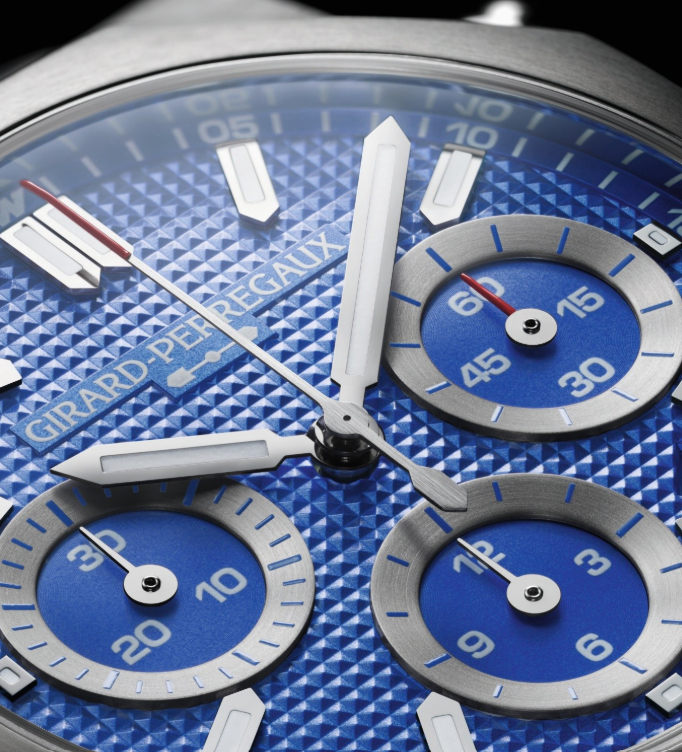
The centrepiece of both models is a blue Clous de Paris dial informed by the livery of the Williams FW48, the car being campaigned by the team during the 2026 Formula 1 season.
A small Williams “W” replaces the conventional marker at 12 o’clock, while the team emblem appears on the sapphire crystal caseback. Red accents echo the keyline used on the FW48 without overwhelming the established Laureato design.
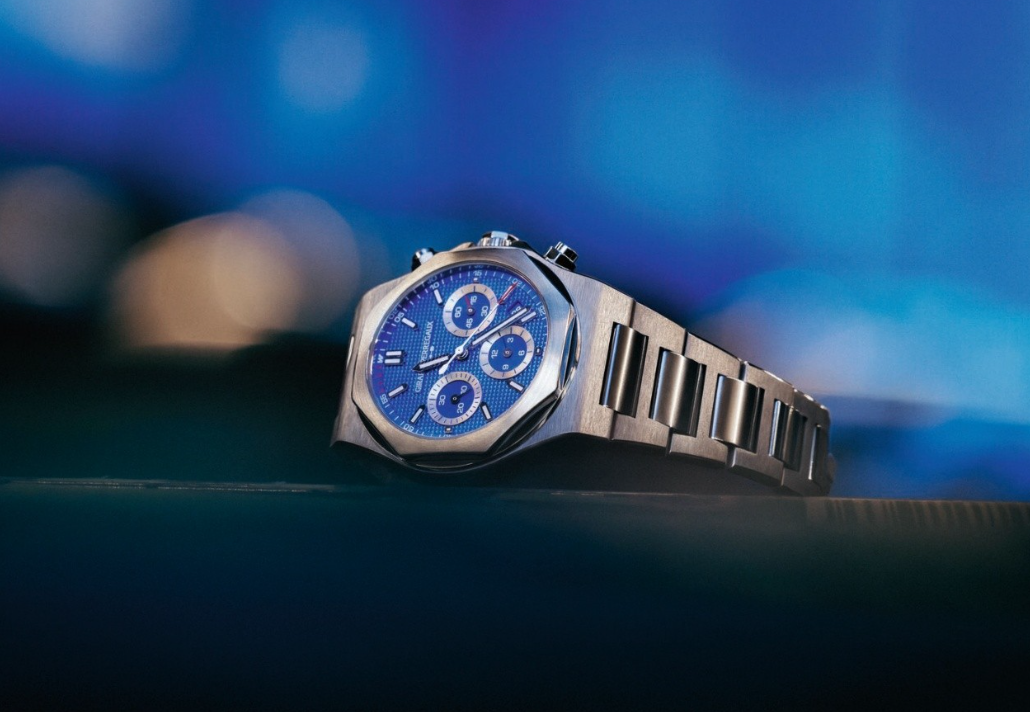
The three-hand model offers the quieter interpretation. Baton-shaped, rhodium-plated hands and hour markers are filled with white-emitting luminescent material, while a date window sits at three o’clock.
The chronograph creates a more obvious connection with motorsport. Three subdials are framed by rhodium-plated rings, with red appearing on the small-seconds hand and the tip of the central chronograph seconds hand.
Both watches measure 42mm across and are water resistant to 100 metres. The standard Laureato has a case thickness of 10.68mm, while the additional mechanics of the chronograph increase its profile to 12.16mm.
Two in-house automatic movements
The Laureato Williams Edition is powered by Girard-Perregaux’s self-winding GP01800 calibre. The movement provides hours, minutes, central seconds and the date, with a minimum power reserve of 54 hours.
The Laureato Chronograph Williams Edition uses the automatic GP03300 calibre, which combines its chronograph functions with a date display and offers a minimum power reserve of 46 hours.
Both movements operate at 28,800 vibrations per hour and can be viewed through their sapphire crystal casebacks.
Their decoration provides a more traditional counterpoint to the Formula 1 association. Finishing techniques include Côtes de Genève, circular graining, bevelling, mirror polishing, satin finishing, engraving and snailing.
The result is less about reproducing the appearance of a racing car than identifying the common ground between two mechanical disciplines: precision, incremental development and the considerable work hidden beneath the finished product.
Parallel histories
The timing of the partnership draws attention to the remarkably similar ages of its two protagonists.
Girard-Perregaux introduced the original Laureato in 1975, establishing an integrated-bracelet sports watch with a distinctive octagonal bezel. Williams entered Formula 1 two years later in 1977.
Both have evolved continuously across the five decades since. The Laureato has moved through different sizes, materials and complications, while retaining its central design language. Williams, meanwhile, has remained one of Formula 1’s most historically significant teams.
That gives the collaboration greater credibility than a simple licensing exercise. Girard-Perregaux and Williams are not being connected solely through the familiar language of speed. Their stronger link is a shared dependence on engineering, testing and the accumulation of specialist knowledge.
The watches are described as the beginning of a longer collaboration, suggesting further Williams editions may follow.
Girard-Perregaux’s international website lists the Laureato Williams Edition at US$16,200 and the Laureato Chronograph Williams Edition at US$20,900. Australian pricing has not been announced.
Specifications
Girard-Perregaux Laureato Williams Edition 42mm
Reference: 81010-11-3680-1GM
Case: Steel
Diameter: 42mm
Thickness: 10.68mm
Crystal: Anti-reflective sapphire crystal
Dial: Blue Clous de Paris pattern
Movement: Automatic GP01800
Functions: Hours, minutes, central seconds and date
Power reserve: Minimum 54 hours
Water resistance: 100 metres
Bracelet: Integrated steel bracelet with triple-folding clasp
International price: US$16,200
Girard-Perregaux Laureato Chronograph Williams Edition 42mm
Reference: 81020-11-3681-1GM
Case: 904L steel
Diameter: 42mm
Thickness: 12.16mm
Crystal: Anti-reflective sapphire crystal
Dial: Blue Clous de Paris pattern with three chronograph counters
Movement: Automatic GP03300
Functions: Chronograph, hours, minutes, small seconds and date
Power reserve: Minimum 46 hours
Water resistance: 100 metres
Bracelet: Integrated 904L steel bracelet with triple-folding clasp
International price: US$20,900
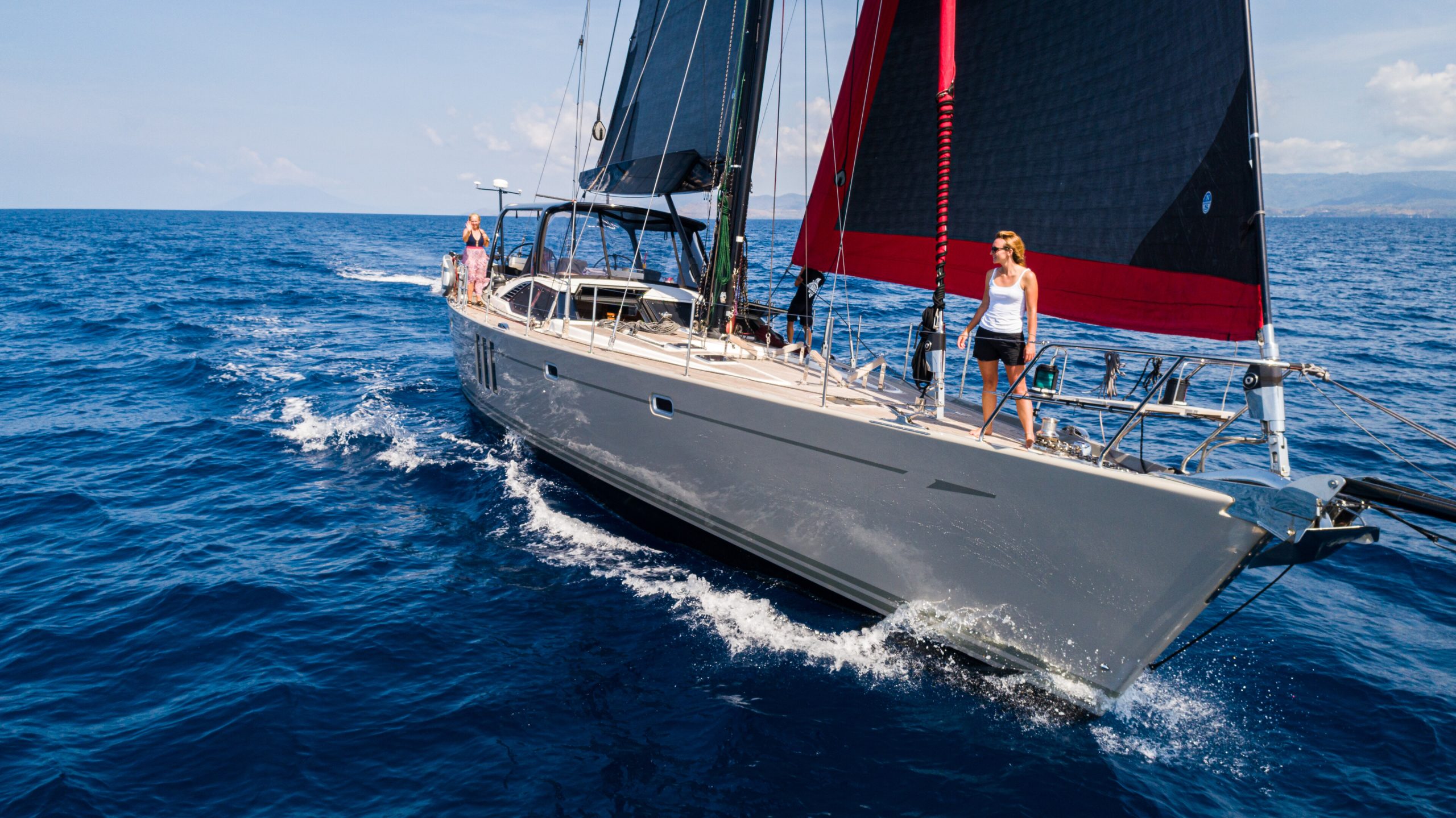
From the Caribbean to Australia’s east coast, Oyster’s latest world rally promises a bluewater voyage designed for owners seeking ultimate sailing experiences.

Now complete, Ophora at Tallawong offers luxury finishes, 10-year defect insurance and standout value from $475,000.