Americans Are Still Spending Like There’s No Tomorrow
Concerts, trips and designer handbags are taking priority over saving for a home or rainy day
 4 min
4 min
Consumers should be spending less by now.
Interest rates are up. Inflation remains high. Pandemic savings have shrunk. And the labour market is cooling.
Yet household spending, the primary driver of the nation’s economic growth, remains robust. Americans spent 5.8% more in August than a year earlier, well outstripping less than 4% inflation. And the experience economy boomed this summer, with Delta Air Lines reporting record revenue in the second quarter and Ticketmaster selling over 295 million event tickets in the first six months of 2023, up nearly 18% year-over-year.
Economists and financial advisers say consumers putting short-term needs and goals above long-term ones is normal. Still, this moment is different, they say.
A tough housing market has more consumers writing off something they’d historically save for, while the pandemic showed the instability of any long-term plans related to health, work or day-to-day life. So, they are spending on once-in-a-lifetime experiences because they worry they may not be able to do them later.
“It’s not a regret-filled, spur-of-the-moment decision,” says Michael Liersch, who oversees a team of advisers as head of advice at Wells Fargo. “It’s the opposite of that, where I would regret not having done it.”
Liersch cautions that it’s too soon to say whether the spate of spending is a fleeting moment or a new normal. And consumers remain frustrated about inflation as the price of many goods remains significantly higher than a few years ago.
Ibby Hussain, who works in marketing for a financial communications firm, says the Brooklyn, N.Y., apartment he and his fiancée rent for $3,000 a month would cost a million dollars to buy. At current rates, that means around $5,000 a month after a $200,000 down payment, not including property taxes. “And it’s not even that nice of an apartment.”
So, instead of saving for a down payment like he expected to after turning 30 and getting engaged in the past year, he splurged.
First, he bought a $1,600 Taylor Swift Eras Tour ticket and then he spent $3,500 on a bachelor party trip to Ibiza, Spain.
“I might as well just enjoy what I have now,” he says.
A travel boom
Ally Bank, whose online platform started allowing customers to create savings buckets for different goals in 2020, says users create about one-and-a-half times more experience-oriented buckets such as travel and “fun funds” versus those associated with longer-term planning.
Lindsey and Darrell Bradshaw went into credit-card debt to finance a vacation to Maui this past spring. The couple booked the trip only a few weeks after Lindsey, 37, quit her job to be a full-time caregiver to their 8-year-old son, who has special needs.
“We did not have the money and we were like, ‘Let’s just do this anyway,’ ” says Darrell Bradshaw, a 39-year-old general contractor in Seattle.
The trip cost about $10,000, including three, $1,000 last-minute plane tickets, 10 nights at a $385-a-night 4-star resort and several elaborate meals.
Even though the family decided to cancel subscriptions and cut back on dining out to help offset the bill, they say they have no regrets—especially since they got to see Lahaina just a few months before it was decimated by deadly wildfires.
Fears about a changing climate are driving some people to try to see places before they’re gone. In a monthly Deloitte survey of 19,000 global consumers, climate change was the only topic among 19 different concerns that respondents reported feeling significantly more worried about over the past year.
Josh Richner says he greatly lowered his retirement contribution to afford a cross-country trip that included a $7,000 Alaskan cruise so his family could see the ice caps, which have been melting at a rapid clip.
“I’ve never spent that much on a trip before,” says the 35-year-old, who says the splurge was also motivated by the pandemic and a health scare.
About six months ago, Richner and his wife decided to sell their Columbus, Ohio, home to travel the country with their two young children. Working for National Legal Center, a law firm that helps consumers resolve debt, he knows the potential consequences of living in a way that gives priority to the present. But he isn’t worried.
“I just hit a point where the thing that we had been talking about maybe hopefully doing some day, we’re going to do it now,” he says. “I’m not going to worry about money anymore. I don’t have it in me.”
Splurge purchases
Consumers might not be able to keep splurging forever. Labour strikes and student loan repayments could both lead people to pull back. Rising gas prices could also deter travel.
For those who study spending, however, the robustness up to this point has been a surprise.
In the New York Federal Reserve Bank’s August SCE Household Spending Survey, households reported spending 5.5% more than last year. The share of households that said they made at least one large purchase in the previous four months increased to 64% from 57%, its highest reading since August 2015.
“Normally at a time when you have higher inflation, but also higher interest rates, you don’t expect spending to hold up so well,” says Wilbert van der Klaauw, an economic research adviser on household and public policy at the Fed.
Rather than funnel all their spare change into a house or retirement account, Candice and Jasmine Kelly started a bucket-list fund after attending back-to-back funerals a few months ago. The couple adds a few hundred dollars from their paychecks each month into the fund, which they have used to try fancy restaurant tasting menus and buy Jasmine her dream designer handbag.
Instead of waiting to have fun when they retire, Candice, a 26-year-old management analyst in Charlotte, N.C., says the couple is trying to do the opposite. They want to enjoy their money while they’re young—even if it means working longer.
“All the rules that exist around money and lifestyle are just things people made up, so we’re playing a different game, and honestly I think we’re having more fun,” says Candice.
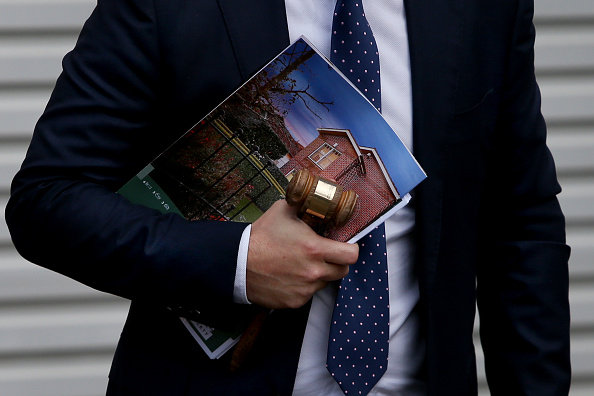
Victorian auction buyers will soon receive a piece of information that has traditionally been withheld until bidding reaches it: the vendor’s reserve price. Under new property-sale and underquoting laws, agents must publish the agreed reserve at least seven days before an auction or fixed-date sale. Most changes begin on 1 October 2026 and apply to …
Continue reading “Victoria’s New Auction Rules Will Force Reserve Prices Into the Open”

Four decks, 34.5 metres and a made-to-measure interior: step aboard the new Custom Line Navetta 35, unveiled at Cannes.

The ASX 200 rose about 0.27% as energy and materials advanced. Woodside and gold miners gained while financials and technology weakened.
2 min
The Australian sharemarket rebounded from its lowest close in three months on Wednesday, with energy and materials companies leading a cautious recovery.
The S&P/ASX 200 finished approximately 23 points, or 0.27 per cent, higher at 8,695.6 on 16 September. A second data source placed the closing index at 8,696.5, up 24 points or 0.28 per cent. The official close should be confirmed through a licensed feed before publication.
The broader All Ordinaries added 25.2 points, or 0.28 per cent, to 8,874.5.
Energy was the strongest sector, rising 2.19 per cent as Australian producers reflected the previous overnight increase in global oil prices. Woodside gained 2.84 per cent. Brent had settled near US$108.75 a barrel before the local session, although it later traded around US$107.68.
Materials advanced 1.28 per cent and provided the largest positive contribution to the index. Gold producers featured prominently among the strongest stocks, with Pantoro rising 9.3 per cent and St Barbara gaining 8.18 per cent. BCI Minerals added 7.48 per cent.
Financials fell 0.37 per cent, detracting from the benchmark despite earlier strength. Rate expectations remained a significant influence after Westpac joined the other major banks in forecasting a possible Reserve Bank increase in November. Higher rates can expand bank margins in some circumstances but also raise funding costs and increase the risk of loan stress and slower credit growth.
Technology remained weak. Life360 declined 5.46 per cent, while healthcare names that had rallied during Tuesday’s sell-off gave back ground. 4DMedical lost 5.35 per cent and Telix Pharmaceuticals fell 4.96 per cent.
James Hardie dropped 5.23 per cent. Codan moved against the weaker technology tone, gaining 7.51 per cent.
The session produced positive breadth, with more advancers than decliners among the largest 250 stocks, but the broader backdrop remains unsettled. Oil prices have revived inflation concerns, bond yields are elevated and investors are assessing the prospect of further monetary tightening in Australia and the United States.
The rebound therefore recovered only part of Tuesday’s 0.9 per cent decline. For Thursday, investors will be watching overnight central-bank developments, energy markets and whether gains can broaden beyond resources.
Market dashboard — 16 September 2026
S&P/ASX 200* Approximately 8,695.6, up 23.1 points or 0.27 per cent; verify the official closing print
All Ordinaries: 8,874.5, up 25.2 points or 0.28 per cent
Best-performing sector: Energy, up 2.19 per cent
Materials: Up 1.28 per cent
Weak sector: Financials, down 0.37 per cent
Leading mover: Pantoro, up 9.30 per cent
Notable large-cap mover: Woodside, up 2.84 per cent
Notable loser: Sunrise Energy Metals, down 6.22 per cent
Life360: Down 5.46 per cent
Australian dollar: About US71.3 cents in the preceding market snapshot
Gold: Approximately US$4,375 an ounce in the afternoon snapshot
Brent crude: Approximately US$107.68 a barrel in the afternoon snapshot
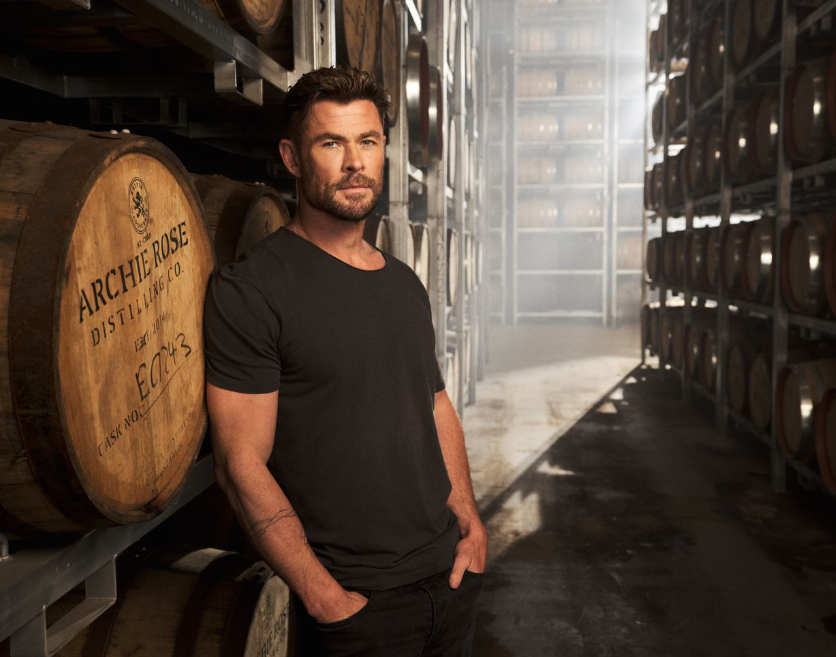
Australian actor Chris Hemsworth has joined Archie Rose Distilling Co. as co-owner and strategic business partner as the Sydney spirits company prepares to enter the United States. The partnership brings Hemsworth together with Archie Rose founder Will Edwards, with the pair aiming to build greater international recognition for Australian whisky. Founded in Sydney in 2014, …
Continue reading “Chris Hemsworth Joins Archie Rose as Co-Owner Ahead of Global Expansion”
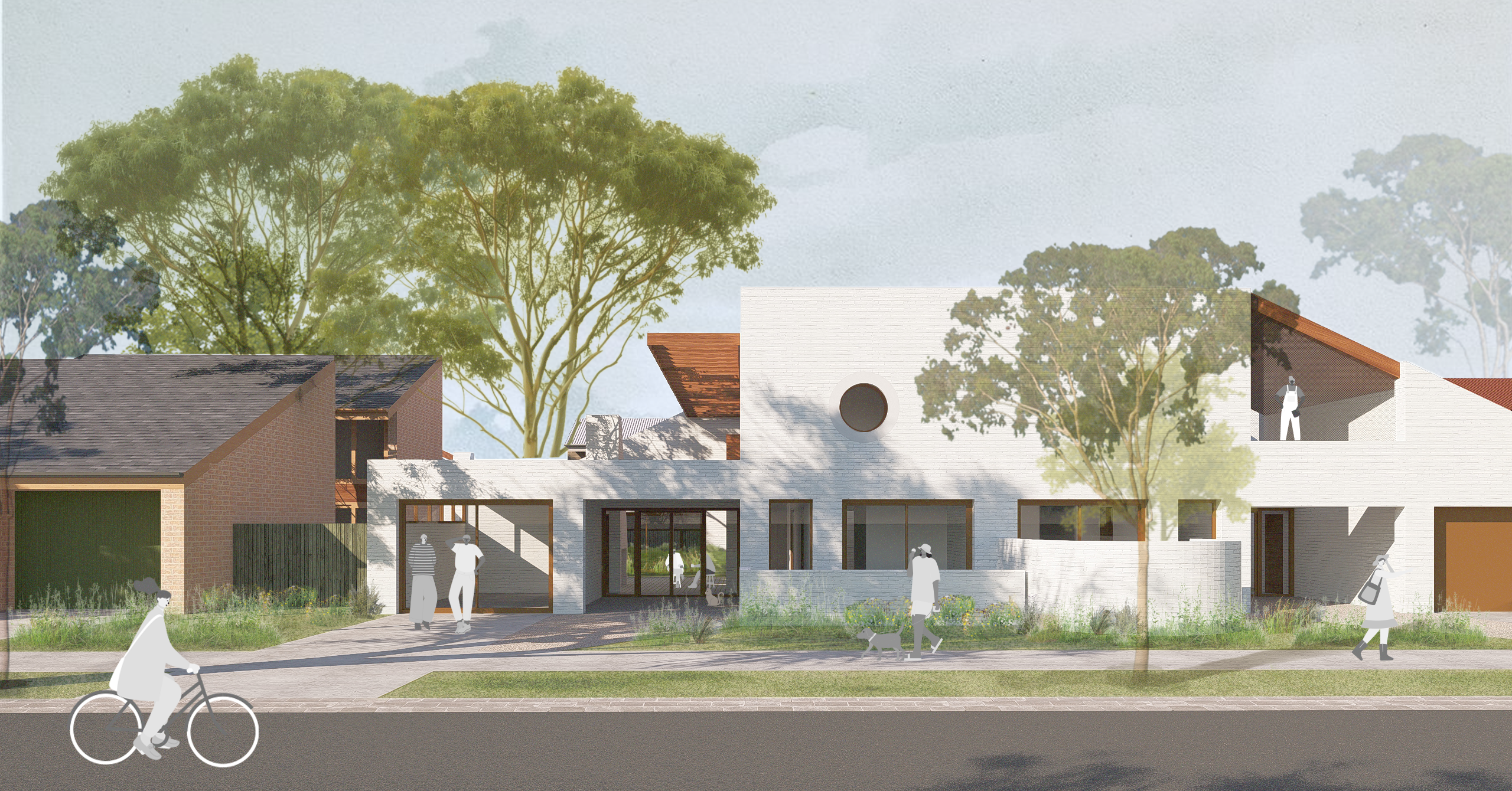
Brickworks has enlisted acclaimed architecture studio Kennedy Nolan to explore how homes could become more adaptable, energy-efficient and connected to community.