Nu Skin Beauty Mogul Puts Longtime Manhattan Pied-à-Terre up for Sale Asking $80 Million
The penthouse unit at 80 Columbus Circle in Manhattan spans 8,000 square feet and once set a price record for the city.

 2 min
2 minEight is definitely someone’s lucky number—especially when a few zeros are tacked on at the end.
The top-floor unit of the 80-storey 80 Columbus Circle in Manhattan is coming to market for the first time in more than 20 years and asking a nice round $80 million.
The full-floor unit spans over 8,000 square feet and is part of the Mandarin Oriental Residences above the hotel in the Deutsche Bank Center. It has eight rooms with eight ensuite baths, each with its own walk-in shower.
It last sold in 2005 for a hair under $30 million to cosmetics executive Sandie Tillotson, a founding member and senior vice president at the Utah-based Nu Skin Enterprises. She agreed to purchase the unit in 2001 while the complex was under development as the Time Warner Center.
Today, the six-bedroom apartment features spacious living areas and views from every room, including a close-up view of Central Park and panoramic 360-degree vistas stretching to the Mario M. Cuomo Bridge, according to listing agent Eva J. Mohr of Sotheby’s International Realty.
“There are windows all the way around,” Mohr said. “The views are spectacular and there are no obstacles in front of the windows.
The apartment comes with a library and cinema, a primary bedroom with its own lounge, an oversized kitchen, a corner breakfast area with two glass walls and a utility room with caterer-level equipment and two sinks—one for prepping flowers and the other for bathing pets.
The 80th-floor unit has never been resold and was rarely used by the seller, according to information provided by the listing agency. The corresponding top-level unit in the complex’s second tower just sold. That unit once belonged to Related Companies boss Stephen Ross and sold for $50.7 million in an off-market deal last week.
“The one that went for $55 (sic) million was completely redone with marble and it was beautiful, but you don’t have the views,” Mohr said.
When Tillotson bought the property, the $30 million contract was a record price for a condominium, according to the New York Times. In 2005, the apartment was delivered as “8,200 square feet of raw space” and Tillotson brought her own team to do the interiors, the Times reported.
Tillotson’s Nu Skin is a seller of anti-ageing and wellness products that was founded in the 1980s and is active in more than 50 international markets, particularly in China. The publicly traded company has also recently expanded into India. Nu Skin has several thousand permanent employees at its Provo, Utah, headquarters as well as tens of thousands of salespeople worldwide.
 Copyright 2020, Dow Jones & Company, Inc. All Rights Reserved Worldwide. LEARN MORE





From making unpopular decisions to learning when to listen, leaders from five businesses reveal what nobody prepared them for — and how running a company has challenged their expectations.

Technology and semiconductor shares fell sharply as investors questioned the debt financing the AI infrastructure boom and confronted higher rates and Chinese competition.

Mirvac’s 45-level Trielle has topped out at Yarra’s Edge, pairing riverfront apartments with wellness facilities, private dining and resident services.
3 min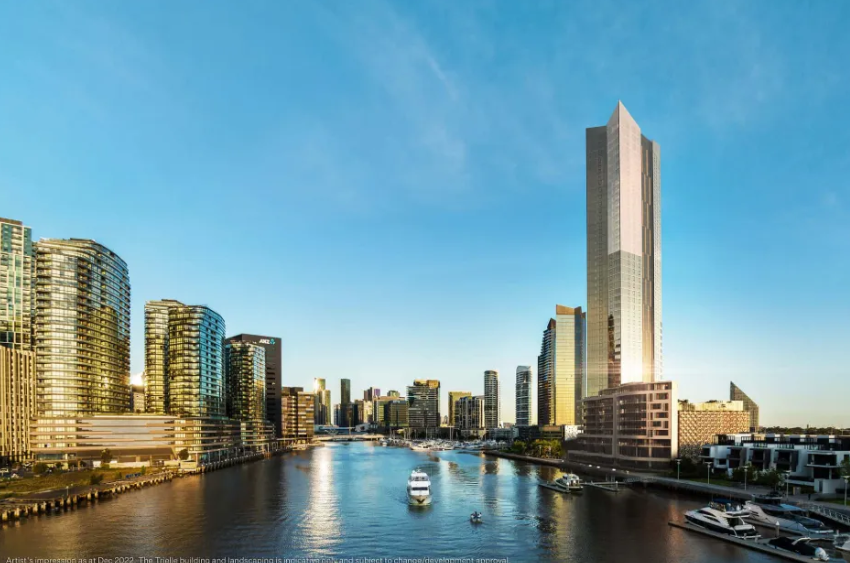
Mirvac has topped out Trielle at Melbourne’s Yarra’s Edge, with more than 70 per cent of the riverfront development sold and approximately 80 per cent of purchasers intending to make their apartment a home.
The figures, released on September 22, point to an owner-occupier audience for one of the precinct’s final residential towers. Mirvac began developing Yarra’s Edge in 2003, and its latest addition occupies one of the remaining absolute riverfront sites.
Mirvac CEO of Development Stuart Penklis said existing residents were among those moving up within the neighbourhood.
“Many purchasers already have a connection to Yarra’s Edge,” Mr Penklis said, describing buyers whose changing needs were encouraging an upgrade within the precinct.
“As one of the final residential towers within Yarra’s Edge, Trielle represents the culmination of more than two decades of creating one of Melbourne’s most established and sought-after waterfront communities,” Penklis said.
“Positioned on the Collins Street axis with absolute river frontage, Trielle offers residents a rare opportunity to enjoy sweeping views across the Yarra River, Melbourne skyline and Port Phillip Bay, while remaining seamlessly connected to the CBD. With Trielle now more than 70 per cent sold, we’re continuing to see strong demand from buyers seeking quality homes in established locations.”
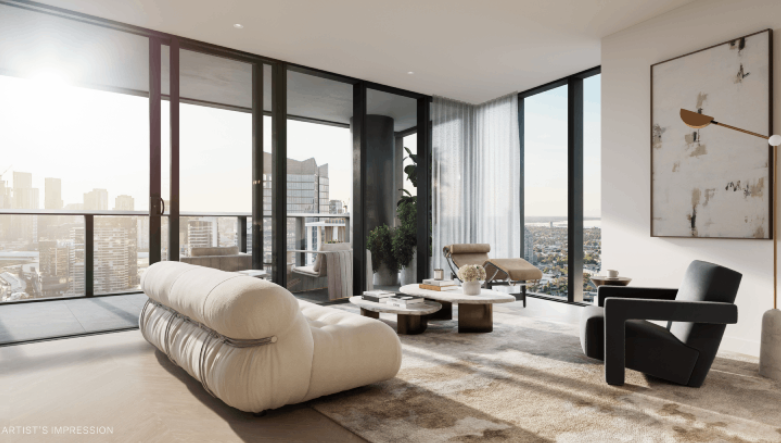
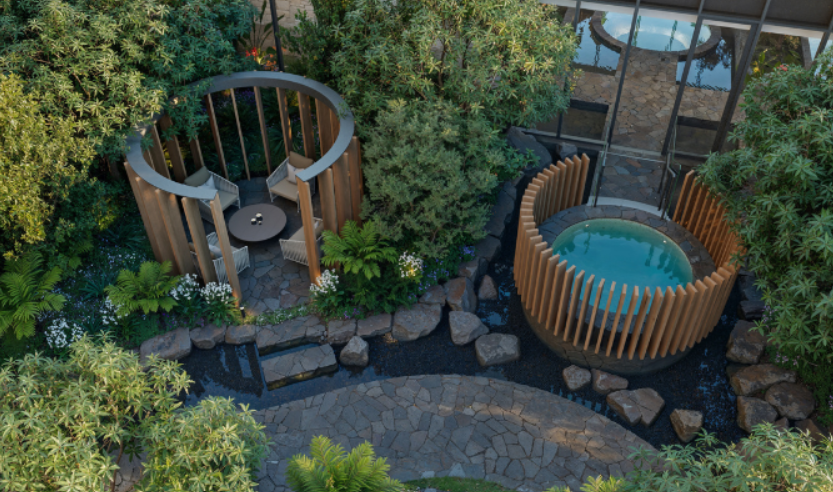
The developer also flagged a penthouse and sub-penthouse collection with larger layouts, premium finishes and broad outlooks. The planned wellness centrepiece, The Oasis, encompasses a 900-square-metre elevated urban rainforest.
Mirvac General Manager Residential Development Victoria Elysa Anderson said Trielle had resonated strongly with buyers seeking a rare lifestyle offering in Melbourne.
“Opportunities to secure a new luxury residence on a riverfront site of this calibre are incredibly rare, particularly within a community like Yarra’s Edge,” Anderson said.
“What makes Trielle unique is the combination of exceptional views, world-class residential facilities and the lifestyle that already exists around it. Residents are buying into a mature waterfront community with parks, promenades, dining, wellness and strong community connections already in place.”
The 45-level tower brings a substantial new presence to that waterfront. Its residential offering spans one-, two-, three- and four-bedroom apartments, with Signature, Prestige and Sub-Penthouse collections accommodating different household sizes. The north-facing position connects the apartments visually to the river and city beyond.
Seven storeys above the promenade, the planned Oasis combines planting and a running stream with a Scandinavian-inspired wellness club developed with spa specialist Naomi Gregory. Facilities include a 25-metre lap pool, hot magnesium pool, sauna, hydrotherapy, a gym, yoga and Pilates room, and treatment spaces.
The amenity extends beyond exercise. Residents will have access to The Biblioteca library and workspaces, ground-floor work pods, and The Salone piano lounge. A private Chef’s Table dining room offers a setting for larger gatherings, while a cinema, games room and sports lounge broaden the entertaining options. Concierge services and a dog-wash area support everyday routines.
Trielle comprises a collection of one, two, three and four-bedroom residences. Reflecting strong demand from owner occupiers, approximately 80 per cent of purchasers to date intend to live in their homes, highlighting the project’s appeal to those seeking a long-term waterfront lifestyle.
Mirvac has recently delivered The Albertine, a premium apartment development on the edge of Melbourne’s CBD, and is nearing completion of Prince & Parade in Brunswick, further strengthening its portfolio of thoughtfully designed apartment communities in some of Melbourne’s most sought-after urban locations.
Studio apartments have almost disappeared from new Australian developments. Lura is bringing them back to Burleigh Heads from $495,000.

A bold new era for Australian luxury: MAISON de SABRÉ launches The Palais, a flagship handbag eight years in the making.