Shein’s Bargain-App Formula Crumbles Under Trump
Chinese fashion giant faces a double whammy of steep U.S. tariffs and an end to its duty-free shipping.

 4 min
4 min
The meteoric popularity among American shoppers of China-founded app Shein was greatly helped by duty-free shipping of its ultra-cheap fashion. After President Trump closed that option for Chinese goods, its clothes will now bear the full impact of his new tariffs.
The U.S. tariffs imposed on Wednesday and China’s retaliation throw a wet blanket over all goods trade between the two countries. For Shein, the additional impact of Trump’s move to end the so-called de mini m is exemption for China means a double hit and perhaps the most pivotal challenge for the fashion giant, whose links to China have long landed it at the center of U.S.-China tensions.
The fashion giant had already shifted its plans for an initial public offering from New York to London, where it had hoped to list by June. But Trump’s new tariffs on China and elimination of duty-free exemption for China on goods valued at $800 or less effective May 2 makes its prospects of going public at all increasingly dim.
The nimble supply chain that Shein prides itself on now faces enormous pressure to keep costs low.
“Shein will probably have to reinvent the wheel,” said Vinci Zhang , an analyst at research and analytics firm M Science. “It’s almost certain they will raise the price, otherwise they won’t survive.”
Shein didn’t respond to a request for comment.
Because Trump only ended the de minimis option for China, Shein could still ship wares to the U.S. tariff-free from other countries. Shein had encouraged some suppliers to move their factories to Vietnam, but Trump’s announcement last week of 46% tariffs on goods from Vietnam has undermined such efforts. On Wednesday, Trump authorized a 90-day delay on most tariffs while increasing tariffs on China.
Cathy Lin , who runs a Guangzhou-based contract manufacturer that supplies Shein and its Chinese rival Temu, has put on hold her plan to set up a factory in Vietnam. “Moving there might not be a once-and-for-all solution,” she said. Lin said she has found two partners in Macau and Vietnam who can temporarily help ship parcels to the U.S.
Trump first tried to end the duty-free exemption for China in February, but had to delay the crackdown to let the Commerce Department set up a system to process inspections and levies on the shipments. Shein, now based in Singapore, has argued that the de minimis exemption isn’t critical to its success. Nevertheless, during the two-month reprieve, Shein has scrambled to prepare.
Shein, whose clothing, on average, costs 20% to 35% less than fast-fashion rivals such as Zara and H&M , has raised prices on some items in the past two months. Eight sellers on Shein and Temu, which also increased some prices, said orders from the U.S. have fallen by 20% to 50% in March compared with January.
After Trump’s latest tariff announcement, Brian Luo , who runs a U.S. delivery company that helps companies such as Shein and Temu get parcels to U.S. customers, said the delivery orders he received for Monday plunged to 1,600 from a daily average of 4,000.
“Once the tariffs are added, people might shift back to Amazon , especially because their delivery speed is faster,” Luo said.
Under the new U.S. tariffs, apparel imported from China could face total levies close to 150%, according to Sheng Lu, professor of fashion and apparel studies at the University of Delaware.
Shein has no customers in China, though it subcontracts with thousands of factories there to power its enormous selection of cheap apparel and respond to fleeting consumer tastes. The company has been diversifying its supply chain in the past few years and now also manufactures in Brazil and Turkey, closer to its consumers in North America and Europe.
In recent months, Shein has been in talks with manufacturers in the U.S. to produce some of its clothing there, people familiar with the matter said. More than one-third of Temu’s U.S. orders are now fulfilled by sellers with inventory in the U.S.
In a rare public comment, commerce officials in Guangzhou, where many Shein suppliers are based, told a Communist Party-controlled newspaper that Shein was increasing investments in China and denied that its suppliers are moving out of China.
Nonetheless, Goldman Sachs analysts on Monday lowered forecasts for Temu’s gross sales by as much as a third to a range of $63 billion to $84 billion.
Temu, owned by Chinese e-commerce company PDD Holdings , didn’t respond to a request for comment.
Last year, companies sent small packages worth $46 billion to the U.S. from China under the de minimis exception, representing 11% of U.S. imports from China, Nomura economists estimated.
While the U.S. is one of its biggest markets, Shein sells to more than 150 countries.
In a chat group on WeChat with more than 200 merchants who sell to American consumers on Shein or Temu, vendors raced to come up with contingency plans. “If I can’t sell to the U.S., that’s OK. There are still other good markets,” said Wang Xianwei , a kitchen-utensil seller in China.
But Shein has run into regulatory and political issues around the world. The European Union is also looking to close its own version of the de minimis provision, and some countries have already ended similar loopholes.
Shein’s revenue grew 19% to around $38 billion in 2024, below the increases of 40% or more that the company had seen in the past few years, people familiar with the retailer said.
Since its New York listing plans collapsed, Shein has strengthened its focus on compliance to meet political and regulatory challenges. Its London IPO application has been awaiting approval from Chinese and British regulators since last June.
“Trump’s tariffs and other policies are closing the window for the IPO,” said a person close to Beijing’s thinking.
 Copyright 2020, Dow Jones & Company, Inc. All Rights Reserved Worldwide. LEARN MORE





From making unpopular decisions to learning when to listen, leaders from five businesses reveal what nobody prepared them for — and how running a company has challenged their expectations.

Technology and semiconductor shares fell sharply as investors questioned the debt financing the AI infrastructure boom and confronted higher rates and Chinese competition.

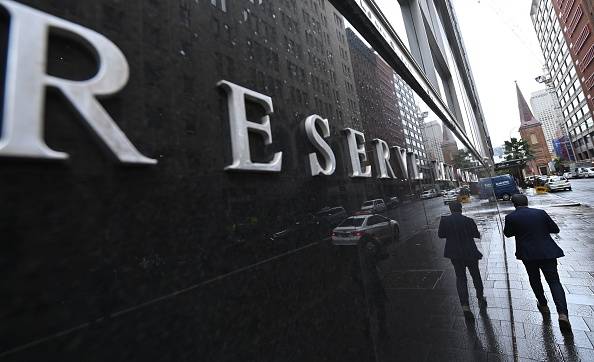
Technology and semiconductor shares fell sharply as investors questioned the debt financing the AI infrastructure boom and confronted higher rates and Chinese competition.
4 minA sharp technology sell-off has exposed a new anxiety on global markets: whether the enormous borrowing behind the artificial-intelligence infrastructure boom can generate sufficient returns as interest rates rise and Chinese competition intensifies.
The artificial-intelligence investment boom has powered technology shares, semiconductor manufacturers and data-centre operators to extraordinary heights. Last week, investors were given a reminder that much of this expansion is being built with borrowed money.
The technology-heavy Nasdaq Composite fell 4.5 per cent over the week ended October 16, its weakest performance since late June. Semiconductor shares suffered an even deeper correction, with the Philadelphia Semiconductor Index losing about 11.4 per cent.
The selling spread quickly through global markets. Micron Technology fell 14.6 per cent over the week, while South Korea’s Samsung Electronics and SK Hynix dropped approximately 18 per cent and 24 per cent respectively.
This was more than a routine bout of profit-taking. Investors were reassessing three interconnected risks: higher interest rates, the rapidly expanding debt burden attached to AI infrastructure and the prospect of stronger competition from Chinese memory-chip manufacturers.
The debt behind the AI build-out
Artificial intelligence requires a physical infrastructure network of enormous scale. Data centres must be built, advanced processors purchased, power supplies secured and cooling systems installed before customers begin generating meaningful revenue from them.
Technology companies are increasingly supplementing their own cash with corporate bonds, syndicated loans, equipment leases, private credit and project-level financing.
JPMorgan describes the emerging funding model as a combination of conventional corporate borrowing and project finance tied to individual data-centre assets. In Australia, the Reserve Bank estimates that syndicated loans accounted for approximately three-quarters of data-centre financing during 2025 and 2026 to date.
The numbers are becoming large enough to affect broader credit markets. The Federal Reserve Bank of Dallas has cited Wall Street estimates suggesting AI-related investment-grade bond issuance could approach US$300 billion in 2026 alone.
That borrowing is not automatically problematic. Debt can be an efficient way to finance long-lived infrastructure when future revenue is sufficiently predictable. The concern is that AI technology, customer demand and computing economics are changing much faster than the repayment schedules attached to the assets.
A data centre financed today may carry debt for years. Investors must therefore make assumptions about future utilisation rates, electricity prices, chip performance, customer concentration and the amount businesses will ultimately pay for AI computing.
When interest rates rise, those assumptions become less forgiving.
Inflation changes the calculation
September’s US inflation data intensified the pressure. Consumer prices increased 3.7 per cent over the year, ahead of market expectations and up from 3.4 per cent in August.
The hotter reading reduced confidence that interest rates would fall quickly and pushed bond yields higher. That matters particularly for companies whose valuations depend on profits expected well into the future, as well as highly leveraged infrastructure operators that may need to refinance.
CoreWeave has emerged as a closely watched test case. The specialist cloud-computing company has accumulated substantial debt and lease obligations to build AI capacity, while relying on a concentrated group of large technology customers.
Its shares fell sharply during the sell-off, while the cost of insuring its debt against default climbed. CoreWeave has argued that its contracted backlog more than covers its obligations and that financial markets do not always understand its business model. Nevertheless, its securities have become a proxy for investor confidence in debt-funded AI infrastructure.
Oracle, another major investor in AI computing capacity, fell 8.8 per cent in Friday trading, while CoreWeave dropped 15.5 per cent.
The question is shifting from how much AI infrastructure can be built to how profitably it can be operated.
China adds another source of pressure
Interest rates were not the only catalyst. Reports of advances by Chinese memory-chip producer ChangXin Memory Technologies raised concerns that lower-cost Chinese products could increase competition across the global semiconductor industry.
Memory chips are essential to AI systems, but the industry is historically cyclical. Periods of tight supply and high pricing can encourage rapid investment, eventually producing oversupply and falling margins.
The prospect of a well-funded Chinese competitor expanding its technological capabilities unsettled investors in Samsung, SK Hynix and Micron. It also demonstrated that AI-related demand does not insulate chipmakers from conventional competitive pressures.
That combination—slower rate cuts, more expensive financing and potentially cheaper supply—challenged the assumption that every company exposed to AI would enjoy continually expanding margins.
A reset rather than the end of the boom
The sell-off does not establish that the AI boom is ending. Demand for computing power remains strong, the largest technology companies continue to generate formidable cash flows and many infrastructure projects are backed by long-term customer contracts.
What has changed is the market’s willingness to overlook the price and financing structure of that growth.
The most resilient companies are likely to be those able to fund investment from operating cash flow, secure long-duration customers and demonstrate that new capacity will earn returns comfortably above its financing costs.
More speculative operators may face greater scrutiny, particularly where debt is expensive, customers are concentrated or expected revenue depends on demand that has not yet materialised.
For Australian investors, the lesson extends beyond US technology shares. Local data-centre operators, infrastructure funds, electricity suppliers and property groups are increasingly exposed to the same investment cycle.
Artificial intelligence may remain one of the defining growth themes of the decade. But last week’s correction showed that enthusiasm for the technology does not eliminate financial discipline.
The next stage of the AI boom will be judged not only by computing power, model performance or demand for chips, but by something more traditional: whether the assets being financed can generate enough cash to repay the money borrowed to build them.
Fact box
Nasdaq Composite: Down 4.5 per cent for the week ended October 16, 2026
Philadelphia Semiconductor Index: Down approximately 11.4 per cent
Micron Technology: Down approximately 14.6 per cent
Samsung Electronics: Down approximately 18 per cent
SK Hynix: Down approximately 24 per cent
US September inflation: 3.7 per cent annually
Estimated 2026 AI-related investment-grade issuance: Approximately US$300 billion
Australian shares fell on Thursday as Wall Street weakness, rising oil and persistent rate concerns weighed on most of the market. The S&P/ASX 200 declined 0.72 per cent to 8,702. The All Ordinaries lost 0.66 per cent to finish at 8,897. Mining stocks were hit particularly hard, while real estate also dragged on the index. …
Continue reading “ASX falls 0.7 per cent as miners and property stocks retreat”

From elevated skincare to handcrafted home pieces, this year’s most thoughtful gifts go beyond the expected.