The Little Sins We Commit at Work—and the Bosses Who Are Cracking Down
Companies are strictly enforcing rules to show who’s in charge and control expenses

 4 min
4 min
Ever used the office printer for your kid’s homework assignment or scrolled Facebook Marketplace during an all-hands Zoom meeting? Fair warning: Your employer may be paying close attention.
Big companies on the hunt for efficiency are deploying perk police to bust employees for seemingly minor infractions that, by the letter of company law, can result in termination.
“We have had lots of requests for new controls,” says Katie MacKillop, U.S. director of Payhawk, which administers company credit-card accounts and watches for misuse.
Clients are asking Payhawk to restrict when and where company cards work. For example, a company can limit a lunch allowance to be available only on weekdays from 11 a.m. to 2 p.m. and be usable at Chipotle but not at Kroger . In partnership with Visa and Mastercard , Payhawk is developing a feature that sends real-time spending alerts to corporate finance teams and allows them to instantly block suspicious transactions by employees.
MacKillop’s firm doesn’t track what happens to employees who violate company policies, but she says there is little doubt employers are taking codes of conduct more seriously.
That helps explain reports of crackdowns at Meta , where employees were fired for spending $25 meal allowances on other items, Ernst & Young dismissing workers who watched multiple training videos at the same time, and Target canning employees who jumped the line to buy coveted Stanley water bottles ahead of the general public. The companies declined to comment on the incidents.
As the employer-employee power struggle tilts in companies’ favour, some businesses are using strict rules enforcement to make an example of rule-breakers or reduce payroll without having a real layoff. An employer feeling buyer’s remorse after a post pandemic hiring spree can use the company handbook to push out unwanted employees, says human-resources consultant Suzanne Lucas.
“When you are desperately hiring, you’re definitely overlooking things,” says Lucas, who cheekily brands herself the Evil HR Lady. “When you need to cut head count, you tighten up the rules.”
Workers argue many so-called perks are designed to increase productivity. A free meal is an enticement to stay at your desk. A recorded HR tutorial is less a reprieve from the awkwardness of in-person, sexual-harassment training than an invitation to keep plugging away while paying half attention to a video on your second monitor.
Why gin up excuses to fire people instead of simply announcing a round of job cuts? A few reasons, Lucas says.
Layoffs imply a business is struggling, and companies may want to avoid shaking the confidence of customers or investors. Employers often feel obligated—or are contractually bound—to offer severance packages to laid-off workers. Firing people for cause can save money, she says.
Then there’s the effect on a company’s remaining employees. Few things put workers on notice like seeing colleagues pink-slipped for minor offences. And, as a matter of principle, stealing is stealing even if it is a small amount of company money or time.
Warning shot
If a goal of harsh consequences is to keep people in line, then it’s working on Matt Tedesco.
When he read a Financial Times report that Meta fired employees who spent Grubhub meal allowances on things like acne pads and laundry detergent in a saga dubbed “Grubgate,” he flashed back to a similar episode at a defunct company where he used to work. He says a half dozen colleagues in sales were shown the door because they used meal stipends to buy groceries.
Tedesco, 47, describes himself as a rule follower in general and says he is doubly sure to do everything by the book in the current climate. He started this fall as a sales account executive at Hearst after being laid off by S&P Global last year.
“It’s hard to get a job right now—it took me months,” he says. “From an employee standpoint, my takeaway is don’t abuse any privilege because it’s not worth the risk.”
People in a range of industries admitted to me privately that they’ve broken rules like these in the past but said they’d never cop to it publicly. One likened today’s workplace to a street with a 30 mph speed limit, where you routinely get away with driving 37 mph and feel blindsided when you’re pulled over and ticketed. Enforcement levels fluctuate, this person said, and seem to be high right now.
Cracking down is a time-honoured tactic when companies feel financial pressure. In 2009, in the teeth of the Great Recession, a former private-client relationship manager at Fidelity told the Fort Worth Star-Telegram that he and three colleagues lost their jobs for running fantasy-football leagues at work, in violation of a corporate policy against gambling. The stakes in his league: $20. Fidelity had laid off 1,700 employees earlier that year.
And in 2018, when Wells Fargo announced significant head count cuts, the bank fired or suspended more than a dozen bankers who put dinners on the company tab and doctored the receipts. The bank said at the time that it pays for meals when employees work late, but some ordered takeout before the allowed hour and changed the timestamps on the bills.
Without knowing all the details, it can be hard to understand why companies police small dollars when they appear to spend freely on pricier items, says Jennifer Dulski , chief executive of Rising Team, a maker of employee-engagement software. She notes Meta offices are known for vending machines stocked with headphones, keyboards and other electronics available to employees free of charge, yet the company is getting serious about lunch money.
“They’re either weeding or just trying to make an example of behaviour they think is inappropriate,” Dulski says.
Employers have good reasons to be sticklers in some cases, says Cedar Boschan, a forensic accountant in Culver City, Calif. Companies can invite tax trouble if money earmarked for perks and business expenses is misspent on other things.
So, don’t put all of the blame for policy crackdowns on human resources. Save some for the one department that HR might beat in a popularity contest: accounting.
 Copyright 2020, Dow Jones & Company, Inc. All Rights Reserved Worldwide. LEARN MORE





From making unpopular decisions to learning when to listen, leaders from five businesses reveal what nobody prepared them for — and how running a company has challenged their expectations.

Technology and semiconductor shares fell sharply as investors questioned the debt financing the AI infrastructure boom and confronted higher rates and Chinese competition.

Technology and semiconductor shares fell sharply as investors questioned the debt financing the AI infrastructure boom and confronted higher rates and Chinese competition.
4 minA sharp technology sell-off has exposed a new anxiety on global markets: whether the enormous borrowing behind the artificial-intelligence infrastructure boom can generate sufficient returns as interest rates rise and Chinese competition intensifies.
The artificial-intelligence investment boom has powered technology shares, semiconductor manufacturers and data-centre operators to extraordinary heights. Last week, investors were given a reminder that much of this expansion is being built with borrowed money.
The technology-heavy Nasdaq Composite fell 4.5 per cent over the week ended October 16, its weakest performance since late June. Semiconductor shares suffered an even deeper correction, with the Philadelphia Semiconductor Index losing about 11.4 per cent.
The selling spread quickly through global markets. Micron Technology fell 14.6 per cent over the week, while South Korea’s Samsung Electronics and SK Hynix dropped approximately 18 per cent and 24 per cent respectively.
This was more than a routine bout of profit-taking. Investors were reassessing three interconnected risks: higher interest rates, the rapidly expanding debt burden attached to AI infrastructure and the prospect of stronger competition from Chinese memory-chip manufacturers.
The debt behind the AI build-out
Artificial intelligence requires a physical infrastructure network of enormous scale. Data centres must be built, advanced processors purchased, power supplies secured and cooling systems installed before customers begin generating meaningful revenue from them.
Technology companies are increasingly supplementing their own cash with corporate bonds, syndicated loans, equipment leases, private credit and project-level financing.
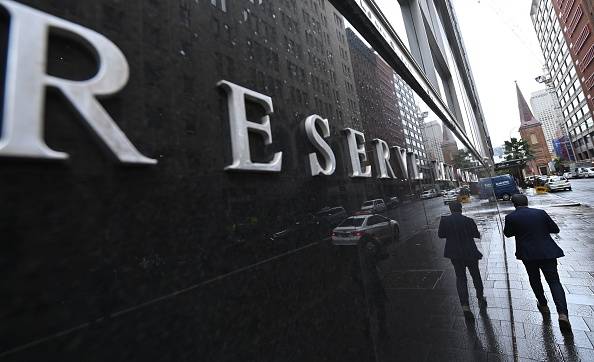
JPMorgan describes the emerging funding model as a combination of conventional corporate borrowing and project finance tied to individual data-centre assets. In Australia, the Reserve Bank estimates that syndicated loans accounted for approximately three-quarters of data-centre financing during 2025 and 2026 to date.
The numbers are becoming large enough to affect broader credit markets. The Federal Reserve Bank of Dallas has cited Wall Street estimates suggesting AI-related investment-grade bond issuance could approach US$300 billion in 2026 alone.
That borrowing is not automatically problematic. Debt can be an efficient way to finance long-lived infrastructure when future revenue is sufficiently predictable. The concern is that AI technology, customer demand and computing economics are changing much faster than the repayment schedules attached to the assets.
A data centre financed today may carry debt for years. Investors must therefore make assumptions about future utilisation rates, electricity prices, chip performance, customer concentration and the amount businesses will ultimately pay for AI computing.
When interest rates rise, those assumptions become less forgiving.
Inflation changes the calculation
September’s US inflation data intensified the pressure. Consumer prices increased 3.7 per cent over the year, ahead of market expectations and up from 3.4 per cent in August.
The hotter reading reduced confidence that interest rates would fall quickly and pushed bond yields higher. That matters particularly for companies whose valuations depend on profits expected well into the future, as well as highly leveraged infrastructure operators that may need to refinance.
CoreWeave has emerged as a closely watched test case. The specialist cloud-computing company has accumulated substantial debt and lease obligations to build AI capacity, while relying on a concentrated group of large technology customers.
Its shares fell sharply during the sell-off, while the cost of insuring its debt against default climbed. CoreWeave has argued that its contracted backlog more than covers its obligations and that financial markets do not always understand its business model. Nevertheless, its securities have become a proxy for investor confidence in debt-funded AI infrastructure.
Oracle, another major investor in AI computing capacity, fell 8.8 per cent in Friday trading, while CoreWeave dropped 15.5 per cent.
The question is shifting from how much AI infrastructure can be built to how profitably it can be operated.
China adds another source of pressure
Interest rates were not the only catalyst. Reports of advances by Chinese memory-chip producer ChangXin Memory Technologies raised concerns that lower-cost Chinese products could increase competition across the global semiconductor industry.
Memory chips are essential to AI systems, but the industry is historically cyclical. Periods of tight supply and high pricing can encourage rapid investment, eventually producing oversupply and falling margins.
The prospect of a well-funded Chinese competitor expanding its technological capabilities unsettled investors in Samsung, SK Hynix and Micron. It also demonstrated that AI-related demand does not insulate chipmakers from conventional competitive pressures.
That combination—slower rate cuts, more expensive financing and potentially cheaper supply—challenged the assumption that every company exposed to AI would enjoy continually expanding margins.
A reset rather than the end of the boom
The sell-off does not establish that the AI boom is ending. Demand for computing power remains strong, the largest technology companies continue to generate formidable cash flows and many infrastructure projects are backed by long-term customer contracts.
What has changed is the market’s willingness to overlook the price and financing structure of that growth.
The most resilient companies are likely to be those able to fund investment from operating cash flow, secure long-duration customers and demonstrate that new capacity will earn returns comfortably above its financing costs.
More speculative operators may face greater scrutiny, particularly where debt is expensive, customers are concentrated or expected revenue depends on demand that has not yet materialised.
For Australian investors, the lesson extends beyond US technology shares. Local data-centre operators, infrastructure funds, electricity suppliers and property groups are increasingly exposed to the same investment cycle.
Artificial intelligence may remain one of the defining growth themes of the decade. But last week’s correction showed that enthusiasm for the technology does not eliminate financial discipline.
The next stage of the AI boom will be judged not only by computing power, model performance or demand for chips, but by something more traditional: whether the assets being financed can generate enough cash to repay the money borrowed to build them.
Fact box
Nasdaq Composite: Down 4.5 per cent for the week ended October 16, 2026
Philadelphia Semiconductor Index: Down approximately 11.4 per cent
Micron Technology: Down approximately 14.6 per cent
Samsung Electronics: Down approximately 18 per cent
SK Hynix: Down approximately 24 per cent
US September inflation: 3.7 per cent annually
Estimated 2026 AI-related investment-grade issuance: Approximately US$300 billion

Here’s how they are looking at artificial intelligence, interest rates and economic pressures.

The pandemic-fuelled love affair with casual footwear is fading, with Bank of America warning the downturn shows no sign of easing.