Rediscovered John Lennon Guitar Heads to Auction, Expected to Set Records

 3 min
3 min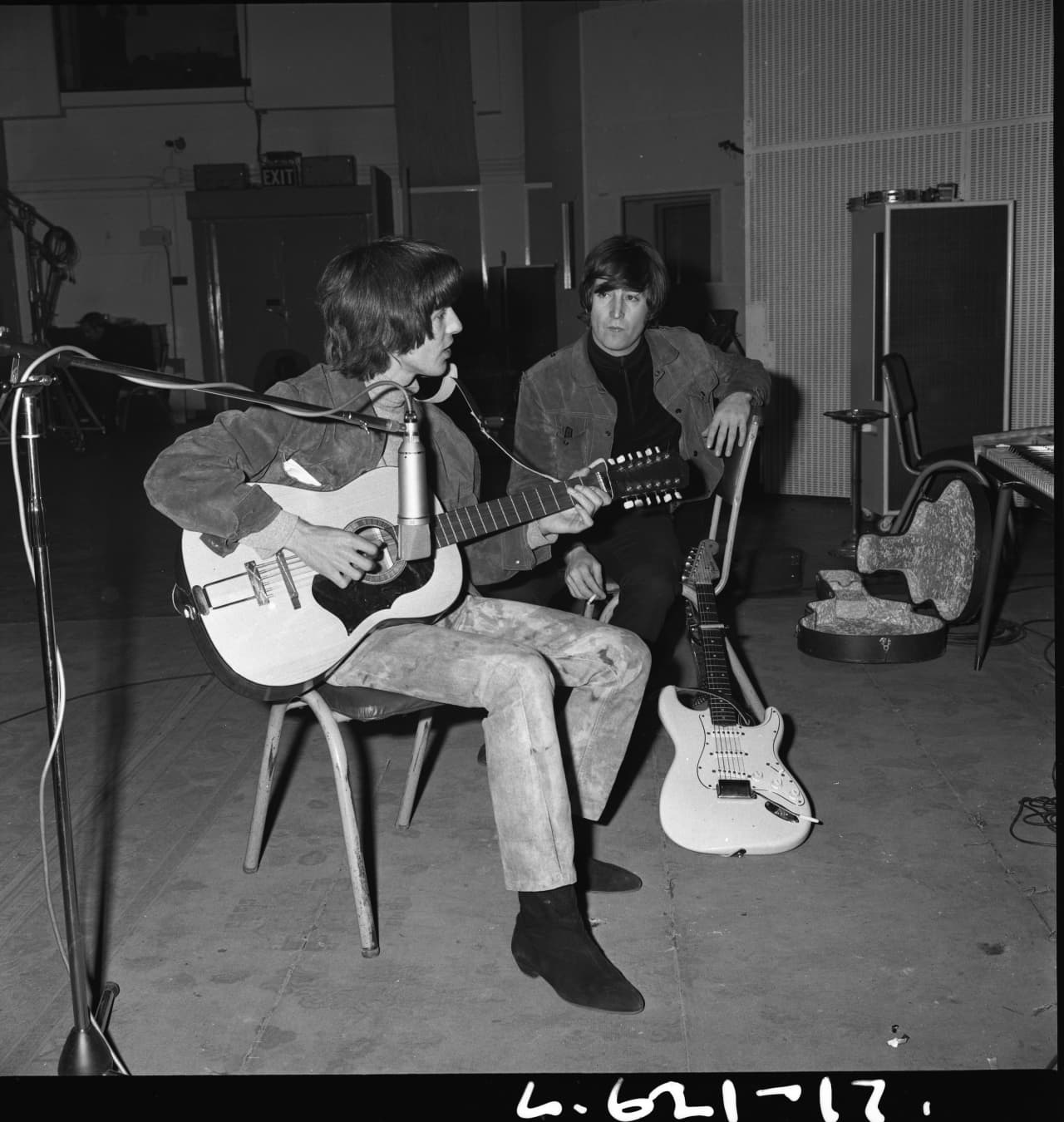
Lost for decades, an acoustic guitar John Lennon used at the height of the Beatles’ fame is going up for auction after being found in the attic of a home in the British countryside.
The 1965 Framus Hootenanny is arguably one of the most historically important guitars in the history of the Beatles, and was used on some of the group’s classic songs and played by Lennon in the movie Help! , released the same year.
The 12-string acoustic guitar will headline Julien’s Auctions Music Icons event on May 29 and 30 at the Hard Rock Cafe in New York, the auction house announced Tuesday morning in London.
Darren Julien, the firm’s co-founder and executive director, expects the Framus to exceed its presale estimate of between US$600,000 and US$800,000 and says it could set a new record for the highest-selling Beatles guitar, a record his auction house set nearly a decade ago.
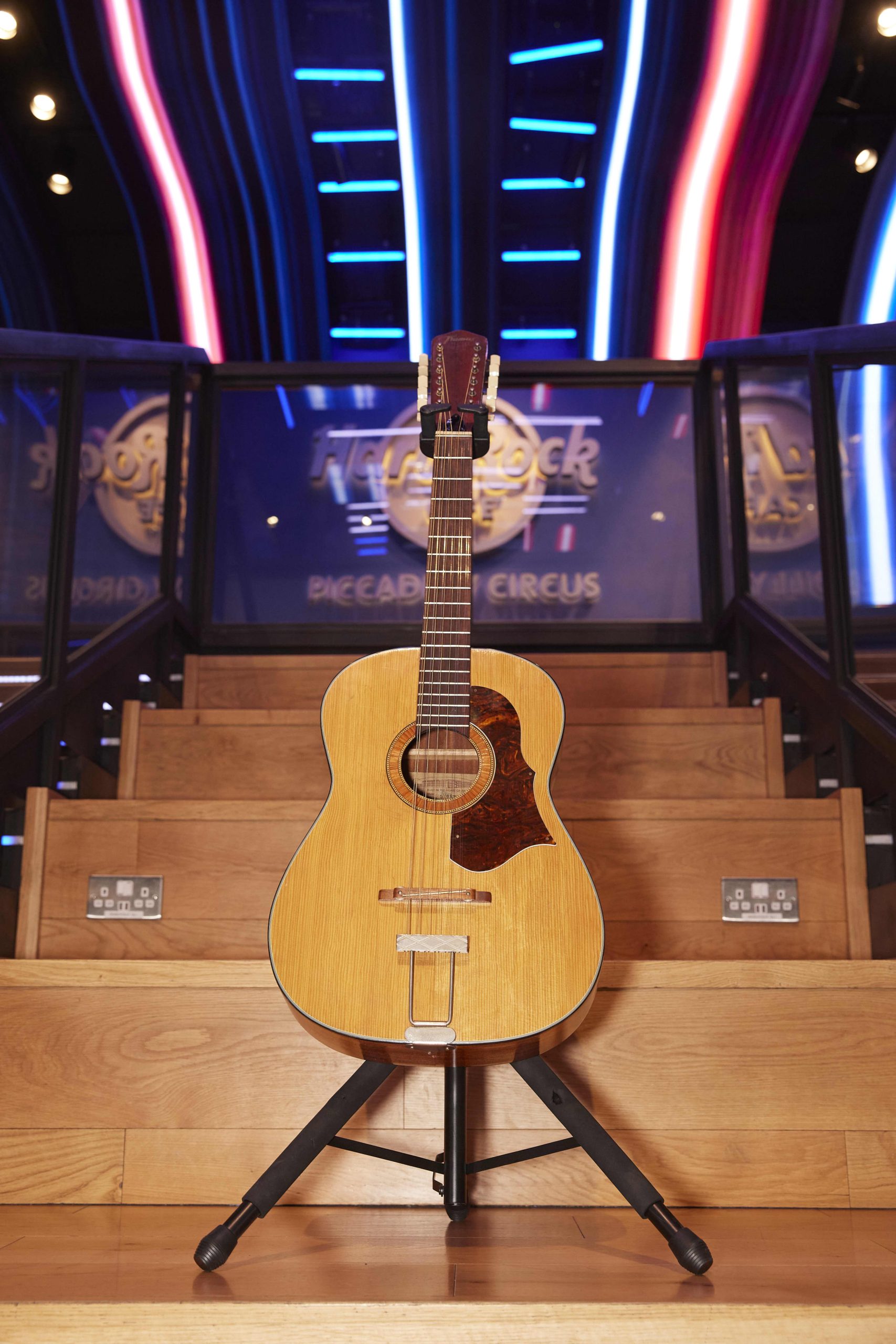
Rupert Hitchcox/Julien’s auctions
“Julien’s sold a John Lennon [Gibson J-160E] guitar in 2015 for US$2.4 million, and because this, historically speaking, is a more significant guitar, our expectation is that this guitar—played by John Lennon and George Harrison on the Help! album and other recordings—will be in the top five most expensive guitars ever sold at auction,” Julien says. “It’s likely the last chance for someone to buy and personally own an iconic John Lennon/George Harrison guitar.”
While equating its discovery to that of a “lost Rembrandt or Picasso,” Julien believes this is the greatest find of a Beatles guitar since Paul McCartney ’s lost 1961 Höfner bass, which was returned to him in February after it had been stolen in 1972.
The rediscovered Framus was famously seen in the 1965 film Help! , and was used in recording sessions for classics such as “You’ve Got To Hide Your Love Away,” “It’s Only Love” and “I’ve Just Seen A Face.” It was also played by George Harrison on the rhythm track for “Norwegian Wood” on the 1966 album Rubber Soul .
According to the auction house, by the late-1960s the guitar was in the possession of Gordon Waller of the British pop duo Peter & Gordon, who later gave it to their road managers. The instrument was recently discovered in an attic in rural Britain where it sat forgotten and unplayed for more than 50 years. After finding the guitar in the midst of a move, the homeowners contacted Julien’s.
Along with co-founder Martin Nolan, Julien traveled to the U.K. and immediately recognised that it was the storied Help! guitar. While on the premises, they also discovered the original guitar case in the trash and rescued it. It’s an Australian-made Maton case that can be seen in photos taken of The Beatles in 1965 The sale of the guitar is accompanied by the case and a copy of the book The Beatles: Photographs From The Set of Help by Emilo Lari.
In addition to Lennon’s acoustic Gibson J-160E—which fetched three times its presale estimate—Julien’s has broken multiple Beatles records, including Ringo Starr’s Ludwig drum kit (which sold for US$2.2 million), the drumhead played on the Ed Sullivan Show (US$2.2 million), and a personal copy of the White Album , (US$790,000), all of which sold in 2015.
Julien’s also holds the record for the world’s most expensive guitar ever sold at auction: Kurt Cobain’s MTV Unplugged 1959 Martin D-18E acoustic electric guitar, which sold in 2020 for US$6 million.
More than 1,000 pieces of music memorabilia will also be part of the auction, including items used by the likes of AC/DC, Nirvana, Guns N’ Roses, Judas Priest, Heart, Queen, and Tupac Shakur.
Sartorial highlights include custom dresses worn by Tina Turner (Versace) and Amy Winehouse (Fendi), both of which are expected to sell for between US$4,000 and $6,000, and Michael Jackson’s stage-worn “Billie Jean” jacket from 1984’s Victory Tour (presale estimate: US$80,000 to $100,000).
Bidders will have the chance to buy items benefitting a pair of U.K. charities. Several collectibles from The Who and other British musicians will be sold to benefit the Teenage Cancer Trust, and an assortment of memorabilia—ranging from a Stella McCartney dress worn by Helen Mirren and an Armani jacket stage-worn by Phil Collins to artwork created and signed by Pierce Brosnan—will be offered to help fund the King’s Trust.
Rounding out the two-day auction is Randy Bachman’s collection of more than 200 museum-quality guitars. Known for his role in The Guess Who and Bachman-Turner Overdrive, the Canadian rock star used the instruments on hits such as “These Eyes,” “Takin’ Care of Business,” “You Ain’t Seen Nothin’ Yet,” and “American Woman.”
The public can view the Help! guitar and other auction highlights at Hard Rock Cafes in London (April 23-29) and New York City (May 22-28).
 Copyright 2020, Dow Jones & Company, Inc. All Rights Reserved Worldwide. LEARN MORE




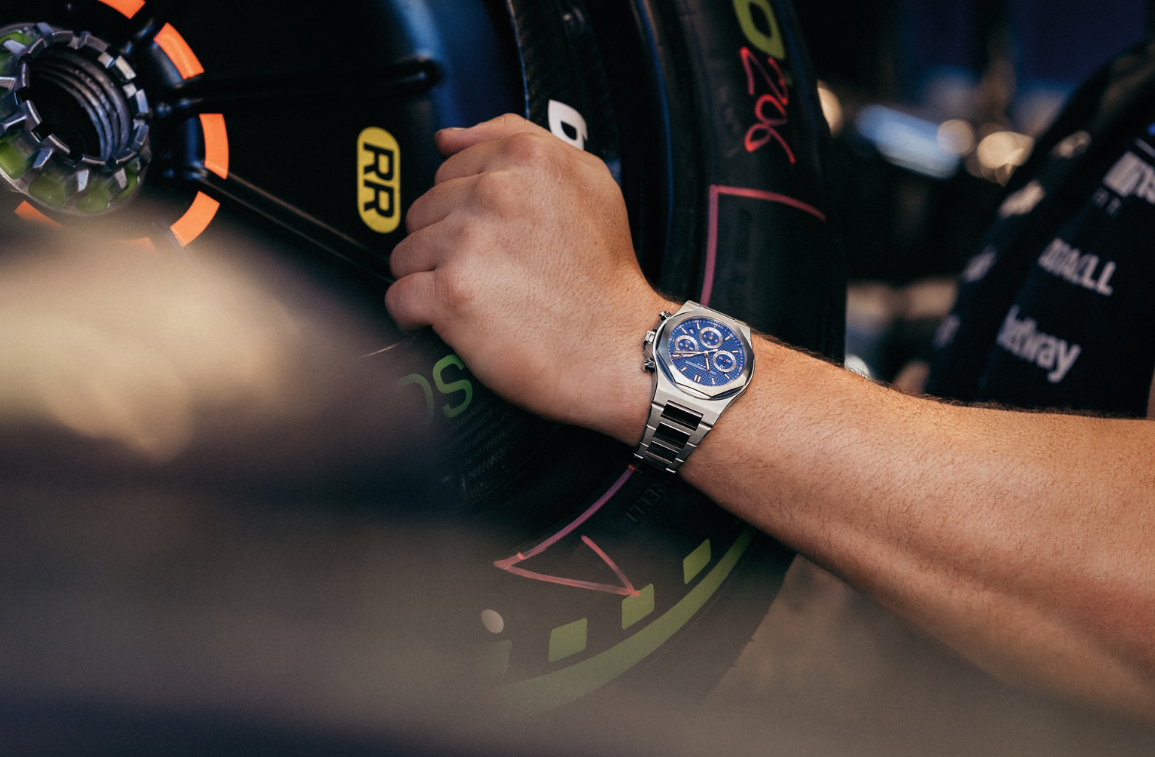
The Swiss watchmaker’s first collaboration with Atlassian Williams F1 Team produces two sporting Laureato models inspired by the team’s 2026 racing car.
Victorian auction buyers will soon receive a piece of information that has traditionally been withheld until bidding reaches it: the vendor’s reserve price. Under new property-sale and underquoting laws, agents must publish the agreed reserve at least seven days before an auction or fixed-date sale. Most changes begin on 1 October 2026 and apply to …
Continue reading “Victoria’s New Auction Rules Will Force Reserve Prices Into the Open”
The Swiss watchmaker’s first collaboration with Atlassian Williams F1 Team produces two sporting Laureato models inspired by the team’s 2026 racing car.
3 minGirard-Perregaux has revealed the first watches created through its partnership with Atlassian Williams F1 Team, bringing the British racing team’s colours to one of Switzerland’s most recognisable integrated-bracelet designs.
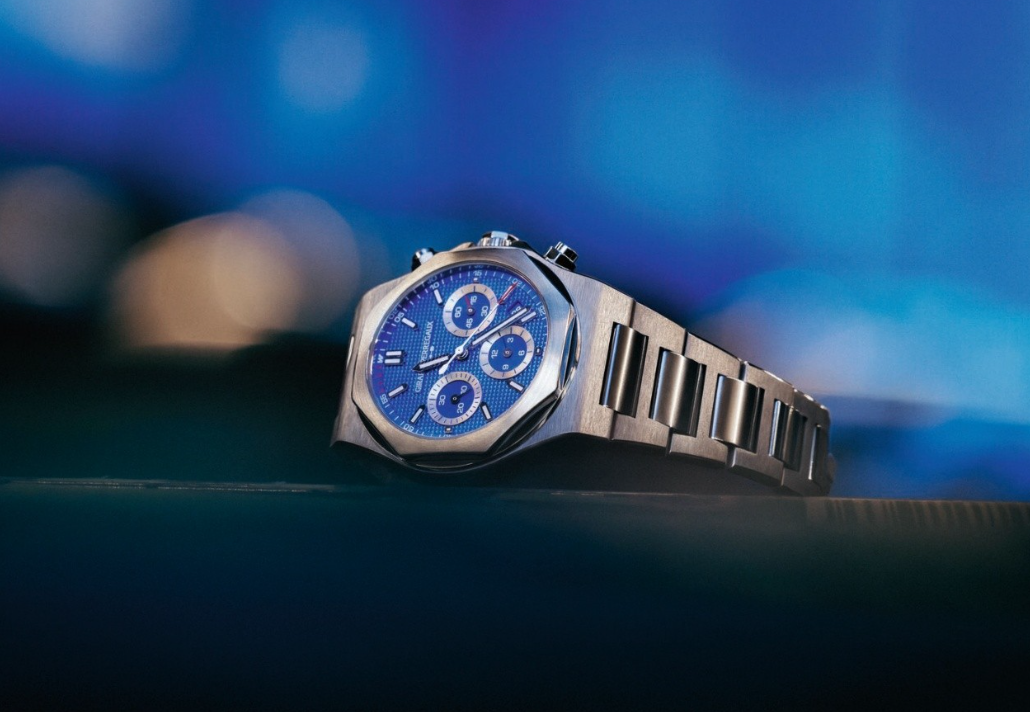
The collaboration comprises two 42mm steel watches: the time-and-date Laureato Williams Edition and the more technical Laureato Chronograph Williams Edition.
Both retain the familiar architecture of the Laureato, including its octagonal bezel, integrated bracelet and mix of polished and satin-finished surfaces. The influence of Williams is comparatively restrained, appearing through colour, discreet branding and details inspired by the team’s current Formula 1 car.
It is a welcome departure from the oversized logos and literal automotive references that can characterise motorsport watches.
The Williams FW48 inspires the dial
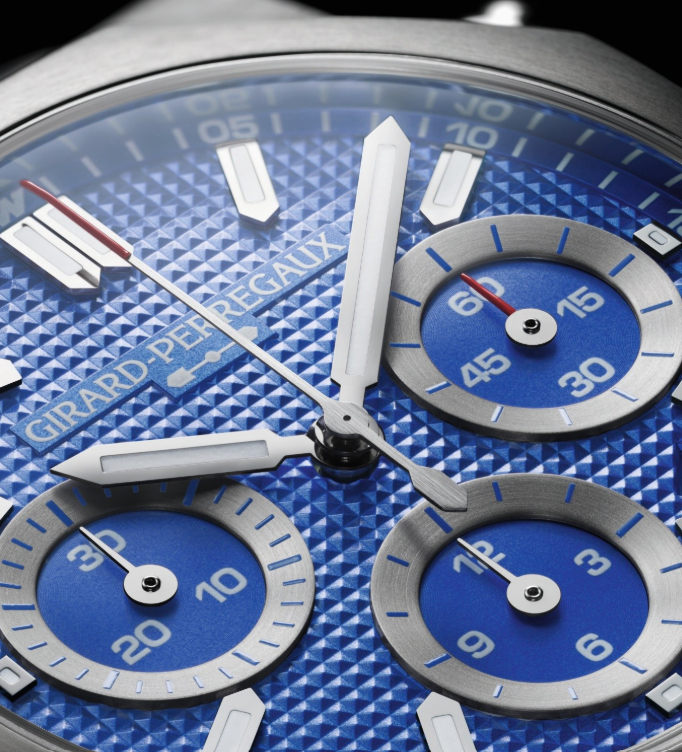
The centrepiece of both models is a blue Clous de Paris dial informed by the livery of the Williams FW48, the car being campaigned by the team during the 2026 Formula 1 season.
A small Williams “W” replaces the conventional marker at 12 o’clock, while the team emblem appears on the sapphire crystal caseback. Red accents echo the keyline used on the FW48 without overwhelming the established Laureato design.
The three-hand model offers the quieter interpretation. Baton-shaped, rhodium-plated hands and hour markers are filled with white-emitting luminescent material, while a date window sits at three o’clock.
The chronograph creates a more obvious connection with motorsport. Three subdials are framed by rhodium-plated rings, with red appearing on the small-seconds hand and the tip of the central chronograph seconds hand.
Both watches measure 42mm across and are water resistant to 100 metres. The standard Laureato has a case thickness of 10.68mm, while the additional mechanics of the chronograph increase its profile to 12.16mm.
Two in-house automatic movements
The Laureato Williams Edition is powered by Girard-Perregaux’s self-winding GP01800 calibre. The movement provides hours, minutes, central seconds and the date, with a minimum power reserve of 54 hours.
The Laureato Chronograph Williams Edition uses the automatic GP03300 calibre, which combines its chronograph functions with a date display and offers a minimum power reserve of 46 hours.
Both movements operate at 28,800 vibrations per hour and can be viewed through their sapphire crystal casebacks.
Their decoration provides a more traditional counterpoint to the Formula 1 association. Finishing techniques include Côtes de Genève, circular graining, bevelling, mirror polishing, satin finishing, engraving and snailing.
The result is less about reproducing the appearance of a racing car than identifying the common ground between two mechanical disciplines: precision, incremental development and the considerable work hidden beneath the finished product.
Parallel histories
The timing of the partnership draws attention to the remarkably similar ages of its two protagonists.
Girard-Perregaux introduced the original Laureato in 1975, establishing an integrated-bracelet sports watch with a distinctive octagonal bezel. Williams entered Formula 1 two years later in 1977.
Both have evolved continuously across the five decades since. The Laureato has moved through different sizes, materials and complications, while retaining its central design language. Williams, meanwhile, has remained one of Formula 1’s most historically significant teams.
That gives the collaboration greater credibility than a simple licensing exercise. Girard-Perregaux and Williams are not being connected solely through the familiar language of speed. Their stronger link is a shared dependence on engineering, testing and the accumulation of specialist knowledge.
The watches are described as the beginning of a longer collaboration, suggesting further Williams editions may follow.
Girard-Perregaux’s international website lists the Laureato Williams Edition at US$16,200 and the Laureato Chronograph Williams Edition at US$20,900. Australian pricing has not been announced.
Specifications
Girard-Perregaux Laureato Williams Edition 42mm
Reference: 81010-11-3680-1GM
Case: Steel
Diameter: 42mm
Thickness: 10.68mm
Crystal: Anti-reflective sapphire crystal
Dial: Blue Clous de Paris pattern
Movement: Automatic GP01800
Functions: Hours, minutes, central seconds and date
Power reserve: Minimum 54 hours
Water resistance: 100 metres
Bracelet: Integrated steel bracelet with triple-folding clasp
International price: US$16,200
Girard-Perregaux Laureato Chronograph Williams Edition 42mm
Reference: 81020-11-3681-1GM
Case: 904L steel
Diameter: 42mm
Thickness: 12.16mm
Crystal: Anti-reflective sapphire crystal
Dial: Blue Clous de Paris pattern with three chronograph counters
Movement: Automatic GP03300
Functions: Chronograph, hours, minutes, small seconds and date
Power reserve: Minimum 46 hours
Water resistance: 100 metres
Bracelet: Integrated 904L steel bracelet with triple-folding clasp
International price: US$20,900

Margot Robbie and Jacob Elordi star in an adaptation of the classic novel that respects the romance’s slow burn.

On October 2, acclaimed chef Dan Arnold will host an exclusive evening, unveiling a Michelin-inspired menu in a rare masterclass of food, storytelling and flavour.