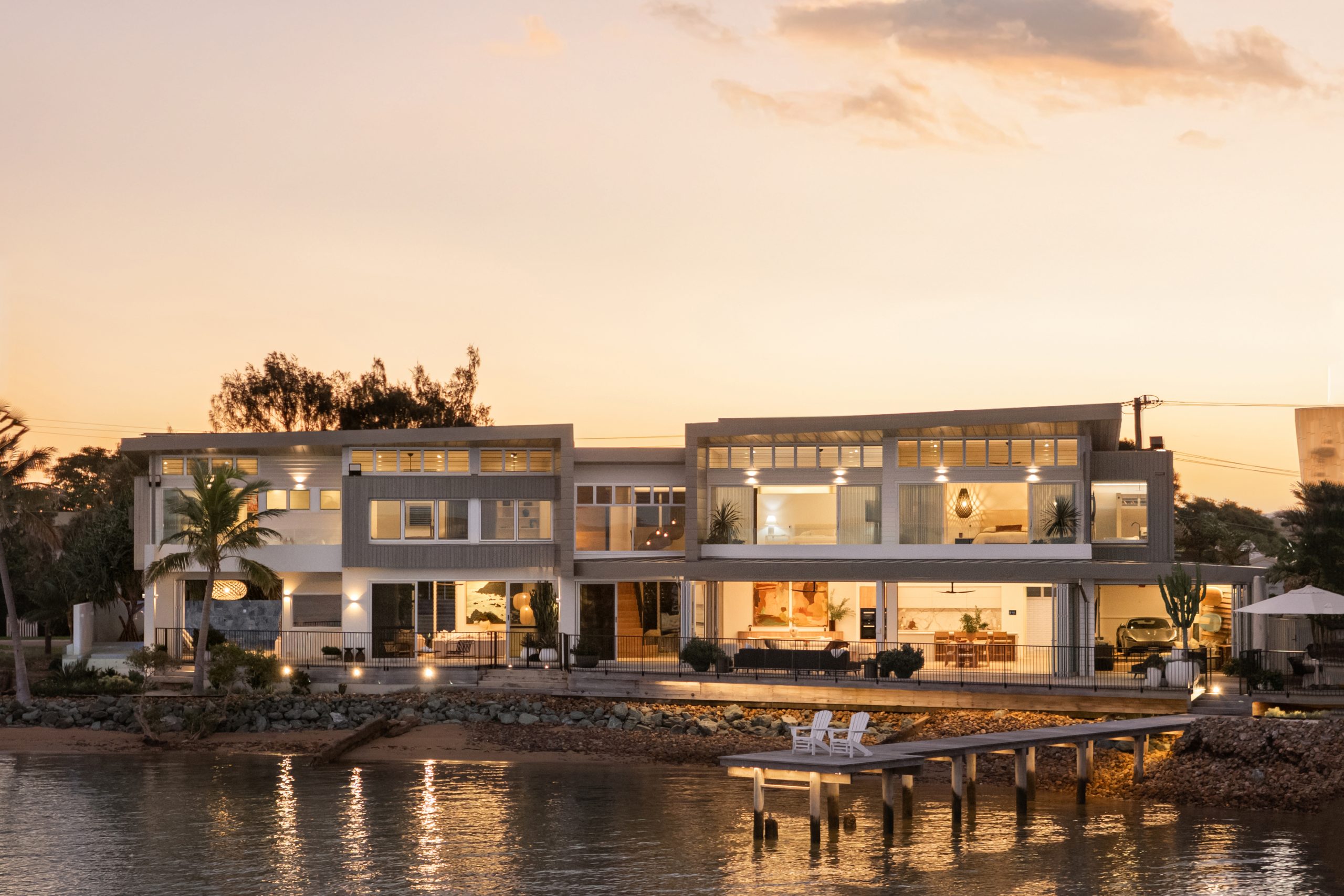
RENTS, LAND VALUES AND DEVELOPMENT IN FOCUS AS INDUSTRIAL MARKET STABILISES
Australia’s industrial property market is moving from a post-COVID boom to a steadier phase, with vacancy rates normalising and rental growth diverging across regions.
 3 min
3 min
Australia’s industrial property market is shifting gears after five years of record-breaking growth in demand, rents and construction.
Vacancy levels have climbed from historic lows, bringing the sector back into more balanced territory, according to Knight Frank’s latest research, From Surge to Stabilisation.
Vacancy rates normalise
Blended vacancy across the East Coast now sits at 3.2 per cent. While still considered tight, that represents a significant change from the 0.6 per cent recorded in the first quarter of 2023. The post-COVID surge in tenant demand had driven unprecedented leasing take-up and fuelled a wave of new construction, but that momentum has since cooled.
The report suggests that effective rental growth will remain subdued in the short term, although the picture is far from uniform. Vacancy is expected to concentrate in emerging precincts with a large pipeline of new projects, while more established markets are likely to prove resilient.
Diverging rental outlook
Sydney’s South West and Outer South, Melbourne’s North and Brisbane’s South and South West are flagged as more exposed, with lower prospects for rental growth. By contrast, Sydney’s Inner South, Melbourne’s South East and East, and Brisbane’s Trade Coast are expected to deliver stronger outcomes thanks to lower construction and tighter vacancy.
Knight Frank Partner, Research and Consulting, Queensland, Jennelle Wilson, said tenants in some markets will still face higher costs even as more space becomes available.
“It is expected that face rents will be defended with a corresponding increase in incentives to impact effective rents,” she said. “Tenants on leases negotiated prior to 2021 will still face significant rental reversion on renegotiation or relocation, despite having greater choice in the market, to bring them into line with current market rents resulting from significant growth over the boom.”
According to Wilson, prime industrial rents rose by between 30 and 60 per cent on the East Coast over the past three years, underscoring just how intense the recent surge was.
Supply pipeline rebalances
The report found that the supply side will correct relatively quickly, with speculative development slowing and more reliance on pre-commitments. Lower levels of speculative projects and a greater focus on pre-leased space are expected to ease new supply through the second half of 2025 and into 2026.
Wilson said occupiers will continue to look for operational efficiency and upgrades. “Over time, there will be a lift in pre-commitment activity as upgrading and unlocking operational efficiency remains key for large occupiers,” she said. “A more conservative development environment will limit speculative supply in 2026, diverting demand back to pre-commitments to tenants seeking a technology and building fabric upgrade.”
She added that the market would increasingly split between businesses willing to pay for high-efficiency, tech-enabled facilities and those seeking to minimise rental costs, even if it means compromising on optimisation.
Land values remain firm
One of the strongest findings from the research is that serviced industrial land values are expected to hold firm, even as demand eases. Over the past five years, land values across the East Coast have climbed sharply — by 46 to 118 per cent for smaller blocks and 46 to 131 per cent for lots of one to five hectares.
While prices have plateaued recently in Sydney and Melbourne, Wilson said the most significant bottleneck has been the time taken to service land.
“In contrast to building construction timeframes, recent years have proven that the timeline for industrial land servicing and development is the most critical step in the development process,” she said. Lessons from markets such as Western Sydney, and to a lesser extent Brisbane and Melbourne, around the delivery of power and water are expected to continue supporting values.
Looking ahead
The industrial market is settling into a new rhythm. Rental growth will be patchy, depending on location and level of development.
Pre-commitments are expected to dominate new supply, while speculative activity is expected to recede. And despite a cooling in overall tenant demand, the value of well-serviced land is likely to remain robust.
For investors, developers and occupiers alike, the message is clear: the frenzy of the boom years is over, but fundamentals remain strong for quality assets in the right locations.

Technology and semiconductor shares fell sharply as investors questioned the debt financing the AI infrastructure boom and confronted higher rates and Chinese competition.
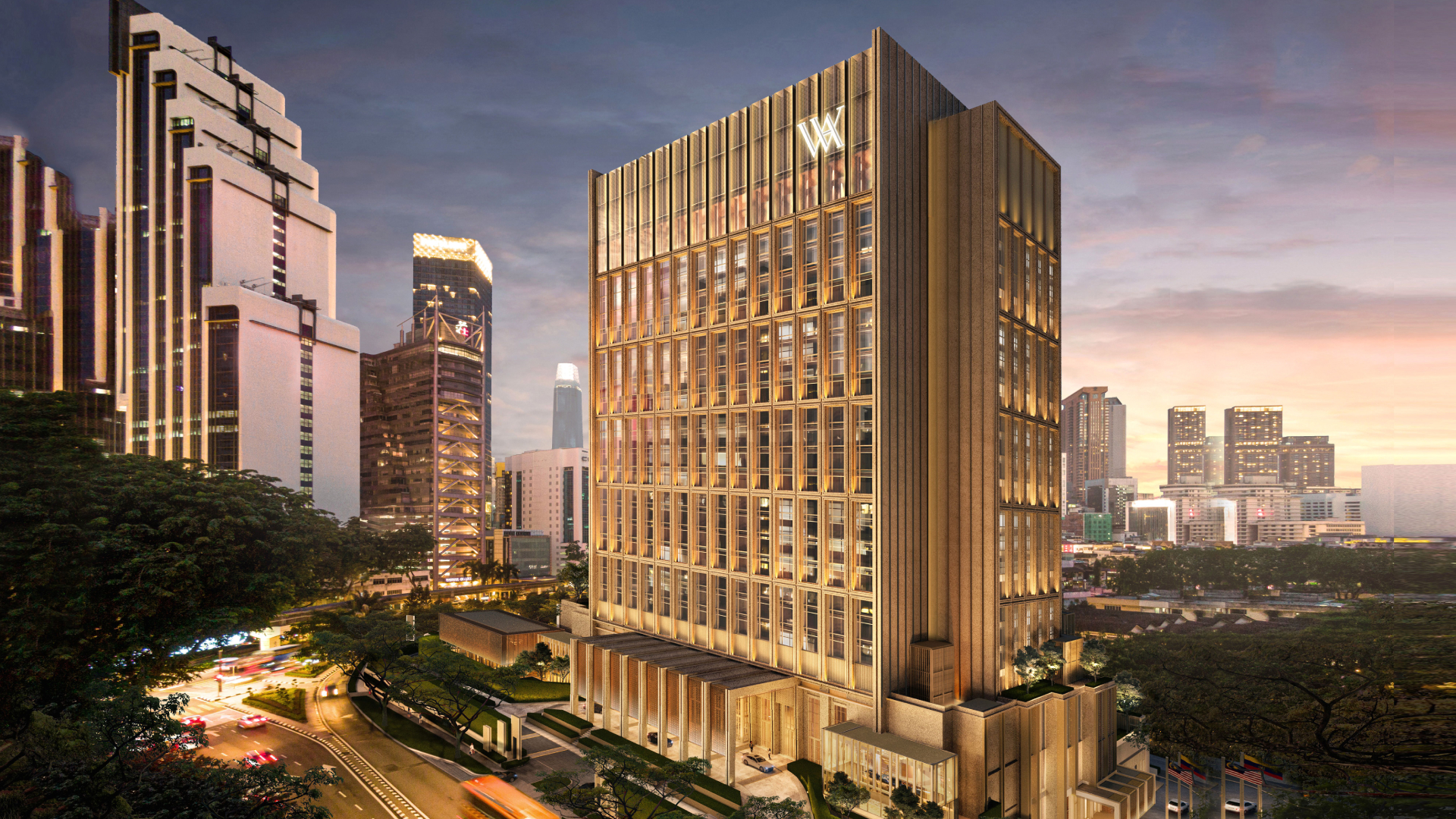
Waldorf Astoria Kuala Lumpur is scheduled to open on 30 October, introducing the Hilton luxury brand to Malaysia with an all-suite hotel in the city’s Golden Triangle.

Employment fell by 39,300 and unemployment held at a revised 4.7 per cent, giving the RBA more room to pause in November.
2 min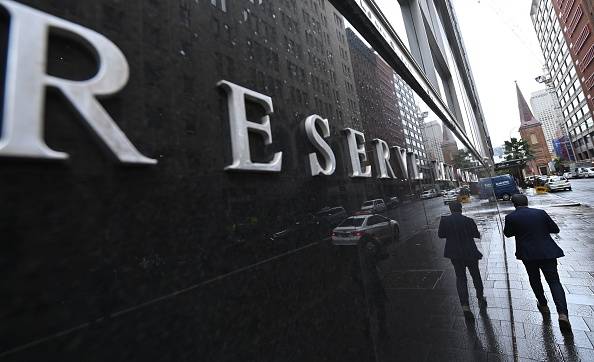
Australia’s labour market weakened in September, reducing—but not eliminating—the case for another Reserve Bank rate rise in November.
The seasonally adjusted unemployment rate was 4.7 per cent, according to the Australian Bureau of Statistics. August was revised to the same level, while September employment fell by 39,300 people. The number of unemployed Australians increased by 8,900 to 732,000.
The weakness extended beyond the headline rate. The employment-to-population ratio fell 0.3 percentage points to 63.6 per cent, participation declined 0.2 points to 66.8 per cent and underemployment edged up to 6.3 per cent. Part-time employment fell by 73,700, partly offset by a 34,400 increase in full-time work.
For the RBA, this is a clearer sign that restrictive monetary policy is cooling demand. Higher unemployment and falling employment reduce wage pressure over time and increase the risk that another rate rise would push the economy harder than necessary.
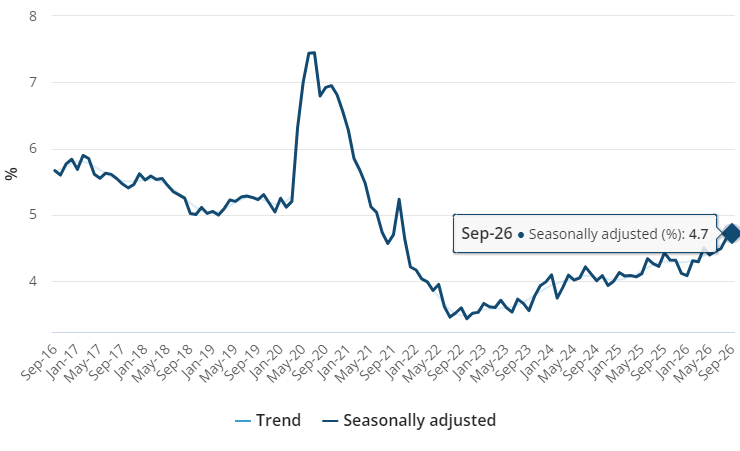
That makes a November increase less certain. It does not make a hold inevitable. The RBA must balance labour-market softness against inflation, and the September-quarter consumer price index due later in October will carry more direct weight in the decision.
For mortgage holders and property investors, the practical conclusion is not to trade one data release. Borrowers should continue testing repayments at higher rates, preserve liquidity and avoid basing a purchase on an assumed near-term reversal. Refinancing decisions should be assessed against total cost, not simply the advertised rate.
Property markets may initially welcome a reduced probability of another increase because borrowing capacity and sentiment are highly rate-sensitive. But a weakening labour market is not unambiguously positive for housing: job security supports mortgage serviceability, rental demand and buyer confidence.
The September numbers have given the RBA a credible reason to wait. Inflation will determine whether it can use it.
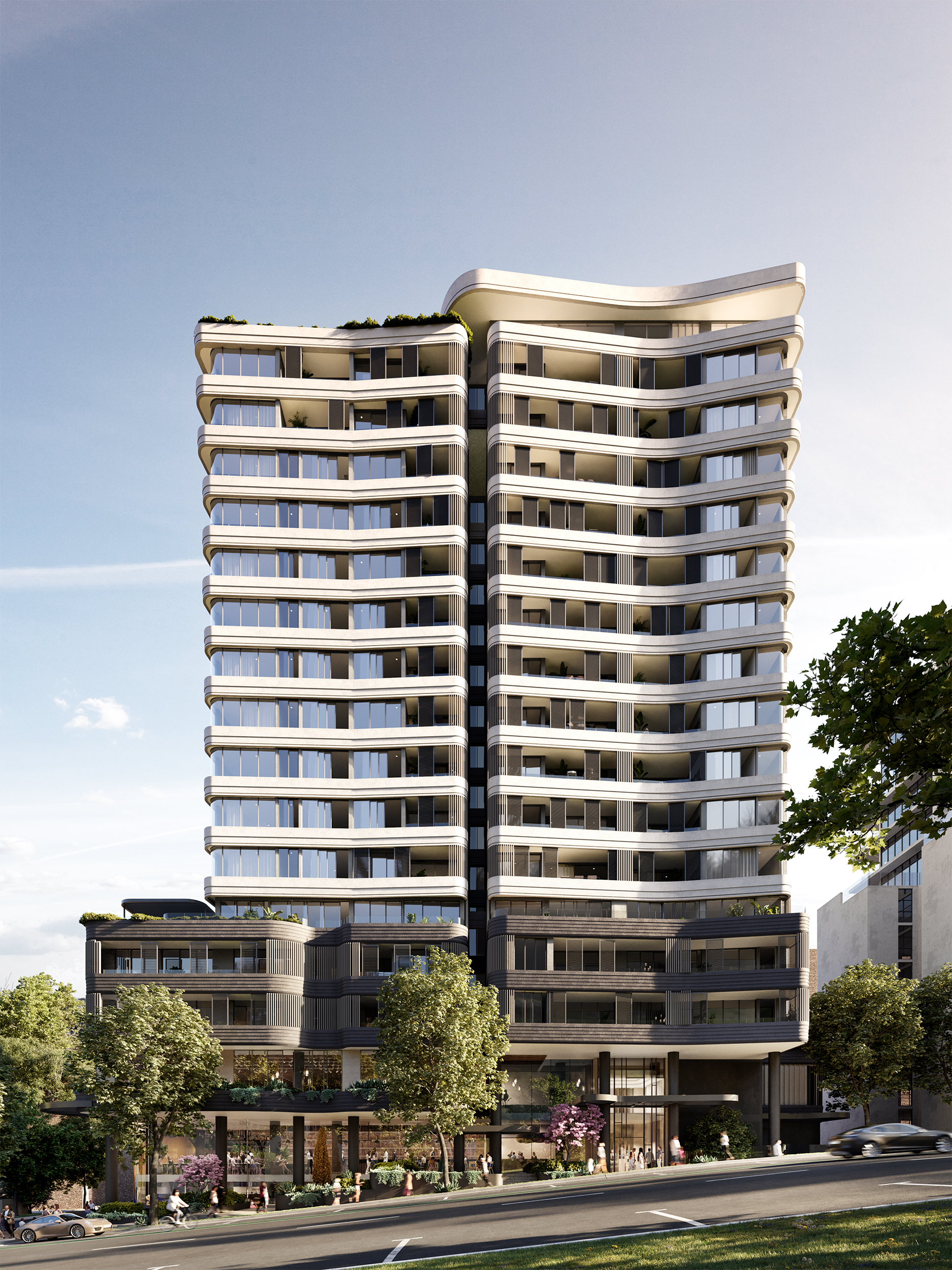
Located steps from Crows Nest Metro, the near-complete development brings luxury living to Sydney’s Lower North Shore.

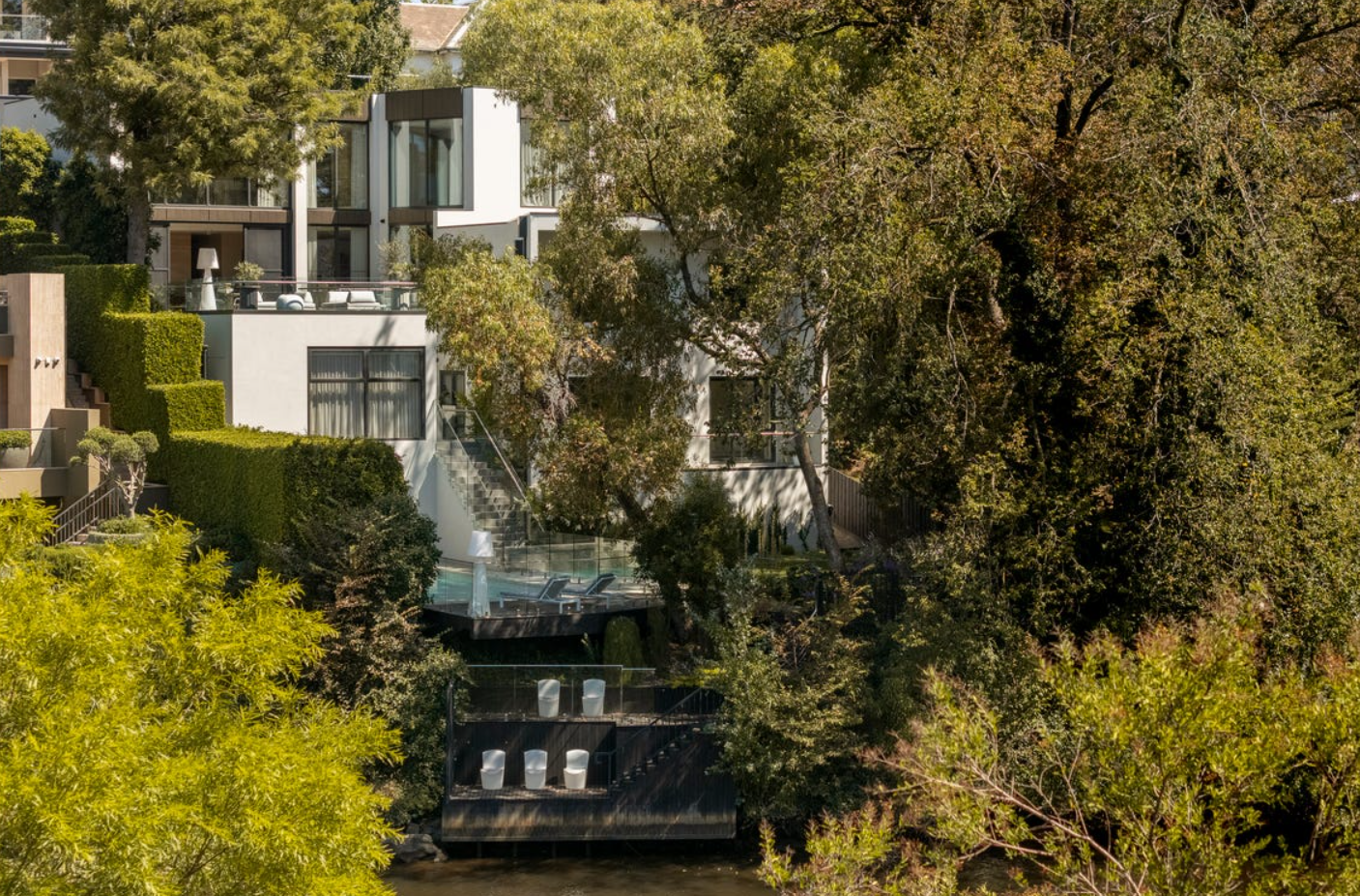
With two waterfronts, bushland surrounds and a $35 million price tag, this Belongil Beach retreat could become Byron’s most expensive home ever.