The Six-Figure Cars Drawing Enthusiastic Women Buyers

 5 min
5 min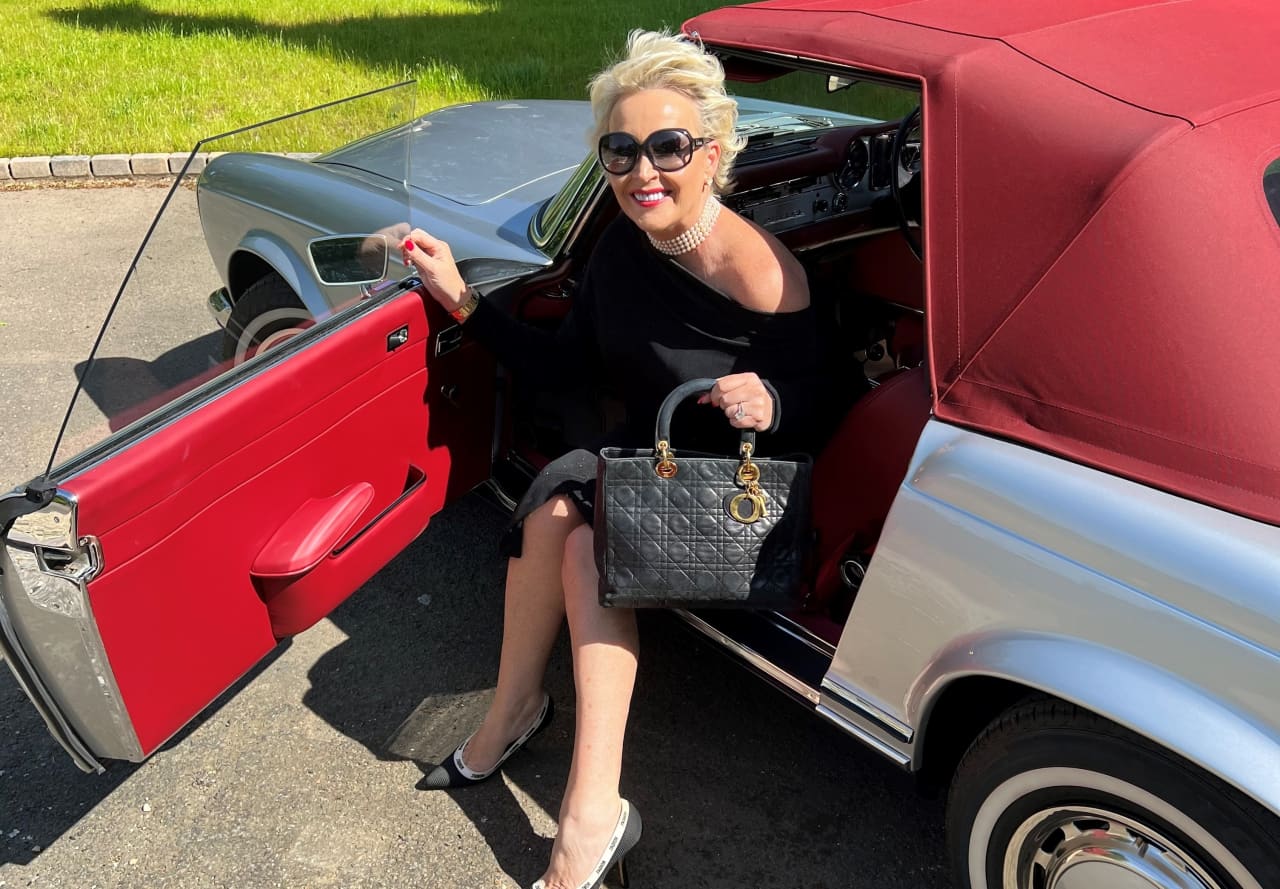
Classic cars or SUVs painstakingly retrofitted with modern drivetrains and interiors, otherwise known as “restomods,” are selling out despite prices of US$200,000 to US$400,000 and up. And the buyers are not all men.
The world of classic cars is overwhelmingly male-dominated, but it turns out these modernized versions have a broader appeal, tapping into girlhood nostalgia, too. The specialty shops that make these cars, based on everything from the Mercedes 280SL and Chevrolet Chevelle to off-roaders like the Land Rover Defender and the Ford Bronco, are reporting that their lists of female clients are growing, and some are buying more than one.
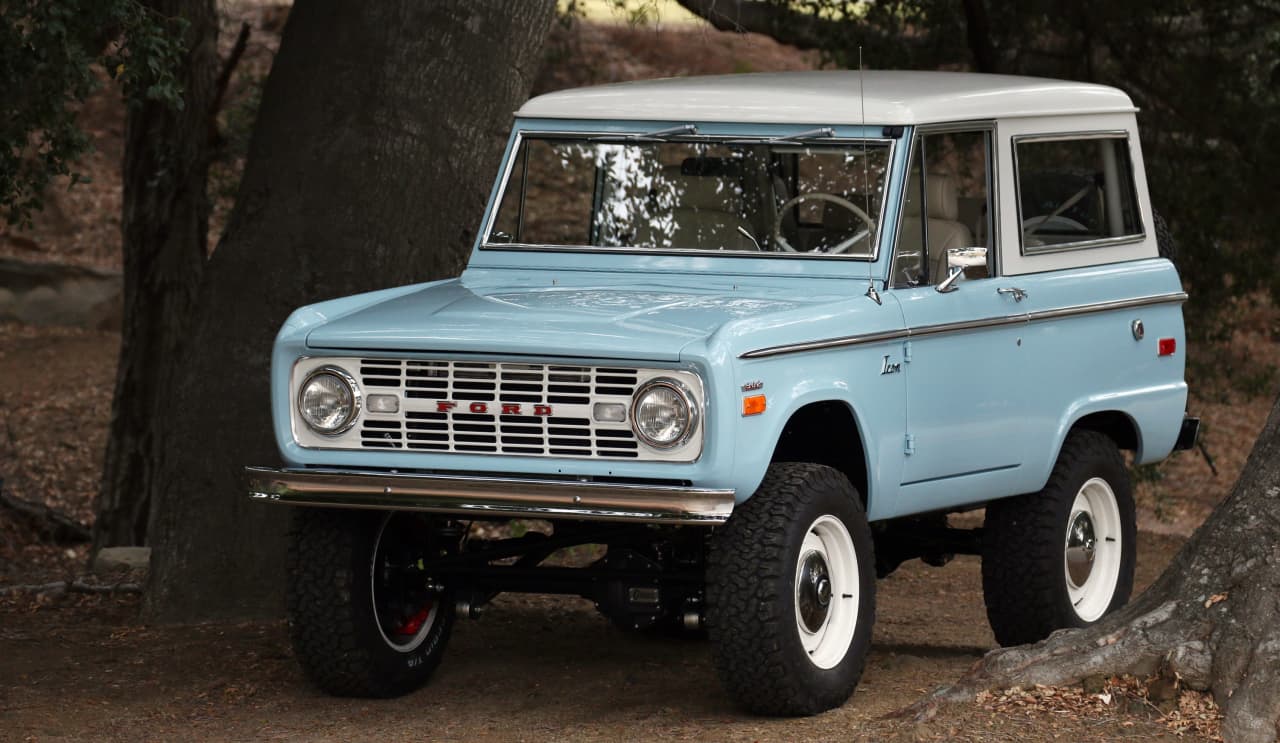
Jacqueline Comolli, who has homes in California and Maui, has a mid-US$300,000s Icon4X4 Ford Bronco, in orange and light blue, at each location.
“I’m happy with both of them,” she says. “I’ve only ever been drawn to old cars. They speak to me. But I can’t have a car that wouldn’t be safe or reliable. I don’t want to think that it’s about to break down.”
Icon4X4
Comolli reports that she’s using the orange Bronco, fitted with a modern Ford five-liter “Coyote” V8 producing 420 horsepower, in Maui as her daily driver.
“It really connects with people who see it, in the way a regular expensive luxury car would not,” she says. “The older cars that people remember just evoke a feeling.”
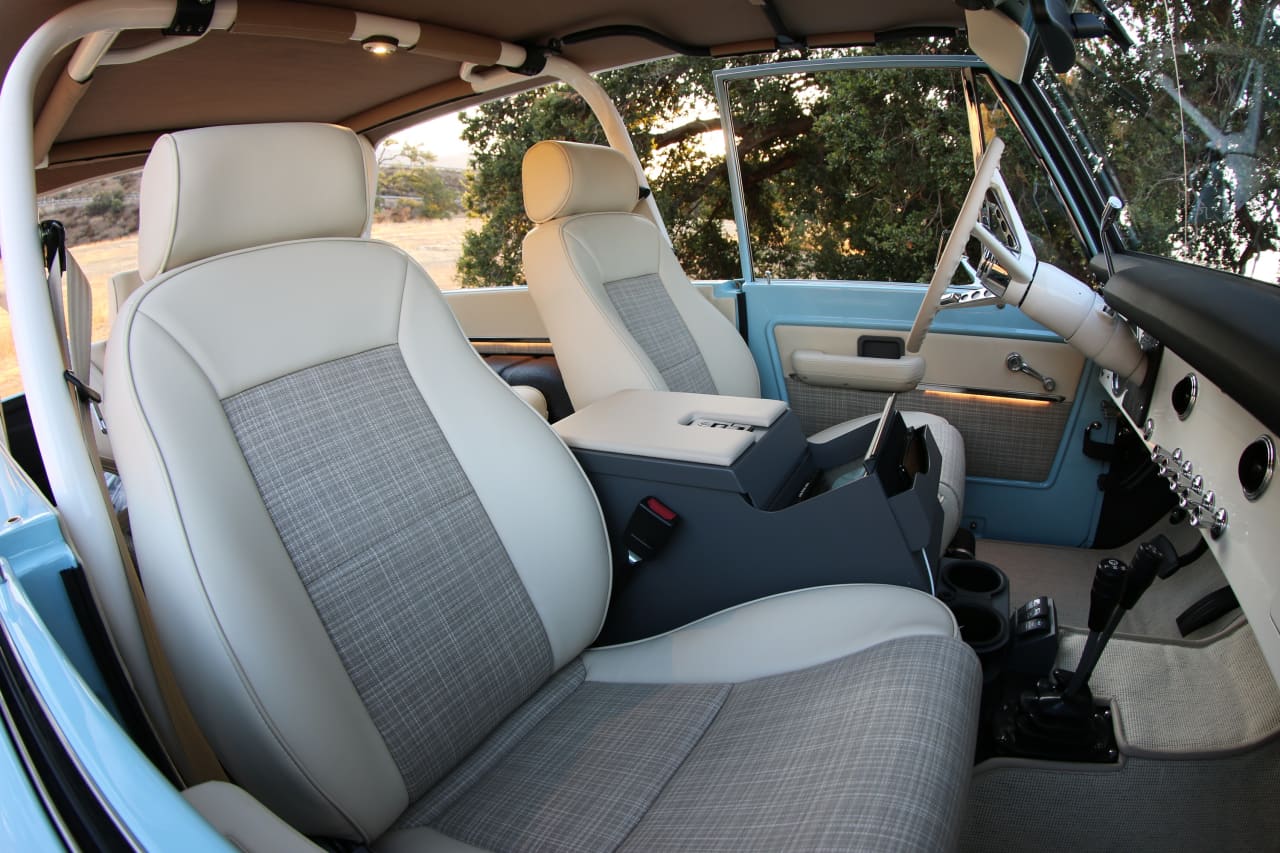
Restomods are bespoke commissions, encouraging their owners to get involved in choosing colours and materials. Comolli says she sent in a “ratty old bikini top and a high-heeled shoe” for the colours she wanted.
Icon4X4
Though the colour inspiration might be a bit different, the priorities of male and female clients are “pretty much the same,” says Jonathan Ward, CEO and lead designer at Icon4X4.
“They want enhanced performance, safety, and ease of service, while maintaining the vintage style and vibe.” He added that only 5% of his customers are women now, but “we are seeing more female interest.”
Emme Hall is a California-based auto writer who is very hands-on with her 2001 Mazda Miata off-road racer.
“There are fewer women who are car people today, and traditionally we haven’t had the same opportunities to work on cars,” she says. “When I wrench on my car I have to watch YouTube videos to avoid making mistakes. But when you buy one of these restomods, you get a dream car that is already done for you. The reliability and the workmanship are guaranteed.”
Katy Schuman
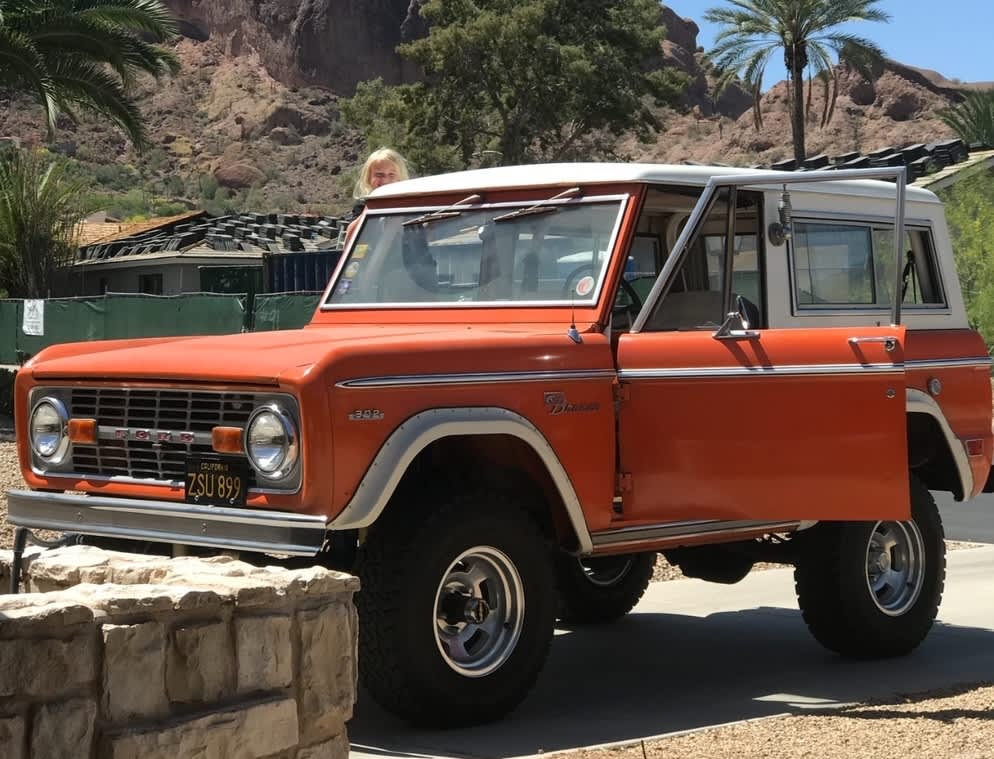
Katy Schuman, who drives a car from Illinois-based Gateway Bronco built to her individual style, is an interior designer who has also worked with Gateway on the details of another pair of Bronco builds. She has a second restomod on order, a Defender being built by the Landrovers, a company in Holland. Schuman’s husband drives a blacked-out LS3-powered 1968 Chevrolet Chevelle restomod with an eight-speed push-button automatic that was originally special-ordered by comedian David Spade from Florida-based Velocity.
Schuman says that her Bronco was built from a second-hand 1969 car that she and her husband had on the road for 12 years.
“They completely rebuilt our old Bronco,” she said. “It’s a lot smoother now with a new chassis, stronger brakes and motor.” When the Bronco was just a well-worn used car it broke down frequently, often while Schuman was ferrying the kids to school. “It was usually the battery,” she says.
Wales-based Hemmels completely rebuilds Mercedes SLs to exacting specifications, and CEO Thomas Butterfield says that 10% of his clients are women—more than most of the competition.
“Our women buyers are exceptionally focused on detail, and they thrive on the car being custom and bespoke,” Butterfield says. “There’s a reason one-off handbags from Hermès sell for millions, because they’re statements.”
He added that the company has matched exterior and interior colors from handbags, flecks of house paint, and shades of nail varnish.
Tessa Hartmann , a Scottish branding strategist in the fashion and entertainment space who appeared on ITV’s Real Housewives of Jersey for two seasons, first fell in love with Mercedes sports cars as a child when she saw movie star Grace Kelly in a 190 SL. Hartmann first owned “Grace,” a 1969 Mercedes 280SL “Pagoda” that she’d traded for her Maserati Ghibli. But the car needed a lot of expensive loving care and attention, and a restoration through a local shop stalled—in part because, Hartmann felt, the owners took advantage of a woman client. Hartmann decided to swap Grace for a restored SL.
“It was at that point that I discovered Hemmels,” Hartmann says. “I felt bad for Grace, but I named the new car ‘Doris’ after Doris Day, who also has an effortless charm and a wholesome femininity about her.”
Hartmann notes that her four kids thought she was making an eccentric move, which prompted the thought that “it’s O.K. for a man to idolise engines, exhaust, and torque, but if a woman expresses an interest in cars, especially classic cars, she’s eccentric? Frankly I couldn’t have cared less what people thought. I was in charge. I had earned the right to do what I wanted. I am a workaholic and if this was my vice, so be it.”
Doris has had a makeover, and Hartmann took delivery of the 1970 car last year, paying around £220,000 (about US$280,000 and minus the £70,000 she got for trading in Grace). “Doris has a silver body, red leather interior, a red roof, and a hardtop—she’s quite magnificent, and the craftsmanship from Hemmels is impeccable,” Hartmann says. “Doris only gets to come out on sunny days. I feel an immense pride in being able to have one of these cars—it was an achievement many years in the making.” She’d buy another restomod, and thinks they hold their value well.
E.C.D. photo
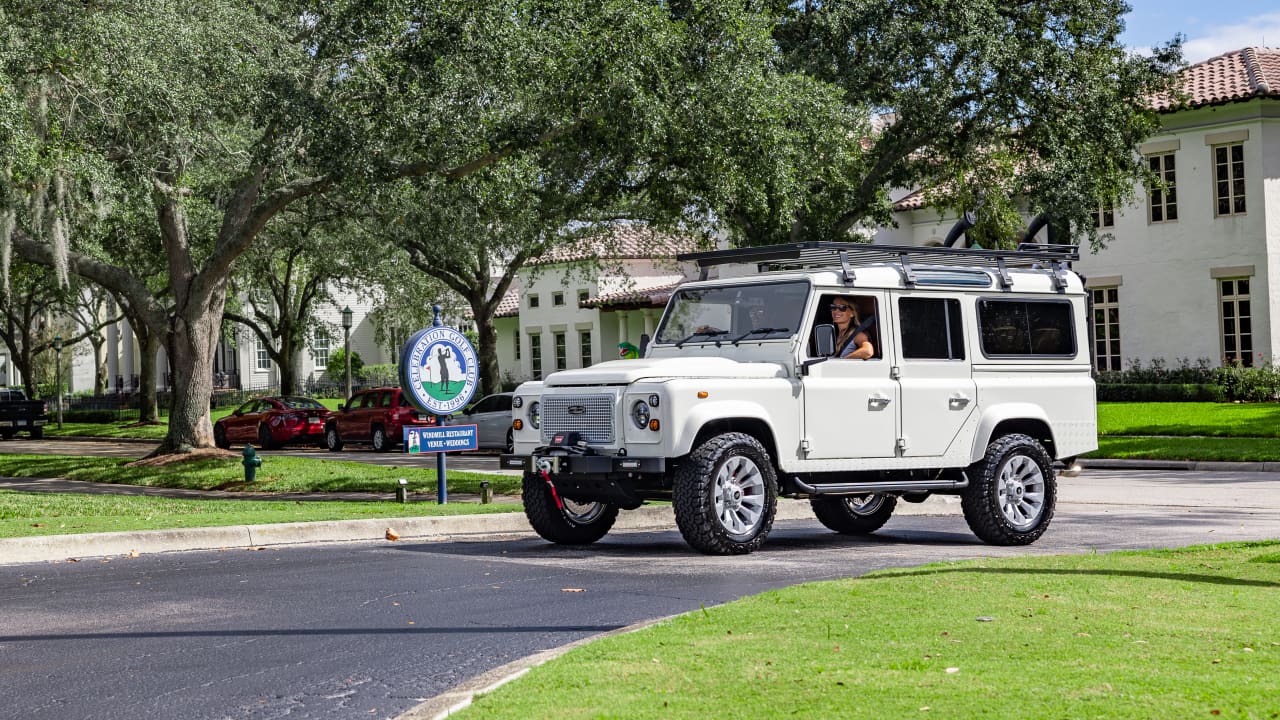
The ride owned by Diane Johnson-Marchand and Tania Marchand, is a restored bright-white 1990 Land Rover Defender 110 known as “Island Girl” in right-hand drive, upgraded to 455 horsepower via a GM LT1 V8. The builder, at a cost of around US$300,000, was Florida-based E.C.D. Automotive Design, which also restores Jaguar E-Types and Mustangs and has a little more than 6%female clients.
E.C.D. CEO Scott Wallace says the women he’s worked with bring a unique “perspective and flair” to their custom builds, “resulting in one-of-one vehicles that truly stand out. Their attention to detail and passion for design continually inspire us.”
Johnson-Marchand, a veterinarian in the Daytona Beach area of Florida, learned to drive in a Defender in Hawaii. That one was right-hand drive, so the new one had to be, too. She wanted an alloy-bodied car, located one in South Africa, and imported it to the U.S. before handing it over to E.C.D. for a nine-month build.
“We spent a month just on the design and personalised many aspects of the car,” Johnson-Marchand says. “And there were several on-site visits. E.C.D. kept us posted each step of the way, so we were able to see the car through the assembly process. Vintage looks combined with a modern drivetrain, that combination allows us to have the best of both worlds.”
There is actually a club for women supercar owners, the Arabian Gazelles, based in Dubai. Seeing the growing trend, similar organisations could take root around the world.
 Copyright 2020, Dow Jones & Company, Inc. All Rights Reserved Worldwide. LEARN MORE




Australian shares fell on Thursday as Wall Street weakness, rising oil and persistent rate concerns weighed on most of the market. The S&P/ASX 200 declined 0.72 per cent to 8,702. The All Ordinaries lost 0.66 per cent to finish at 8,897. Mining stocks were hit particularly hard, while real estate also dragged on the index. …
Continue reading “ASX falls 0.7 per cent as miners and property stocks retreat”

Borrowers cannot control the Reserve Bank, but they can control how exposed their household budget is to its next decision. The RBA meets on 29 September with inflation concerns still elevated and major-bank economists increasingly bringing forward their rate-rise calls. Fixed mortgage rates have also been moving, reducing the value of waiting for perfect certainty. …
Continue reading “What mortgage holders should do before the next RBA decision”
 2 min
2 minAustralian shares fell on Thursday as Wall Street weakness, rising oil and persistent rate concerns weighed on most of the market.
The S&P/ASX 200 declined 0.72 per cent to 8,702. The All Ordinaries lost 0.66 per cent to finish at 8,897. Mining stocks were hit particularly hard, while real estate also dragged on the index.
Energy was the notable exception, gaining more than one per cent as Brent crude traded above US$103 a barrel. Oil had moved higher amid uncertainty surrounding potential US diesel-export restrictions and broader geopolitical supply risks. The move supported energy producers but renewed concern about inflation inputs across transport and the wider economy.
Gold shares were weak even as spot bullion remained historically elevated. The All Ordinaries Gold index fell about 2.25 per cent, showing that equity performance can diverge from the commodity because of valuation, currency, operating and company-specific factors.
Zip was a prominent loser, falling 11.38 per cent after the company reported short sales after the previous close. Nine Entertainment also weakened after UBS analysts warned of near-term revenue challenges associated with its advertising-supported subscription tier.
Premier Investments led larger winners despite caution about the retail environment. Breville, in which Premier owns a significant stake, also appeared among leading movers. In the broader ASX 300 screen, Myer gained 11.43 per cent and MAAS Group rose 7.93 per cent, while Lotus Resources fell 10.53 per cent. These percentage moves should be checked against company announcements and trading liquidity before attributing causes.
The Australian dollar was broadly flat at US70.38 cents. Spot gold was around US$4,280 an ounce, Brent crude approximately US$103.08 a barrel and iron ore near US$96.90 a tonne late in the session.
The rate outlook remains the central domestic catalyst. Labour-market weakness has not eliminated the possibility of an RBA increase next week, leaving banks, listed property and other rate-sensitive sectors exposed to changing expectations.
Market dashboard
S&P/ASX 200: 8,702, down 0.72 per cent.
All Ordinaries: 8,897, down 0.66 per cent.
Best sector: Energy, up more than one per cent.
Weakest areas: Real estate and materials were the major drags; confirm final sector percentages before publication.
Material winner: Premier Investments led the large-company gainers. Confirm its final closing move from the ASX before publication.
Material loser: Zip, down 11.38 per cent.
ASX 300 percentage leader: Myer, up 11.43 per cent.
ASX 300 percentage laggard: Zip, down 11.38 per cent.
AUD/USD: Approximately US$0.7038, broadly flat.

Pure Amazon has begun journeys deep into Peru’s Pacaya-Samiria National Reserve, combining contemporary design, Indigenous craftsmanship and intimate wildlife encounters in one of the richest ecosystems on Earth.
International AI strategist Justin Kabbani will headline the Kanebridge Property Summit in Sydney on June 18, with tickets selling fast.